Published on October 26, 2023
In the specialized field of mold making, the quality of gypsum powder directly determines the precision, surface finish, and durability of the final mold. Whether producing intricate ceramic slip casts, detailed industrial prototypes, or dental models, the grinding mill chosen is the cornerstone of production success. Gypsum, being a relatively soft and friable mineral (Mohs hardness around 2), requires a milling process that not only reduces particle size efficiently but also controls particle shape and distribution to avoid defects such as air bubbles, shrinkage cracks, or poor replication of fine details. This article provides a comprehensive technical overview of gypsum grinding mill solutions for mold making applications, drawing on decades of engineering expertise from Liming Heavy Industry. We explore the critical parameters of mill selection, from capacity and fineness to system integration and environmental compliance, ensuring that mold manufacturers can achieve consistent, high-quality output. By leveraging advanced milling technologies, including Raymond mills, European trapezium mills, and micro powder mills, producers can tailor their grinding process to meet the exacting standards of the mold making industry.
Understanding the Gypsum Grinding Requirements for Mold Making
Mold making gypsum, often referred to as plaster of Paris or alpha gypsum, demands a specific particle size distribution (PSD) and purity to ensure proper setting time, water absorption, and mechanical strength. Unlike construction-grade gypsum, which may tolerate broader particle ranges, mold gypsum typically requires a fineness of 150-400 mesh (100-38 microns) or even finer for high-precision applications. Liming Heavy Industry’s portfolio of grinding mills is engineered to meet these diverse requirements. The key challenges include preventing over-grinding—which can lead to excessive heat generation and alteration of the gypsum’s crystalline structure—and ensuring uniform feeding to avoid mill vibration or blockages. Our machines, such as the Raymond Mill and MTW European Type Trapezium Mill, incorporate advanced classification systems that allow for precise cut points, ensuring that only particles of the desired size exit the mill while oversize material is returned for further grinding. This closed-loop system is essential for maintaining consistent quality in mold making batches.
Recommended Mill Types for Gypsum Mold Making
1. Raymond Mill (Traditional and Upgraded Models)
The Raymond mill has been a workhorse in the gypsum industry for decades. Liming Heavy Industry’s Raymond Mill is specifically designed for processing non-flammable and non-explosive materials with Mohs hardness under 7, making it ideal for gypsum. With an output fineness ranging from 613μm to 44μm (30-325 mesh), it covers the majority of mold making needs. Its compact structure and easy maintenance make it a cost-effective choice for small to medium-scale operations. The mill’s grinding rollers and ring are manufactured from high-chrome alloy, ensuring long service life even with abrasive gypsum feed. For mold makers requiring a capacity of 1.2 to 4.5 T/H, this mill offers a reliable solution. However, for those needing higher output or finer finishes, the MTW series may be more appropriate.
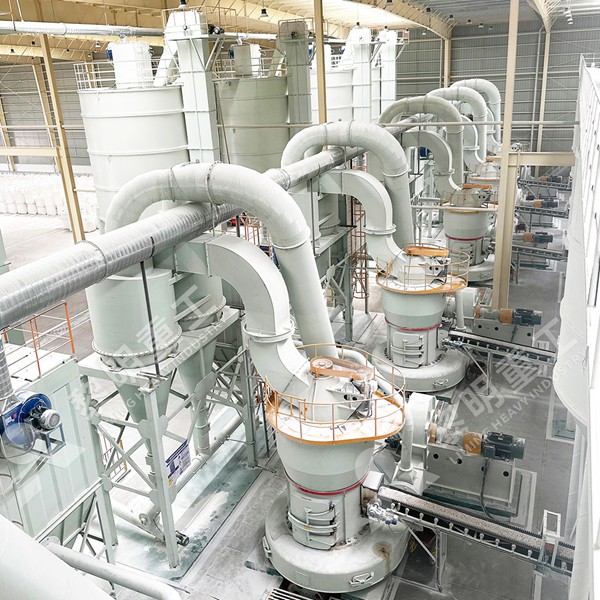
2. MTW European Type Trapezium Mill (Upgraded Performance)
As the successor to traditional Raymond and pendulum mills, the MTW European Type Trapezium Mill represents a significant leap in technology. It features a bevel gear integral transmission system, which ensures smooth operation and lower energy consumption. The mill’s capacity ranges from 3 to 55 T/H, with an input size of 30-50mm, making it suitable for larger mold making facilities that process tonnage volumes. The patented technology includes a curved air duct and a powder concentrator that can adjust fineness between 80-425 mesh. For alpha gypsum production, the MTW mill’s ability to maintain low temperatures during grinding is critical to preserving the material’s hydraulic properties. Moreover, its dust collection system, which uses a pulse bag filter, meets stringent environmental standards—an increasingly important factor for industrial facilities operating near residential areas.
3. MW Micro Powder Mill (For Ultra-Fine Applications)
For specialized mold making requiring superfine powder—such as dental molds, jewelry casting, or high-resolution prototypes—the MW Micro Powder Mill is the premier choice. This mill integrates advanced Swedish grinding technology and can achieve a fineness of up to d97 ≤ 5μm (325-3250 mesh). The capacity ranges from 0.5 to 25 T/H. The MW series is particularly adept at processing gypsum without causing thermal degradation because of its multi-stage grinding mechanism and efficient air classification. The mill’s pin roller system rotates under centrifugal force, grinding material between the roller and the ring. The finished product has a uniform particle shape, reducing the risk of agglomeration during mold mixing. For mold makers who prioritize surface smoothness and dimensional accuracy, the MW Micro Powder Mill offers an unmatched solution. However, due to its higher complexity and finer output, it is recommended for producers who require consistent sub-micron control.
System Integration and Workflow Optimization
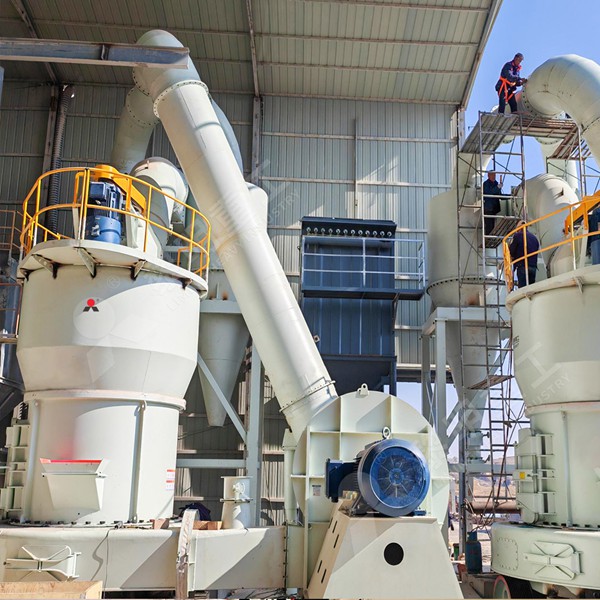
An efficient gypsum grinding line for mold making is not just about the mill itself; it encompasses the entire system from raw material reception to finished product storage. Liming Heavy Industry designs complete grinding circuits that include:
- Primary Crushing: A jaw crusher reduces large gypsum rock (up to 500mm) to a feed size suitable for the mill (e.g., 15-50mm).
- Conveying and Feeding: Variable-frequency belt feeders ensure a steady, controlled material flow to the mill, preventing surges that could cause blockages or inconsistent particle sizes.
- Grinding Mill: The core unit, selected based on capacity and fineness requirements.
- Classification: Air classifiers or separators that return coarse particles to the mill for regrinding.
- Dust Collection: Pulse-jet dust collectors that capture fine particles, ensuring compliance with environmental regulations and recovering valuable product.
- Finished Product Storage: Silos or bagging systems for convenient handling.
For mold making, it is critical to isolate the grinding system from moisture. Gypsum is hygroscopic, and excessive humidity can cause caking or setting issues. All our mills are equipped with sealed bearings and optional hot air sweeping systems to remove surface moisture. The closed-loop air circulation system also minimizes the introduction of ambient moisture.
Maintenance and Operational Best Practices
To maintain the longevity and performance of a gypsum grinding mill, operators should adhere to a strict maintenance schedule. Key practices include:
- Regular Lubrication: Grease all bearings and gears according to manufacturer specifications to prevent heat buildup and premature wear.
- Wear Parts Inspection: Grinding rollers, rings, and scraper blades are consumables. Inspect them monthly and replace when the thickness reduces by 15-20% to maintain grinding efficiency.
- Air Filter Cleaning: Pulse-jet filters should be checked regularly. Clogged filters reduce airflow, causing the mill to overheat and decreasing capacity.
- Feeder Calibration: Ensure the variable-frequency feeder delivers material consistently to avoid mill vibration or “spitting” of coarse material.
- Magnetic Separation: Install magnetic separators before the mill to remove any ferrous contaminants that could damage the grinding elements.
Liming Heavy Industry provides comprehensive after-sales support, including spare parts supply and on-site training, to ensure that mold makers can maximize uptime. Our 30 years of experience in the field have taught us that attention to these details separates a high-performing plant from a problematic one.
Why Choose Liming Heavy Industry for Gypsum Grinding?
Liming Heavy Industry Co., Ltd., founded in 1987, has grown into a leader in the global crushing and grinding equipment market. With a 80,000 m² headquarters in Zhengzhou’s Hi-Tech Zone and an additional 67,000 m² workshop in Shangjie, our manufacturing capacity enables us to deliver robust, high-precision machines. Our scientific research team continuously develops innovations such as the MTW trapezium mill and MW micro powder mill, targeting the technological frontier of the industry. For mold making applications, our machines offer distinct advantages:
- Proven reliability in 100+ countries across diverse climatic conditions.
- Customizable solutions: from single mills to turnkey grinding plants.
- Environmental compliance: all mills can be equipped with efficient dust collection systems.
- Energy efficiency: advanced transmission and aerodynamic designs reduce electricity consumption by up to 20% compared to conventional mills.
- After-sales network: local service centers and a 24/7 technical hotline ensure quick response times.
Whether you are a small workshop producing decorative molds or a large industrial facility supplying the automotive or construction sectors, Liming Heavy Industry has the expertise and equipment to elevate your gypsum grinding process.
Frequently Asked Questions (FAQ)
- What is the best grinding mill for high-precision gypsum molds used in dental applications? For dental molds requiring extremely fine and uniform particles, the MW Micro Powder Mill is recommended due to its ability to achieve fineness up to 3250 mesh (sub-micron level) while maintaining consistent particle shape.
- Can the same mill process both natural gypsum rock and synthetic gypsum (FGD gypsum)? Yes, Liming Heavy Industry’s mills, particularly the MTW European Type Trapezium Mill and Raymond Mill, are designed to handle both natural gypsum and flue gas desulfurization (FGD) gypsum, provided the moisture content is controlled (ideally below 6% for Raymond Mill, below 10% for MTW with hot air).
- How can I prevent the gypsum from setting or caking inside the mill during grinding? Ensure proper ventilation and use the optional hot air system to reduce humidity within the mill chamber. Also, avoid over-grinding which generates excessive heat (keep mill outlet temperature below 80°C for gypsum). Regular cleaning of internal surfaces and maintaining a steady feed rate also help.
- What is the typical power consumption for a gypsum grinding mill producing 200-mesh powder for mold making? Power consumption varies by mill type and capacity, but generally, Raymond mills consume 20-40 kWh per ton, while MTW mills consume 15-30 kWh per ton due to their more efficient transmission systems. The MW micro powder mill may consume 30-50 kWh per ton due to the finer grinding requirements.
- Does Liming Heavy Industry provide complete turnkey gypsum grinding plants for mold making? Yes, we design and supply integrated solutions including crushers, feeders, mills, classifiers, dust collectors, and control systems. Our engineering team can customize the layout based on your available space, capacity needs, and specific mold making requirements.


