Published on: October 26, 2023
In the specialized field of dental material production, the quality of gypsum plaster directly determines the accuracy of dental molds, the smoothness of prosthetic surfaces, and ultimately the success of clinical restorations. As a leading manufacturer of industrial grinding equipment since 1987, Liming Heavy Industry has developed advanced gypsum grinding mill solutions specifically tailored for the demanding requirements of dental plaster processing. Our grinding mills—ranging from Raymond mills to European trapezium mills and micro powder mills—offer the precise particle size control, consistent fineness, and high purity output that dental laboratories and plaster manufacturers require. By integrating modern scientific management systems with precision manufacturing, Liming has established itself as the dominant force in both domestic and international machinery manufacturing, providing reliable equipment that transforms raw gypsum into high-quality dental plaster with exceptional efficiency and environmental compliance.
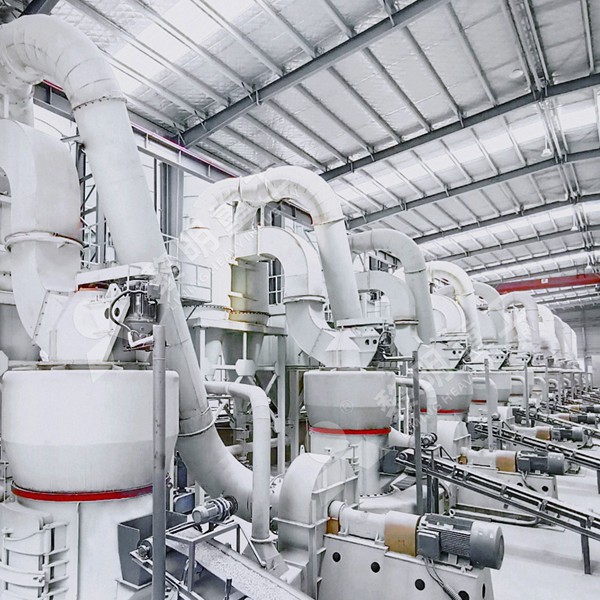
The Critical Role of Gypsum Grinding in Dental Plaster Manufacturing
Dental plaster, primarily composed of calcium sulfate hemihydrate, is produced by calcining natural gypsum rock and then grinding it to a specific fineness. The grinding stage is arguably the most critical step because it determines the setting time, expansion rate, compressive strength, and surface detail reproduction of the final plaster product. For dental applications, particle size distribution must be tightly controlled—typically between 40 and 100 microns for Type III dental plaster and even finer for Type IV die stone materials. Any inconsistency in grinding can lead to porous casts, inaccurate margins, or dimensional instability, all of which compromise dental work.
Liming Heavy Industry’s gypsum grinding mills are engineered to meet these exacting standards. Our equipment achieves output fineness ranging from 613μm down to an impressive 44μm for standard applications, with our micro powder mills capable of reaching D97 ≤ 5μm for ultra-fine dental plasters. This flexibility allows manufacturers to produce everything from conventional dental plaster to high-strength, low-expansion die materials using a single grinding platform.
Key Equipment Options for Dental Gypsum Processing
Raymond Mill for Standard Dental Plaster
For manufacturers producing conventional dental plaster used in study models and mounting casts, our Raymond mill is the proven workhorse. With a capacity range of 1.2 to 4.5 tons per hour and an input size of 15-25mm, this mill is ideal for medium-scale operations. The Raymond mill handles non-flammable, non-explosive materials with a Mohs hardness under 7 and humidity below 6%, making it perfectly suited for gypsum. Its output fineness, adjustable between 613μm and 44μm, directly corresponds to the particle size requirements for standard dental plasters. The enclosed grinding system minimizes dust, which is crucial for maintaining a clean production environment in facilities that may also handle dental impression materials.
MTW European Type Trapezium Mill for Enhanced Efficiency
Our MTW European Type Trapezium mill represents a significant upgrade over traditional Raymond and pendulum mills, offering patented technology that delivers stable performance and higher productivity. With a capacity spanning 3 to 55 tons per hour and input size of 30-50mm, this mill is appropriate for larger dental plaster manufacturing operations. The MTW mill’s working principle involves a closed-loop system where materials are crushed by a jaw crusher, fed via a variable-frequency belt feeder, and ground between rings and rollers. Particles that do not pass the separator are recirculated for further grinding, ensuring uniform fineness. The integrated pulse dust collector complies with stringent environmental standards, an increasingly important consideration for dental material plants seeking sustainable operations.
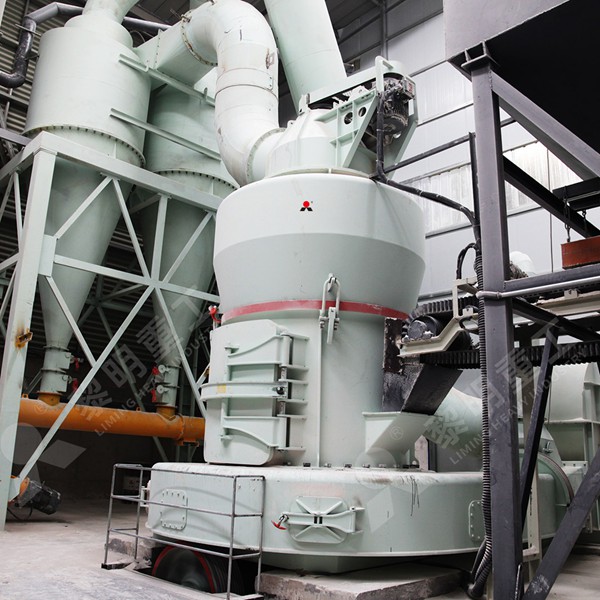
Micro Powder Mill for Premium Dental Die Stone
For manufacturers targeting the high-end dental die stone market—where surface hardness and abrasion resistance are paramount—our MW Micro Powder Mill provides superfine grinding capabilities. Absorbing advanced Swedish grinding technology, this mill achieves finished product fineness up to D97 ≤ 5μm, with adjustability between 325 mesh and 3250 mesh. The mill’s capacity ranges from 0.5 to 25 tons per hour with an input size of 10-20mm. The working mechanism involves a motor driving the main shaft and turnplate, which rotates dozens of rollers against the ring’s raceway. This design produces exceptionally fine particles with narrow size distribution, which translates to dental plasters that set with minimal expansion and high compressive strength—critical for crowns, bridges, and implant models.
Comprehensive Grinding System Components
Regardless of the mill type selected, a complete Liming gypsum grinding system includes several coordinated components: the grinding mill itself, separator, air blower, jaw crusher, vibrating feeder, hopper, dust collector, piping, powder collector, electric cabinet, and motors. This integrated approach ensures that raw gypsum, typically arriving as large lump material, is first crushed to the required size by the jaw crusher. The crushed material is then transported via elevator and fed uniformly into the mill by a vibrating feeder. During grinding, fines are carried upward by airflow, oversized particles are rejected by the separator and returned for further grinding, while acceptable particles are collected as finished product. The air circulation system is closed-loop, with all air passing through the separator and returning to the blower, minimizing energy loss and environmental impact.
Why Liming Heavy Industry Stands Out for Dental Plaster Grinding
With a headquarter located in the HI-TECH Industry Development Zone of Zhengzhou covering 80,000 m² and an additional workshop in Shangjie Industry Park spanning 67,000 m², Liming Heavy Industry has the manufacturing capacity to deliver reliable grinding solutions globally. Our company’s commitment to scientific research and development—focusing on “scientific research tackling key problems, technological progress and technological improvement” along with “production, learning and research”—means that our gypsum grinding mills continuously evolve to meet the changing needs of the dental industry. Whether you require a mill for small-batch specialty plasters or high-volume industrial production, Liming provides equipment that enhances product quality while reducing operational costs. Our decades of experience in crushing and grinding equipment, combined with a mature scientific research team, ensure that every mill is optimized for the unique physical and chemical properties of gypsum used in dental applications.
Frequently Asked Questions (FAQ)
1. What particle size does a Liming gypsum grinding mill produce for dental plaster?
Our Raymond mills typically produce fineness between 613μm and 44μm, which covers standard dental plaster requirements. For premium die stone applications requiring superfine powder, our Micro Powder Mill achieves fineness down to D97 ≤ 5μm (approximately 3250 mesh). The exact particle size distribution can be adjusted based on your specific dental plaster formulation.
2. Can the same mill process both standard dental plaster and high-strength die stone?
Yes, depending on the model selected. The MTW European Type Trapezium mill offers a wide capacity range (3-55 TPH) and adjustable fineness, making it versatile enough to switch between standard plaster and finer die stone products. However, for consistent ultra-fine production, we recommend dedicating an MW Micro Powder Mill to die stone operations.
3. How does the closed-loop grinding system benefit dental plaster manufacturers?
The closed-loop system recirculates air and oversize particles, which ensures consistent product fineness while reducing energy consumption. It also minimizes dust emissions, which is particularly important for facilities that must maintain cleanroom-like conditions to avoid contaminating sensitive dental materials. The integrated pulse dust collector further ensures compliance with environmental regulations.
4. What maintenance is required for the gypsum grinding mill?
Routine maintenance includes periodic inspection of grinding rollers and rings for wear, checking the separator's blade condition, lubricating bearings as per the schedule provided in the manual, and cleaning the dust collector filters. With proper care, Liming mills are designed for long service life, even under continuous operation for dental plaster production.
5. Is the grinding mill suitable for small-scale dental plaster startups?
Absolutely. Our Raymond mill, with a capacity starting at 1.2 TPH, is ideal for small to medium-scale operations. The equipment is compact, cost-effective, and easy to operate. For very small production runs, we can also suggest configurations that optimize throughput for lower volumes without compromising on particle quality. Contact our technical team for personalized recommendations.


