Published: October 2025
A Phosphogypsum grinding production line is a specialized system designed to convert phosphogypsum—a byproduct of phosphate fertilizer production—into valuable gypsum powder for applications in construction, cement, agriculture, and desulfurization. This article provides a comprehensive overview of the key considerations, equipment selection, and operational benefits of building an efficient phosphogypsum grinding production line, drawing on decades of industry experience and proven technology. By integrating advanced grinding mills, intelligent control systems, and environmentally friendly dust collection, modern production lines ensure high capacity, fine product fineness, and compliance with strict environmental standards. Whether you are processing phosphogypsum for wallboard, cement retarder, or soil amendment, understanding the full process from crushing to packaging is essential for maximizing return on investment.
Understanding Phosphogypsum and Its Processing Challenges
Phosphogypsum is a acidic, moist, and often sticky material with high moisture content (usually 10-20% after dewatering) and contains impurities such as phosphates, fluorides, and organic matter. These characteristics make it more challenging to grind than natural gypsum. A dedicated phosphogypsum grinding production line must address these issues through proper drying, optimized feeding, and robust milling equipment.
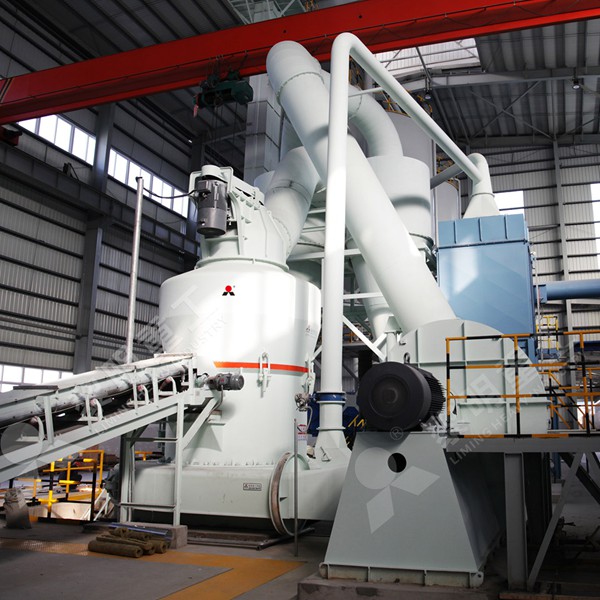
Core Equipment for a Phosphogypsum Grinding Production Line
Based on our company’s extensive product portfolio, the following machinery can be configured into a high-performance phosphogypsum grinding line:
1. Primary Crushing Unit (Optional)
For phosphogypsum with large lumps or high moisture content, a jaw crusher is recommended to reduce the feed size to ≤30-50mm, ensuring smooth feeding into the grinding mill.
2. Grinding Mill Selection
Depending on target fineness (from 100 mesh to 1250 mesh), capacity requirements (0.5 T/H to 400 T/H), and energy efficiency goals, we offer several grinding options:
- LM Vertical Roller Mill: Best for large-capacity lines (10-400 T/H). Integrates drying, grinding, and classifying in one unit. The hot air system can handle up to 15% moisture, making it ideal for phosphogypsum with high moisture.
Input size: 30-55mm
Applications: Cement additive, non-metallic minerals, power plant desulfurization. - MTW European Type Trapezium Mill: The upgrade of traditional Raymond mill, with patented technology for stable performance (3-55 T/H). Suitable for medium-scale production of phosphogypsum powder for building materials.
Input size: 30-50mm
Working Principle: Big lump materials are crushed by jaw crusher, then fed via variable-frequency belt feeder into the mill. Materials are ground between ring and rollers, and the closed system with pulse dust collector ensures environmental compliance. - Raymond Mill: For smaller capacities (1.2-4.5 T/H) or fine powder applications (100-325 mesh). Suitable for phosphogypsum with low moisture (<6%).
- MW Micro Powder Mill: For ultra-fine phosphogypsum powder (325-3250 mesh, d97 ≤ 5μm). Capacity: 0.5-25 T/H. The hammer crusher pre-crushes material before grinding.
- Ball Mill: Traditional but robust option for capacities up to 50 T/H, especially when combined with air classifiers to produce controlled fineness.
3. Auxiliary Systems
- Drying System: For phosphogypsum with moisture >10%, a hot air furnace or waste heat from the grinding process can be integrated. LM mill’s internal drying capability is particularly advantageous.
- Dust Collection: Pulse bag filter is standard to meet emission standards, capturing fine particles for reuse.
- Feeding and Conveying: Variable-frequency belt feeders ensure uniform feed rate, preventing clogging caused by the stickiness of phosphogypsum.
- Packaging and Storage: Finished powder is collected in silos and can be bagged or transported in bulk.
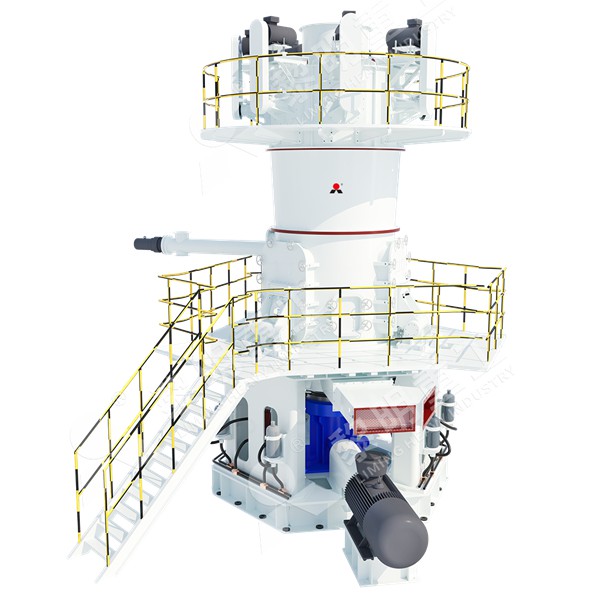
Typical Process Flow of a Phosphogypsum Grinding Production Line
- Raw Material Reception & Pre-treatment: Phosphogypsum is received from the fertilizer plant, often with 12-18% moisture. It may be stockpiled to allow natural dewatering, or directed to a dryer if moisture is high.
- Crushing: Large lumps (if any) are crushed by a jaw crusher to ≤50mm for vertical mills or ≤25mm for ball mills.
- Drying & Grinding: Feed enters the mill along with hot air (if needed). In an LM mill, drying and grinding happen simultaneously. Grinding rollers press material against the grinding table, and the air classifier separates fine particles from coarse ones. Coarse particles return for re-grinding.
- Classification & Collection: Fine powder is carried by air flow to a separator, then to a dust collector (bag filter or cyclone). The clean air is recycled or exhausted.
- Product Storage & Dispatch: Powder is pneumatically conveyed to silos. It can be packed into bags or sent via tanker truck.
Key Benefits of a Well-Designed Phosphogypsum Grinding Line
- Resource Efficiency: Converts industrial byproduct into marketable gypsum, reducing landfill waste.
- High Capacity with Low Energy Consumption: Vertical roller mills consume 30-50% less energy than ball mills for the same throughput.
- Product Flexibility: Adjustable fineness from 80 mesh to 1250 mesh caters to different applications (cement retarder, plasterboard, soil conditioner).
- Environmental Compliance: Closed-loop systems and high-efficiency dust collectors minimize dust emissions.
- Reliable Operation: Sturdy construction and advanced control systems ensure continuous operation even with challenging materials like phosphogypsum.
Conclusion
A phosphogypsum grinding production line is a strategic investment for phosphate fertilizer producers and gypsum processors alike. By selecting the appropriate milling technology—whether LM vertical roller mill for maximum capacity, MTW mill for medium-scale production, or micro powder mill for superfine application—and integrating proper drying and dust collection, companies can achieve both economic and environmental goals. Our company, with over 30 years of experience in manufacturing grinding equipment, offers complete solutions from single machines to turnkey production lines, backed by scientific research and innovation.
Frequently Asked Questions (FAQ)
1. What is the typical moisture content of phosphogypsum that a grinding line can handle?
Our LM vertical roller mill can process phosphogypsum with moisture content up to 15% by utilizing internal hot air system for simultaneous drying and grinding. For higher moisture, a separate dryer is recommended before feeding.
2. What fineness can be achieved for phosphogypsum powder?
Depending on the mill selected, fineness can range from 80 mesh (180 μm) for construction gypsum up to 1250 mesh (10 μm) using the MW Micro Powder Mill. Standard Raymond and MTW mills produce 100-325 mesh powder.
3. Is phosphogypsum grinding equipment different from natural gypsum grinding equipment?
While the core grinding mechanism is similar, phosphogypsum processing requires additional considerations such as anti-corrosion materials (due to residual acid), robust sealing to handle stickiness, and integrated drying systems. Our mills are customizable with wear-resistant liners and modified feeding arrangements.
4. What is the capacity range for a complete phosphogypsum grinding production line?
Capacity can be scaled from as low as 0.5 T/H (with MW mill or small ball mill) to over 400 T/H (with LM vertical mill). The choice depends on the available supply of phosphogypsum and end-product demand.
5. How do you control dust and emissions in a phosphogypsum grinding line?
We equip all production lines with pulse-jet bag filters that achieve emission levels below 30 mg/Nm³. The grinding system is under negative pressure, and all material conveyance points are sealed to prevent fugitive dust.


