Published: October 2023
Gypsum, primarily composed of calcium sulfate dihydrate, is an essential additive in Portland cement production, serving as a critical retarder to control the setting time. The grinding of gypsum into a fine, consistent powder is a pivotal step that directly influences the performance of the final cement product. At Liming Heavy Industry, we have over three decades of expertise in manufacturing advanced grinding solutions, including the MTW European Type Trapezium Mill, Raymond Mill, and other specialized equipment. These mills are engineered to process gypsum with high efficiency, ensuring precise particle size distribution, moisture control, and energy savings. This article provides a comprehensive overview of gypsum grinding mills for cement retarder production, detailing our technology, applications, and operational benefits, based on our extensive product portfolio and industry leadership since 1987.
Why Gypsum Grinding Matters for Cement Retarders
In cement manufacturing, gypsum is interground with clinker to regulate the hydration rate of tricalcium aluminate, preventing flash set and allowing sufficient working time. The effectiveness of gypsum as a retarder depends heavily on its fineness, purity, and uniformity. A gypsum grinding mill must deliver a product with a specific particle size—typically between 80% passing 200 mesh and 95% passing 325 mesh—to optimize the retardation effect. Over-grinding can reduce the permeability and increase the cost, while under-grinding can lead to inconsistent set times. Liming Heavy Industry’s grinding mills are designed to achieve precise fineness adjustments, from coarse to ultra-fine, making them ideal for both natural gypsum and synthetic gypsum (e.g., desulfurization gypsum from power plants).
Key Grinding Mill Solutions for Gypsum Processing
Our company offers a range of grinding mills tailored to gypsum’s specific properties, such as its softness (Mohs hardness of 2) and slight hygroscopicity. Below are the most suitable models for cement retarder production, derived from our product line:
1. MTW European Type Trapezium Mill
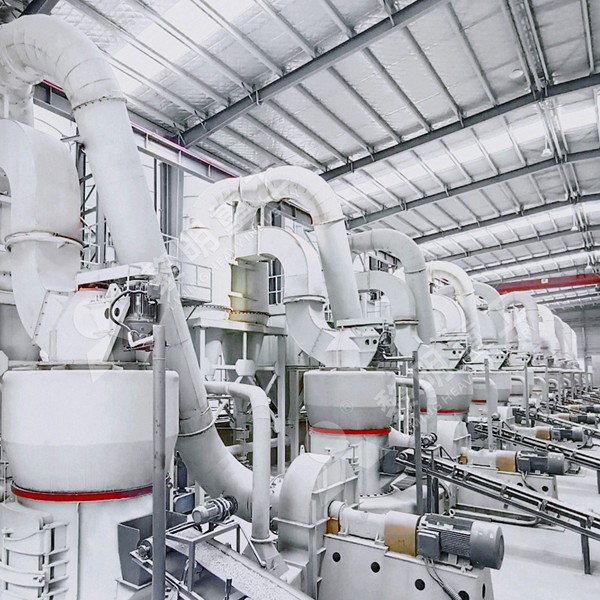
The MTW European Type Trapezium Mill is our flagship product for gypsum grinding in cement plants. It is an upgrade of traditional Raymond and pendulum mills, featuring patented technologies that ensure stable performance, high productivity, and environmental compliance. The MTW mill operates on a closed-loop system: gypsum lumps are crushed by a jaw crusher to 30-50mm, then fed via a variable-frequency belt feeder into the grinding chamber. Materials are ground between the ring and rollers, and fine particles are classified by an integrated separator. Oversize particles fall back for regrinding, while finished powder is collected by a pulse dust collector. This system achieves a capacity of 3-55 TPH and output fineness adjustable from 80-600 mesh (180-23 μm). For gypsum retarder applications, it provides consistent particle morphology and low residual moisture, critical for cement mix uniformity.
2. Raymond Mill
Raymond Mill remains a cost-effective choice for smaller-scale gypsum grinding operations. It handles materials with Mohs hardness under 7 and humidity below 6%, making it suitable for gypsum. With a capacity of 1.2-4.5 TPH and output fineness ranging from 613 μm to 44 μm (30-325 mesh), it delivers a reliable product for cement retarders where moderate fineness is acceptable. The mill’s simple structure and low maintenance needs are advantages for plants with limited space or budget. However, for high-volume production requiring ultra-fine powder, we recommend the MTW or MW Micro Powder Mill.
3. MW Micro Powder Mill
For cement retarder formulations demanding super-fine gypsum (e.g., d97 ≤ 5 μm or 325-3250 mesh), the MW Micro Powder Mill is ideal. With a capacity of 0.5-25 TPH, this mill uses medium-speed grinding technology based on advanced Swedish design. It incorporates a hammer crusher for pre-crushing, a bucket elevator, and a vibrating feeder to convey material to the grinding chamber. The rollers rotate against a raceway, achieving ultra-fine grinding through centrifugal force and compression. The integral pulse dust collector ensures minimal dust emission, meeting stringent environmental standards. This mill is particularly valuable for high-performance cement where precise retardation control is essential.
4. Ball Mill
While ball mills are traditional for cement grinding, they are also used for gypsum in integrated cement plants. Our ball mill has a capacity of 0.65-50 TPH and accepts feed sizes up to 25mm. It uses steel balls in a horizontal rotating drum to impact and grind gypsum. It is rugged and reliable, but its energy consumption is higher than roller mills. For gypsum retarder production, ball mills are best suited when combined with a classifier to ensure consistent fineness. We recommend them for plants that already use ball mills for clinker and want a unified grinding system.
Technical Considerations for Gypsum Grinding in Cement Retarder
When selecting a gypsum grinding mill, several factors influence product quality and operational efficiency:
- Feed Size and Moisture: Gypsum is often received as lumps up to 100mm. Pre-crushing with a jaw crusher is standard to reduce input size to 10-50mm for mill feed. Moisture content should be below 6% to prevent clogging; if higher, a drying system (e.g., hot air from an air blower) may be integrated, as in LM Vertical Roller Mill.
- Fineness and Throughput: For cement retarder, target fineness is typically 80% passing 200 mesh (74 μm) or finer. The mill’s separator speed and airflow must be adjustable. Our MTW mill offers a variable-frequency inverter to precisely control classifier rotor speed, allowing quick fineness changes without downtime.
- Energy Efficiency: Grinding gypsum consumes significant energy. The MTW mill uses a multi-stage grinding principle that reduces power consumption by 20-30% compared to ball mills. Additionally, the closed-circuit design minimizes material recirculation and wear.
- Environmental Compliance: Gypsum dust is a respiratory hazard. All our mills are equipped with pulse dust collectors that capture >99.9% of particles, and a closed air circulation system (air blower returns air to the mill) prevents fugitive emissions.
Integration with Cement Production Lines
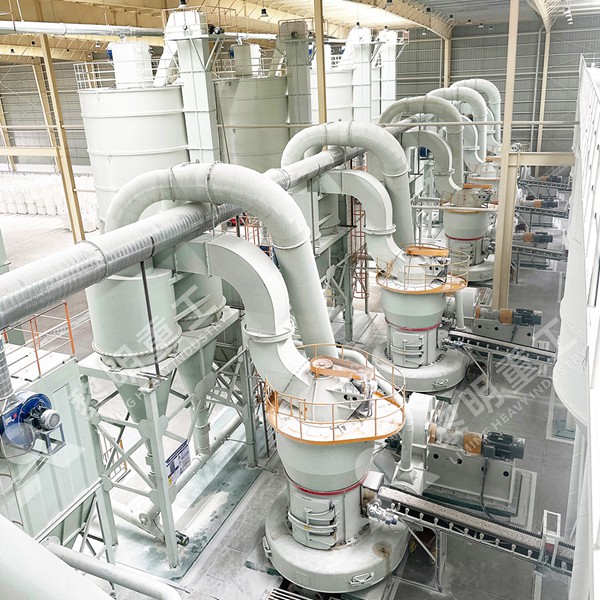
Liming Heavy Industry provides complete gypsum grinding systems that can be integrated into existing cement plants. Our scope includes the jaw crusher, vibrating feeder, bucket elevator, mill, separator, air blower, dust collector, pipework, and electric control cabinet with PLC automation. The system can be designed for either natural gypsum (mined) or synthetic gypsum (e.g., flue gas desulfurization gypsum). For cement plants requiring both gypsum and clinker grinding, we offer the LM Vertical Roller Mill, which can handle both materials in separate passes. Our 80,000 m² headquarter in Zhengzhou’s Hi-Tech Zone and a 67,000 m² workshop in Shangjie ensure rapid delivery and customization.
Operational Benefits and Case Studies
Users of our gypsum grinding mills report consistent cement quality, reduced set time variability, and lower operating costs. For example, a cement plant in Southeast Asia replaced its hammer mill with an MTW138 mill and achieved a 15% increase in gypsum throughput while reducing power consumption by 0.5 kWh per ton. The pulse dust collector also allowed the plant to recycle gypsum dust, cutting raw material waste. Our service network, built over 30 years, provides on-site commissioning, training, and spare parts support globally.
Conclusion
Gypsum grinding for cement retarder requires a mill that balances fineness, capacity, energy efficiency, and environmental safety. The MTW European Type Trapezium Mill stands out as the optimal choice for most medium-to-large plants, while Raymond Mill and MW Micro Powder Mill serve niche applications. With our scientific R&D strategy and focus on technological innovation, Liming Heavy Industry delivers reliable, long-lasting equipment that enhances your cement production line. Whether you are expanding capacity or upgrading old machinery, our team can engineer a solution tailored to your gypsum specifications.
Frequently Asked Questions (FAQ)
- What is the typical fineness required for gypsum used as a cement retarder? Typically, the gypsum powder should be ground to where 80-95% passes 200 mesh (74 μm) or 325 mesh (44 μm). Fineness above 325 mesh may be used for specialized cement types. The exact spec depends on the cement formulation and desired set time.
- Can the MTW European Type Trapezium Mill handle synthetic gypsum from power plants? Yes, it can. Synthetic gypsum (FGD gypsum) often has higher moisture content (up to 10-15%), but the MTW mill can be equipped with a hot air system to dry the material during grinding. Ensure the feed moisture is managed to avoid plugging in the feeding system.
- What maintenance is required for a gypsum grinding mill? Regular checks include roller and ring wear (every 6-12 months depending on abrasiveness), bearing lubrication (every 200 hours), and classifier blade inspection. Pulse dust collector filters need cleaning per the PLC schedule. Our mills come with a maintenance manual and remote support.
- Is there a difference between grinding natural gypsum and desulfurized gypsum? Natural gypsum is denser and less sticky, while synthetic gypsum is lighter and may contain impurities like calcium sulfite. Our Raymond Mill and MTW mill can process both, but we recommend a pre-drying step for synthetic gypsum and possibly a more robust classifier to handle fines.
- How does the closed air circulation system benefit gypsum grinding? The closed system reduces energy loss by recycling hot air and decreases the risk of dust leakage. It also maintains a stable grinding temperature, which is important because gypsum can dehydrate to hemihydrate (plaster) if overheated above 150°C, altering its retarding properties.


