When producing high-quality ink, the performance of the final product—whether it is printing ink, paint ink, or specialty coating ink—depends heavily on the particle size and consistency of the calcium carbonate filler. As a functional extender and pigment, calcium carbonate must be ground to a precise fineness, typically between 325 mesh and 2500 mesh, to ensure uniform dispersion, optimal viscosity, and excellent gloss and opacity. The right Calcium Carbonate Grinding Mill for Ink must combine high capacity, energy efficiency, and the ability to produce ultra-fine powders with narrow particle size distribution. At Liming Heavy Industry, with over 30 years of experience in manufacturing crushing and grinding equipment, we offer a suite of mills—including the Raymond Mill, MTW European Type Trapezium Mill, and MW Micro Powder Mill—engineered specifically to meet the stringent demands of the ink industry. This article provides a detailed, professional analysis of how our grinding solutions deliver the performance required for calcium carbonate processing in ink production.
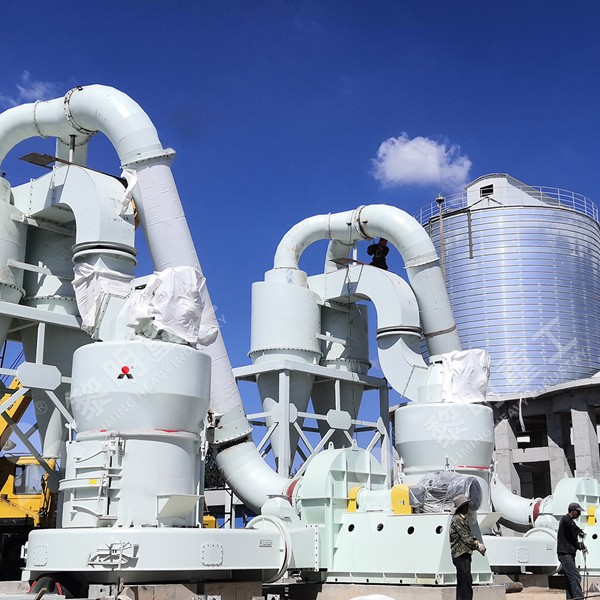
Why Calcium Carbonate Grinding Mills Matter for Ink Manufacturing
Calcium carbonate is one of the most widely used fillers in the ink industry, accounting for up to 30% of the formulation in some ink types. Its roles include reducing cost, improving rheology, increasing body, and enhancing printability. However, these benefits are only realized when the particle size is carefully controlled. Coarse particles can cause nozzle clogging in inkjet inks, poor gloss in offset inks, and uneven coating in gravure inks. Conversely, excessively fine particles may lead to high oil absorption and increased viscosity, disrupting the ink's flow behavior. Therefore, the grinding mill must offer adjustable fineness, stable operation, and low contamination. Liming Heavy Industry's grinding mills are designed with these parameters in mind, leveraging advanced mechanical design and proprietary technology.
Key Mill Technologies for Calcium Carbonate in Ink Applications
1. Raymond Mill: The Workhorse for Standard Ink Fillers
For ink manufacturers that require a consistent 200-600 mesh calcium carbonate powder at a moderate capacity, the Raymond Mill remains a trusted choice. Our Raymond Mill processes non-flammable and non-explosive materials with Mohs hardness under 7 and humidity below 6%. Its output fineness ranges from 613μm to 44μm (approximately 25 mesh to 325 mesh), which is suitable for common ink formulations where extreme fineness is not critical. The mill's grinding roller and ring are made from high-chrome wear-resistant materials, ensuring long service life and minimal iron contamination—a crucial factor for white inks. With a capacity of 1.2 to 4.5 T/H and an input size of 15-25mm, this mill is ideal for mid-sized ink production facilities that value simplicity and reliability.
2. MTW European Type Trapezium Mill: High-Efficiency Solution for Fine and Ultra-Fine Processing
When the ink application demands higher fineness (up to 400 mesh or more) and greater throughput, the MTW European Type Trapezium Mill is the preferred upgrade. This mill is the successor to traditional Raymond and pendulum mills, featuring patented technology such as a bevel gear overall transmission, thin oil lubrication, and a curved air duct. These innovations result in 20-30% higher output per unit power compared to conventional mills. For calcium carbonate used in high-gloss offset inks or UV-curable inks, the MTW mill can produce a uniform powder with a narrow particle size distribution, essential for consistent color strength. The system includes a pulse dust collector, making it compliant with modern environmental standards. Capacity ranges from 3 to 55 TPH, and input size is 30-50mm, making it suitable for large-scale ink raw material processing.
3. MW Micro Powder Mill: The Specialist for Superfine Calcium Carbonate
In the premium segment of ink manufacturing—such as inkjet inks, nano-inks, and high-end coatings—superfine calcium carbonate with a fineness of D97 ≤ 5 μm (approx. 2500 mesh) is often required. The MW Micro Powder Mill, also known as the medium-speed micro-grinding mill, incorporates advanced Swedish grinding technology to achieve this level of fineness. Its grinding principle involves dozens of rollers rotating against a raceway, generating intense shear and compression forces. The finished product fineness can be adjusted between 325 mesh and 3250 mesh, offering unparalleled flexibility. With a capacity of 0.5 to 25 T/H and an input size of 10-20mm, this mill is designed for specialized ink producers who prioritize quality over raw speed. The closed-loop system, equipped with a pulse precipitator, ensures a dust-free operation, which is critical when handling fine powders that could otherwise contaminate the workshop environment.
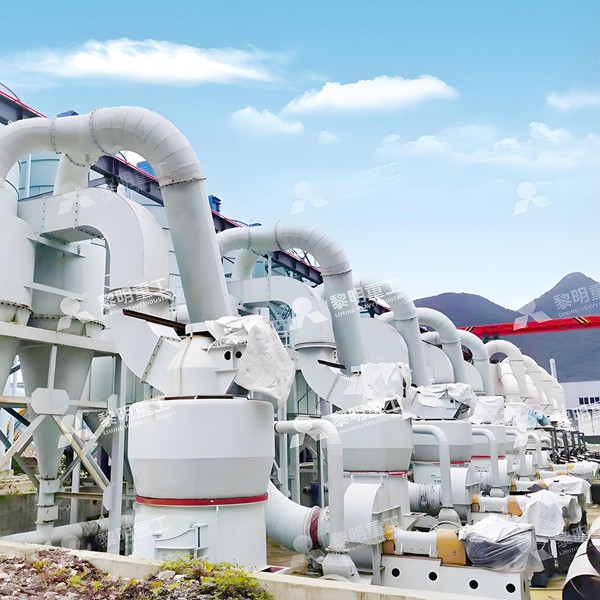
How Our Grinding Mills Integrate into a Complete Ink Raw Material System
A typical calcium carbonate grinding line for ink consists of more than just the mill itself. At Liming Heavy Industry, we provide a turnkey solution that includes a jaw crusher for primary crushing, a vibrating feeder, a hopper, a dust collector, a powder collector, an electric cabinet, and connecting pipes. For example, in an MTW system, the workflow begins with the jaw crusher reducing large limestone lumps to 30-50mm. The material then enters the variable-frequency belt feeder, which ensures even and continuous feeding into the mill. Inside the mill, the material is ground between the ring and rollers. The air flow carries the fine particles upward, where the separator classifies them. Oversized particles fall back for regrinding, while the qualified powder is collected. The air is recycled in a closed loop, minimizing energy loss and environmental impact. This integrated approach guarantees that ink manufacturers receive a consistent, ready-to-use product with minimal manual intervention.
Practical Considerations for Selecting a Calcium Carbonate Grinding Mill for Ink
Choosing the right mill for your ink production depends on several factors: required fineness, desired throughput, moisture content of the feed material, and your facility's space and power constraints. For most standard ink applications, the Raymond Mill offers a cost-effective entry point. For higher volumes and better energy efficiency, the MTW mill is a strong investment. For superfine requirements, the MW micro powder mill is unmatched. All our mills share a common philosophy: robust construction, easy maintenance, and reliable after-sales support. As a company with over 30 years of history and two large manufacturing bases covering a combined area of 147,000 m², we have the capacity to deliver both standard and customized solutions. Our scientific research team continuously innovates, focusing on the technological frontier of the industry, to ensure that our grinding equipment remains at the forefront of performance and environmental compliance.
Conclusion
In the competitive field of ink manufacturing, the quality of your calcium carbonate filler can make or break your product. By selecting a Liming Heavy Industry grinding mill, you gain access to decades of engineering expertise, a comprehensive product range, and a commitment to precision. Whether you need a Raymond Mill for standard fillers, an MTW European Type Trapezium Mill for efficient fine grinding, or an MW Micro Powder Mill for superfine applications, our equipment is designed to deliver the particle size distribution, purity, and consistency that the ink industry demands. Contact us today to discuss your specific requirements and let our team help you optimize your calcium carbonate grinding process.
Frequently Asked Questions (FAQs)
- Q: What fineness of calcium carbonate is typically required for ink manufacturing, and which Liming mill is best suited?
A: For standard offset and gravure inks, a fineness of 325-600 mesh is common, which can be achieved with our Raymond Mill or MTW European Mill. For inkjet or nano-inks requiring superfine particles (D97 ≤ 5 μm), the MW Micro Powder Mill is recommended. - Q: How does Liming ensure the calcium carbonate powder is free from iron contamination, which can affect ink color?
A: Our mills use wear-resistant materials, such as high-chrome alloy for grinding rollers and rings, to minimize iron content. Additionally, the system can be equipped with magnetic separators if required. - Q: Can the MTW European Type Trapezium Mill handle sticky or high-moisture calcium carbonate?
A: The MTW mill is designed for materials with humidity below 6%. For higher moisture, we recommend a drying step ahead of grinding or using a hot-air system integrated with the mill to assist in moisture removal. - Q: What is the typical power consumption for grinding 1 ton of calcium carbonate to 800 mesh using an MW Micro Powder Mill?
A: While exact figures depend on feed size and hardness, the MW mill's medium-speed design is highly energy-efficient, generally consuming less than traditional ball mills for the same throughput and fineness. Our engineering team can provide a specific calculation based on your material. - Q: Does Liming provide after-sales installation and training for the calcium carbonate grinding mill?
A: Yes, we offer comprehensive after-sales support, including on-site installation guidance, commissioning, and operator training. Our global service network ensures prompt technical assistance.


