Gypsum grinding mills are essential for converting raw gypsum ore into high-quality plaster powder used extensively in construction, wallboard manufacturing, and decorative applications. The choice of grinding mill directly impacts plaster purity, fineness, energy consumption, and throughput. Based on decades of engineering experience and a comprehensive product portfolio, this article explores the key mill types suitable for plaster production—from traditional pendulum mills to advanced vertical roller mills. We examine how factors such as moisture content, target fineness (typically 80-325 mesh for building plaster), and production scale determine the optimal grinding solution. By understanding these parameters, plant operators can select equipment that ensures consistent gypsum calcination feed, minimized downtime, and compliance with environmental standards.
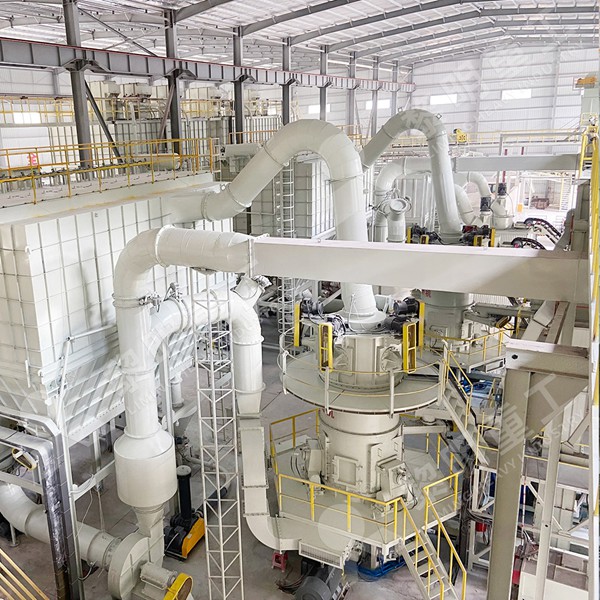
Why Gypsum Grinding Is Critical for Plaster Quality
Before plaster can be used for wall finishes, molds, or industrial applications, gypsum rock must be crushed and ground to a specific particle size distribution. The grinding process not only reduces particle size but also prepares the material for calcination—the controlled heating that removes chemically bound water to produce stucco (calcium sulfate hemihydrate). A poorly ground feed results in uneven calcination, weaker plaster strength, and inconsistent setting times. Therefore, selecting the right gypsum grinding mill is a foundational decision for any plaster production line.
Key Grinding Mill Types for Gypsum Plaster
1. Raymond Mill: The Proven Workhorse
LIMING's Raymond mill has been a staple in the gypsum grinding industry for decades, particularly for small to medium-capacity plaster plants. It processes gypsum with a Mohs hardness of under 7 and humidity below 6%, making it ideal for most natural gypsum deposits. The output fineness ranges from 613 μm to 44 μm (30-325 mesh), easily covering the 80-120 mesh required for standard building plaster. With a capacity of 1.2-4.5 T/H and input size of 15-25 mm, this mill is cost-effective for plants producing 10,000-30,000 tons of plaster annually. Its pendulum system grinds material between a rotating roller and stationary ring, while an integral air classifier returns oversize particles for regrinding. Maintenance is straightforward, and spare parts are widely available.
2. MTW European Type Trapezium Mill: Enhanced Efficiency
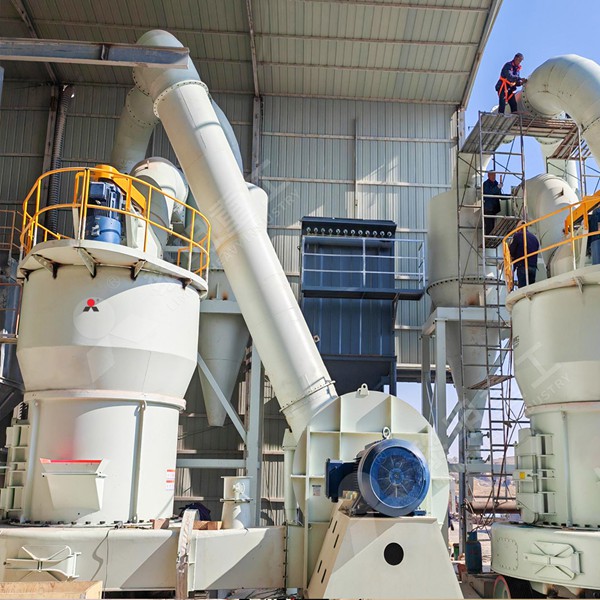
For larger plaster operations requiring 3-55 TPH capacity, the MTW European type trapezium mill represents a significant upgrade from traditional Raymond mills. It incorporates patented technology including bevel gear transmission, curved air ducts, and a multi-blade classifier that improves powder selection efficiency. The trapezium-shaped grinding roller and ring increase the grinding area, reducing energy consumption per ton of gypsum processed. Input size can reach 30-50 mm, allowing direct feeding from primary crushers without intermediate screening. The mill operates in a closed-loop system with a pulse dust collector, ensuring dust emissions stay within environmental regulations—a critical factor for modern plaster plants in urban or ecologically sensitive areas.
The working principle is as follows: large gypsum lumps are crushed to required size by a jaw crusher, then fed evenly into the mill via a variable-frequency belt feeder. The material is ground between the ring and rollers, then carried upward by airflow. Particles that pass the separator become finished product; coarser particles fall back for regrinding. The system recycles air through a dust collector, maintaining negative pressure for clean operation.
3. LM Vertical Roller Mill: For High-Capacity Integrated Lines
When a plaster plant is designed for capacities exceeding 10 T/H and aims for simultaneous drying and grinding, the LM vertical roller mill becomes the optimal choice. With capacity ranging from 10 to 400 T/H, it is suited for large-scale gypsum processing operations feeding multiple calcining kettles or rotary kilns. The mill integrates drying, grinding, powder selection, and pneumatic conveying into one unit. Hot gases from a heat source can be introduced into the mill to reduce the moisture content of gypsum from 8-12% down to the required level for calcination (typically below 1%). This eliminates the need for separate drying equipment, saving capital costs and floor space. The automatic electric control system maintains stable operation with minimal operator intervention, which is crucial for consistent plaster quality in continuous production.
4. MW Micro Powder Mill: For Specialty Fine Plaster
Some plaster applications—such as dental plaster, investment casting, or high-strength molding compounds—require superfine gypsum powder with fineness up to 3250 mesh (d97 ≤ 5 μm). The MW micro powder mill, based on advanced Swedish grinding technology, delivers this ultra-fine product. Its capacity of 0.5-25 T/H makes it suitable for niche markets where product purity and particle shape are paramount. The mill drives dozens of rollers to rotate against a raceway ring, with material fed centrally onto a rotating turnplate. Centrifugal force pushes the gypsum outward into the grinding zone, where it is crushed into micro-fine powder. An integral pulse precipitator ensures the process remains environmentally friendly.
Selecting the Right Mill: A Practical Approach
To choose the appropriate gypsum grinding mill for plaster production, consider these factors:
- Target Output Fineness: Standard building plaster requires 80-120 mesh (180-150 μm); specialty products may demand 325 mesh (44 μm) or finer. Raymond and MTW mills cover the standard range; MW mill handles micro-fine requirements.
- Capacity Requirements: Small plants (under 5 T/H) benefit from Raymond mills; medium plants (5-50 T/H) suit MTW mills; large industrial lines (above 50 T/H) should consider LM vertical roller mills.
- Moisture Content: Gypsum with humidity >6% requires drying during grinding—the LM vertical mill with hot gas injection is ideal. For dry gypsum (below 6%), Raymond or MTW mills work well.
- Power Consumption and Operating Cost: MTW and LM mills offer lower specific energy consumption (kWh per ton) than traditional Raymond mills, offsetting their higher initial investment through long-term savings.
- Environmental Compliance: All modern mills from LIMING can be equipped with pulse dust collectors to meet strict emission standards, though the LM and MTW series offer more compact, integrated dust management.
System Integration and After-Sales Support
A gypsum grinding mill for plaster production rarely operates in isolation. The typical system includes a jaw crusher for primary size reduction, a vibrating feeder for controlled material input, the mill itself, a classifier, a dust collector, a blower, and storage silos for the finished product. LIMING HEAVY INDUSTRY CO., LTD. provides complete turnkey solutions, from process design and equipment supply to installation and commissioning. Founded in 1987, the company operates from headquarters in Zhengzhou's HI-TECH Zone (80,000 m² facility) plus a 67,000 m² workshop in Shangjie. Over 30 years of manufacturing experience ensures robust construction and precision machining of mill components such as grinding rollers, rings, and classifier blades. The scientific research team continuously innovates, targeting the technological frontier of non-metallic mineral processing.
Conclusion
Gypsum grinding mills are the heart of any plaster production facility. Whether you choose the reliable Raymond mill for modest outputs, the efficient MTW trapezium mill for medium-scale operations, the high-capacity LM vertical mill for integrated drying and grinding, or the MW micro powder mill for ultra-fine specialties, the decision must align with your raw material characteristics, target plaster quality, and production scale. By partnering with an experienced manufacturer that offers a full spectrum of mills, research-driven innovation, and comprehensive after-sales service, you can achieve consistent plaster quality, lower operating costs, and compliance with environmental standards.
Frequently Asked Questions (FAQ)
- What is the typical fineness required for gypsum plaster used in wallboard manufacturing? For standard wallboard and building plaster, the fineness typically ranges from 80 mesh (180 μm) to 120 mesh (150 μm). Some manufacturers require 90% passing 100 mesh for optimal calcination and workability.
- Can the same grinding mill process both natural gypsum and synthetic gypsum (FGD gypsum)? Yes, mills such as the LM vertical roller mill and MTW trapezium mill are designed to handle both natural gypsum rock and synthetic gypsum (from flue gas desulfurization). However, adjustments to feeding system and drying gas temperature may be necessary due to differences in moisture content and particle shape.
- How often do the grinding rollers and rings need replacement in a gypsum mill? Replacement frequency depends on the gypsum's abrasiveness and the mill's operating hours. For Raymond mills processing typical gypsum, wear parts often last 1,000 to 3,000 hours. LM vertical mill rollers and table liners may last 3,000 to 8,000 hours. Regular inspection and hardfacing can extend service life.
- What dust collection system is recommended for a gypsum grinding mill to meet current environmental standards? Pulse-jet baghouse dust collectors are the standard recommendation. They can achieve outlet emissions below 20 mg/Nm³, compliant with most international regulations. The MTW and LM series mills from LIMING are equipped with integrated pulse dust collectors in their standard configuration.
- What is the typical power consumption for grinding gypsum to 100 mesh in an MTW mill? For an MTW European type trapezium mill processing gypsum to a fineness of 100 mesh (150 μm), the specific power consumption typically ranges from 18 to 25 kWh per ton of finished product, depending on feed size and moisture content. This is about 15-25% lower than traditional Raymond mills.
Note: All capacities and specifications mentioned are based on standard testing conditions. Actual performance may vary depending on gypsum characteristics, operating conditions, and system configuration.


