Published on March 14, 2025
Calcium carbonate grinding mills have become indispensable in the animal feed supplement industry, providing a cost-effective and reliable method to produce fine, consistent calcium carbonate powder that enhances bone development, eggshell quality, and overall livestock health. At Liming Heavy Industry, we manufacture a comprehensive range of grinding mills—including Raymond mills, vertical roller mills, European-type trapezium mills, micro powder mills, and ball mills—each engineered to meet specific feed-grade calcium carbonate fineness requirements. Our equipment ensures uniform particle size distribution, low moisture content, and high purity, which are critical for feed digestibility and nutritional absorption. With decades of expertise and continuous innovation, Liming Heavy Industry has established itself as a global leader in supplying grinding solutions for the feed supplement sector, supporting both small-scale farms and large industrial feed producers.
Calcium carbonate (CaCO₃) is a primary source of calcium in livestock feed, essential for poultry, swine, cattle, and aquaculture. The grinding process must achieve a particle size typically between 40 and 200 mesh (approximately 74 to 420 microns) for optimum bioavailability. Coarser particles are used for poultry grit, while finer powders are preferred for premixes and pelleted feeds. Our grinding mills are designed with advanced classification systems, enabling precise control over fineness, and they operate under strict environmental standards to minimize dust emissions. Whether you need high-capacity production or ultra-fine grinding, Liming Heavy Industry provides tailored solutions that integrate crushing, grinding, conveying, and dust collection into a seamless, energy-efficient system.
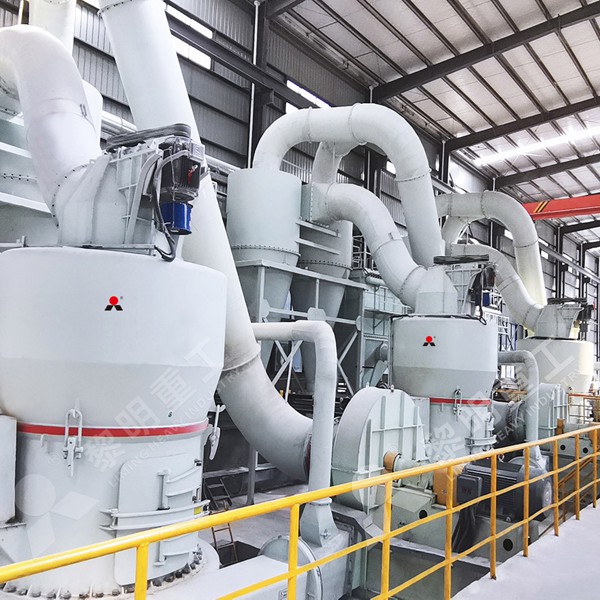
Why Calcium Carbonate Grinding Matters for Feed Supplements
Calcium is the most abundant mineral in the animal body, and its deficiency can lead to weak bones, reduced egg production, and metabolic disorders. The effectiveness of calcium carbonate as a feed supplement directly depends on the grinding quality. Oversized particles can cause segregation in feed mixes, while overly fine dust may lead to respiratory issues for animals and handling losses. Our Raymond mill, for instance, produces a fineness range of 613μm to 44μm (30 to 325 mesh), making it ideal for feed-grade calcium carbonate. The European-type MTW trapezium mill, with its patented technology, offers even higher throughput (3-55 TPH) and improved powder selection, ensuring that every batch meets the strict specifications required by feed manufacturers.
Liming Heavy Industry's grinding mills are built to handle calcium carbonate with a Mohs hardness of 3 and a moisture content below 6%. The closed-loop pneumatic system in our MTW mill recycles air and integrates a pulse dust collector, which not only complies with environmental regulations but also recovers fine product that would otherwise be lost. This efficiency translates into lower operational costs and higher yield for feed supplement producers.
Our Grinding Mill Portfolio for Feed Supplement Applications
We offer five primary mill types, each suited to different production scales and fineness requirements:
1. LM Vertical Roller Mill
The LM vertical mill integrates drying, grinding, and classification in a single unit. With a capacity range of 10-400 TPH, it is perfect for large-scale feed supplement plants. Its automatic control system ensures consistent product quality, while the innovative milling device reduces energy consumption by up to 30% compared to traditional ball mills. Feed material with an input size of 30-55mm is ground to the desired fineness in a single pass.
2. Raymond Mill
A time-tested workhorse, the Raymond mill is widely used for calcium carbonate processing in the feed industry. It handles non-flammable, non-explosive materials with Mohs hardness under 7 and humidity below 6%. Output fineness ranges from 613μm to 44μm, and capacity is 1.2-4.5 TPH. Its simple structure and low maintenance make it a favorite for medium-sized operations.
3. MTW European Type Trapezium Mill
The MTW mill is an upgrade of traditional Raymond and pendulum mills, featuring trapezium-shaped rollers and a high-efficiency classifier. It delivers capacities from 3 to 55 TPH with input sizes of 30-50mm. The system includes a jaw crusher, vibrating feeder, elevator, and pulse dust collector, creating a complete grinding line. It is particularly effective for heavy calcium carbonate processing and is equipped with a closed-circuit air system that enhances powder uniformity.
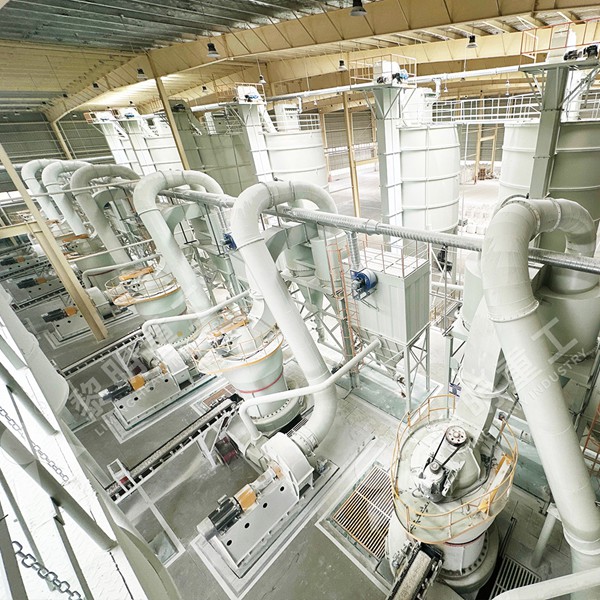
4. MW Micro Powder Mill
For applications requiring ultra-fine powder, the MW micro powder mill uses advanced Swedish grinding technology to achieve fineness up to d97 ≤ 5μm (approximately 3250 mesh). It is ideal for producing premium feed supplements where maximum calcium bioavailability is needed. Capacity is 0.5-25 TPH with an input size of 10-20mm. The pulse precipitator ensures a clean, green production process.
5. Ball Mill
The ball mill remains a reliable option for wet or dry grinding of calcium carbonate. It is widely used in large-scale beneficiation and construction but also serves feed plants that require consistent, high-volume output. With capacities from 0.65 to 50 TPH and an input size of ≤25mm, it uses steel balls to impact and grind material in a horizontal rotating chamber. Ladder or ripple liners improve grinding efficiency.
Working Principle and System Integration
All our grinding mills operate on the principle of material crushing between moving and stationary grinding elements. In a typical MTW grinding line, bulk calcium carbonate is first crushed by a jaw crusher to a size of 30-50mm. The material is then fed evenly via a variable-frequency belt feeder into the mill chamber, where it is ground between the ring and rollers. Upward air flow carries fine particles to the separator; those that do not meet the fineness specification fall back for re-grinding, while qualified powder is collected as final product. The air is continuously recycled, and the pulse dust collector removes any remaining dust, ensuring compliance with environmental standards.
We also offer customized solutions, such as adding a hammer crusher for smaller input sizes or integrating an elevator and hopper system for automated material handling. Our team works closely with clients to design a layout that maximizes floor space and minimizes manual intervention.
Quality and Innovation at Liming Heavy Industry
Founded in 1987, Liming Heavy Industry Co., Ltd. has grown into a modern joint-stock corporation integrating research, manufacturing, and sales. Our headquarters in Zhengzhou’s Hi-Tech Zone covers 80,000 m², with an additional workshop of 67,000 m² in Shangjie Industry Park. Over 30 years, we have adhered to modern scientific management and precision manufacturing. Our strategy focuses on scientific research, technological breakthroughs, and continuous improvement. We aim for the technological frontier of the grinding industry, enhancing overall innovation capacity.
We invite you to contact us for a consultation on the best calcium carbonate grinding solution for your feed supplement business. Our engineers can provide sample testing, layout design, and after-sales support to ensure your production runs smoothly and profitably.
Frequently Asked Questions (FAQ)
- What is the recommended fineness of calcium carbonate for poultry feed?
For poultry feed, calcium carbonate is typically ground to a fineness of 40-80 mesh (177-420 microns) for grit, and 100-200 mesh (74-149 microns) for incorporation into pelleted feeds. The exact specification depends on the target species and feed formulation. - Can the MTW mill handle moisture in calcium carbonate?
Yes, the MTW European Type Trapezium mill can process calcium carbonate with moisture content up to 6%. The integrated hot air system can further assist in drying during grinding if needed. - What is the power consumption of a Raymond mill for calcium carbonate grinding?
Power consumption varies based on capacity and fineness requirements. Our Raymond mill typically consumes 15-30 kWh per ton of calcium carbonate ground to 100 mesh. Actual figures depend on operational parameters and material characteristics. - Do you provide after-sales service and spare parts for feed supplement mills?
Absolutely. Liming Heavy Industry offers comprehensive after-sales support, including installation guidance, operator training, and a reliable supply of wear parts such as grinding rollers, rings, and classifiers. We have service centers in multiple countries. - How do I choose between a ball mill and an MTW mill for feed calcium carbonate?
For large-scale production (over 10 TPH) with moderate fineness requirements (100-200 mesh), the ball mill is cost-effective. For higher fineness (325 mesh or finer) and lower energy consumption per ton, the MTW trapezium mill is recommended. We can run material tests to help you decide.


