In the rubber industry, calcium carbonate (CaCO3) serves as a critical functional filler that enhances product strength, reduces production costs, and improves processing characteristics. The selection of an appropriate grinding mill for calcium carbonate is paramount to achieving the desired particle size distribution, purity, and surface treatment. Liming Heavy Industry Co., Ltd., with over three decades of expertise in manufacturing crushing and grinding equipment, offers a comprehensive range of mills including LM Vertical Roller Mill, Raymond Mill, MTW European Type Trapezium Mill, MW Micro Powder Mill, and Ball Mill. Each of these systems is engineered to meet the specific demands of rubber compounding, from coarse fillers for general-purpose rubber goods to ultra-fine powders for high-performance elastomers. This article provides an in-depth analysis of these milling technologies, their applications in calcium carbonate processing for rubber, and practical guidance for selecting the optimal equipment based on capacity, fineness, and operational efficiency.
Why Calcium Carbonate Matters in Rubber Production
Calcium carbonate is the most widely used mineral filler in the rubber industry, accounting for a significant portion of compound formulations. It improves dimensional stability, increases tear resistance, and enhances the surface finish of rubber products such as tires, hoses, seals, and conveyor belts. Moreover, it reduces the overall compound cost without compromising essential mechanical properties. However, the performance of calcium carbonate heavily depends on its particle size, morphology, and dispersibility. Grinding mills must deliver consistent fineness, low contamination, and high throughput to meet the rigorous standards of rubber manufacturers.
Liming Heavy Industry: A Trusted Partner for Grinding Solutions
Founded in 1987, Liming Heavy Industry Co., Ltd. has evolved into a modern joint-stock corporation integrating research, manufacturing, and sales. With its headquarters in the HI-TECH Industry Development Zone of Zhengzhou, covering 80,000 square meters, and an additional manufacturing workshop in Shangjie Industry Park spanning 67,000 square meters, the company possesses the infrastructure to produce large and medium-sized equipment. Over the past 30 years, Liming has adhered to modern scientific management, precision manufacturing, and continuous innovation, establishing itself as a leader in the domestic and international machinery industry. The company's strategy focuses on scientific research to improve product competitiveness, targeting technological frontiers to enhance overall innovation capability.
Grinding Mill Options for Calcium Carbonate in Rubber
LM Vertical Roller Mill
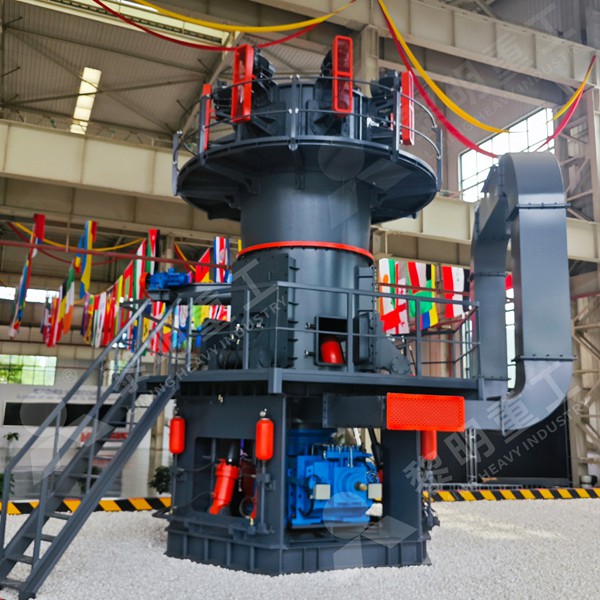
The LM Vertical Roller Mill integrates drying, grinding, powder selection, and conveying into a single system. It employs a new milling device and an automatic electric control system, ensuring stable operation and high efficiency. The mill is designed for capacities ranging from 10 to 400 T/H, with input sizes of 30-55 mm. While it is commonly used in cement, electricity, metallurgy, and chemical industries, it excels in processing non-metallic minerals like calcium carbonate for rubber applications. The LM mill produces a uniform particle size distribution, which is critical for consistent filler performance in rubber compounds. Its vertical design reduces floor space and energy consumption, making it an ideal choice for large-scale rubber manufacturing plants.
Raymond Mill
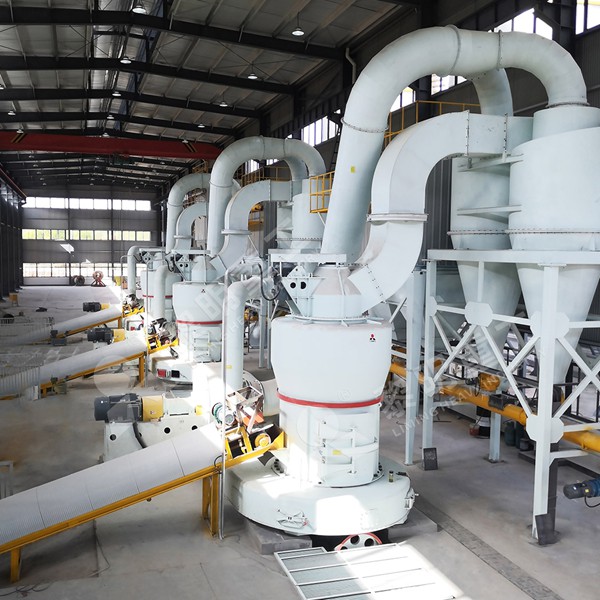
The Raymond Mill is a classic choice for calcium carbonate grinding, suitable for non-flammable and non-explosive materials with Mohs hardness under 7 and humidity less than 6%. Its output fineness ranges from 613 μm to 44 μm, offering flexibility for different rubber product requirements. With a capacity of 1.2-4.5 T/H and input size of 15-25 mm, this mill is particularly effective for medium-volume production. Applications include calcium carbonate crushing for rubber compounding, gypsum processing, power plant desulfurization, and pulverized coal preparation. The Raymond Mill's robust construction and simple operation make it a reliable workhorse for rubber industry fillers.
MTW European Type Trapezium Mill
As the upgrade product of traditional Raymond and Pendulum Mills, the MTW European Type Trapezium Mill incorporates patented technology for improved stability, productivity, and environmental protection. With a capacity of 3-55 TPH and input size of 30-50 mm, it is designed for large-scale non-metallic mineral powder making. Its working principle involves a closed-loop system where big lump materials are crushed by a jaw crusher, then fed into the mill via a variable-frequency belt feeder. Material is ground between rings and rollers, then classified by a separator; oversize particles return for regrinding, while fine particles are collected. The system includes pulse dust collectors that comply with national environmental standards, ensuring a clean production environment for rubber industry applications.
MW Micro Powder Mill
For ultra-fine calcium carbonate required in high-end rubber products such as thin-walled seals or medical-grade rubber, the MW Micro Powder Mill is the optimal solution. This medium-speed micro-grinding mill, based on advanced Swedish technology, achieves finished products up to d97 ≤ 5 μm, with adjustable fineness from 325 mesh to 3250 mesh. Its capacity ranges from 0.5 to 25 T/H, with an input size of 10-20 mm. The mill works by driving dozens of rollers against a raceway ring via a reducer and turnplates, crushing small material particles. The pulse precipitator ensures environmentally friendly operation. For rubber compounders seeking high brightness and specific surface area, the MW mill delivers exceptional performance.
Ball Mill
The Ball Mill is a versatile grinding plant that is key for milling after materials are crushed. It can handle various ores and materials, making it suitable for beneficiation, construction, and chemical industries, including rubber filler production. With a capacity of 0.65-50 T/H and input size ≤ 25 mm, the ball mill operates as a horizontal rotating device transmitted by an outer gear. Materials are transferred to the grinding chamber through a quill shaft, where ladder and ripple liners and steel balls impact and grind the materials. The ground material is discharged through a discharging board. This mill is ideal for grinding large volumes of calcium carbonate for rubber applications where moderate fineness is acceptable.
Selecting the Right Mill for Rubber Industry Needs
When choosing a calcium carbonate grinding mill for rubber manufacturing, consider the following factors:
- Fineness requirement: Coarse fillers (200-400 mesh) for general rubber products can be achieved with Raymond Mill or Ball Mill. For fine fillers (600-1250 mesh), MTW or LM mills are better. Ultra-fine (2500 mesh+) requires MW Micro Powder Mill.
- Capacity: Large-scale operations (>50 T/H) should consider LM Vertical Roller Mill; medium-scale (10-50 T/H) can use MTW; small-scale (<10 T/H) fits Raymond or Ball Mill.
- Energy efficiency: LM and MTW mills offer lower energy consumption per ton compared to Ball Mills.
- Environmental compliance: All Liming mills can be equipped with dust collectors to meet strict regulations.
- Material characteristics: For moist calcium carbonate, LM mill's integrated drying feature is advantageous.
Conclusion
Liming Heavy Industry's comprehensive portfolio of calcium carbonate grinding mills provides rubber manufacturers with tailored solutions for every production scale and quality requirement. From the rugged Raymond Mill to the advanced MW Micro Powder Mill, each machine ensures consistent particle size, high throughput, and operational reliability. With decades of engineering excellence and a commitment to innovation, Liming Heavy Industry remains a trusted partner in the global machinery market. For rubber industry professionals, investing in the right grinding mill translates directly into superior product quality and cost efficiency.
Frequently Asked Questions (FAQ)
1. What is the typical particle size of calcium carbonate used in rubber?
The ideal particle size depends on the rubber application. For general-purpose rubber products, 200-400 mesh (38-74 μm) is common. For high-performance rubber, finer sizes such as 600-1250 mesh (10-20 μm) or even ultra-fine 2500 mesh (5 μm) are used to improve reinforcement and dispersibility.
2. Can the same mill be used for both calcium carbonate and other minerals in the rubber plant?
Yes, many of Liming's mills, such as the Raymond Mill and MTW Mill, are versatile and can process various non-metallic minerals like talc, barite, or kaolin. However, it is important to clean the mill thoroughly between material changes to avoid cross-contamination that could affect rubber compound properties.
3. How does the moisture content of calcium carbonate affect the grinding process?
Moisture above 6% can cause material sticking and reduce grinding efficiency, especially in Raymond and Ball Mills. For such cases, Liming's LM Vertical Roller Mill with integrated drying capability is recommended, as it can handle materials with higher moisture while maintaining throughput.
4. What are the key maintenance considerations for these grinding mills in a rubber factory?
Regular maintenance includes checking roller and ring wear in Raymond/MTW mills, monitoring ball charge in Ball Mills, and inspecting separator blades. Lubrication of bearings, belt tensioning, and dust collector filter replacement are critical. Liming provides comprehensive manuals and after-sales support to ensure long equipment life.
5. Does Liming Heavy Industry provide custom solutions for calcium carbonate grinding in rubber applications?
Absolutely. Liming's engineering team can customize mill configurations, including variable-frequency drives, specific classifier designs, and dust collection systems, to match the exact fineness, capacity, and plant layout requirements of your rubber production line. Contact sales for a tailored proposal.


