When it comes to manufacturing high-quality putty, the selection of a calcium carbonate grinding mill is not just a technical decision—it is a strategic one. Putty formulations rely heavily on the fineness, purity, and consistency of calcium carbonate powder, which serves as the primary filler and structural component. A poorly ground calcium carbonate can lead to crack formation, poor adhesion, and an uneven finish, undermining the entire application. For decades, Liming Heavy Industry has been at the forefront of grinding mill innovation, offering a suite of machines that address every nuance of calcium carbonate processing for putty. From the robust Raymond Mill to the ultra-fine MW Micro Powder Mill, each solution is engineered to deliver precise particle size distribution, energy efficiency, and long-term reliability. This article presents a comprehensive overview of how to match the right mill to your putty production needs, drawing on our extensive field experience and over 30 years of manufacturing excellence. We will also walk through the working principles, capacity ranges, and application-specific advantages that make Liming mills the preferred choice for putty manufacturers worldwide.
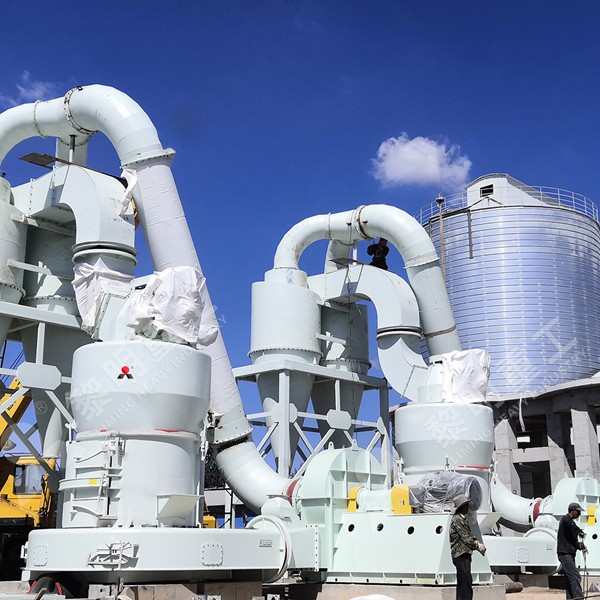
Why Calcium Carbonate Grinding Matters for Putty
Putty is a paste-like material used for sealing, filling, and smoothing surfaces before painting or finishing. Its performance hinges on the filler material—typically calcium carbonate—which must be ground to a specific fineness to ensure a smooth, non-cracking surface. If the calcium carbonate particles are too coarse, the putty will lack plasticity and adhesion; if too fine or inconsistent, the binder absorption becomes erratic, leading to shrinkage or blistering. The ideal particle size for putty-grade calcium carbonate usually falls in the range of 325 mesh (44 microns) to 800 mesh (18 microns), with a narrow distribution width. This requires a grinding mill that offers precise control over classification and does not introduce contamination. Moreover, the mill must operate efficiently over long shifts, as putty manufacturers often run continuous production cycles. Liming Heavy Industry's grinding mills, including the Raymond Mill and MTW European Type Trapezium Mill, are designed to meet these exacting standards, combining robust mechanical design with advanced air classification systems.
The Raymond Mill: A Workhorse for Standard Putty Grades
For many small to medium-scale putty producers, the Raymond Mill remains the go-to solution. It is a classic pendulum-type mill that has been refined over decades to offer reliable performance for materials with Mohs hardness under 7 and humidity below 6%. In calcium carbonate grinding, the Raymond Mill can produce a fineness ranging from 613µm to 44µm, meaning it comfortably covers the typical putty specification range. With a capacity of 1.2 to 4.5 tons per hour and an input size of 15–25mm, it is ideal for operations that require moderate throughput without excessive capital investment. The mill operates on the principle of rotating rollers pressing against a stationary ring, grinding the material by compression and shear. A built-in classifier ensures that only particles below the set cut size exit the grinding chamber, while oversized material is returned for further grinding. This closed-loop system minimizes waste and ensures uniform product quality. For putty producers who are scaling up from manual operations, the Raymond Mill offers a perfect balance of simplicity, durability, and cost-effectiveness.
MTW European Type Trapezium Mill: Precision and Productivity for Demanding Applications
When production volumes increase and quality requirements become more stringent, the MTW European Type Trapezium Mill comes into its own. This mill is the direct successor to the Raymond Mill and incorporates patented technologies that significantly improve grinding efficiency, energy consumption, and product fineness. With a capacity range of 3 to 55 tons per hour and an input size of 30–50mm, the MTW mill is suitable for larger putty manufacturing facilities that need to process hundreds of tons of calcium carbonate daily. Its trapezium-shaped grinding rollers and ring create a larger grinding surface area, leading to finer particles with less energy. The air classifier system is also more advanced, allowing for precise cut points between 80 mesh and 400 mesh. Additionally, the MTW mill features a pulse dust collector as standard, which not only meets environmental regulations but also recovers fine powder that would otherwise be lost. This is especially important for putty applications where even micron-sized variations can affect the paste rheology. The mill's automation system includes a variable-frequency belt feeder, enabling consistent feed rates and reducing operator intervention. For putty exporters or large-scale construction material suppliers, the MTW mill is a formidable asset.
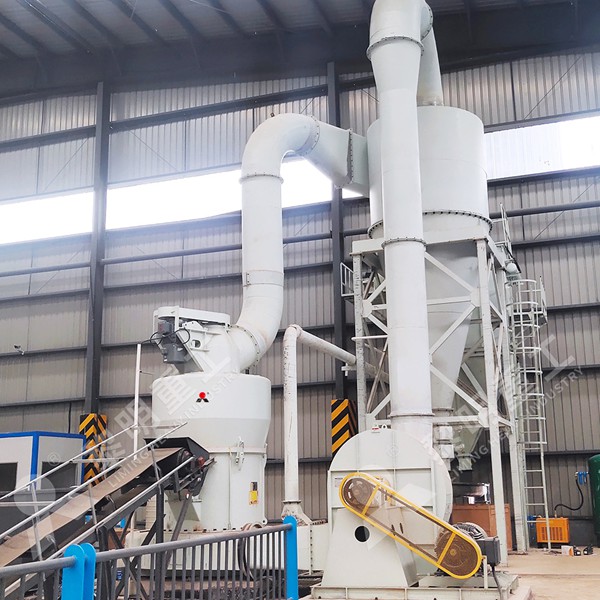
Micro Powder Grinding Mill: Ultra-Fine Calcium Carbonate for Specialized Putties
Not all putty is created equal. High-end architectural putties, automotive fillers, and industrial sealants often require calcium carbonate powders with a fineness of 800 mesh to 3250 mesh (d97 ≤ 5µm). For these specialized applications, the MW Micro Powder Mill is the ideal choice. This mill, which incorporates advanced Swedish grinding technology, is capable of producing ultra-fine powders while maintaining high throughput (0.5 to 25 tons per hour). Its working principle is distinct: a main shaft drives a turnplate, which rotates multiple rollers that press against a grinding ring. Small material crushed by a hammer crusher is fed into the mill, where centrifugal force distributes it evenly across the grinding raceway. The ultra-fine classification system ensures that only particles meeting the target fineness pass through, while coarse material is recirculated. For putty manufacturers targeting premium markets—for example, low-VOC putties or ultra-smooth finishes for high-gloss paints—the MW mill delivers the consistency and purity that differentiate a commodity product from a premium one. Moreover, the enclosed system and pulse precipitator guarantee a greener production process, which is increasingly important for companies seeking environmental certifications.
Ball Mill vs. Vertical Roller Mill: Matching the Application
While Raymond and MTW mills dominate the calcium carbonate grinding space, the Ball Mill and LM Vertical Roller Mill also have their place in putty production, particularly when the grinding circuit needs to handle larger feed sizes or when integrated drying is required. The Ball Mill, with a capacity of 0.65 to 50 tons per hour and input size of ≤25mm, is a proven technology that uses steel balls to impact and grind material. It is especially useful when the calcium carbonate is relatively hard or when the target fineness is coarser (e.g., 100–200 mesh). However, ball mills are generally less energy-efficient than vertical or roller mills and produce a broader particle size distribution. On the other hand, the LM Vertical Roller Mill offers combined drying, grinding, and classifying in a single unit, with capacity up to 400 tons per hour. It is best suited for large-scale operations that grind calcium carbonate along with other additives (e.g., slag or coal) or when moisture content in the feed is variable. For most putty manufacturers, however, the Raymond and MTW mills provide the best balance of fineness control, operating cost, and simplicity.
Choosing the Right Mill for Your Putty Business
The decision ultimately depends on your target market, production scale, and quality requirements. If you are a small workshop producing putty for local construction, a Raymond Mill with a capacity of 2–3 tons per hour will serve you reliably for years. If you are expanding to supply regional hardware chains, an MTW European Type Trapezium Mill will give you the flexibility to produce multiple grades of calcium carbonate from the same machine. And if you aim to enter the premium putty segment, the MW Micro Powder Mill is your gateway to ultra-fine powders that command higher margins. No matter which path you choose, Liming Heavy Industry provides comprehensive support—from site planning and installation to training and after-sales service. Our team understands that a grinding mill is not just a machine; it is the heart of your putty production line. That is why every mill we produce undergoes rigorous quality testing and is backed by a scientific research foundation that has kept us at the industry forefront for over three decades.
Frequently Asked Questions (FAQ)
1. What is the recommended fineness of calcium carbonate for putty production?
For general-purpose putty, a fineness of 325 mesh (44 microns) to 600 mesh (23 microns) is typical. For high-performance or ultra-smooth putties, fineness up to 1250 mesh (10 microns) or finer may be required. The mill should allow easy adjustment of the classifier to achieve these ranges consistently.
2. Can the same grinding mill handle both coarse and fine calcium carbonate for different putty grades?
Yes, mills like the MTW European Type Trapezium Mill and the MW Micro Powder Mill have adjustable classifier speeds and air flow rates. You can change the fineness setting within minutes to switch between, say, a 200-mesh filler for base coat putty and an 800-mesh powder for finishing putty, without changing the grinding media.
3. What is the typical power consumption of a calcium carbonate grinding mill for putty?
Power consumption varies by mill type and fineness. A Raymond Mill processing 2 tons per hour at 325 mesh typically consumes between 50–70 kWh per ton. An MTW mill at the same capacity might consume 40–55 kWh per ton due to higher efficiency. For precise numbers, we recommend a site-specific evaluation based on your material hardness and target output.
4. Do I need additional drying equipment if my calcium carbonate feed has moisture?
It depends on the mill. Standard Raymond and Ball Mills require feed moisture below 6%. If your calcium carbonate is slightly damp (e.g., from washing), you may need a separate dryer or use a vertical roller mill with integrated drying (like the LM series). For most putty operations, dry calcium carbonate is preferred to avoid agglomeration during grinding.
5. How do I maintain the grinding rollers and ring in a putty calcium carbonate mill?
Regular inspection of wear parts is critical. For Raymond and MTW mills, roller and ring life typically ranges from 2000 to 6000 operating hours depending on feed material hardness. We recommend checking the clearance between the roller and ring monthly, and replacing them when the grinding efficiency drops by 15% or more. Liming provides original spare parts and on-site maintenance guidance to minimize downtime.


