Published: October 10, 2023
In the flooring industry, the quality of raw materials directly dictates the final product's durability, appearance, and performance. Calcium carbonate, a naturally abundant mineral, serves as a fundamental filler and extender in various flooring applications, including PVC flooring, vinyl tiles, luxury vinyl planks (LVP), and epoxy coatings. The grinding process of calcium carbonate—transforming coarse limestone or marble into fine, uniform powder—is critical. A specialized calcium carbonate grinding mill for flooring ensures that the powder meets exacting standards for particle size, consistency, and purity. This article explores the role of calcium carbonate in flooring, the types of grinding mills suitable for this application, and key considerations for selecting the right equipment. Whether you are a flooring manufacturer, a raw material processor, or an engineer seeking to optimize your production line, understanding the capabilities of different grinding technologies will empower you to achieve superior results in your flooring products.
Why Calcium Carbonate is Crucial for Flooring
Calcium carbonate (CaCO₃) is the most common filler in the flooring industry, primarily because of its high whiteness, low cost, and ability to improve mechanical properties. In PVC and vinyl flooring, fine calcium carbonate powder enhances dimensional stability, reduces shrinkage, and improves impact resistance. It also acts as a reinforcing agent, increasing the hardness and abrasion resistance of the flooring surface. In epoxy and polyurethane flooring systems, calcium carbonate is used to adjust viscosity, improve flow characteristics, and reduce overall material costs. The particle size distribution of the powder is particularly important: finer particles (e.g., 325 mesh to 2500 mesh) provide better dispersion and surface smoothness, while coarser grades (e.g., 100-200 mesh) are used for texture or anti-slip properties. Therefore, selecting a grinding mill capable of producing a controllable and narrow particle size distribution is essential for consistent flooring quality.
Grinding Mill Options for Calcium Carbonate Flooring Applications
Our company, LIMING HEAVY INDUSTRY CO., LTD., offers a range of grinding mills designed to meet diverse production requirements for calcium carbonate processing. Founded in 1987, we have over three decades of experience in manufacturing large and medium-sized crushing and grinding equipment. Our headquarters in the HI-TECH Industry Development Zone of Zhengzhou, along with our second workshop in Shangjie Industry Park, allows us to produce high-quality machines with precision. Below are the most suitable mill types for flooring-grade calcium carbonate.
1. Raymond Mill
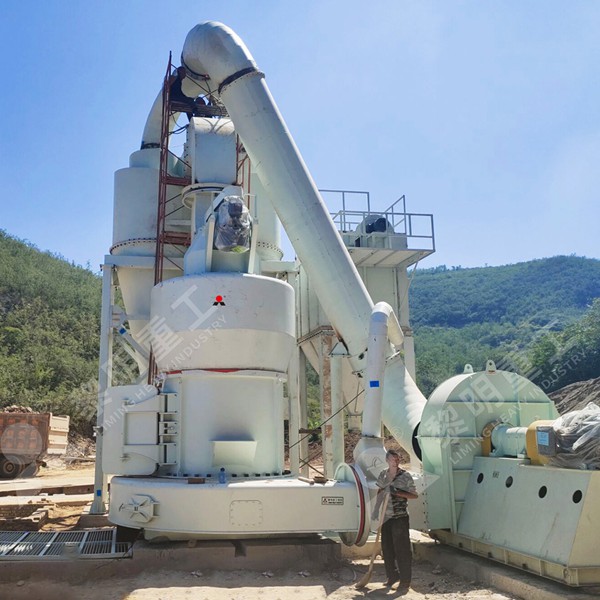
The Raymond Mill is a classic choice for processing non-flammable and non-explosive materials with Mohs hardness under 7 and humidity less than 6%. For calcium carbonate flooring applications, this mill typically delivers an output fineness between 613 μm and 44 μm (approximately 30 to 325 mesh). With a capacity range of 1.2-4.5 T/H and an input size of 15-25 mm, it is ideal for small to medium-scale operations where a moderate fineness is acceptable. The Raymond Mill is cost-effective and reliable, making it a popular entry-level solution for flooring manufacturers who need consistent, medium-fineness powder for standard vinyl or PVC products.
2. European Type Trapezium Mill (MTW Series)
As the upgrade of traditional Raymond and Pendulum mills, the MTW European Type Trapezium Mill features patented technology that boosts productivity, stability, and environmental performance. Its capacity ranges from 3 to 55 TPH, with input sizes up to 30-50 mm. The MTW mill excels in producing higher fineness (up to 600 mesh) and more uniform particles compared to the Raymond mill. For flooring applications requiring a smoother surface finish—such as luxury vinyl tiles or high-end epoxy coatings—the MTW mill is an excellent choice. Its closed-loop system, equipped with a pulse dust collector, ensures compliance with environmental standards while minimizing dust emissions. The working principle: large materials are crushed by a jaw crusher, then fed via a variable-frequency belt feeder into the mill, where material is ground between rings and rollers. Fine particles are separated by a classifier, with coarse particles returned for regrinding.
3. LM Vertical Roller Mill
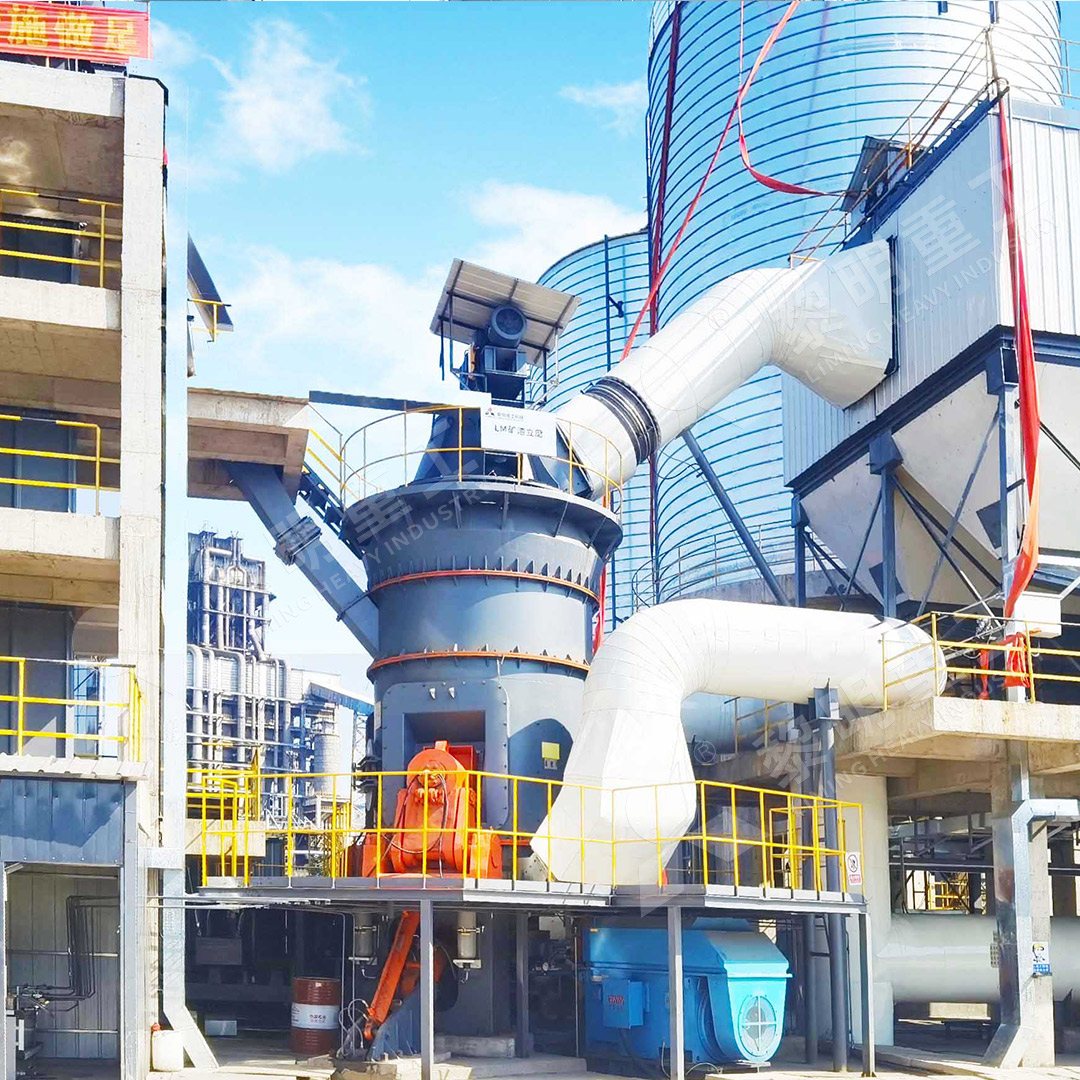
For large-scale calcium carbonate processing, the LM Vertical Roller Mill is a powerhouse. It integrates drying, grinding, powder selection, and conveying in one unit. With a capacity of 10-400 T/H and input sizes from 30-55 mm, it is suited for high-volume production lines. The LM mill produces a fine, consistent product suitable for both filler-grade and coating-grade calcium carbonate used in flooring. Its automatic electric control system ensures stable operation and precise particle size control (typically 200-400 mesh, but adjustable with classifier settings). This mill is especially beneficial for non-metallic mineral processing in the flooring industry, where large output and low energy consumption are key.
4. Micro Powder Grinding Mill (MW Series)
When ultra-fine calcium carbonate is required—for instance, in premium flooring formulations that demand a silky-smooth finish—the MW Micro Powder Mill is the best choice. Its medium-speed design, based on advanced Swedish grinding technology, can achieve fineness up to 3250 mesh (d97 ≤ 5μm). With a capacity of 0.5-25 T/H and input sizes of 10-20 mm, this mill is designed for superfine powder production. The working principle involves a main shaft driving a turnplate with dozens of rollers that rotate against a ring raceway. The ultra-fine powder produced by the MW mill enhances the gloss and feel of flooring products, making it popular for high-end applications where quality is paramount.
5. Ball Mill
The Ball Mill is a traditional but robust solution for calcium carbonate grinding. It is widely used in beneficiation and chemical industries due to its ability to grind a wide variety of materials. For flooring applications, ball mills are typically used for coarser to medium-fineness grinding (100-400 mesh). With a capacity ranging from 0.65 to 50 T/H and input sizes ≤25 mm, the ball mill is suitable for moderate production volumes. It operates on a horizontal rotating barrel with steel balls that impact and grind the material through centrifugal force. While less energy-efficient than vertical mills for fine grinding, the ball mill is valued for its simplicity and reliability in high-consistency applications.
Key Considerations When Choosing a Grinding Mill for Flooring Calcium Carbonate
- Fineness Requirements: Flooring products demand specific particle sizes. Standard vinyl flooring may need 200-400 mesh, while luxury vinyl or epoxy coatings may require 600-2500 mesh. Choose a mill that can achieve your target fineness without excessive energy use.
- Production Capacity: Calculate your daily or hourly throughput. Small mills like Raymond or MW series are ideal for low volumes, while LM vertical mills or large MTW units can handle high capacities for industrial-scale operations.
- Moisture Content: Calcium carbonate is usually dry, but some limestone feedstocks may have moisture. Mills with integrated drying capability (e.g., LM Vertical Mill) are advantageous in such cases.
- Environmental Compliance: Modern flooring manufacturing must adhere to strict dust and emission standards. All our mills can be equipped with pulse dust collectors and closed-loop systems to minimize pollution.
- Maintenance and Operating Costs: Consider power consumption, wear part lifespan, and ease of maintenance. For example, Raymond mills have lower upfront costs but may have higher per-ton wear costs compared to vertical mills.
Conclusion
Selecting the right calcium carbonate grinding mill for flooring applications is a strategic decision that impacts product quality, production efficiency, and overall profitability. From the cost-effective Raymond Mill to the ultra-fine MW Micro Powder Mill, and from the high-capacity LM Vertical Roller Mill to the versatile MTW European Type Trapezium Mill, our company offers solutions tailored to every scale and requirement. With over 30 years of experience, a strong focus on R&D, and a commitment to technological innovation, we are equipped to help you optimize your calcium carbonate processing line. Whether you are producing standard PVC flooring or luxury epoxy surfaces, the right grinding mill will ensure your products meet market demands for durability, appearance, and consistency.
Frequently Asked Questions (FAQ)
1. What is the best grinding mill for producing calcium carbonate for PVC flooring?
For PVC flooring, a fineness of 200 to 400 mesh is typically sufficient. The European Type Trapezium Mill (MTW series) is an excellent choice due to its high productivity, stable performance, and ability to achieve uniform particle size within this range. For higher output, the LM Vertical Roller Mill is also suitable.
2. Can a single mill produce different fineness levels for different flooring products?
Yes, mills like the MTW and LM series have adjustable classifiers that allow you to change the fineness by modifying the rotational speed of the separator wheel. However, switching between very different fineness levels (e.g., from 200 mesh to 2500 mesh) may require mill adjustments or even a different mill type for optimal efficiency.
3. What is the role of the pulse dust collector in calcium carbonate grinding?
The pulse dust collector captures fine dust particles generated during the grinding process, preventing them from entering the atmosphere. This ensures compliance with environmental regulations, maintains a clean work environment, and also recovers valuable fine powder that can be used in high-end flooring formulations.
4. How does input material size affect the grinding process?
Larger input sizes require more energy to break down and may reduce mill throughput. It is recommended to pre-crush the calcium carbonate to the mill's specified input size (e.g., 15-50 mm depending on the mill). Using a jaw crusher before the mill ensures optimal performance and lower operational costs.
5. What maintenance is required for a calcium carbonate grinding mill used in flooring?
Regular maintenance includes inspecting and replacing wear parts such as grinding rollers, rings, and classifier blades. Lubrication of bearings and gearboxes should follow the manufacturer's schedule. Additionally, the pulse dust collector's filters should be cleaned or replaced periodically. Our technical support team provides detailed maintenance manuals and on-site assistance to ensure your mill operates reliably.


