Published: October 26, 2023
In the adhesive manufacturing industry, calcium carbonate serves as a critical filler and extender, enhancing viscosity, improving mechanical strength, and reducing production costs. The particle size and distribution of calcium carbonate directly influence the adhesive’s performance—ranging from bonding strength to application smoothness. A high-efficiency calcium carbonate grinding mill is therefore indispensable for achieving the precise fineness and uniformity required in modern adhesive formulations. Liming Heavy Industry, with over three decades of expertise in crushing and grinding equipment, offers a comprehensive range of mills—from Raymond mills to vertical roller mills and micro powder mills—each engineered to meet the specific demands of calcium carbonate processing for adhesives. This article explores the technical nuances, application benefits, and selection criteria of calcium carbonate grinding mills tailored for the adhesive sector, drawing on Liming’s proven technologies and global installations.
The Role of Calcium Carbonate in Adhesive Manufacturing
Calcium carbonate (CaCO₃) is one of the most widely used fillers in the adhesive industry. It is prized for its low cost, white color, and ability to improve the rheological properties of adhesives. When ground to a fine powder—typically between 325 mesh (44 μm) and 1250 mesh (10 μm)—calcium carbonate enhances the adhesive’s thixotropy, making it easier to apply while preventing sagging on vertical surfaces. Moreover, it contributes to the adhesive’s opacity and helps control shrinkage during curing.
However, not all calcium carbonate powders are created equal. The performance of an adhesive depends heavily on the particle size distribution (PSD) and the shape of the filler particles. A narrow PSD with consistent fineness ensures uniform dispersion in the adhesive matrix, reducing the risk of agglomeration and sedimentation. This is where a dedicated calcium carbonate grinding mill becomes a game-changer. By precisely controlling the grinding parameters—such as roller pressure, classifier speed, and airflow—manufacturers can produce calcium carbonate powder with a d97 particle size as fine as 5 μm, meeting the highest quality standards for premium adhesives.
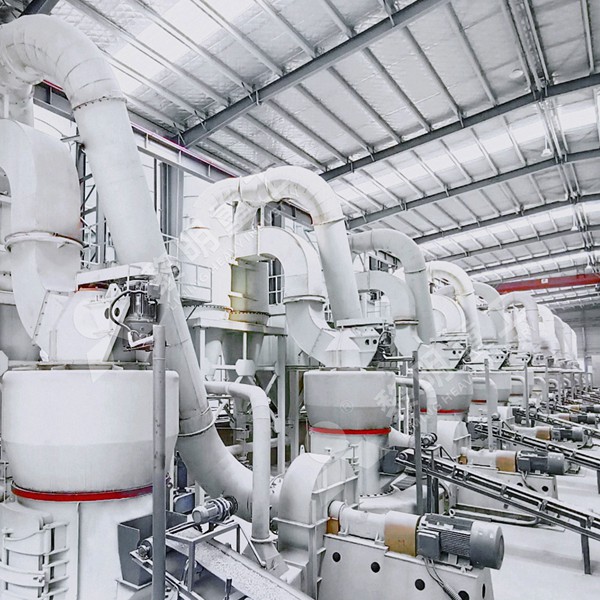
Liming’s Grinding Mill Solutions for Calcium Carbonate
Liming Heavy Industry offers several mill models that are ideally suited for calcium carbonate grinding in adhesive applications. Each model brings unique advantages depending on the production scale, target fineness, and energy efficiency requirements.
1. MTW European Type Trapezium Mill
The MTW series is an upgrade of traditional Raymond and pendulum mills, incorporating patented technology for higher productivity and lower energy consumption. It is particularly effective for grinding calcium carbonate to a fineness of 80–325 mesh, which covers the majority of adhesive filler applications. The mill features a bevel gear drive system that reduces power loss, and its integral classifier ensures a sharp PSD. For adhesive producers seeking a balance between throughput (3–55 TPH) and fineness control, MTW is a reliable workhorse.
2. Raymond Mill
Liming’s Raymond mill remains a popular choice for small to medium-scale adhesive operations. With a capacity of 1.2–4.5 TPH and an output fineness range of 613–44 μm, it is cost-effective for processing non-flammable, non-explosive materials like calcium carbonate (Mohs hardness ≤7). The mill’s centrifugal roller design provides consistent grinding pressure, and its closed-circuit system minimizes dust emissions. For adhesive plants where space and capital are limited, the Raymond mill offers an accessible entry point to in-house powder production.
3. MW Micro Powder Mill
For adhesive manufacturers targeting superfine calcium carbonate (d97 ≤5 μm, corresponding to 1250–3250 mesh), the MW Micro Powder Mill is the premier solution. It incorporates Swedish grinding technology and a multi-roller suspension design that achieves ultra-fine grinding with minimal heat generation. The built-in pulse dust collector ensures the production process meets stringent environmental regulations. This mill is ideal for high-performance adhesives used in automotive, aerospace, or electronic applications, where particle size precision directly translates to product reliability.
4. LM Vertical Roller Mill
The LM vertical mill is engineered for large-scale adhesive production lines, with capacities reaching 400 TPH. It integrates drying, grinding, and classification in a single unit, making it exceptionally space-efficient. The automatic electric control system allows operators to adjust fineness on the fly, adapting to different adhesive formulations without interrupting production. For calcium carbonate processing, the LM mill’s grinding rollers and table are designed to handle abrasive materials, ensuring long service life and consistent quality.
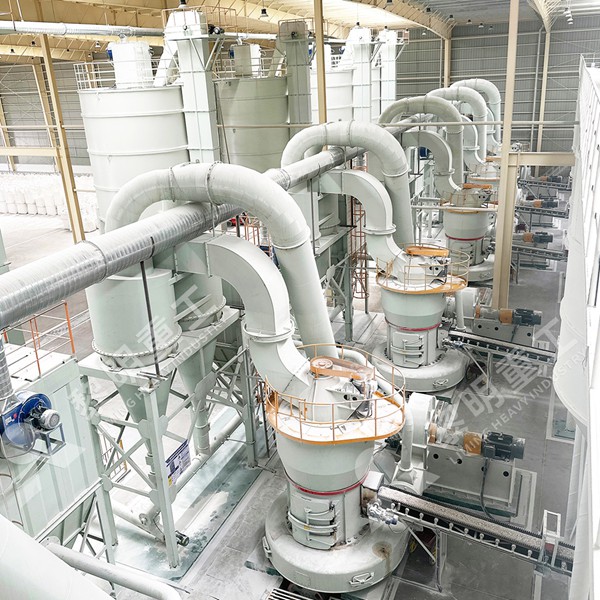
Key Considerations When Selecting a Calcium Carbonate Grinding Mill
Choosing the right grinding mill for adhesive-grade calcium carbonate involves several technical factors:
- Target Fineness: Adhesive fillers typically require 200–800 mesh (74–18 μm). For specialty adhesives, finer grades (up to 3250 mesh) may be necessary. Match the mill’s fineness range to your end product specifications.
- Moisture Content: Calcium carbonate from quarries often contains 2–5% moisture. Mills with integrated drying capabilities, such as the LM vertical mill, can handle this without pre-processing.
- Hardness and Abrasiveness: CaCO₃ has a Mohs hardness of 3, which is relatively soft. However, impurities like silica can increase wear. Choose mills with abrasion-resistant materials (e.g., high-chrome rollers) to minimize downtime.
- Production Capacity: Small adhesive shops may require 1–5 TPH, while large industrial plants need 50 TPH or more. Liming offers scalable solutions from 0.5 TPH micro mills to 400 TPH vertical mills.
- Environmental Compliance: Modern adhesive plants must adhere to dust emission limits. Liming’s mills are equipped with pulse jet bag filters or electrostatic precipitators to ensure clean operation.
Case Study: Upgrading an Adhesive Plant with Liming MTW Mill
A leading European manufacturer of water-based adhesives faced quality issues due to inconsistent calcium carbonate particle size. Their existing ball mill produced a broad PSD, causing variation in adhesive viscosity and settling. After evaluating several options, they installed a Liming MTW175 European Trapezium Mill. The results were immediate: the fineness of the ground calcium carbonate stabilized at 200 mesh with a d90 value of 75 μm, reducing adhesive batch rejection rates by 40%. The MTW mill’s energy consumption dropped by 25% compared to the old ball mill, and the closed-loop pneumatic system eliminated dust leakage. The plant now produces over 20,000 tons of adhesive annually with consistent quality.
Working Principle in Adhesive Context
Understanding how a calcium carbonate grinding mill operates helps adhesive manufacturers optimize their processes. Taking the MTW mill as an example: raw calcium carbonate lumps (30–50 mm) are first crushed by a jaw crusher. The crushed material is then fed into the mill via a variable-frequency belt feeder, ensuring a steady, controllable feed rate. Inside the grinding chamber, rollers press against a rotating grinding ring, pulverizing the material to the desired fineness. An airstream carries the fine particles upward to a classifier, where oversized particles are returned for regrinding. The acceptable fines pass through to a cyclone or bag filter for collection. The entire system operates under negative pressure, preventing dust from escaping.
For adhesive applications, the classifier speed and airflow can be fine-tuned to achieve the exact PSD required for a specific adhesive type—whether it’s a construction adhesive needing coarser filler for gap-filling or a packaging adhesive demanding superfine powder for smooth spreading.
Future Trends: Sustainability and Smart Grinding
The adhesive industry is moving toward greener formulations, with bio-based adhesives and low-VOC products gaining market share. Calcium carbonate grinders must adapt by offering better energy efficiency and reduced carbon footprint. Liming is investing in smart grinding technologies, including IoT-enabled sensors that monitor roller temperature, vibration, and motor load in real time. These systems provide predictive maintenance alerts and optimize grinding parameters automatically, minimizing waste and energy use. Additionally, the use of recycled calcium carbonate from industrial waste streams is on the rise; mills like the LM vertical mill, with its robust construction, can handle such materials without compromising output quality.
In conclusion, the calcium carbonate grinding mill is not merely a piece of equipment but a strategic asset for adhesive manufacturers. By selecting the right mill from Liming Heavy Industry’s portfolio—whether it’s the versatile MTW series, the cost-effective Raymond mill, or the ultra-fine MW micro mill—producers can achieve superior product consistency, operational efficiency, and long-term cost savings. As adhesive technologies evolve, partnering with a mill manufacturer that prioritizes innovation and reliability ensures that your grinding process remains a competitive advantage.
FAQ
- What fineness of calcium carbonate is typically required for adhesives?
Most adhesive applications use a fineness range of 200–800 mesh (74–18 μm). For high-performance or specialty adhesives, finer grades up to 1250 mesh (10 μm) or even d97 ≤5 μm may be specified. Always test with your formulation to optimize. - Can Liming’s grinding mills handle wet calcium carbonate?
Yes, certain models like the LM vertical roller mill integrate drying within the grinding chamber, allowing them to process materials with moisture content up to 10%. For other mills, pre-drying is recommended if the moisture exceeds 5%. - How does the choice of grinding mill affect adhesive quality?
The mill’s particle size distribution control directly impacts filler uniformity. A mill with a precise classifier ensures narrow PSD, leading to stable viscosity, improved dispersion, and reduced settling in the adhesive product. Inconsistent grinding can cause batch-to-batch variation. - What is the typical maintenance schedule for a calcium carbonate grinding mill?
Routine checks (daily/weekly) include inspecting lubrication levels, wear on grinding rollers/rings, and filter bag condition. Major overhauls depend on operating hours, but Liming designs its mills for extended intervals—typically 2,000–4,000 hours between roller replacements, depending on material abrasiveness. - Is it possible to switch between different calcium carbonate grades without stopping production?
With Liming’s MTW and LM mills equipped with automatic control systems, operators can adjust classifier speed and feed rate while the mill is running to change output fineness within a certain range. For major grade changes (e.g., from 200 mesh to 800 mesh), a brief stabilization period is needed.


