Published: October 26, 2023
In the competitive landscape of industrial mineral processing, a large output calcium carbonate grinding plant represents the pinnacle of engineering capability, merging high-capacity throughput with stringent environmental compliance and operational reliability. Such a plant is not merely a collection of machines; it is an integrated system designed to transform raw limestone or marble into finely ground calcium carbonate powder used across paper, paint, plastics, construction, and agriculture industries. At the core of these installations are advanced grinding mills—ranging from vertical roller mills and European trapezium mills to ball mills and micro powder mills—each meticulously selected based on feed size, required fineness, and production volume. Modern large-scale plants emphasize automation, energy efficiency, and closed-loop dust collection to minimize environmental impact while maximizing uptime. This article explores the critical components, operational principles, and selection considerations for building a high-capacity calcium carbonate grinding plant, drawing on decades of expertise from industry leader Liming Heavy Industry, a manufacturer with a legacy of innovation since 1987.
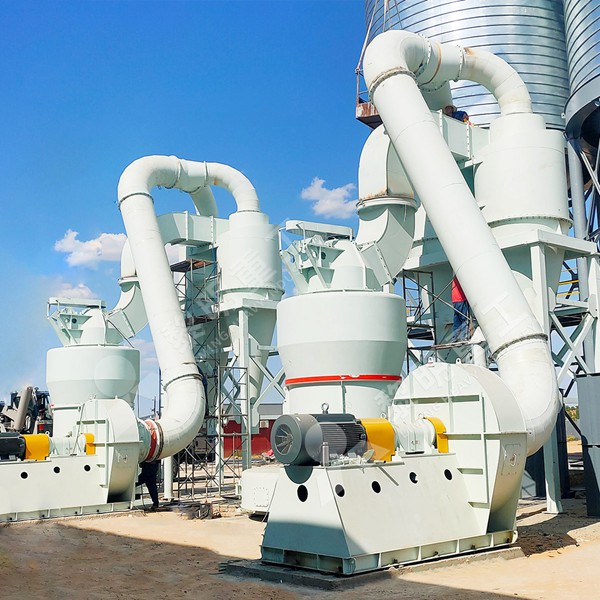
Core Components of a High-Capacity Grinding Plant
A large output calcium carbonate grinding plant typically comprises several key subsystems: primary crushing, feeding, grinding, classification, dust collection, and product storage. The process begins with a jaw crusher reducing oversized limestone boulders to a manageable feed size—typically 30–50 mm for most mills. A variable-frequency belt feeder then delivers the material evenly into the grinding chamber, ensuring consistent load and preventing overloading. The heart of the plant is the mill itself, which must be matched to the target fineness and capacity. For instance, the LM Vertical Roller Mill from Liming Heavy Industry offers capacities from 10 to 400 T/H with input sizes up to 55 mm, making it ideal for large-scale operations. Its integrated drying, grinding, and classifying functions reduce the need for separate equipment, simplifying the plant layout. Similarly, the MTW European Type Trapezium Mill—an upgrade of traditional Raymond mills—provides capacities of 3–55 T/H and excels in producing powders for limestone desulfurization and heavy calcium carbonate processing. For ultra-fine requirements down to d97 ≤ 5 μm, the MW Micro Powder Mill achieves capacities of 0.5–25 T/H using advanced Swedish grinding technology.
Working Principles and Operational Flow
Understanding the working principle of each mill type is crucial for optimizing plant performance. In the MTW European Type Trapezium Mill, material is ground between rollers and a rotating ring; finer particles are carried upward by an air stream, with oversized particles falling back for regrinding. The system is closed-loop: air from the separator is recycled via a fan, and a pulse dust collector ensures emissions stay within environmental standards. In contrast, the Ball Mill—a horizontal rotating device—uses steel balls lifted by centrifugal force to impact and grind material against liners. It handles capacities from 0.65 to 50 T/H and is favored for its simplicity and ability to grind a wide range of materials including cement and ores. The LM Vertical Mill uses a unique vertical arrangement where the grinding table rotates and rollers press material against it; hot gas simultaneously dries and conveys the product. This design is particularly efficient for high-moisture materials and large particle sizes. Regardless of the mill, the system is controlled by an automatic electric control system that monitors feed rate, temperature, pressure, and product fineness, allowing operators to adjust parameters in real time for consistent quality.
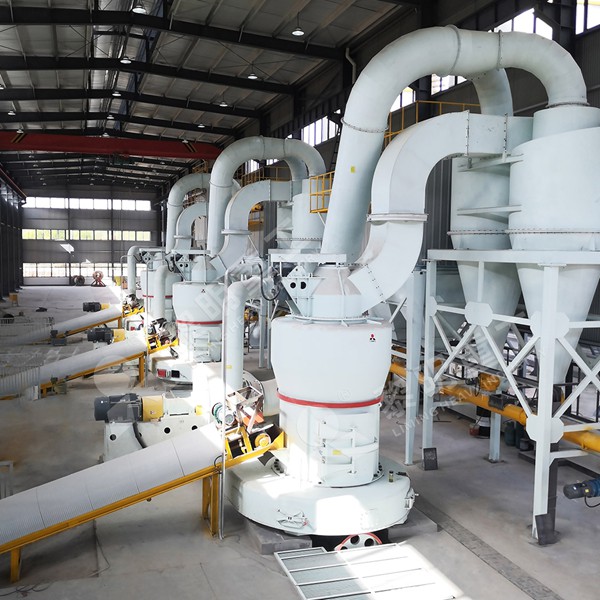
Factors Driving Selection of a Large Output Plant
Choosing the right configuration for a high-capacity calcium carbonate grinding plant depends on several technical and economic factors. Feed material characteristics—including hardness (Mohs scale), moisture content (ideally below 6%% for most mills), and abrasiveness—dictate the mill type and liner material. For non-metallic minerals like calcium carbonate (Mohs 3), both Raymond mills and vertical mills are suitable, but output requirements push toward vertical mills for capacities above 50 T/H. Fineness requirements also play a role: if the target is 200 mesh (74 μm) for industrial fillers, a MTW or LM mill suffices; for superfine grades like 1250 mesh (10 μm), an MW Micro Powder Mill is necessary. Energy consumption per ton, maintenance frequency, and spare parts availability further influence decisions. Liming Heavy Industry’s nearly 40 years of manufacturing expertise means that plants can be tailored with specific auxiliary equipment—such as linear screens, bucket elevators, and pulse dust collectors—to match local conditions. The company’s dual manufacturing bases in Zhengzhou and Shangjie, covering over 147,000 m², ensure a robust supply chain and quality control, reinforcing its position as a domestic and overseas machinery leader.
Environmental and Operational Considerations
Modern large output grinding plants must comply with increasingly stringent environmental regulations. The integrated pulse dust collector in mills like the MTW and MW series captures fine particles during grinding and conveying, preventing air pollution and enabling dust-free operation. Additionally, the closed-loop air circulation minimizes energy waste and reduces the plant’s carbon footprint. Noise enclosures, vibration dampening mounts, and soundproofing for motors and fans are often specified to meet workplace sound level limits. From an operational standpoint, these plants are designed for continuous 24/7 operation with minimal downtime. Automatic lubrication systems, wear-part monitoring sensors, and remote diagnostic capabilities help maintain high availability. Robust after-sales support—including on-site installation, commissioning, and training provided by manufacturers like Liming—ensures that plant operators can quickly resolve issues and maintain optimal performance.
Conclusion
Building a large output calcium carbonate grinding plant is a complex but rewarding endeavor that requires careful integration of milling technology, environmental controls, and automation. By selecting the appropriate mill type—whether a high-capacity LM Vertical Mill for massive throughput, an MTW Trapezium Mill for balanced efficiency, or a specialized MW Micro Powder Mill for ultra-fine products—operators can achieve the desired particle size distribution and production rates. With a foundation of decades of engineering innovation and a commitment to scientific research, Liming Heavy Industry continues to deliver grinding solutions that meet the evolving needs of the global mineral processing market. As industries demand higher purity, finer powders, and lower environmental footprints, the plant designs of today are poised to set new benchmarks for tomorrow.
Frequently Asked Questions (FAQ)
1. What is the typical capacity range for a large output calcium carbonate grinding plant?
Depending on the mill type, capacities can range from 0.5 T/H for micro powder mills to 400 T/H for vertical roller mills, with most large-scale plants operating between 20 T/H and 200 T/H.
2. Which mill is best for producing coarse calcium carbonate powder (100–200 mesh)?
The MTW European Type Trapezium Mill or Raymond mill are well-suited for coarse to medium fineness, with capacities up to 55 T/H and easy fineness adjustment.
3. How does a large grinding plant ensure environmental compliance?
Closed-loop air systems, pulse dust collectors with high filtration efficiency, and soundproofing measures help meet emission and noise regulations. Proper selection of bag filters and mist eliminators is critical.
4. Can a single plant process both dry and wet calcium carbonate?
Most grinding mills in large output plants are designed for dry processing. Wet grinding typically requires a different setup, such as a slurry mill or ball mill with water addition, and separate drying stages.
5. What is the typical lead time for designing and commissioning a large output grinding plant?
Lead time varies based on plant size and customization, but typically ranges from 4 to 12 months, including engineering, manufacturing, shipping, installation, and commissioning phases.


