In the sealant manufacturing industry, the quality of calcium carbonate filler directly determines the product's viscosity, adhesion, thixotropy, and overall performance. A specialized calcium carbonate grinding mill for sealant must deliver ultra-fine particle size distribution, consistent brightness, and controlled moisture content—all while maintaining high throughput and energy efficiency. LIMING HEAVY INDUSTRY CO., LTD., a global leader in crushing and grinding equipment since 1987, offers a comprehensive range of mills engineered to meet the stringent requirements of sealant production. From our flagship MTW European Type Trapezium Mill and MW Micro Powder Mill to the versatile Raymond Mill and Ball Mill, each system is designed to process calcium carbonate with precision down to d97 ≤ 5μm. By integrating advanced automation, environmental protection systems, and decades of metallurgical expertise, our solutions empower sealant manufacturers to achieve superior product consistency while reducing operational costs. This article explores the technical advantages, selection criteria, and practical applications of our grinding technologies in the sealant industry.
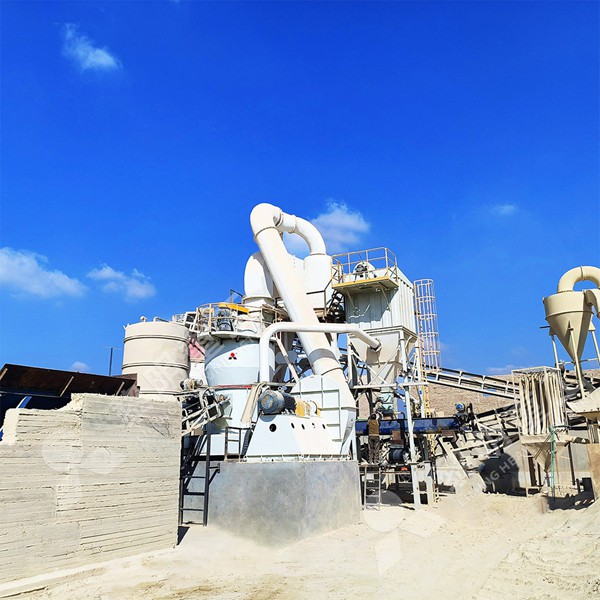
Why Particle Size Matters in Sealant Applications
Calcium carbonate (CaCO₃) is the most widely used mineral filler in sealants, accounting for up to 60-70% of the formulation by weight. Its role extends beyond simple bulking—it controls rheology, improves mechanical strength, and reduces raw material costs. However, suboptimal grinding can introduce oversize particles that cause nozzle clogging, poor surface finish, or uneven curing. For premium sealants, the target fineness typically ranges from 5 to 25 microns (equivalent to 500-2500 mesh), with a narrow particle size distribution. Our MW Micro Powder Mill achieves d97 ≤ 5μm, making it ideal for high-end architectural and automotive sealants where smoothness and precision are non-negotiable. The MTW European Type Trapezium Mill, with capacities from 3 to 55 TPH, offers an excellent balance for medium to large-scale operations requiring consistent 325-800 mesh product. Each mill in our portfolio is designed to minimize grinding media contamination and preserve the whiteness of calcium carbonate—critical for light-colored sealants.
LIMING Grinding Mill Technologies for Calcium Carbonate
1. MW Micro Powder Mill – Ultra-Fine Precision
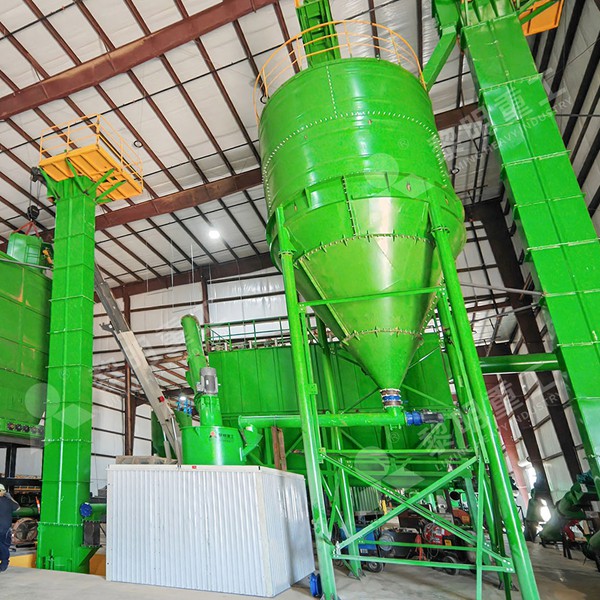
For sealant producers targeting top-tier performance, the MW Micro Powder Mill represents the pinnacle of superfine grinding. Developed through collaboration with Swedish grinding technology experts, this mill incorporates a medium-speed micro-grinding mechanism that reduces material to d97 ≤ 5μm (3250 mesh maximum). The key innovation lies in its multi-stage classification system: the rotating separator ensures that only particles meeting the cut point pass through, while oversize material returns for regrinding. This closed-loop design guarantees uniformity batch after batch. Practical applications include silicone sealants, polyurethane sealants, and hybrid polymer sealants where fillers must be invisible to the naked eye after curing. The pulse dust collector integrated into the system not only meets stringent environmental regulations but also recovers product that would otherwise be lost.
2. MTW European Type Trapezium Mill – Heavy-Duty Production
The MTW series is the evolution of traditional Raymond and pendulum mills, designed for large-scale calcium carbonate processing. Its trapezium-shaped grinding roller and ring create a wedge effect that maximizes crushing efficiency while reducing energy consumption per ton. The integrated variable-frequency belt feeder ensures precise material input, preventing mill overload and maintaining stable product fineness. For sealant factories producing 10-50 tons of filler daily, the MTW mill offers a proven solution with low maintenance requirements. The system's enclosed air circulation (blower, separator, and pipe network) keeps moisture and dust under control, which is vital for sealant-grade calcium carbonate that must maintain less than 0.5% moisture content. Limestone desulfurization applications in power plants have validated its durability, but the same robustness translates directly to non-metallic mineral grinding for sealants.
3. Raymond Mill – Proven Reliability
LIMING's Raymond Mill remains a workhorse for many sealant manufacturers. Suitable for materials under Mohs hardness 7 and humidity below 6%, it processes calcium carbonate to a fineness range of 613μm to 44μm (30-325 mesh). While not as fine as the MW or MTW mills, Raymond Mill excels in producing standard-grade filler for general-purpose sealants, caulks, and mastics. Its simple mechanical design—with a rotating grinding roller and stationary ring—ensures easy operation and low spare parts costs. For small to medium enterprises (SMEs) just entering the sealant market, a Raymond Mill with a capacity of 1.2-4.5 T/H provides a capital-efficient entry point.
4. Ball Mill and Others – Versatility
For operations requiring both dry and wet grinding, the Ball Mill offers extreme versatility. While less energy-efficient than vertical roller mills for fine grinding, it remains standard for pre-grinding or when combined with classifiers to produce specific particle distributions. Our ball mill can handle feed sizes up to 25mm and outputs 0.65-50 T/H. Some sealant manufacturers use a two-stage approach: a jaw crusher to reduce run-of-mine ore to 20mm, then the ball mill for primary grinding, followed by a micro powder mill for final fineness. This hybrid approach is common in regions where raw material variations require flexible processing. Additionally, the LM Vertical Roller Mill (10-400 T/H) is ideal for large mining operations supplying multiple sealant plants, thanks to its integrated drying, grinding, and selection capabilities.
System Integration and Environmental Compliance
Every LIMING grinding mill for calcium carbonate operates within a complete system: jaw crusher → vibrating feeder → mill → separator → dust collector → air blower → finished product silo. The variable-frequency drives on feeders and separators allow operators to adjust fineness on-the-fly without mechanical changes. All systems meet or exceed national environmental protection standards, with pulse jet bag filters capturing >99.9% of particulate matter. For sealant manufacturers facing increasing regulatory pressure, this compliance reduces permitting delays and community relations issues. Our research team continuously innovates—recent developments include energy-saving inverter technology for mill main drives and wear-resistant alloy materials that extend roller and ring life by 30% compared to industry averages.
Selecting the Right Mill for Your Sealant Line
Choosing between MW, MTW, Raymond, or Ball Mill depends on three factors: target fineness, throughput requirement, and budget. For premium sealants (e.g., structural glazing, sanitary sealants) requiring 5-10μm filler, MW Micro Powder Mill is the only choice. For industrial sealants (e.g., construction joints, automotive) where 10-50μm is acceptable, MTW or Raymond mills offer better cost per ton. Our engineering team provides free material testing to determine the optimal mill configuration based on your raw calcium carbonate's hardness, moisture, and abrasiveness. With over 30 years of data from 10,000+ installations worldwide, we can simulate your production scenario before you invest.
Frequently Asked Questions (FAQ)
Q1: What is the ideal fineness of calcium carbonate for sealant applications?
A1: For most sealants, a fineness of 325-2500 mesh (5-44 microns) is recommended. High-performance sealants may require d97 ≤ 5μm achieved by our MW Micro Powder Mill, while standard mastics can use 200-400 mesh from Raymond or MTW mills.
Q2: How does moisture content in calcium carbonate affect grinding and final sealant quality?
A2: Moisture above 6% can cause clogging in grinding mills and lead to bubbling or poor adhesion in sealants. LIMING mills, especially the MTW and LM series, incorporate drying functions to handle up to 10% moisture, but we recommend pre-drying feed to below 3% for optimal results.
Q3: Can one grinding mill process both calcium carbonate and other fillers like talc or silica?
A3: Yes. LIMING mills are designed for multiple non-metallic minerals. However, to avoid cross-contamination, thorough cleaning between runs is required. Our MW and MTW mills feature quick-access doors for easy maintenance.
Q4: What is the typical energy consumption per ton of calcium carbonate ground to 800 mesh?
A4: Energy consumption varies by mill type and feed size. For MTW European Type Trapezium Mill, typical consumption is 15-25 kWh per ton for 800 mesh. The MW Micro Powder Mill uses 20-35 kWh per ton for ultra-fine products. We provide detailed energy audits during mill selection.
Q5: Does LIMING offer training and after-sales support for overseas customers?
A5: Absolutely. With headquarters in Zhengzhou Hi-Tech Zone and a 67,000 m² workshop in Shangjie, we provide on-site installation guidance, remote monitoring, and annual maintenance contracts. Our global service network covers Europe, Southeast Asia, Africa, and the Americas.


