Published: October 26, 2023
Processing calcium carbonate to a fineness of 600 mesh (approximately 22 microns) is a critical requirement across multiple industries, including plastics, paints, paper, and construction. Achieving this specification consistently and economically demands a grinding mill that balances high capacity, energy efficiency, and product purity. This article provides an in-depth exploration of the technologies available for 600 mesh calcium carbonate grinding, drawing on decades of engineering experience from a global leader in comminution equipment. We will examine the core principles, machine configurations, and operational considerations that define success in this application, helping you make an informed decision for your production line. From traditional pendulum mills to modern vertical roller systems, we dissect the options to reveal the optimal path to high-quality, 600 mesh ground calcium carbonate (GCC).
Understanding the 600 Mesh Benchmark
In the world of mineral processing, 600 mesh represents a significant threshold. It sits between standard fine powders (200-400 mesh) and ultra-fine grades (800-1250 mesh). At this particle size, calcium carbonate begins to exhibit enhanced properties as a functional filler, improving gloss, opacity, and impact strength in end products. The production of 600 mesh GCC requires a mill capable of delivering precise classification and consistent throughput. Our company, LIMING HEAVY INDUSTRY CO., LTD., founded in 1987, has engineered several solutions that excel in this range. With our headquarters in Zhengzhou's HI-TECH Industry Development Zone, covering 80,000 m², and a dedicated workshop in Shangjie Industry Park spanning 67,000 m², we have the infrastructure and R&D capability to refine these technologies. Our strategy, centered on scientific research and technological innovation, ensures that our mills are at the forefront of the industry.
Raymond Mill: The Workhorse for 600 Mesh
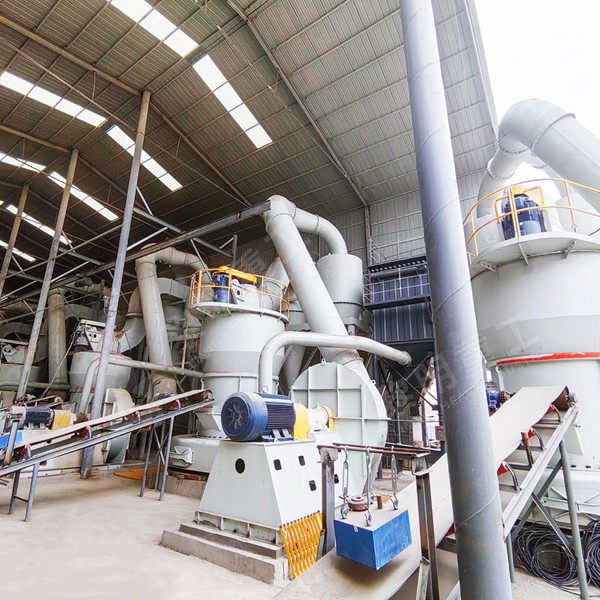
For many operators, the Raymond Mill remains the first choice for 600 mesh calcium carbonate grinding. This classic machine is renowned for its reliability and low capital cost. It is suitable for non-flammable and non-explosive materials with Mohs hardness under 7 and humidity below 6%, which perfectly describes raw calcium carbonate. The output fineness range of 613μm to 44μm comfortably covers the 600 mesh target (22 microns). With a capacity of 1.2-4.5 T/H and an input size of 15-25mm, it is ideal for medium-scale operations. The mill operates by grinding material between a rotating roller and a stationary grinding ring. The ground powder is then carried upward by an air stream to a classifier, where coarse particles are returned for regrinding, while 600 mesh fines are collected as final product. For a standard calcium carbonate crushing processing line, this mill offers a proven, low-maintenance pathway.
European Type Trapezium Mill: The Upgrade
When higher capacity and lower energy consumption are priorities, the MTW European Type Trapezium Mill becomes the superior choice. This is the upgrade product of the traditional Raymond Mill and Pendulum Mill. It features patented technology that increases production efficiency by up to 50% compared to older models. With a capacity range of 3-55 TPH and a fineness control that extends to 44μm, it is exceptionally well-suited for large-scale 600 mesh calcium carbonate grinding. The input size of 30-50mm allows for direct feeding after a primary crusher. The working principle involves a closed-loop system: material is crushed by a jaw crusher, then fed via a variable-frequency belt feeder into the mill. Inside, grinding rollers and rings pulverize the material, and a high-efficiency classifier ensures that only particles meeting the 600 mesh specification escape to the powder collector. The system, including the air blower and pulse dust collector, operates under negative pressure, meeting stringent environmental protection standards. This makes the MTW mill a top contender for power plant desulfurization and building materials applications, where consistent quality and uptime are non-negotiable.
LM Vertical Roller Mill: For High-Capacity Demands
For operations requiring massive throughput in the range of 10-400 T/H, the LM Vertical Roller Mill is the definitive solution. This mill integrates drying, grinding, powder selection, and conveying into a single, compact unit. It is particularly effective for non-metallic mineral ore industries, including calcium carbonate. The LM mill uses a unique milling device and an automatic electric control system. Material is fed onto a rotating grinding table and crushed under hydraulically-loaded rollers. The hot air (if needed for drying) or ambient air carries the ground material to a dynamic classifier. The LM series offers exceptional grinding efficiency for coarse to medium-fine powders like 600 mesh. Its vertical design minimizes floor space and installation cost, making it a strategic choice for large industrial parks and cement plants that also produce GCC. The automatic control system maintains consistent fineness despite variations in feed material, ensuring the 600 mesh target is hit every time.
MW Micro Powder Mill: Precision for Ultra-Fine Gaps
While the primary target is 600 mesh, some applications require the flexibility to go finer. The MW Micro Powder Mill absorbs advanced Swedish grinding technology and is designed for superfine powder processing. The finished product can reach up to d97 ≤ 5μm (approximately 3250 mesh), and fineness is adjustable between 325-3250 mesh. This makes it an excellent choice if you need to produce 600 mesh now but may want to move to 800 or 1250 mesh in the future. With a capacity of 0.5-25 T/H and an input size of 10-20mm, it operates by rotating dozens of rollers against a raceway ring. The classification system is extremely precise, ensuring that the 600 mesh fraction is separated with minimal oversize. Equipped with a pulse precipitator, it is a green option for the most environmentally conscious operations. For specialized GCC grinding lines, this mill offers unmatched precision.
Ball Mill: The Traditional Alternative
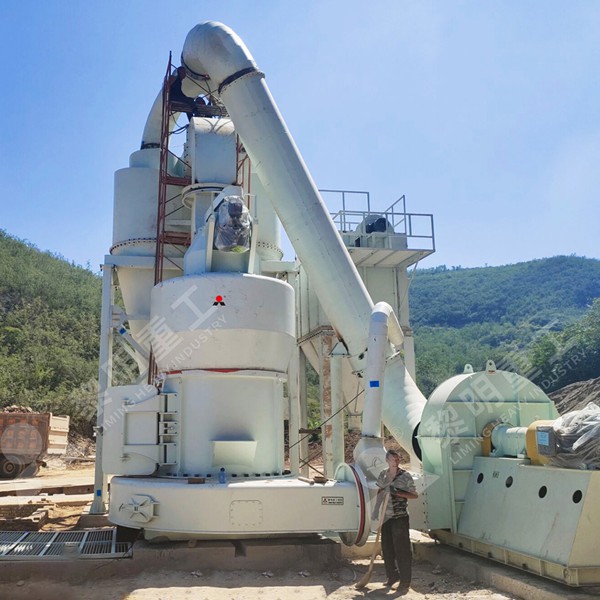
For operations that value simplicity and robust construction, the Ball Mill is a common grinding plant. It is key equipment used for milling after materials are crushed. With a capacity of 0.65-50 T/H and an input size of ≤25mm, it can produce 600 mesh calcium carbonate, though often with higher energy consumption compared to roller mills. The mill is a horizontal rotating device transmitted by the outer gear. Steel balls inside the chamber are lifted by centrifugal force and then cascade down, impacting and grinding the material. While ball mills are versatile and used across cement, coal, and metallurgy, their efficiency for fine grinding of calcium carbonate is often lower than V-belt driven or direct drive roller mills. However, for small to medium capacities, they remain a viable option, especially where the same mill is used for multiple materials.
Key Operational Considerations
Regardless of the mill chosen, achieving consistent 600 mesh output requires attention to several factors. First, the raw material moisture must be controlled, as high humidity can clog air classifiers and reduce throughput. Second, the classifier speed is the primary variable for controlling fineness; slower speeds yield coarser powder, while faster speeds yield finer particles. Third, maintaining proper grinding pressure (either mechanical or hydraulic) ensures that the material is adequately stressed. Finally, a well-maintained dust collection system is non-negotiable, as it protects the environment and recovers valuable product. Our company, LIMING HEAVY INDUSTRY, has spent over 30 years perfecting these parameters, and our team provides full technical support for mill commissioning and operation.
Conclusion: The Right Machine for Your Goal
Selecting the right mill for 600 mesh calcium carbonate grinding depends on your specific capacity, budget, and future expansion needs. The Raymond Mill offers a low-cost entry point. The European Type MTW Mill provides an excellent balance of cost, capacity, and energy savings. The LM Vertical Mill is the champion of high-volume production. The MW Micro Powder Mill gives you precision and versatility. And the Ball Mill offers time-tested robustness. We at LIMING HEAVY INDUSTRY CO., LTD., with our modern scientific management and precision manufacturing, are prepared to help you choose and implement the perfect solution. Our persistence in scientific research and our mature team ensure that your investment yields the highest returns.
Frequently Asked Questions (FAQ)
1. Can a Raymond Mill reliably produce 600 mesh calcium carbonate?
Yes, a Raymond Mill can produce 600 mesh (22 micron) calcium carbonate, as its standard fineness range (613μm to 44μm) covers this specification. However, for consistent high-volume output, you may need to adjust the classifier speed and ensure the raw material is dry. The capacity at 600 mesh will be lower than at coarser settings.
2. What is the main difference between the MTW European Mill and the traditional Raymond Mill?
The MTW European Mill is the upgrade product of the Raymond Mill. It features patented trapezium-type grinding faces and a bevel gear overall drive, which increases capacity by up to 50% and reduces energy consumption by 30%. It also has a higher capacity range (3-55 TPH) and a more efficient classifier.
3. Is a Ball Mill or a Vertical Roller Mill better for grinding 600 mesh GCC?
For producing 600 mesh GCC at a large scale, a Vertical Roller Mill (like the LM series) is generally better. It offers higher energy efficiency, integrated drying, and a smaller footprint. A Ball Mill is simpler and can be more cost-effective for smaller batches or lower capacities, but it consumes more power.
4. What is the maximum input size for the MW Micro Powder Mill when targeting 600 mesh?
The MW Micro Powder Mill requires a feed size of 10-20mm. Material larger than this must first be crushed using a hammer crusher or jaw crusher. The mill is optimized for feeding smaller particles to achieve its ultra-fine grinding capabilities.
5. How does the mill handle the environmental impact of calcium carbonate dust?
All modern LIMING mills are equipped with advanced dust collection systems. The MTW and MW series use pulse dust collectors that capture over 99.9% of airborne particles, ensuring compliance with national environmental protection standards. The systems operate under negative pressure, preventing dust leakage.


