Calcium carbonate (CaCO₃) serves as a critical functional filler in PVC pipe manufacturing, enhancing stiffness, impact resistance, and dimensional stability while reducing overall production costs. The selection of an appropriate grinding mill for calcium carbonate processing directly influences particle size distribution, surface area, and purity—factors that determine the final mechanical properties and surface finish of PVC pipes. Among the leading solutions for this application, Liming Heavy Industry's range of grinding mills—including the MTW European Type Trapezium Mill, Raymond Mill, and Micro Powder Mill—offers tailored configurations for processing calcium carbonate with fineness ranging from 44 µm to 5 µm, capacities from 0.5 to 55 TPH, and energy-efficient closed‑loop systems. This article provides a comprehensive technical overview of calcium carbonate grinding for PVC pipe production, covering mill selection, working principles, process optimization, and integration with downstream compounding operations, supported by empirical data from over three decades of industrial equipment manufacturing.
The Role of Calcium Carbonate in PVC Pipe Formulations
In PVC pipe compounds, calcium carbonate is typically added at loadings of 10–40 phr (parts per hundred resin) for rigid pipes (e.g., drainage, sewer, and electrical conduits) and up to 60 phr for flexible profiles. The filler serves multiple functions: it acts as a nucleating agent for crystallinity, improves heat deflection temperature, reduces shrinkage, and increases modulus. However, the performance benefits are highly dependent on particle morphology and size. Coarse particles (above 100 µm) can act as stress concentrators, reducing impact strength, while ultrafine particles (below 2 µm) provide reinforcement at the expense of melt flow. The optimal range for general‑purpose PVC pipes is typically 5–15 µm, with a narrow distribution (span < 2.5). Achieving this distribution requires precision grinding equipment capable of consistent operation under high throughput conditions.
Liming Heavy Industry: A Legacy of Grinding Innovation
Founded in 1987, Liming Heavy Industry Co., Ltd. has evolved into a global leader in crushing and grinding machinery, with operational headquarters spanning 80,000 m² in Zhengzhou's HI‑TECH Industry Development Zone and an additional 67,000 m² workshop in Shangjie Industry Park. The company's integrated R&D, manufacturing, and sales structure enables rapid customization of grinding solutions for niche applications like PVC pipe fillers. Over 30 years, Liming has accumulated expertise in processing non‑metallic minerals, coal, and slag, with a particular focus on calcium carbonate grinding for the construction and plastics industries. The company's product portfolio—including LM Vertical Roller Mill, Raymond Mill, MTW European Type Trapezium Mill, Micro Powder Mill, and Ball Mill—covers the full spectrum of fineness and capacity requirements for PVC pipe production.
Mill Selection for Calcium Carbonate in PVC Pipes
MTW European Type Trapezium Mill for Medium to High Capacity
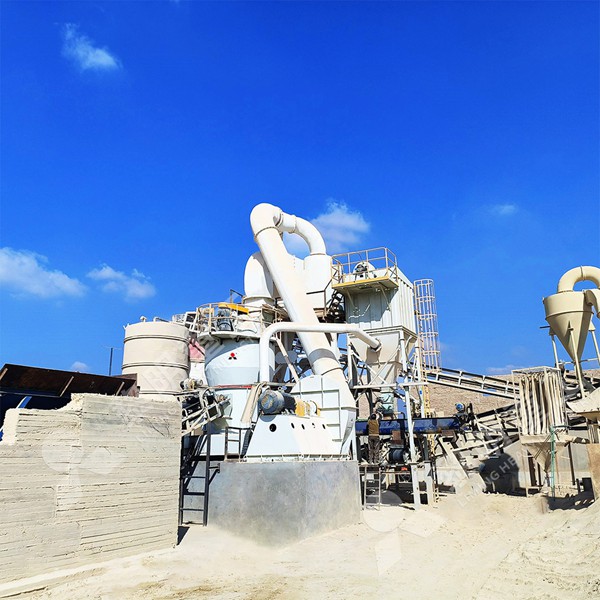
The MTW European Type Trapezium Mill is Liming's flagship solution for calcium carbonate grinding at capacities between 3 and 55 TPH. With an input size of 30–50 mm, the mill accepts pre‑crushed limestone or marble, reducing it to finenesses adjustable from 80 mesh (177 µm) down to 325 mesh (44 µm). The trapezium‑shaped grinding rollers and ring create a multi‑layer grinding zone that improves particle size uniformity—a critical factor for PVC pipe extrusion where inconsistent filler size can cause die buildup or surface roughness. The integrated separator (rotor classifier) allows online adjustment of fineness, enabling operators to switch between different pipe grades (e.g., rigid vs. flexible) without mill downtime. Additionally, the pulse dust collector ensures compliance with environmental standards, capturing fine CaCO₃ that would otherwise be lost as fugitive dust.
Raymond Mill for Small to Medium Production
For smaller PVC pipe manufacturing facilities or pilot lines, the Raymond Mill from Liming offers a cost‑effective entry point with capacities of 1.2–4.5 TPH. The Raymond Mill can process calcium carbonate with feed sizes up to 25 mm and produce fineness between 613 µm (30 mesh) and 44 µm (325 mesh). While its throughput is lower than the MTW series, the Raymond Mill is well‑suited for operations that require frequent recipe changes or lower annual volumes. The mill's pendulum‑type grinding mechanism provides a stable grinding action with minimal vibration, and the built‑in air classifier ensures that oversize particles are returned for regrinding—a closed‑loop operation that minimizes waste.
Micro Powder Mill for Ultrafine Fillers
When the PVC pipe application demands surface‑modified or ultrafine calcium carbonate (d97 ≤ 5 µm, equivalent to 2,500 mesh), Liming's MW Micro Powder Mill is the appropriate choice. This mill, drawing on advanced Swedish grinding technology, operates at a medium speed and uses a multi‑roller grinding ring system. The capacity range of 0.5–25 TPH covers both niche specialty pipe production and high‑volume masterbatch manufacturing. The finished product fineness can be adjusted between 325 and 3,250 mesh (44–5 µm), which is particularly valuable for producing thin‑walled or transparent PVC pipes where filler visibility must be minimized. The Micro Powder Mill's pulse precipitator also ensures that the ultrafine particles are collected without atmospheric release.
Working Principle of the MTW Grinding Line—A Case Study
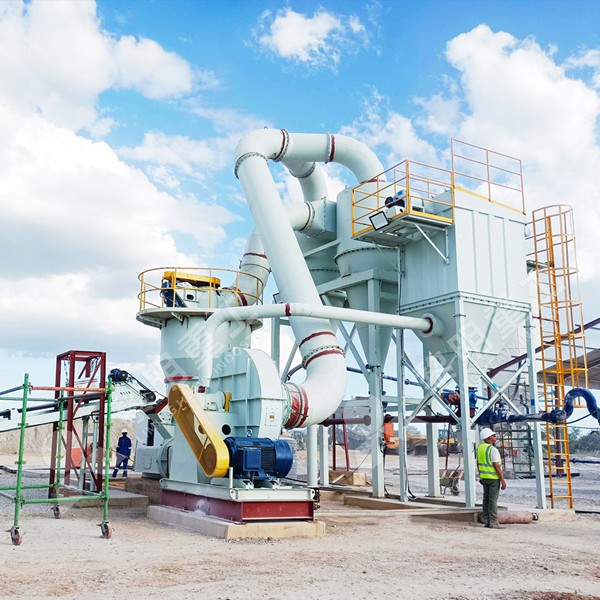
To illustrate the typical grinding line configuration for calcium carbonate destined for PVC pipes, consider the MTW system. The grinding line includes a jaw crusher, vibrating feeder, variable‑frequency belt feeder, MTW mill, separator (classifier), air blower, pulse dust collector, pipes, powder collector, and electric cabinet. Bulk limestone or marble (30–50 mm) is first crushed by the jaw crusher to a size suitable for the mill feed. The variable‑frequency belt feeder ensures a constant and uniform feed rate, preventing mill overload or starvation. Inside the mill, the material is ground between the rotating grinding ring and the stationary rollers; the ground powder is carried upward by air flow generated by the blower. The separator allows only particles meeting the target fineness to pass through; oversized particles fall back for regrinding. The air stream, now free of product, returns to the blower for recirculation, while the collected powder is discharged through a rotary valve or pneumatic conveying system to storage silos or directly to the PVC compounding line.
Process Optimization for PVC Pipe Filler Quality
Several variables must be controlled to consistently achieve the desired particle size distribution for PVC pipe applications. The mill's rotational speed, separator rotor speed, feed rate, and air flow all interact to determine the final fineness. For instance, increasing the separator speed reduces the cutoff size, producing finer particles; however, this also reduces mill throughput. Liming's mills are equipped with variable‑frequency drives, allowing operators to fine‑tune these parameters in real time. Additionally, moisture content in the feed calcium carbonate must be kept below 6% to prevent clogging of the grinding chamber and classifier. In humid environments, a pre‑drying step using the LM Vertical Roller Mill's integrated drying function can be incorporated, which simultaneously dries and grinds the material.
Integration with Downstream Compounding
Once ground to specification, the calcium carbonate powder is typically stored in silos and then fed into a high‑speed mixer or compounding extruder where it is blended with PVC resin, stabilizers, lubricants, and other additives. For optimum dispersion, the filler must be free of agglomerates and have a consistent bulk density. Liming's mills, particularly the MTW and Micro Powder series, produce a well‑deagglomerated product due to the intense shear forces in the grinding zone. Furthermore, the optional surface coating system can be added to the mill outlet, allowing the calcium carbonate to be treated with stearic acid or other coupling agents directly after grinding—a process that improves filler‑polymer compatibility and reduces the energy required for compounding.
Comparative Analysis of Liming Grinding Mills for PVC Filler
| Mill Type | Capacity (TPH) | Input Size (mm) | Fineness Range (μm) | Key Advantage for PVC Pipe |
|---|---|---|---|---|
| MTW European Trapezium Mill | 3–55 | 30–50 | 44–177 | High throughput, uniform particle size, low energy |
| Raymond Mill | 1.2–4.5 | 15–25 | 44–613 | Low investment, simple operation for small plants |
| Micro Powder Mill (MW) | 0.5–25 | 10–20 | 5–44 | Ultrafine fillers for specialty & thin‑wall pipes |
| Ball Mill | 0.65–50 | ≤ 25 | 44–200 | Reliable for coarse grinding, wet or dry operation |
Conclusion
Choosing the right calcium carbonate grinding mill for PVC pipe manufacturing is a strategic decision that impacts product quality, production efficiency, and operational costs. Liming Heavy Industry's comprehensive range—from the high‑capacity MTW European Type Trapezium Mill to the ultrafine Micro Powder Mill—provides PVC pipe producers with flexible, scalable solutions that can be tailored to specific filler specifications. With over three decades of engineering experience, a strong R&D focus, and a commitment to environmental compliance, Liming stands as a reliable partner for the plastics processing industry. By integrating correct mill selection, process control, and downstream handling, manufacturers can achieve consistent filler quality, reduce material waste, and enhance the mechanical properties of their PVC pipe products.
Frequently Asked Questions (FAQ)
1. What is the ideal particle size of calcium carbonate for rigid PVC pipe?
For rigid PVC pipes, the recommended calcium carbonate particle size is typically in the range of 5–15 µm (equivalent to 800–2,500 mesh). This range provides a balance between impact strength, stiffness, and processability. Coarser particles may reduce tensile strength, while excessively fine particles can increase melt viscosity and require higher processing temperatures.
2. Can the MTW European Type Trapezium Mill handle wet calcium carbonate?
The MTW mill is designed for materials with moisture content up to 6%. If the feed calcium carbonate has higher moisture, the mill may clog due to material sticking on the grinding ring. In such cases, Liming recommends using the LM Vertical Roller Mill, which integrates a drying function, or pre‑drying the material in a rotary dryer before feeding into the MTW mill.
3. How does the separator adjustment affect the final product fineness in a Raymond Mill?
In Raymond Mills, the separator rotor speed is adjustable via a variable‑frequency drive. Increasing the rotor speed raises the centrifugal force acting on the particles, preventing coarser particles from passing through. This results in a finer product but reduces the mill's throughput. The optimal speed is determined by balancing the required fineness with the desired production rate.
4. What is the typical power consumption for grinding calcium carbonate to 325 mesh using a Micro Powder Mill?
The Micro Powder Mill is designed for energy efficiency compared to traditional ball mills. For grinding calcium carbonate to 325 mesh (44 µm), the specific power consumption typically ranges from 25 to 45 kWh per ton, depending on the feed hardness and desired throughput. Liming's mill design minimizes idle energy consumption through an automated feed control system.
5. Is a dust collector mandatory for calcium carbonate grinding in PVC pipe filler production?
Yes, a dust collector is strongly recommended—and often required by environmental regulations—to capture fine CaCO₃ particles. Liming's grinding systems (MTW, Raymond, Micro Powder) include pulse‑jet dust collectors that achieve >99% filtration efficiency. This not only complies with emission limits but also reclaims valuable product that would otherwise be lost, improving overall yield.


