Published on: October 26, 2023
Surface treated calcium carbonate grinding systems are engineered to transform raw calcium carbonate into ultra-fine, surface-modified powders that meet the demanding requirements of industries such as plastics, rubber, paints, and adhesives. These systems integrate advanced milling technology with precise classification and surface coating processes, enabling the production of particles with controlled morphology, narrow size distribution, and enhanced compatibility with organic matrices. The key to success lies in the synergy between grinding efficiency and surface treatment uniformity, which directly impacts the final product's dispersibility, mechanical reinforcement, and end-use performance. As a leader in crushing and grinding equipment manufacturing since 1987, Liming Heavy Industry offers a complete line of grinding mills tailored for calcium carbonate processing — from Raymond mills for coarse powders to micro powder mills for superfine products, all combined with pulse dust collection and closed-loop systems to ensure environmental compliance and operational stability.
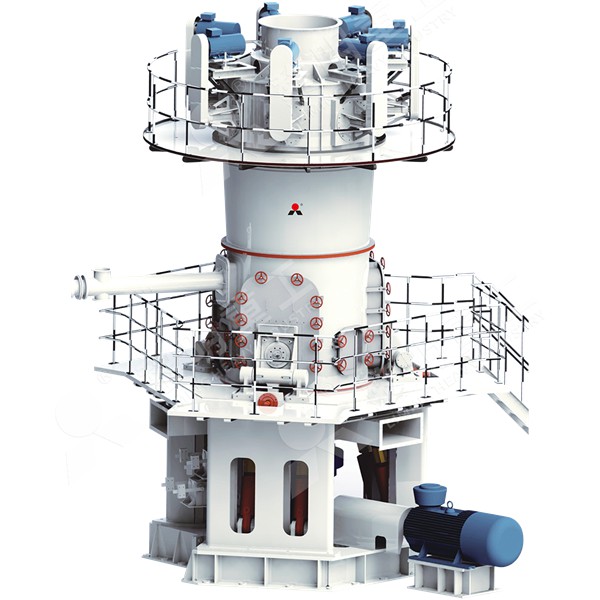
System Architecture and Key Components
A surface treated calcium carbonate grinding system typically comprises a primary crusher, a grinding mill, an air classifier, a surface coating unit, a pulse dust collector, and a control cabinet. The process begins with the jaw crusher reducing large limestone lumps to a feed size of 15-55mm, depending on the mill type. The crushed material is then fed via a variable-frequency belt feeder into the grinding chamber, where it is ground between rollers and a ring. The fine particles are carried upward by the air stream to the classifier; oversize particles fall back for regrinding, while the qualified powder passes through to the surface treatment stage.
Our MTW European Type Trapezium Mill exemplifies the modern grinding platform for this application. With a capacity of 3-55 TPH and input size up to 50mm, it is the upgrade of traditional Raymond and pendulum mills, featuring patented technology for high productivity and energy savings. The system is fully enclosed, with air flow recycled through the blower, and a pulse dust collector ensures emissions comply with national environmental standards.
For finer applications, MW Micro Powder Mill achieves a product fineness of d97 ≤ 5μm (325-3250 mesh) at capacities from 0.5 to 25 TPH. It absorbs advanced Swedish grinding technology and is equipped with dozens of rollers rotating against a raceway ring. The surface treatment agent is introduced via a metering pump into the classification zone or a downstream mixing chamber, where it coats the newly generated particle surfaces to improve hydrophobicity and dispersion.
Process Flow and Integration
The grinding and surface treatment process operates on a closed-loop principle. After the jaw crusher reduces the raw material to a uniform size, the elevator transports it to a hopper. The vibrating feeder then meters the material into the mill. Inside the mill, the material is ground between the roller and ring under centrifugal force. The air stream carries the ground powder to the separator; fine particles pass through, while coarse particles return for regrinding. The air then goes to the dust collector, where the product is collected, and clean air is recycled to the blower. The surface treatment agent — typically stearic acid or titanate coupling agents — is sprayed or atomized onto the powder stream just after classification or inside a dedicated coating vessel. This ensures uniform coverage and minimal agglomeration.
Our LM Vertical Roller Mill is also an excellent choice for calcium carbonate grinding, offering capacities from 10 to 400 T/H with input sizes up to 55mm. It integrates drying, grinding, and selection in one unit, making it ideal for large-scale operations. The vertical mill's compact footprint and high drying capacity are particularly advantageous when processing surface-treated products that require controlled moisture levels.
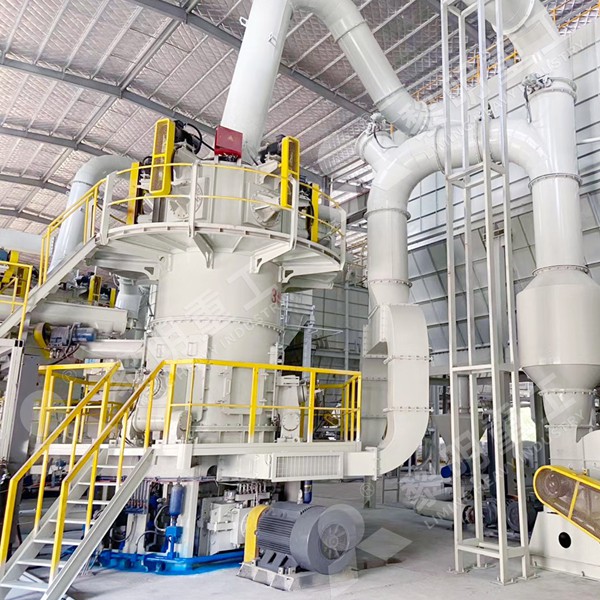
Equipment Selection Guide for Surface Treated Calcium Carbonate
Choosing the right grinding system depends on the target fineness, capacity, and the specific surface treatment requirements:
- Raymond Mill (capacity 1.2-4.5 T/H, input size 15-25mm): Suitable for coarse processing of calcium carbonate with fineness between 613μm and 44μm. It is a cost-effective solution for low-volume production where surface treatment is applied externally.
- MTW European Type Trapezium Mill (capacity 3-55 TPH, input size 30-50mm): The preferred choice for medium to large-scale production of surface-treated calcium carbonate for the plastics and paint industries. Its stable performance and patented technology ensure consistent particle size distribution, which is critical for uniform coating.
- MW Micro Powder Mill (capacity 0.5-25 T/H, input size 10-20mm): Ideal for superfine calcium carbonate (d97 ≤ 5μm) used in high-end rubber and sealant applications. The integrated pulse precipitator keeps the working environment clean while maintaining product purity.
- Ball Mill (capacity 0.65-50 T/H, input size ≤25mm): Best for applications requiring extremely high fineness and narrow distribution, such as in the paper and food industries. The steel balls impact and grind the materials, and the discharged product can be fed into a surface treatment unit.
- LM Vertical Roller Mill (capacity 10-400 T/H, input size 30-55mm): For large-tonnage operations, this mill offers the highest throughput with low energy consumption. Its automatic control system ensures stable grinding conditions, which simplifies the addition of surface treatment agents.
Quality Control and Environmental Considerations
Consistency in surface treatment depends on precise control of the grinding temperature, classifier speed, and agent feed rate. Our systems are equipped with PLC-based automatic control that monitors motor current, grinding pressure, and separator speed in real time. The pulse dust collector not only recovers fine powder but also prevents dust leakage, ensuring the plant meets stringent environmental regulations. The closed air circuit minimizes heat loss and moisture ingress, which is particularly important for stearic acid-coated calcium carbonate, as excess moisture can cause caking.
Conclusion
Liming Heavy Industry's surface treated calcium carbonate grinding systems combine decades of engineering expertise with modern automation to deliver consistent, high-quality products. Whether you need coarse powders for construction or superfine fillers for high-performance polymers, our range of mills — including Raymond, MTW, MW, Ball, and LM Vertical mills — provides a scalable solution. With our headquarters in Zhengzhou's HI-TECH Zone and a 67,000 m² workshop, we are committed to providing reliable equipment and responsive support for your grinding needs.
FAQ
- What is the typical fineness range achievable for surface treated calcium carbonate with your equipment?
Using our MW Micro Powder Mill, the fineness can reach d97 ≤ 5μm (approximately 3250 mesh). With MTW European Type Trapezium Mill, the typical range is between 44μm and 613μm. The Raymond Mill produces coarser powders in the 44μm to 613μm range. The exact fineness depends on the classifier settings and the specific mill model selected. - How is the surface treatment agent integrated into the grinding process?
The surface treatment agent (e.g., stearic acid) is introduced via a metering pump either at the classifier outlet or in a dedicated downstream coating chamber. It is atomized onto the powder stream to ensure uniform coverage. The system can be customized to control agent dosage based on real-time powder flow rate, ensuring consistent coating quality. - Can your systems handle both dry grinding and simultaneous coating in one pass?
Yes, our MTW European Type Trapezium Mill and MW Micro Powder Mill are designed to support simultaneous grinding and surface treatment. The closed-loop air system and integrated classifier allow the coating agent to be added during the classification stage, reducing processing steps and improving efficiency. However, for critical applications, a separate coating unit may be recommended for better control. - What are the environmental features of your grinding system?
All our systems are equipped with pulse dust collectors that capture fine particles with over 99.9% efficiency, ensuring compliance with national emission standards. The air flow is recycled within the closed loop, minimizing dust release and reducing the need for external ventilation. Additionally, the systems are designed for low noise operation, and the grinding mills feature energy-saving motors. - How do I choose between a ball mill and a roller mill for my calcium carbonate processing?
Ball mills are generally preferred for very fine grinding (down to micron levels) and when a narrow particle size distribution is critical. They also offer flexibility in processing various materials. Roller mills like the MTW or LM Vertical mills are more efficient for medium to coarse grinding and offer higher throughput per unit floor space. For surface treated products, roller mills provide better control over grinding temperature, which is beneficial for heat-sensitive coatings. We recommend consulting our technical team for a personalized equipment selection based on your raw material characteristics and target product specifications.


