Published: October 2023
When it comes to grinding calcium carbonate into ultra-fine powders, the choice of milling equipment is critical for achieving both high productivity and consistent particle size distribution. A Calcium Carbonate Micro Grinding Mill, such as the MW Micro Powder Mill series developed by LIMING HEAVY INDUSTRY, offers a specialized solution that bridges the gap between traditional grinding technologies and modern superfine processing demands. This type of mill is engineered to produce finished products with fineness ranging from 325 mesh to 3250 mesh (d97 ≤ 5μm), making it ideal for industries like non-metallic mineral processing, power plant desulfurization, and construction materials. The system integrates pulse dust collection to meet stringent environmental standards, ensuring that the operation is not only efficient but also compliant with green manufacturing practices. In the following sections, we will explore the technical specifications, working principles, and application scenarios of these mills, drawing on decades of engineering expertise from LIMING HEAVY INDUSTRY CO., LTD., a leader in crushing and grinding equipment since 1987.
Understanding Calcium Carbonate Micro Grinding Mill Technology
Calcium carbonate, whether derived from limestone, marble, or chalk, is one of the most widely used minerals in the world. Its applications range from paper and plastics to paints and pharmaceuticals. However, to unlock its full potential, the material must be ground to a fine or ultra-fine powder. This is where the Calcium Carbonate Micro Grinding Mill comes into play. Unlike conventional ball mills or Raymond mills, micro grinding mills are designed to handle smaller input sizes (typically 10–20 mm) and deliver exceptionally fine outputs. The MW Micro Powder Mill, for instance, employs a medium-speed grinding mechanism that absorbs advanced Swedish grinding technology, making it particularly adept at superfine powder processing.
Key Features of Micro Grinding Mills
- Ultra-fine output: Achieves fineness up to d97 ≤ 5μm, adjustable between 325–3250 mesh.
- High efficiency: The unique roller and ring design reduces energy consumption while maximizing throughput (capacity ranges from 0.5 to 25 T/H).
- Environmental compliance: Equipped with a pulse precipitator, the system minimizes dust emissions and complies with national environmental protection standards.
- Versatile applications: Suitable for calcium carbonate, gypsum, non-metallic ores, and coal preparation.
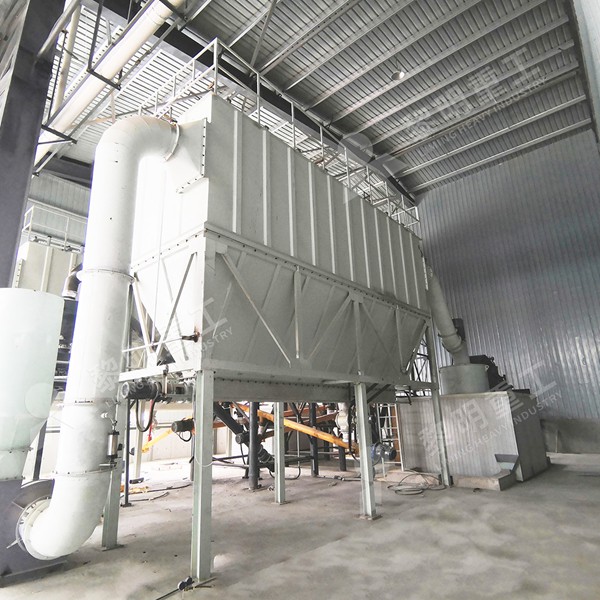
LIMING Heavy Industry: A Legacy of Innovation
Founded in 1987, LIMING HEAVY INDUSTRY CO., LTD. has established itself as a modern joint-stock corporation integrating research, manufacturing, and sales. With a headquarters covering 80,000 m² in Zhengzhou's HI-TECH Industry Development Zone and an additional workshop of 67,000 m² in Shangjie Industry Park, the company possesses substantial manufacturing capacity. Over the past 30+ years, LIMING has adhered to a strategy of scientific research and development, focusing on improving product competitiveness through technological advancements and systematic innovation. This commitment has positioned LIMING as a leader in both domestic and overseas machinery manufacturing industries.
The company's product portfolio includes a range of grinding equipment tailored to various applications. For calcium carbonate processing, the MW Micro Powder Mill stands out due to its ability to produce fine powders with narrow particle size distribution. Additionally, the MTW European Type Trapezium Mill, Raymond Mill, and Ball Mill offer alternative solutions depending on the required fineness, capacity, and material characteristics. However, for applications demanding the finest powders, micro grinding technology is often the preferred choice.
Working Principle of the Micro Grinding Mill
The MW Micro Powder Mill operates on a well-engineered principle that combines compression, impact, and attrition to grind materials. A motor drives the main shaft through a reducer, causing the turnplate to rotate. Dozens of rollers are pinned to the turnplate and rotate against the race way of a grinding ring. Material is first crushed by a hammer crusher to a small size (10–20 mm), then transported via an elevator to a hopper. From the hopper, a vibrating feeder delivers the material evenly to the central part of the upper turnplate. Under centrifugal force, the material falls to the circle and moves into the raceway of the ring, where it is crushed into powder by the rollers. The ground particles are carried upward by an air stream, and a separator ensures that only particles meeting the desired fineness pass through. Oversized particles fall back for re-grinding, while the fine powder is collected in a bag filter or cyclone collector.
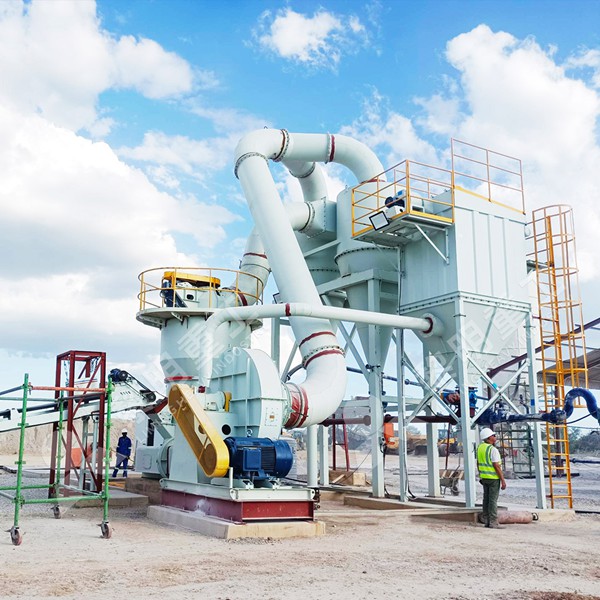
Application Scenarios and Advantages
Calcium carbonate micro grinding mills are widely used in industries that require high-purity fine powders. For example, in the paper industry, ground calcium carbonate (GCC) is used as a filler and coating pigment to improve brightness and opacity. In the plastics industry, ultra-fine calcium carbonate enhances impact resistance and reduces production costs. The MW Micro Powder Mill is particularly effective in these applications due to its ability to produce powders with high specific surface area and uniform particle shape. Moreover, the integrated pulse dust collector ensures that the workspace remains clean, aligning with the growing emphasis on sustainable manufacturing.
Compared to other mills, the micro grinding mill offers distinct advantages:
- Lower energy consumption: The medium-speed design reduces wear and tear while maintaining high grinding efficiency.
- Compact footprint: The system is designed to minimize floor space, making it suitable for plant expansions or retrofit projects.
- Easy maintenance: The roller assembly can be easily replaced, reducing downtime.
For larger capacity requirements (above 25 T/H) or coarser outputs, LIMING's MTW European Type Trapezium Mill (capacity 3–55 T/H, input size 30–50 mm) or LM Vertical Roller Mill (capacity 10–400 T/H) may be considered. However, for superfine calcium carbonate grinding, the MW Micro Powder Mill remains the optimal solution.
Conclusion
In summary, the Calcium Carbonate Micro Grinding Mill represents a pinnacle of engineering for superfine powder production. With its ability to deliver consistent fineness, high capacity, and environmental compliance, it is an indispensable tool for industries relying on calcium carbonate. LIMING HEAVY INDUSTRY's decades of experience and commitment to innovation ensure that these mills meet the highest standards of performance and reliability. Whether you are processing calcium carbonate for paper, plastics, or desulfurization, investing in a micro grinding mill from a reputable manufacturer is a strategic decision that yields long-term benefits.
Frequently Asked Questions (FAQ)
- What is the typical feed size for a calcium carbonate micro grinding mill?
The recommended feed size is between 10 and 20 mm. Material larger than this should be pre-crushed using a jaw crusher or hammer crusher to ensure optimal grinding performance. - What fineness can be achieved with the MW Micro Powder Mill?
The mill can produce powders with fineness ranging from 325 mesh to 3250 mesh, with a d97 cutoff as fine as 5μm. The exact fineness is adjustable based on the separator speed and airflow settings. - Is the micro grinding mill suitable for materials other than calcium carbonate?
Yes, it is also effective for grinding gypsum, non-metallic ores, coal, and other materials with Mohs hardness below 7 and moisture content under 6%. - How does the pulse dust collector contribute to environmental protection?
The pulse dust collector captures fine particles from the exhaust air, reducing dust emissions to levels that comply with national environmental standards. This ensures a cleaner working environment and reduces material loss. - What is the typical capacity range for a micro grinding mill in calcium carbonate processing?
The MW Micro Powder Mill offers a capacity range of 0.5 to 25 T/H, depending on the fineness required and the specific characteristics of the feed material.


