A dry ground calcium carbonate (GCC) production line is a comprehensive system engineered to transform raw calcium carbonate ore—typically limestone, marble, or chalk—into fine powders of controlled particle size and purity. This process involves crushing, grinding, classifying, and collecting the material without the use of water, making it an energy-efficient and environmentally responsible choice for industries such as plastics, paints, rubber, construction, and agriculture. The core of an efficient dry GCC line lies in the selection of grinding mills, classifiers, and dust collection systems that balance throughput, energy consumption, and product fineness. Modern dry processing technology enables producers to achieve particle sizes ranging from 200 mesh (74 microns) for coarse fillers down to 2,500 mesh (5 microns) or finer for high-value applications. Key performance indicators include capacity, specific energy consumption, product yield, and operational stability. With decades of experience in grinding equipment manufacturing, Liming Heavy Industry offers a full spectrum of dry calcium carbonate solutions—from Raymond mills for standard fineness to vertical roller mills and micro powder mills for ultra-fine products—all supported by integrated drying, classification, and dust removal systems that meet stringent environmental standards.
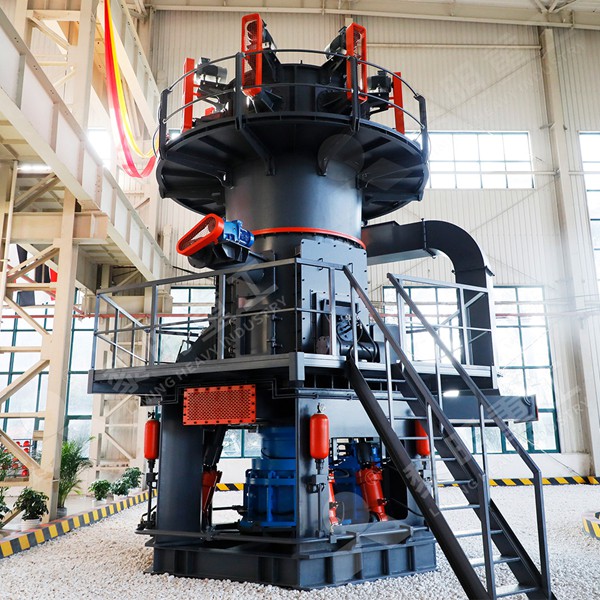
Process Flow and Equipment Configuration in a Dry GCC Line
A typical dry ground calcium carbonate production line follows a sequential flow designed to maximize efficiency and product quality. The process begins with primary crushing, where jaw crushers reduce large limestone boulders (up to 500 mm) to a uniform size of 20–50 mm. This crushed material is then conveyed to a hopper and fed into the grinding mill via a variable-frequency belt feeder or vibrating feeder, ensuring consistent material flow. The grinding mill is the heart of the line, and its selection depends on the desired fineness, capacity, and moisture content of the feed. For coarse to medium grinding (200–325 mesh, capacity 1–55 t/h), the MTW European Type Trapezium Mill or Raymond mill is a proven choice, offering robust performance with low maintenance. For ultra-fine grinding of 800 mesh and above (up to 3,250 mesh), the MW Micro Powder Mill or LM Vertical Roller Mill is employed, capable of producing d97 ≤ 5 μm powders. During grinding, the material is pulverized between grinding rollers and a grinding ring or table. An integral air classifier separates fine particles from coarse ones; oversized particles are returned to the mill for regrinding, while fines are carried by airflow to a pulse dust collector or cyclone collector. The collected powder is then conveyed to a silo or packing station. The entire system operates under negative pressure to prevent dust leakage, and the closed-loop airflow—including the air blower and recycling pipe—is designed for energy efficiency. For raw materials with moisture exceeding 1%, a hot air generation system can be integrated to dry the material during the milling process, eliminating the need for a separate drying step.
Key Grinding Mills for Dry Calcium Carbonate Processing
Liming Heavy Industry offers multiple grinding mill technologies tailored to dry GCC production, each with distinct advantages. The MTW European Type Trapezium Mill is an upgrade of the traditional Raymond mill, featuring a trapezoidal grinding roller and ring for increased grinding area and capacity. It achieves capacities from 3 to 55 t/h and fineness adjustable between 80 and 425 mesh. Its working principle involves a jaw crusher for size reduction, a variable-frequency feeder for controlled feed, and a mill where material is ground between rollers and a ring under centrifugal force. A separator ensures product size control, and the system includes a pulse dust collector for compliance with environmental regulations. For high-capacity coarse grinding of up to 400 t/h in the cement and power industries, the LM Vertical Roller Mill integrates drying, grinding, classification, and conveying in one compact unit. It excels with its automatic electric control system, low energy consumption (30–40% less than ball mills), and ability to handle raw materials up to 6% moisture. For ultra-fine applications, the MW Micro Powder Mill is designed for particle sizes from 325 mesh to 3,250 mesh (d97 ≤ 5 μm). Its medium-speed micro-grinding mechanism, based on Swedish technology, uses dozens of rollers rotating against a ring raceway to produce super-fine powder with high efficiency. The ball mill, while traditional, remains relevant for large-scale wet-dry conversion lines and beneficiation plants, offering capacities of 0.65–50 t/h and input sizes up to 25 mm. However, ball mills typically consume more energy and produce broader particle size distributions compared to modern roller or vertical mills.
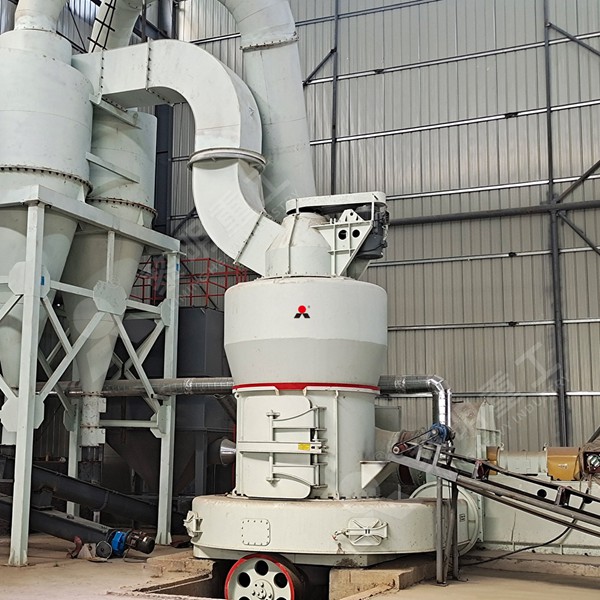
System Integration and Environmental Compliance
A complete dry GCC production line is more than just a grinding mill; it involves auxiliary equipment that ensures seamless operation, product consistency, and environmental safety. The jaw crusher performs the primary reduction of large quarry blocks. A bucket elevator or belt conveyor transports material to a storage bin or hopper. From there, a variable-frequency belt feeder delivers material at a controlled rate to the mill. The classifier—either integrated within the mill or as a separate unit—separates fine product from coarse returns. Air blowers, air ducts, and a pulse dust collector form a closed-loop pneumatic system that conveys powder, cools equipment, and captures dust with over 99.9% efficiency. The collected dust can be recycled as product, reducing waste. For high-value applications requiring precise particle size distribution, a secondary classification stage using an air classifier may be added after the mill. Control systems provided by Liming Heavy Industry use PLC and SCADA interfaces to monitor motor currents, temperatures, pressures, and product fineness in real time, enabling operators to adjust parameters like mill speed, feeder rate, and classifier rotor speed to optimize output. Environmental compliance is a key feature: the pulse dust collection system meets PM2.5 capture standards, and the negative-pressure design prevents fugitive emissions. Noise levels are mitigated through soundproof enclosures and dampening technologies.
Applications of Dry Ground Calcium Carbonate
The versatility of dry GCC makes it indispensable across multiple industries. In plastics, it serves as a filler to improve stiffness, impact resistance, and dimensional stability while reducing production costs. In paints and coatings, fine GCC enhances opacity, brightness, and weather resistance. Rubber products use GCC as a reinforcing agent and processing aid. Construction materials—such as sealants, adhesives, and wall putty—benefit from the controlled particle size and low abrasion of dry GCC. In agriculture, calcium carbonate is used as a soil conditioner to adjust pH and supply calcium to crops. Power plants and steel mills also utilize GCC for flue gas desulfurization. The fineness and purity required vary by application: 200–325 mesh is common for construction and agriculture, while 800–2,500 mesh is sought after in plastics, paints, and high-end masterbatch production.
Operational Best Practices and Maintenance
To maintain optimal performance in a dry GCC line, operators should monitor feed moisture (ideally below 3%), prevent metal contaminants with magnetic separators, and regularly inspect wear parts such as grinding rollers, rings, liners, and classifier blades. Lubrication of bearings and gearboxes must follow manufacturer schedules. The reverse pulse jet system of the dust collector should be checked daily to prevent bag blinding. Calibration of the separator and air pressure settings ensures consistent product fineness. Liming Heavy Industry provides comprehensive technical support, spare parts, and training for plant personnel to maximize uptime and product quality. With proper maintenance, a dry GCC line can operate reliably for decades, delivering consistent output of high-quality calcium carbonate powder to meet market demands.
Frequently Asked Questions (FAQ)
- Q: What is the typical capacity range of a dry ground calcium carbonate production line?
A: Depending on the mill type and configuration, dry GCC lines from Liming Heavy Industry achieve capacities from 0.5 t/h (micro powder mill) up to 400 t/h (vertical roller mill). - Q: How do I choose between a Raymond mill, MTW mill, and vertical roller mill for calcium carbonate?
A: Raymond mills are suitable for coarse to medium fineness (80–425 mesh) at low to medium capacity. MTW mills offer higher capacity and efficiency for similar fineness ranges. Vertical roller mills are best for large-scale production of coarse to moderately fine powder (200–400 mesh) with integrated drying. - Q: Can the dry line handle raw calcium carbonate with high moisture content?
A: Standard dry mills can process material with up to 1% moisture without issues. For moisture up to 6%, an integrated hot air drying system can be added. Above 6%, a separate drying step may be required. - Q: What particle sizes can be achieved with the MW Micro Powder Mill?
A: The MW Micro Powder Mill can produce powders with fineness adjustable between 325 mesh and 3,250 mesh (d97 ≤ 5 μm), suitable for ultra-fine applications in plastics, paints, and specialty chemicals. - Q: Is environmental compliance ensured in dry calcium carbonate grinding?
A: Yes. The system features a pulse dust collector with 99.9% efficiency, closed-loop negative-pressure operation, and optional soundproofing, meeting international standards for emissions and noise.


