Calcium carbonate is a critical mineral pigment used extensively in the paper coating industry to enhance brightness, opacity, and printability. The production of high-quality ground calcium carbonate (GCC) for paper coating demands precise particle size distribution, controlled fineness, and consistent performance from grinding equipment. The calcium carbonate vertical mill emerges as a superior solution for this application, offering integrated drying, grinding, classifying, and conveying in a single system. Designed with advanced milling technology and automatic electric control, the vertical mill ensures high capacity, energy efficiency, and stable operation. This article explores the technical advantages, working principles, and practical considerations of using a calcium carbonate vertical mill for paper coating, drawing on decades of engineering expertise from Liming Heavy Industry.
Understanding the calcium carbonate vertical mill
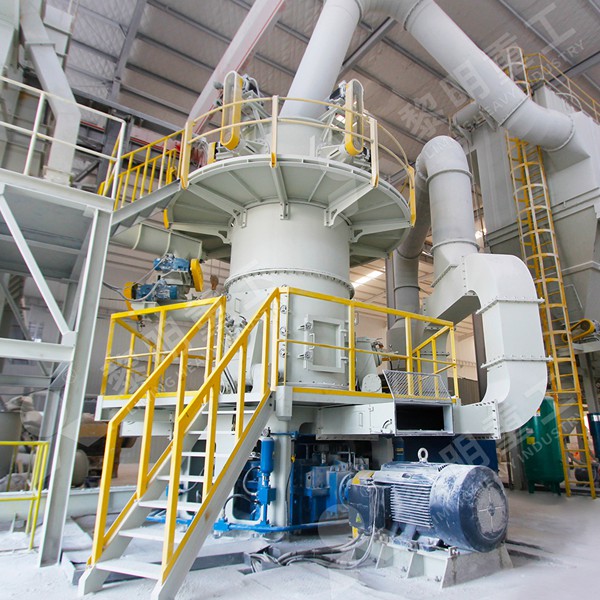
The calcium carbonate vertical mill, often referred to as a vertical roller mill (VRM), is specifically engineered to process non-metallic minerals like calcium carbonate. Unlike traditional ball mills or Raymond mills, the vertical mill adopts a new milling device that combines crushing, grinding, drying, and powder selection in a compact footprint. This design reduces energy consumption by up to 30-50% compared to conventional systems, while delivering a finer and more uniform product. For paper coating applications, where GCC typically requires a d50 of 1–2 microns and a top cut of 10–15 microns, the vertical mill's integrated classifier ensures precise particle size control.
Liming Heavy Industry's LM vertical roller mill, for instance, is widely adopted in the paper coating sector. With a capacity range of 10–400 tons per hour and an input size of 30–55 mm, it processes calcium carbonate ore into fine powder suitable for coating formulations. The mill's working principle involves a grinding table rotating at moderate speed, while hydraulic cylinders press rollers against the material bed. Material is fed from the center and moves outward under centrifugal force, being crushed and ground between the rollers and the table. Hot gas introduced from the bottom dries the material, while the dynamic classifier returns oversize particles for further grinding. This closed-loop system produces consistent quality with minimal operator intervention.
Key advantages for paper coating
Paper coating requires GCC with high whiteness, low abrasion, and controlled rheology. The calcium carbonate vertical mill delivers several benefits:
- Superior fineness and particle size distribution: The vertical mill's classifier can adjust fineness between 200 mesh and 800 mesh (d97 = 5–74 microns), meeting the strict specifications for coating grades. For example, a typical coating GCC might require 90% passing 2 microns, which is achievable with precise classifier settings.
- Energy efficiency and lower operating costs: The vertical mill consumes less power per ton of product due to its efficient grinding mechanism and integrated drying. Compared to ball mills, operating costs can be reduced by 30–50%.
- Environmental compliance: Equipped with pulse dust collectors, the system meets national environmental standards for emissions, making it suitable for modern industrial parks.
- Compact layout: The vertical design saves floor space, which is advantageous for plants with limited area.
Working process and system integration
The calcium carbonate vertical mill operates as part of a complete grinding system. Raw calcium carbonate ore, typically in lump form, is first crushed by a jaw crusher to the required input size (30–55 mm for LM mill). The crushed material is then conveyed via a variable-frequency belt feeder into the mill evenly and continuously. Inside the mill, the grinding table rotates, and rollers oscillate, crushing the material into fine powder. A stream of hot air or exhaust gas lifts the powder to the classifier, where coarse particles are separated and returned to the table. Fine particles pass through the classifier and are collected in a bag filter or cyclone as finished product. The entire system is automated, with centralized control adjusting feed rate, roller pressure, and gas flow to maintain product consistency.
For the paper coating industry, the GCC product is often further processed in a wet-grinding stage to achieve submicron particles, but the vertical mill serves as the primary dry grinding step, significantly reducing the load on downstream equipment. Many GCC producers use the LM vertical mill to produce a pre-dispersed powder that is then mixed with water and dispersants to form a coating slurry. The mill's ability to handle moisture up to 10% in the feed material also simplifies the drying process, as hot gas from a furnace or waste heat source can be used.
Technical specifications and customization
Liming Heavy Industry offers the LM vertical mill in multiple models to match specific capacity and fineness requirements. Key specifications for the paper coating application include:
- Capacity: 10–400 T/H
- Input size: 30–55 mm
- Fineness: 200–800 mesh (adjustable)
- Main motor power: varies by model
- Drying capability: up to 10% feed moisture
Customization options include the classifier type (dynamic or static), roller wear protection materials (high chromium or ceramic), and auxiliary equipment like hot gas generators and dust collectors. Liming's engineering team also provides site-specific layout designs to optimize material flow and reduce installation costs.
Case study: dry GCC production for coating
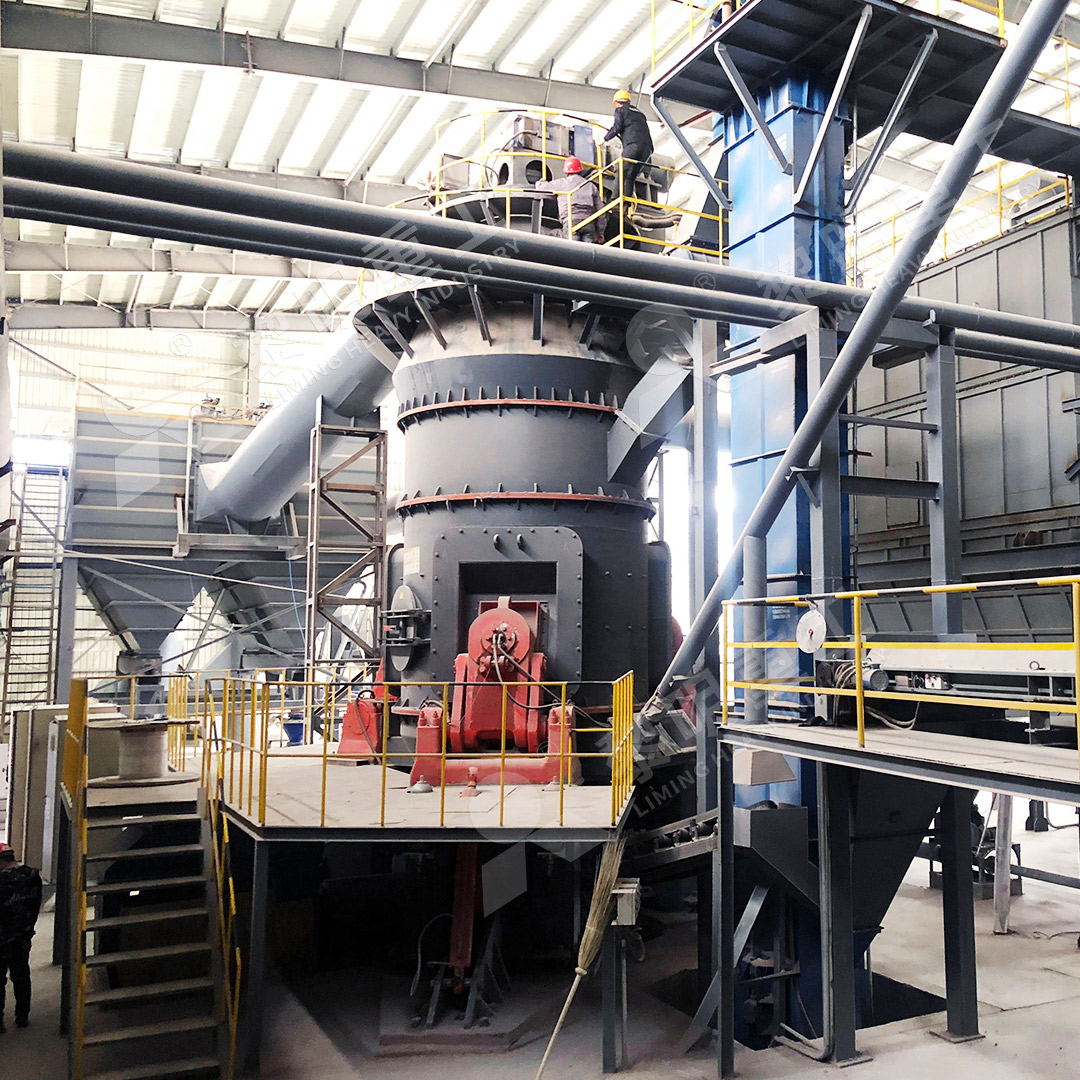
In a typical installation for a GCC plant supplying the paper industry, a Liming LM1700 vertical mill processes limestone with a feed size of 40 mm and moisture of 5%. The mill operates at a capacity of 50 T/H, producing a product with a fineness of d97 = 45 microns (325 mesh). The system includes a pulse dust collector with an emission level below 20 mg/Nm³, meeting EU and Chinese environmental standards. The customer reports a 35% reduction in energy consumption compared to their previous ball mill, along with improved product consistency. The GCC is then transported to a wet-grinding mill for final particle size reduction to 2 microns, with the vertical mill's output serving as an ideal intermediate product.
Maintenance and operational considerations
Proper maintenance of the calcium carbonate vertical mill ensures long service life and consistent product quality. Key maintenance areas include:
- Roller and table wear: Inspect and replace wear parts periodically, based on material abrasiveness. Liming offers wear-resistant liners with a service life of 6,000–8,000 hours for typical limestone.
- Hydraulic system: Check hydraulic oil levels, filters, and seals to maintain consistent roller pressure.
- Classifier: Clean and lubricate rotating parts to maintain classification efficiency.
- Dust collector: Monitor bag condition and differential pressure to ensure emission compliance.
Operators should also monitor the mill's vibration, temperature, and current draw as indicators of performance. Automatic control systems from Liming include alarm functions for abnormal conditions, enabling proactive maintenance.
Conclusion
For the paper coating industry, the calcium carbonate vertical mill from Liming Heavy Industry represents a state-of-the-art solution for dry grinding of GCC. Its combination of high capacity, energy efficiency, precise classification, and environmental compliance makes it an ideal choice for producers aiming to meet the demanding quality standards of modern paper coating. With over 30 years of manufacturing experience and a global service network, Liming provides comprehensive support from equipment selection to after-sales service, ensuring reliable operation for decades.
Frequently Asked Questions (FAQ)
1. What is the typical fineness range for calcium carbonate used in paper coating?
For paper coating, ground calcium carbonate (GCC) typically requires a fineness of 90% passing 2 microns (d90 < 2 µm), which corresponds to approximately 600–800 mesh. The vertical mill can produce powder in the 200–800 mesh range, with the classifier adjustable to achieve the target specification.
2. Can the calcium carbonate vertical mill process wet feed material?
Yes. The vertical mill is designed with integrated drying capability. It can handle feed materials with moisture content up to 10% by introducing hot gas from an external furnace or waste heat source. The drying process occurs simultaneously with grinding, ensuring efficient operation.
3. What is the energy consumption of a vertical mill compared to a ball mill for GCC production?
The vertical mill typically consumes 30–50% less energy than a ball mill for the same capacity and fineness. For example, producing 50 tons per hour of GCC at 325 mesh may require about 20–25 kWh per ton in a vertical mill, versus 35–45 kWh per ton in a ball mill, depending on the material hardness and moisture.
4. What maintenance is required for the vertical mill's grinding rollers?
Grinding rollers wear over time due to abrasion from calcium carbonate. Typical maintenance includes regular inspection of roller and table liner thickness, replacement of worn parts every 6,000–8,000 hours of operation (depending on feed abrasiveness), and periodic checks of the hydraulic system that applies pressure to the rollers.
5. Is the vertical mill suitable for small-scale GCC production for paper coating?
The LM vertical mill is designed for medium to large-scale production, with a minimum capacity of 10 T/H. For smaller operations, Liming Heavy Industry offers alternative grinding equipment such as the MTW European trapezium mill (capacity 3–55 T/H) or the micro powder mill (capacity up to 25 T/H), which can also produce GCC suitable for coating applications.


