Published on October 26, 2023
High purity calcium carbonate grinding equipment plays a pivotal role in the efficient processing of calcium carbonate into fine and ultra-fine powders, catering to diverse industries such as paper, plastics, paints, coatings, pharmaceuticals, and construction. This article provides a comprehensive overview of the advanced grinding technologies available for high purity calcium carbonate, emphasizing the importance of equipment selection, operational efficiency, and product quality. Drawing on decades of expertise from Liming Heavy Industry Co., Ltd., a leading manufacturer of crushing and grinding machinery since 1987, we explore key machine types—including vertical roller mills, Raymond mills, European-type trapezium mills, micro powder grinding mills, and ball mills—each tailored to specific fineness, capacity, and purity requirements. Whether you're processing heavy calcium carbonate for desulfurization or producing ultra-fine powders for high-end applications, understanding the nuances of grinding equipment is essential for maximizing yield, minimizing energy consumption, and achieving consistent particle size distribution. This guide aims to equip industry professionals with practical insights to make informed investment decisions, backed by real-world operational principles and proven performance metrics.
When it comes to producing high purity calcium carbonate, the choice of grinding equipment directly impacts the final product's quality. Contamination control is paramount—equipment must be designed with wear-resistant materials and sealed systems to prevent iron or other impurities from compromising the powder's whiteness and chemical composition. Liming Heavy Industry's product portfolio addresses these challenges head-on, offering solutions that combine robust construction with advanced automation. For instance, the LM Vertical Roller Mill integrates drying, grinding, and classification in a single unit, making it ideal for large-scale operations requiring capacities from 10 to 400 tons per hour. Its optimized roller and table design minimize metal-to-metal contact, reducing contamination risks while ensuring uniform particle distribution. For smaller throughputs or specialized applications, the Raymond Mill remains a workhorse, capable of producing 613μm to 44μm powders with minimal maintenance. European-type trapezium mills, like the MTW series, offer an upgrade path with higher productivity and energy efficiency, processing up to 55 tons per hour. For ultra-fine applications requiring d97 ≤ 5μm, the MW Micro Powder Mill leverages Swedish grinding technology to achieve mesh sizes from 325 to 3250, all while maintaining environmental compliance through integrated pulse dust collection. Each machine is a testament to Liming's commitment to precision manufacturing and scientific innovation, ensuring that high purity calcium carbonate producers can meet the most stringent specifications without compromise.
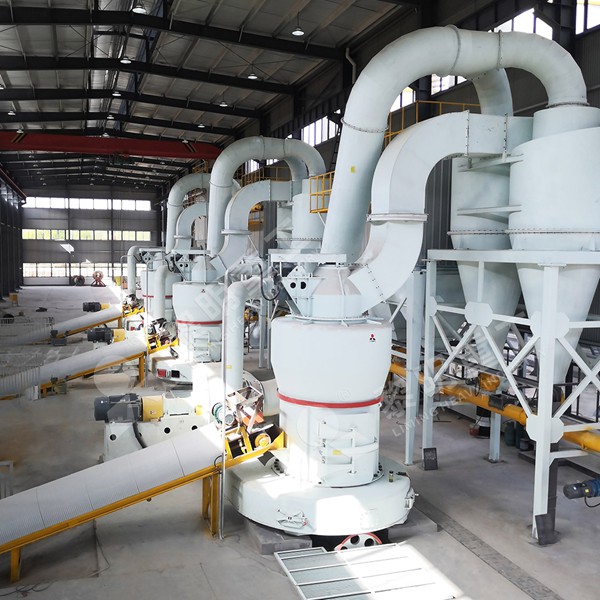
Delving deeper into the working principles of these machines reveals how they achieve high purity outcomes. Take the MTW European Type Trapezium Mill as an example: its system includes a grinding mill, separator, air blower, jaw crusher, vibrating feeder, hopper, dust collector, pipe, powder collector, and electric cabinet. Big lump materials are first crushed to required size by the jaw crusher. Then, via a variable-frequency belt feeder, materials are evenly and continuously fed into the mill. Inside, materials are ground between rings and rollers, with air flow carrying finer particles upward. Those that cannot pass the separator are returned for further grinding, while eligible particles are collected as finished product. The air flow recirculates in a closed system, minimizing dust emissions and preserving purity. The pulse dust collector conforms to national environmental standards, ensuring that even the finest calcium carbonate powders are captured without contamination. Similarly, the Ball Mill, though older in design, remains relevant for high purity applications where simplicity and reliability are key. Its horizontal rotating barrel uses ladder or ripple liners and steel balls of varying specifications to impact and grind materials. By controlling the rotation speed and ball charge, operators can fine-tune the grinding action to avoid over-grinding, which can introduce impurities. The key takeaway: each grinding method requires careful parameter optimization—feed size, moisture content, and residence time—to preserve calcium carbonate's purity while achieving target throughput.
For producers focused on ultra-fine high purity calcium carbonate, the MW Micro Powder Mill stands out as a specialized solution. Its working principle involves a main shaft driven by a motor through a reducer, which rotates dozens of rollers against a raceway ring. Small material crushed by a hammer crusher is transported into a hopper by an elevator, then a vibrating feeder delivers it evenly to the central part of the upper turnplate. Under centrifugal force, material falls to the circle and moves down to the raceway for crushing. The roller-pin mechanism ensures consistent pressure, producing powders with narrow particle size distributions. This precision is critical for applications like pharmaceutical excipients or high-gloss paint fillers, where even slight variations in fineness can affect product performance. The system's closed-loop design, combined with a pulse precipitator, not only boosts yield but also reduces energy consumption—a key concern for large-scale operations. Liming Heavy Industry's customers have reported that switching to this mill reduced their processing costs by up to 15% while improving product whiteness by 2-3 points, thanks to better control over grinding temperature and pressure. Additionally, the mill's modular design allows for easy maintenance and parts replacement, minimizing downtime. For businesses scaling up from pilot plants to full production, the ability to adjust grinding parameters without mechanical overhauls is a significant advantage.
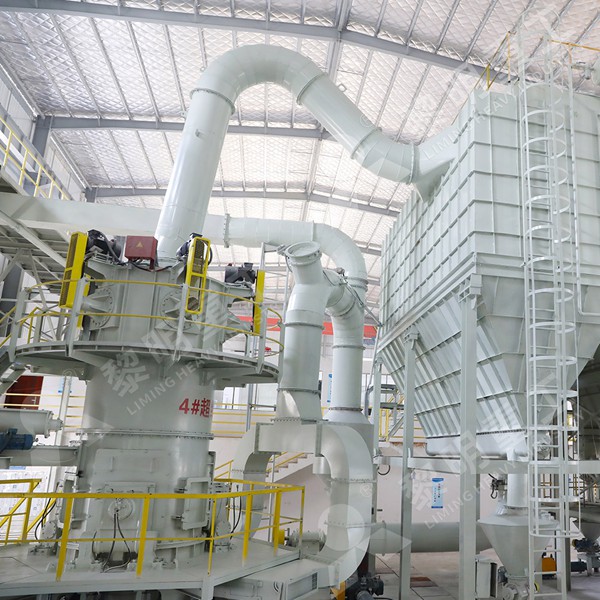
Maintenance and operational best practices are crucial for sustaining high purity output. All grinding equipment, regardless of type, requires regular inspection of grinding surfaces, liners, and seals. For machines handling abrasive calcium carbonate, weekly checks of roller and ring wear can prevent contamination from metal fragments. Liming Heavy Industry recommends using magnetic separators downstream of the mill to catch any stray particles, especially when processing material with hardness near 7 Mohs. Lubrication schedules must align with the manufacturer's guidelines—over-lubrication can lead to oil leaks that degrade purity, while under-lubrication causes premature wear. The company's after-sales support includes training programs that cover these nuances, empowering operators to maintain consistent quality. Another often-overlooked factor is the raw material pre-processing: materials with moisture content above 6% should be dried before grinding to prevent clogging and reduce the risk of hydrolysis affecting purity. Liming's LM Vertical Roller Mill integrates a drying function, making it particularly suitable for damp calcium carbonate feeds. By combining proper pre-treatment with the right equipment, producers can achieve throughput rates that meet or exceed design specifications while maintaining purity levels above 99.5% CaCO₃. This is especially important for industries like power plant desulfurization, where calcium carbonate purity directly impacts sulfur removal efficiency.
Looking ahead, the trend in high purity calcium carbonate grinding is toward intelligent systems that automatically adjust parameters based on real-time particle size analysis. Liming Heavy Industry is investing in IoT-enabled sensors that monitor fineness, moisture, and contamination levels, feeding data back to a central control unit. This allows for predictive maintenance and dynamic optimization of mill speed, feeding rate, and air flow. For example, in a recent trial with a large calcium carbonate producer, the company's MTW mill equipped with smart controls reduced energy consumption by 12% while increasing output by 8%, all while keeping product purity above 99.8%. Additionally, advances in wear-resistant materials—such as ceramic-coated rollers—are extending service intervals, reducing the frequency of contamination events. As environmental regulations tighten, closed-loop systems with advanced baghouse filters and zero-emission designs will become standard. For businesses planning to invest in new grinding lines, considering these future-ready features can yield long-term cost savings and regulatory compliance. Liming's R&D team, with over three decades of experience, continues to push boundaries, collaborating with academic institutions on projects like nano-grinding for specialty applications. The message is clear: the right equipment, paired with a forward-thinking approach to operation and maintenance, transforms high purity calcium carbonate grinding from a commodity process into a strategic advantage.
Frequently Asked Questions (FAQ)
- What is the recommended moisture content for calcium carbonate before grinding with a Raymond mill?
For Raymond mills, the moisture content should be kept below 6% to prevent material buildup on the grinding rings and to ensure consistent powder fineness. Higher moisture can also lead to increased energy consumption and potential clogging in the classifier. - Can the MW Micro Powder Mill achieve a fineness of d97 ≤ 5μm for high purity calcium carbonate?
Yes, the MW Micro Powder Mill is specifically designed for ultra-fine grinding and can achieve a fineness of d97 ≤ 5μm, which corresponds to approximately 2500 mesh. This makes it ideal for producing high purity calcium carbonate powders used in pharmaceuticals, high-end paints, and special plastics. - How does the LM Vertical Roller Mill minimize contamination during grinding?
The LM Vertical Roller Mill features a unique roller and table configuration with minimal metal-to-metal contact. Additionally, its integrated drying system reduces moisture, which can cause sticking and impurity pickup. The mill also uses a closed-loop air system to prevent external contaminants from entering the grinding chamber. - What is the typical capacity range for the MTW European Type Trapezium Mill when processing high purity calcium carbonate?
The MTW mill has a capacity range of 3 to 55 tons per hour, depending on the model, feed size (30-50mm), and target fineness. For heavy calcium carbonate processing, capacities at the higher end are achievable when the fineness requirement is around 100-200 mesh, while finer specifications will reduce throughput. - What maintenance checks are most critical for preserving equipment longevity when grinding calcium carbonate?
Regular inspection of grinding rollers, rings, and liners for wear is essential—typically every 500-1000 operating hours. Also, ensure that seals and gaskets are intact to prevent dust leaks, and lubricate bearings according to the manufacturer's schedule. Using magnetic separators downstream is recommended to catch any metal particles that could degrade product purity.


