Published on: October 26, 2023
In the coating industry, the quality of calcium carbonate powder directly determines the final product's gloss, opacity, texture, and durability. The pursuit of ultra-fine, precisely classified, and contamination-free calcium carbonate has never been more critical. Selecting the right grinding mill is the cornerstone of producing high-value coated calcium carbonate, whether for paper coatings, architectural paints, automotive finishes, or industrial primers. This comprehensive guide explores how advanced grinding technology from LIMING HEAVY INDUSTRY transforms raw calcium carbonate into the premium filler and extender demanded by modern coating formulations. We'll dissect the key milling solutions—from Raymond Mills to Micro Powder Mills—detailing their working principles, capacity ranges, and specific advantages for coating-grade powder production. By the end of this article, you'll have a clear roadmap for optimizing your calcium carbonate grinding line to achieve superior particle size distribution, brightness, and cost-efficiency.
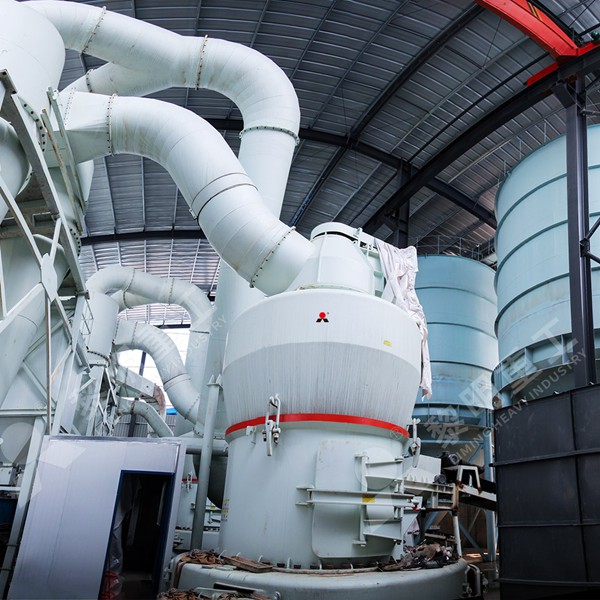
Why Calcium Carbonate Grinding Matters in Coatings
Calcium carbonate is the most widely used extender in the global coatings market, prized for its low cost, high brightness, and excellent compatibility with binders and pigments. The key to unlocking its full potential lies in precise grinding. Coating applications demand specific particle sizes and distributions:
- Paper coatings: Typically require fine powders with d98 ≤ 10 μm for optimal smoothness and gloss.
- Architectural paints: Often use ground calcium carbonate (GCC) with d50 between 5-20 μm to balance hiding power and film integrity.
- Powder coatings: Need tightly controlled particle sizes, usually d50 around 10-30 μm, to ensure electrostatic application efficiency.
- Industrial and automotive coatings: Demand ultra-fine grades (d97 ≤ 5 μm) for high-gloss, low-haze finishes.
Improper grinding can lead to issues such as poor dispersion, settling, reduced brightness, and increased binder demand. Therefore, choosing a grinding mill that offers consistent output, adjustable fineness, and high throughput is not just a technical decision—it's a business imperative.
Evaluating Leading Grinding Mill Technologies for Coating-Grade Calcium Carbonate
LIMING HEAVY INDUSTRY CO., LTD., with over 30 years of experience and a strong R&D foundation, provides a range of grinding mills engineered to meet the stringent demands of the coating industry. Below we analyze the most relevant solutions.
The Versatile Raymond Mill for Standard Coating Grades
The Raymond Mill remains a workhorse for medium-fineness calcium carbonate (80-325 mesh). Its robust design, featuring a grinding roller and ring system, ensures reliable operation for materials with Mohs hardness below 7 and humidity under 6%. For coating applications where a fineness of 613 μm to 44 μm (30-325 mesh) is acceptable—such as in primers, fillers, or lower-cost paints—the Raymond Mill offers an excellent balance of investment and output. LIMING's Raymond Mill can handle capacities from 1.2 to 4.5 T/H, with an input size of 15-25 mm. Its simple structure and low maintenance make it ideal for small to medium-scale producers.
MTW European Type Trapezium Mill: The Upgrade for High-Capacity Production
For producers requiring higher throughput and finer, more uniform powders, the MTW European Type Trapezium Mill is the superior choice. This patented technology is an upgrade from traditional Raymond and Pendulum Mills. It integrates a modern milling device with an automatic electric control system for drying, grinding, and separation. Key features relevant to coating production include:
- Higher capacity: 3-55 T/H, making it suitable for large-scale mineral processing.
- Finer and more consistent fineness: Controlled via an efficient separator, ideal for producing 80-400 mesh powders for high-end coatings.
- Environmental compliance: The closed-loop system with a pulse dust collector meets stringent environmental standards.
- Low energy consumption: The trapezium-shaped grinding ring and roller reduce energy use by up to 30% compared to traditional Raymond mills.
Applied in limestone desulfurization and heavy calcium carbonate processing, this mill is a top contender for coating-grade GCC.
MW Micro Powder Mill: For Ultra-Fine Coating Applications
When the coating recipe demands superfine powder—for instance, d97 ≤ 5 μm (equivalent to 2500 mesh)—the MW Micro Powder Mill is the specialist. Based on advanced Swedish grinding technology, this mill is specifically designed for ultra-fine processing. Its fineness can be adjusted between 325 mesh (44 μm) and 3250 mesh (3.6 μm), offering exceptional flexibility. The MW mill adopts a unique multi-roller configuration and a high-efficiency classifier. Key advantages for coatings include:
- Ultra-fine output: Achieves d90 of 10 μm and below, critical for high-gloss paper coatings and topcoats.
- High brightness preservation: Low-temperature grinding minimizes thermal degradation, maintaining the natural whiteness of calcium carbonate.
- Environmentally friendly: Equipped with a pulse precipitator for a greener production process.
- Capacity: 0.5-25 T/H, with an input size of 10-20 mm.
For specialty coating producers, this mill offers a distinct competitive edge.
The Workhorse Ball Mill for Base Grinding
The Ball Mill is a classic solution for large-scale grinding in the cement, chemical, and non-metallic mineral industries. For calcium carbonate coating applications, ball mills are often used in the primary grinding stage or for producing a wide range of finenesses (80-400 mesh). With capacities from 0.65 to 50 T/H, it is robust but generally less energy-efficient than vertical roller mills or micro powder mills for ultra-fine tasks. However, its reliability and low cost per ton make it a viable option for basic grades.
LM Vertical Roller Mill: The Integrated Solution for Large-Scale Production
For industrial-scale operations, the LM Vertical Roller Mill integrates drying, grinding, separation, and conveying in one unit. It excels in processing non-metallic minerals with capacities up to 400 T/H. While primarily used for cement and coal grinding, it can be adapted for GCC. Its vertical design offers a small footprint and easy maintenance. However, for ultra-fine coating grades (below 10 μm), the MW Micro Powder Mill is often preferred due to its finer classification capability.
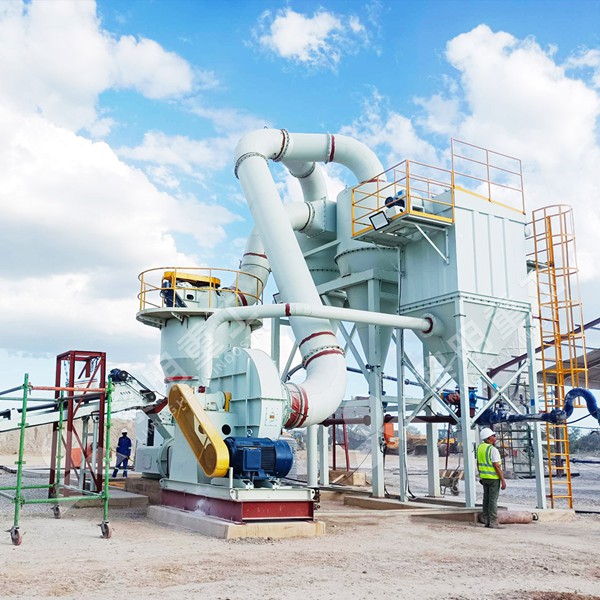
How to Choose the Right Calcium Carbonate Grinding Mill for Coatings
Selecting the optimal mill for your coating production line depends on three critical factors:
- Target Fineness: For 80-325 mesh, Raymond or Ball Mill is sufficient. For 325-800 mesh, MTW Mill is ideal. For 800-3250 mesh (ultra-fine), MW Micro Powder Mill is the best choice.
- Throughput Requirements: Small operations (1-5 T/H) can use Raymond or MW mills. Large-scale production (10-400 T/H) requires LM or MTW mills.
- Investment vs. Operating Cost: Ball Mills have lower initial cost but higher energy consumption per ton. Vertical mills and micro powder mills have higher upfront costs but lower operating expenses and better product quality.
Conclusion: Partnering with LIMING for Coating-Grade Calcium Carbonate
Successful coating formulation starts with the right raw material. By leveraging the expertise of LIMING HEAVY INDUSTRY CO., LTD.—a company with over 30 years of equipment manufacturing history and a focus on scientific R&D—you can achieve a grinding solution that delivers consistent, high-quality calcium carbonate tailored to your specific coating needs. Whether you require a standard Raymond mill for filler grades, a high-capacity MTW mill for bulk production, or an ultra-fine MW micro powder mill for premium coatings, LIMING offers proven technology backed by a strong scientific research team. Our equipment integrates drying, grinding, and classification to optimize efficiency and minimizes environmental impact.
Frequently Asked Questions (FAQ)
1. What is the ideal fineness of calcium carbonate for paper coating?
For paper coating applications, calcium carbonate is typically ground to a fineness where 98% of the particles (d98) are below 10 μm, often reaching 2-5 μm. This ensures high gloss, smoothness, and printability. The MW Micro Powder Mill from LIMING is designed to achieve these ultra-fine grades consistently.
2. Can a Raymond Mill produce coating-grade calcium carbonate?
Yes, but only for lower-end coating applications where fineness up to 325 mesh (44 μm) is acceptable, such as in primers or low-gloss interior paints. For high-end paints and paper coatings requiring finer powders (<20 μm), an MTW or MW Micro Powder Mill is recommended.
3. Which mill is most energy-efficient for grinding calcium carbonate for coatings?
For capacities above 10 T/H, the LM Vertical Roller Mill and MTW European Type Trapezium Mill are highly energy-efficient due to their advanced grinding mechanisms and integrated classifiers. For ultra-fine grinding (below 10 μm), the MW Micro Powder Mill offers competitive energy consumption by using a multi-roller design that prevents over-grinding.
4. How does the moisture content of raw calcium carbonate affect grinding?
Most grinding mills, especially Raymond and MTW mills, require feed material with moisture content below 6%. Higher moisture can cause clogging, reduced capacity, and equipment damage. For materials with higher moisture, the LM Vertical Roller Mill has an integrated drying function, or an external drying step may be required before feeding into other mills.
5. What environmental features should I look for in a calcium carbonate grinding mill for coating production?
Look for a mill equipped with a pulse jet dust collector or baghouse to minimize particulate emissions. The MTW and MW mills from LIMING feature closed-loop air circulation systems and pulse precipitators, ensuring compliance with environmental protection standards while maintaining clean powder collection.


