Published on: October 26, 2023
Limestone is a fundamental raw material in glass manufacturing, serving as a source of calcium oxide (CaO) that stabilizes the glass structure, enhances durability, and improves chemical resistance. The quality of ground limestone directly impacts the clarity, strength, and melting efficiency of the final glass product. At Liming Heavy Industry, we have specialized in designing and manufacturing limestone grinding mills for glass making for over three decades, offering a comprehensive range of equipment tailored to meet the stringent requirements of the glass industry. From coarse crushing to ultra-fine powder processing, our mills—including LM Vertical Roller Mill, Raymond Mill, MTW European Type Trapezium Mill, Micro Powder Mill, and Ball Mill—provide reliable solutions for particle size control, energy efficiency, and environmental compliance. This article explores the critical role of limestone grinding in glass production, the technical advantages of our equipment, and how our integrated approach can optimize your manufacturing process.
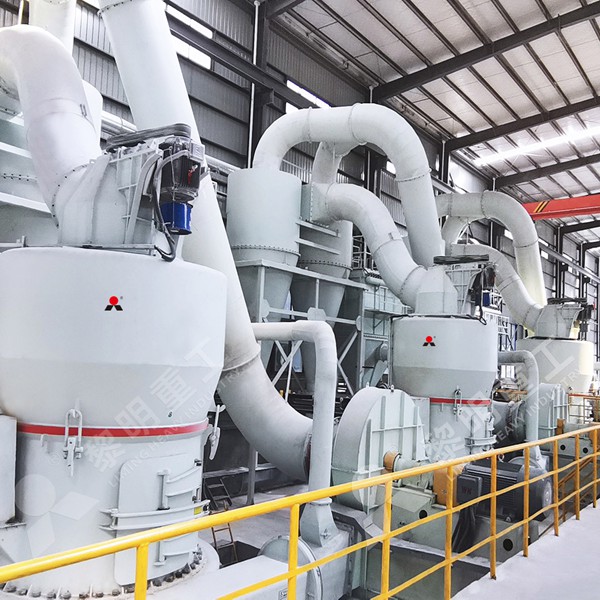
The Importance of Limestone in Glass Making
Glass is primarily composed of silica sand, soda ash, and limestone. Limestone (calcium carbonate) acts as a stabilizer, preventing the glass from dissolving in water and improving its mechanical strength. The typical chemical composition required for glass-grade limestone includes a calcium carbonate content of at least 98%, with low levels of iron, magnesium, and other impurities that can cause discoloration or defects. The particle size distribution of ground limestone also plays a crucial role: finer particles accelerate melting and homogenization, reducing energy consumption in the furnace, while overly coarse particles can lead to incomplete fusion and product inhomogeneity.
For glass container manufacturing (e.g., bottles, jars) and flat glass (e.g., windows, automotive glass), the recommended fineness for limestone powder is typically 80% passing 200 mesh (75 μm) to 325 mesh (44 μm). In specialty glass applications, such as fiberglass or optical glass, finer grinding down to 10–20 microns may be necessary. This is where the selection of the right grinding mill becomes critical—it must deliver consistent output, precise classification, and high throughput while minimizing wear and operational costs.
Our Grinding Mill Portfolio for Limestone Processing
1. LM Vertical Roller Mill: High-Capacity and Integrated Drying
The LM Vertical Roller Mill is our flagship product for large-scale limestone grinding, with capacities ranging from 10 to 400 T/H and input sizes up to 55 mm. It integrates drying, grinding, powder selection, and material conveying into a single unit, making it ideal for processing moist limestone or combined raw materials. The innovative milling device reduces energy consumption by 30–40% compared to traditional ball mills, while the automatic electric control system ensures stable product fineness (typically 80–200 mesh for glass applications). Key advantages include low noise, compact footprint, and the ability to handle non-metallic minerals, coal, and slag.
2. Raymond Mill: Classic Reliability for Medium-Scale Operations
For medium-scale glass manufacturers requiring capacity between 1.2 and 4.5 T/H, the Raymond Mill remains a cost-effective and proven solution. Suitable for materials with Mohs hardness under 7 and humidity below 6%, it produces fineness from 613 μm to 44 μm (30–325 mesh). The Raymond Mill’s simple structure and ease of maintenance make it a popular choice for limestone desulfurization in power plants and non-metallic ore pulverizing. While not as energy-efficient as modern vertical mills, its rugged design ensures long-term operation with minimal downtime.
3. MTW European Type Trapezium Mill: Upgraded Performance for Fine Grinding
The MTW European Type Trapezium Mill is the evolution of traditional Raymond and pendulum mills, combining patented trapezoidal grinding ring and roller technology with stable performance. With a capacity of 3–55 TPH and input size up to 50 mm, it is designed for large-scale non-metallic mineral powder making, including limestone for desulfurization, heavy calcium carbonate, and building materials. The closed-loop system with pulse dust collector meets environmental standards, while the variable-frequency belt feeder ensures uniform material feeding. For glass making, the MTW mill delivers consistent fineness (80–200 mesh) with high throughput and low energy consumption.
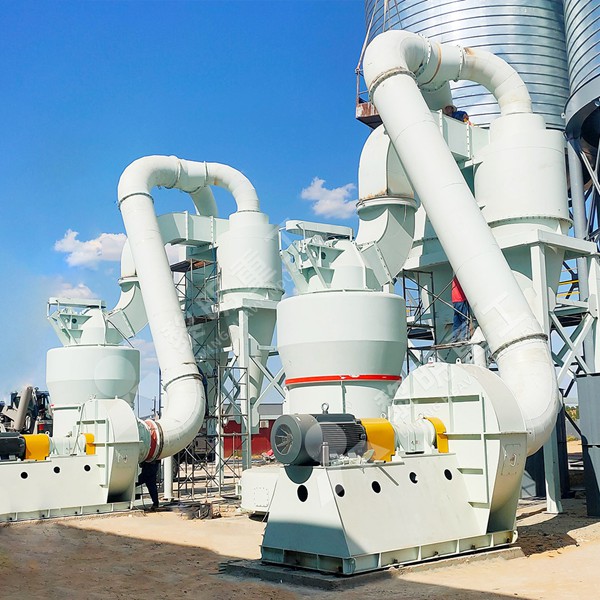
4. MW Micro Powder Mill: Ultra-Fine Grinding for Specialty Glass
When glass formulations demand ultra-fine limestone powder (d97 ≤ 5 μm, 325–3250 mesh), the MW Micro Powder Mill is the ideal choice. With a capacity of 0.5–25 T/H and input size up to 20 mm, it incorporates advanced Swedish grinding technology for medium-speed micro-grinding. The mill’s multiple roller configuration and precision classification system enable precise control over particle size distribution, essential for high-performance glass, ceramics, and coatings. The integrated pulse precipitator ensures a clean, green production environment.
5. Ball Mill: Versatile Workhorse for Wet or Dry Grinding
The Ball Mill remains a versatile option for limestone grinding, especially in cement, construction, and beneficiation applications where coarser to medium fineness (e.g., 200 mesh) is acceptable. With capacities from 0.65 to 50 T/H and input size ≤25 mm, it can operate in both dry and wet modes. The rotating horizontal barrel lifts steel balls to cascade and impact the material, making it suitable for grinding operations that require robust construction and simple operation. For glass making, the ball mill is often used for secondary grinding or when combined with a classifier to achieve the required fineness.
Selecting the Right Mill for Your Glass Application
Several factors influence the optimal mill choice for limestone grinding in glass making:
- Required fineness: For standard container glass, Raymond or MTW mills suffice; for specialty glass, MW Micro Powder Mill is preferred.
- Production capacity: LM Vertical Mill excels in high-tonnage operations, while Ball Mill suits smaller or intermittent runs.
- Moisture content: If limestone feed has high moisture, the LM mill’s integrated drying function is beneficial.
- Energy costs: Vertical roller mills and MTW mills offer superior energy efficiency, reducing operating expenses over time.
- Space constraints: LM vertical mill has a smaller footprint per unit capacity compared to ball mills.
Our engineering team at Liming Heavy Industry can perform material testing and simulation to recommend the most cost-effective solution tailored to your feedstock characteristics and final product specifications.
Quality Assurance and After-Sales Support
Since 1987, we have built a reputation for precision manufacturing and innovation. Our headquarters in Zhengzhou’s HI-TECH zone (80,000 m²) and second workshop in Shangjie (67,000 m²) house state-of-the-art production lines and a mature scientific research team. We adhere to a modern scientific management system, implementing rigorous quality control from raw material selection to final assembly. Our after-sales services include installation supervision, commissioning, operator training, and spare parts supply, ensuring your grinding mill operates at peak performance for years.
Additionally, our commitment to environmental sustainability means all our mills are equipped with pulse dust collectors or baghouses to comply with national emission standards, reducing dust pollution and supporting green manufacturing.
Conclusion: Partner with the Industry Leader
Limestone grinding is a critical step in the glass manufacturing value chain, directly influencing product quality, energy efficiency, and production costs. Liming Heavy Industry offers a complete suite of grinding mills—from high-capacity vertical mills to ultra-fine micro powder mills—backed by 30+ years of expertise and a global service network. Whether you need a single mill or an integrated grinding system, our team is ready to provide customized solutions that meet your technical and operational goals. Contact us today to discuss your project requirements and discover how our limestone grinding mills can enhance your glass making process.
Frequently Asked Questions (FAQs)
Q1: What is the recommended limestone fineness for glass container production?
For standard container glass, the ideal fineness is 80% passing 200 mesh (75 μm) to 325 mesh (44 μm). Finer grinding improves melting efficiency but increases energy consumption, so a balance must be struck based on furnace conditions.
Q2: Can your mills handle limestone with high moisture content?
Yes. The LM Vertical Roller Mill is specifically designed to handle materials with up to 20% surface moisture, as it integrates hot air drying during the grinding process. Other mills like Raymond or MTW may require pre-drying if moisture exceeds 6%.
Q3: How does the MW Micro Powder Mill achieve ultra-fine limestone powder?
The MW mill combines a high-speed rotating classifier with multiple grinding rollers that press and shear material against a stationary ring. The classifier ensures only particles below the set cut size are discharged, while oversized particles are returned for further grinding.
Q4: What is the typical lifespan of wear parts in your limestone grinding mills?
Wear life depends on feed hardness and operating conditions. For typical limestone (Mohs hardness 3–4), Raymond and MTW mill roller and ring wear parts last approximately 6–12 months with regular maintenance. Vertical mills may offer longer intervals due to lower grinding pressure per unit area.
Q5: Do you provide turnkey grinding system solutions?
Absolutely. Our team can supply complete systems including crushers, feeders, conveyors, dust collectors, and electrical controls. We also offer site planning, foundation design, and installation services to ensure seamless integration into your existing production line.


