Published: October 5, 2023
Barite, or barium sulfate (BaSO₄), is a critical mineral in the paint and coatings industry, primarily used as a weighting agent and extender to improve density, opacity, and chemical resistance. The grinding of barite into ultra-fine powders—typically 325 mesh to 2500 mesh—requires specialized milling equipment that balances efficiency, fineness control, and operational reliability. As a leading manufacturer in the crushing and grinding sector since 1987, Liming Heavy Industry offers a comprehensive suite of mills tailored for barite processing, including LM vertical roller mills, Raymond mills, MTW European trapezium mills, MW micro powder mills, and ball mills. These systems integrate drying, grinding, classification, and conveying, ensuring consistent product quality and high throughput while meeting stringent environmental standards. This article explores the technical considerations for selecting a barite grinding mill for paint weighting agent applications, drawing on our expertise in non-metallic mineral processing and over three decades of engineering innovation.
Understanding Barite as a Paint Weighting Agent
In paint formulations, barite serves multiple roles: it increases the specific gravity of the coating, enhances hiding power, improves abrasion resistance, and reduces gloss without affecting color. The particle size distribution of ground barite directly influences these properties. For paint weighting agents, typical fineness ranges from 5 to 45 microns (325–2500 mesh), with a d97 value below 10 microns being common for high-performance applications. Barite is a relatively soft mineral, with a Mohs hardness of 3–3.5, and is non-flammable and non-explosive, making it suitable for a variety of grinding technologies. However, its high density (4.1–4.5 g/cm³) demands robust mill designs that can handle heavy loads and resist wear, particularly in ring-roller or ball mill configurations.
The moisture content of barite ore is generally low (under 6%), but if the feed material contains clay or other impurities, initial drying may be necessary. Our equipment portfolio addresses these challenges through integrated drying systems, variable-speed feeders, and advanced classification mechanisms. For example, the LM vertical roller mill can dry and grind simultaneously, while the MTW mill uses a closed-loop air system to reduce energy consumption.
Selecting the Right Mill for Barite Processing
Choosing the optimal grinding mill for barite as a paint weighting agent depends on production capacity, required fineness, and energy efficiency. Below, we analyze the key available from Liming Heavy Industry.
LM Vertical Roller Mill
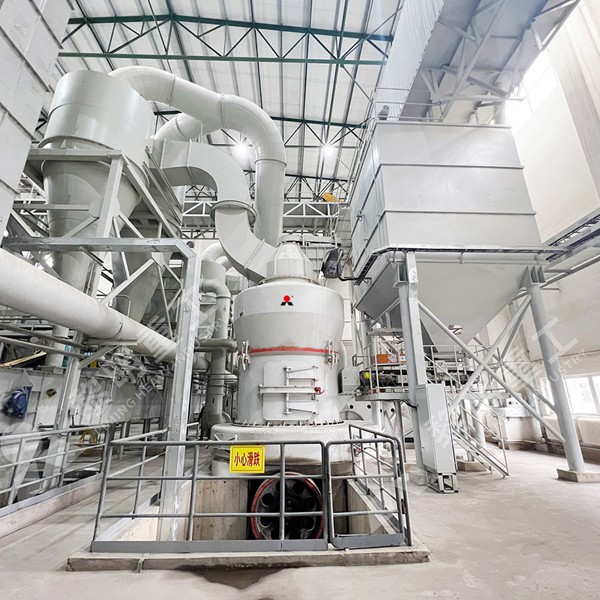
The LM vertical roller mill is ideal for large-scale barite grinding operations with capacities from 10 to 400 T/H. It integrates crushing, grinding, drying, and powder selection in a single unit. The mill uses a hydraulic system to apply pressure on the grinding rollers, which rotate against a rotating table. This design ensures uniform particle size distribution and low energy consumption. For barite, the LM series can achieve a fineness of 80–600 mesh (d97), with the ability to adjust via the built-in classifier. The input size of 30–55 mm allows direct feeding from a primary jaw crusher, reducing pre-processing steps. A key advantage is its automatic electric control system, which stabilizes operation and minimizes downtime—critical for continuous paint manufacturing.
Raymond Mill
For medium-scale barite grinding (1.2–4.5 T/H), the Raymond mill remains a cost-effective solution. It is suitable for materials under Mohs hardness 7 and humidity below 6%, making it a perfect match for barite. The output fineness ranges from 613 μm to 44 μm (30–325 mesh), which covers typical paint filler requirements. The mill works by rotating rollers against a stationary ring; the ground powder is swept upward by an air stream and separated by a centrifugal classifier. Raymond mills are known for their simplicity and low maintenance, though they are less energy-efficient than more modern designs like the MTW or LM series. Liming Heavy Industry’s Raymond mill features a reinforced grinding roller and ring to handle barite’s weight.
MTW European Type Trapezium Mill
As an upgraded version of the traditional Raymond mill, the MTW European type trapezium mill offers higher capacity (3–55 T/H) and improved performance. It incorporates patented technology, such as a bevel gear drive, curved ducting, and a pulse dust collector that conforms to emission standards. The trapezium-shaped rollers and ring create a wedging effect, enhancing grinding efficiency for dense materials like barite. Input size is 30–50 mm, and fineness can be adjusted between 80–425 mesh (d97). The MTW system includes a variable-frequency belt feeder, a separator, an air blower, and a jaw crusher for complete processing. The closed-circuit airflow recycles air through the blower, and the pulse dust collector ensures a clean working environment—important for paint-grade barite where contamination is unacceptable.
MW Micro Powder Mill
For ultra-fine barite powders (325–3250 mesh, d97 ≤ 5 μm), the MW micro powder mill is the top choice. Based on advanced Swedish grinding technology, this medium-speed mill uses a multi-roller configuration where rollers rotate against a raceway ring. The material is fed via a vibrating feeder into the center of an upper turnplate, then thrown outward by centrifugal force to be crushed between the rollers and ring. The classifier returns coarse particles for re-grinding. The MW mill has a capacity of 0.5–25 T/H and an input size of 10–20 mm. It is ideal for producing nano-scale barite used in specialized paint formulations where transparency and weight are critical. Equipped with a pulse precipitator, the system minimizes dust emissions, aligning with green production goals.
Ball Mill
Although older in design, the ball mill remains relevant for barite processing in certain beneficiation contexts. It can handle feed sizes up to 25 mm and produce fineness adjustable via rotation speed and grinding media size. The ball mill is a horizontal rotating device; steel balls inside the barrel cascade and impact the material, grinding it to a powder. Capacities range from 0.65 to 50 T/H. However, for paint-grade barite requiring consistent particle size distribution, the ball mill is often used in conjunction with a classifier. It is more suitable where high throughput and moderate fineness (50–325 mesh) are acceptable, such as in primer or industrial coatings. The energy consumption is higher than vertical or roller mills, but operational simplicity is a benefit.
Process Integration and Quality Control
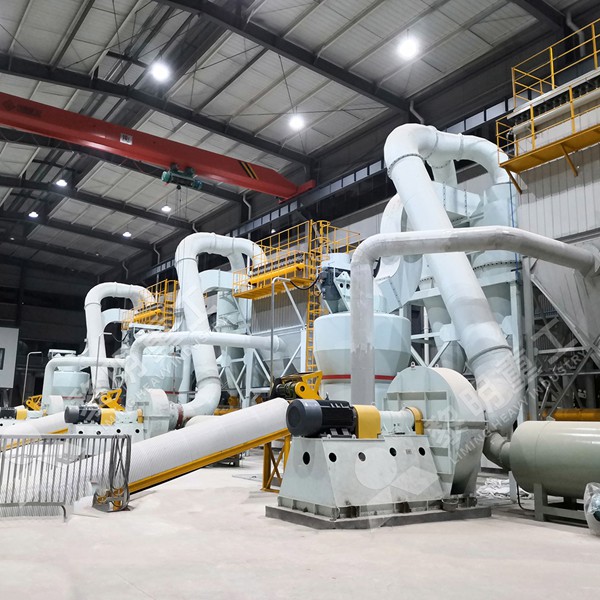
Managing a barite grinding line requires careful integration of equipment to maintain consistent quality. At Liming Heavy Industry, we recommend a typical system: a jaw crusher reduces barite run-of-mine to –30 mm; a hopper and vibrating feeder meter material into the mill; the mill (LM, MTW, or MW) grinds and classifies the powder; a pulse dust collector captures fines; and a powder collector stores the final product. For paint weighting agents, quality control focuses on particle size distribution (PSD), specific gravity, and whiteness. Our mills allow easy adjustment of the classifier speed to achieve target PSD curves, which is essential for paint viscosity and hiding power.
Another key factor is moisture management. Barite with moisture above 6% can cause plugging in mill internals. The LM vertical mill’s integrated hot air system can dry material up to 15% moisture, making it resistant to feed variations. The MTW and Raymond mills require pre-dried materials but are simpler in auxiliary design. We also provide variable-frequency drives to optimize energy use, reducing operational costs over the long term.
Case Study: Barite Grinding for Paint Production
A mid-sized coatings manufacturer in Southeast Asia required 5 T/H of barite powder at 800 mesh (d97) for use as a weighting agent in marine paints. After analyzing the feed material (specific gravity 4.2, hardness 3.5, moisture 2%), we selected the MTW European type trapezium mill. The plant included a jaw crusher (PE 400×600), a vibrating feeder, and a pulse dust collector. The mill operated at a motor power of 110 kW and achieved a throughput of 5.5 T/H with a specific energy consumption of 22 kWh/T. The final product met the d97 specification with a uniformity index of 1.2. After six months of operation, maintenance was limited to roller and ring replacement due to normal wear, with no unscheduled downtime. This project highlighted the importance of matching mill type to material properties and production targets.
Conclusion
Barite grinding for paint weighting agents demands mills that combine high capacity, precise classification, and durability. Liming Heavy Industry’s extensive product line—from LM and MTW mills for medium-to-large operations to MW mills for ultra-fine powders—delivers tailored solutions. Our 30-year heritage in crushing and grinding equipment ensures that each system is built for reliability and efficiency. By integrating modern control systems, environmental protection features, and robust mechanical design, we enable paint manufacturers to produce consistent, high-density barite powders that meet industry standards. For those seeking to optimize their barite grinding process, a thorough evaluation of mill geometry, power consumption, and auxiliary equipment is critical.
Frequently Asked Questions
- What fineness is typically required for barite used as a paint weighting agent? Most paint applications require barite fineness between 325 mesh (44 μm) and 2500 mesh (5 μm), with d97 values often below 10 μm for high-quality coatings. Finer grades improve opacity and chemical resistance.
- Which mill from Liming Heavy Industry is best for grinding barite to 800 mesh? The MTW European type trapezium mill is highly recommended for 800 mesh production due to its adjustable classifier and high throughput. For higher fineness (above 1250 mesh), the MW micro powder mill is more suitable.
- How does barite density affect mill selection? Barite’s high specific gravity (4.1–4.5 g/cm³) places stress on rollers, rings, and bearings. Mills like the LM and MTW use reinforced materials and hydraulic systems to handle the load, while Raymond mills may require more frequent wear part replacement.
- Can the same mill grind both barite and other minerals like calcium carbonate? Yes, many of our mills, such as the LM vertical roller mill and MTW mill, are designed for multiple non-metallic minerals. However, switching between barite and softer minerals like calcium carbonate may require adjusting classifier speed and feeder settings to maintain PSD.
- What environmental controls are included in your barite grinding systems? Our mills are equipped with pulse dust collectors that capture particles down to 1 μm, meeting international emission standards. The MTW and MW systems also feature closed-loop air circulation to minimize dust release, ensuring compliance with environmental regulations.


