Published: October 5, 2023
In the competitive landscape of industrial mineral processing, the demand for high-purity, ultra-fine barite powder has never been more critical, particularly for the coating industry where particle size distribution and brightness directly impact product quality. Barite (barium sulfate, BaSO4) serves as a functional filler in paints, coatings, and plastics, enhancing density, chemical resistance, and gloss while reducing production costs. However, achieving the required fineness—often between 325 mesh (44 μm) and 3250 mesh (5 μm) with strict d97 specifications—demands advanced grinding technology. The barite ultrafine grinding mill for coating applications has evolved to meet these exacting standards, integrating innovations in milling mechanics, classification efficiency, and environmental compliance. This article explores the core technologies, equipment configurations, and operational advantages of modern barite ultrafine grinding systems, with a focus on solutions designed to maximize throughput while minimizing energy consumption and maintenance downtime. Whether producing heavy calcium carbonate substitutes or specialized barite grades for anti-corrosion coatings, selecting the right mill is paramount. We will examine how leading equipment, such as those developed by Liming Heavy Industry, combines decades of engineering expertise with cutting-edge features to deliver consistent, cost-effective results for coating manufacturers worldwide.
The Barite Challenge in Coating Applications
Barite's role in coatings extends beyond mere weight. Its high specific gravity (4.2–4.5 g/cm³) provides excellent settle resistance in liquid formulations, while its low oil absorption and chemical inertness ensure compatibility with diverse resin systems. For UV-curable and waterborne coatings, ultra-fine barite powder improves scratch resistance and film hardness without sacrificing transparency. However, the grinding process must overcome barite's moderate hardness (3–3.5 Mohs) and tendency to generate heat, which can degrade particle morphology. Traditional ball mills or Raymond mills often struggle to achieve consistent sub-10-micron distributions without excessive energy input or contamination from grinding media.
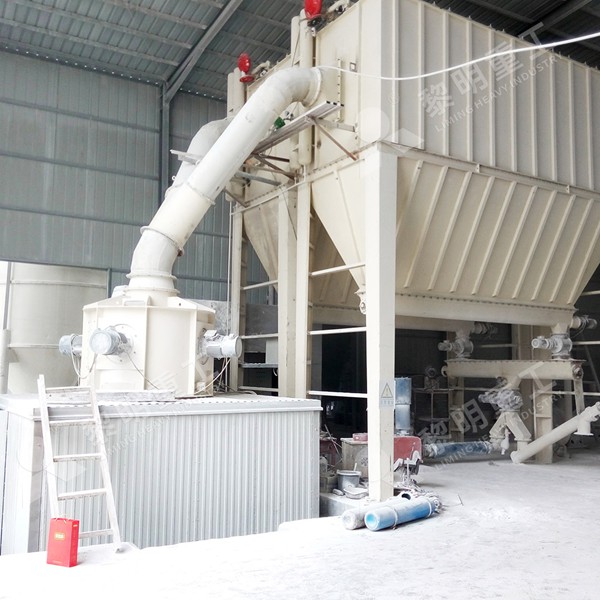
Core Technology: MW Micro Powder Mill for Barite
Liming Heavy Industry's MW Micro Powder Mill stands as a benchmark for barite ultrafine grinding. Designed as a medium-speed micro-grinding mill, it incorporates advanced Swedish grinding technology adapted for high-volume, high-precision mineral processing. The mill operates on a unique principle: the main shaft rotates via a reducer, driving multiple rollers (up to dozens) to rotate against a stationary ring raceway. Material pre-crushed by a hammer crusher to 10–20 mm is fed via an elevator and variable-frequency feeder to the upper turnplate center. Centrifugal force pushes the material downward onto the raceway, where rollers apply controlled compressive and shear forces to generate ultra-fine particles. Airflow carries fines upward to a high-efficiency dynamic classifier, which selects particles meeting d97 ≤ 5 μm. Over-size materials return for regrinding; fines are collected in a pulse dust collector, ensuring zero emissions.
This design offers distinct advantages for barite coating production:
• Adjustable Fineness: From 325 mesh (44 μm) to 3250 mesh (5 μm), with external classifier adjustments.
• Greener Operations: Pulse precipitator and closed-loop air system meet strict environmental norms.
• High Throughput: Capacity ranges from 0.5 to 25 TPH, scalable for both pilot and industrial lines.
• Low Wear: Roller and ring materials (high-chromium steel, ceramic coatings) minimize contamination of final barite product, critical for whiteness (typically >90% brightness).
Equipment Integration and Process Optimization
A complete barite ultrafine grinding system comprises more than the mill itself. Feeding consistency, classification precision, and powder handling are equally vital. The typical line includes a jaw crusher (e.g., PE-400×600) for primary reduction to 30–55 mm, a vibrating feeder, a belt conveyor, the MW mill, a high-efficiency classifier, a cyclone collector, a pulse bag filter, and an induced draft fan. A centralized PLC cabinet controls start-up, shutdown, and interlock sequences. Key operational tips for coating-grade barite:
• Moisture Control: Input moisture must be <6%; pre-drying may be required for damp ores.
• Roller Pressure: Optimize hydraulic pressure to balance fineness and capacity—excessive pressure generates heat and may cause agglomeration.
• Classifier Speed: Rotor speed adjustment directly influences cut size; slower speeds for coarser grades (e.g., 800 mesh), higher speeds for ultra-fine (e.g., 2500 mesh).
• Airflow Volume: Proper fan speed maintains negative pressure in the mill, preventing dust leaks and ensuring efficient material transport.
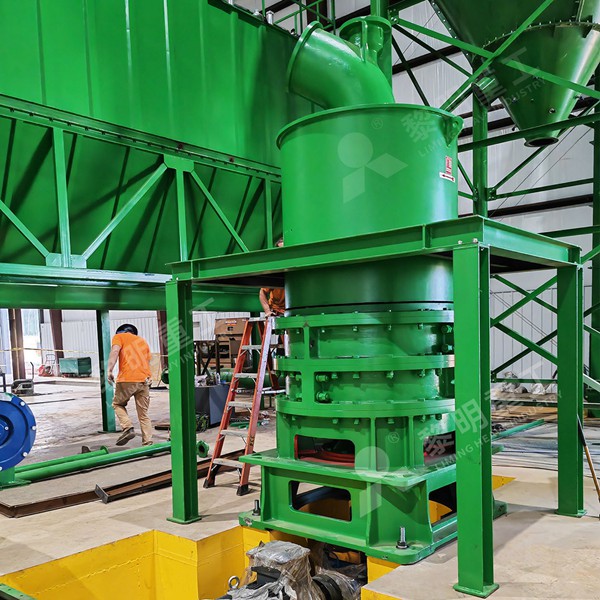
Comparative Analysis: MW Mill vs. Other Grinding Technologies
While alternatives like LM Vertical Roller Mill (10–400 TPH, 30–55 mm input) or MTW European Type Trapezium Mill (3–55 TPH, 30–50 mm input) are effective for coarser barite grinding (e.g., 200 mesh for oil drilling), the MW Micro Powder Mill excels in ultra-fine domains. Ball mills, though robust, suffer from higher energy consumption (40–70 kWh/ton vs. 25–40 kWh/ton for MW) and inconsistent particle shape due to impact-dominant comminution. Raymond mills (1.2–4.5 TPH, 613–44 μm output) are suitable for small-scale production but struggle below 200 mesh. For coating-grade barite—where 97% passing 10 μm is common—the MW mill's roller-ring attrition mechanism produces equiaxed particles with minimal fines, improving packing density in paint films. Additionally, Liming Heavy Industry's 30+ years of manufacturing experience ensures rigorous quality control: vertical roller mill housings are stress-relieved, and all rotating components are dynamically balanced.
Case Studies and Performance Metrics
In a recent installation for a Chinese coating manufacturer, a single MW1250 unit processed barite with feed size ≤15 mm and moisture 4.5%, producing powder at d97 = 8.5 μm (equivalent to 1500 mesh) at 18 TPH. Whiteness measured 92%, with Fe2O3 content below 0.05%. The client reported 30% lower energy costs compared to their previous ball mill + air classifier setup. Another European application utilized two MW800 mills in parallel, yielding 24-hour continuous operation for automotive primer fillers. Maintenance intervals extended to 3000 hours for roller replacement, thanks to the advanced lubrication system. These results underscore the mill's suitability for demanding coating formulations.
Conclusion and Recommendations
Selecting the right barite ultrafine grinding mill for coating is not merely a technical decision—it influences final product performance, production economics, and environmental footprint. Liming Heavy Industry's MW Micro Powder Mill, backed by decades of R&D and a comprehensive service network (including the 80,000 m² HQ in Zhengzhou's Hi-Tech Zone and 67,000 m² workshop in Shangjie), offers a proven solution for manufacturers seeking high-quality ultra-fine barite. For those targeting specific coating segments—anti-corrosion primers, architectural paints, or powder coatings—a tailored system with optional ceramic wear parts and automated fineness control is advisable. By prioritizing efficiency, reliability, and compliance, coating producers can turn barite from a commodity into a competitive advantage.
Frequently Asked Questions (FAQ)
- What is the typical fineness of barite powder produced by the MW Micro Powder Mill for coating applications?
The MW mill can adjust fineness from 325 mesh (44 μm) down to d97 ≤ 5 μm (approximately 3250 mesh), making it ideal for high-end coating fillers requiring narrow particle size distribution. - Can the MW Mill handle barite with high moisture content?
While the mill can process materials with moisture up to 6%, best results for ultra-fine grinding occur at <5% moisture. Higher moisture may require a pre-drying step or integration with a dryer. - What maintenance is required for the grinding rollers and ring?
Rollers and rings typically need replacement every 2000–3000 operating hours, depending on barite hardness and feed cleanliness. Routine lubrication and bolt inspections are recommended weekly. - What is the power consumption per ton of barite ground to 1500 mesh?
Typical specific power consumption ranges from 25 to 40 kWh per ton, depending on feed size and fineness target. This is significantly lower than ball mills (40–70 kWh/ton). - Is the MW mill suitable for other minerals besides barite?
Yes, the mill is widely used for calcium carbonate, gypsum, talc, kaolin, and other non-metallic minerals with Mohs hardness below 6. For barite, the wear components can be customized with high-chromium alloys.


