Published: October 26, 2023
In the modern plastic compounding industry, barite (barium sulfate, BaSO₄) has emerged as a premier heavy filler due to its high density, chemical inertness, and ability to enhance soundproofing, radiation shielding, and weight characteristics in finished plastic products. However, the effectiveness of barite as a filler is critically dependent on its particle size distribution, purity, and surface characteristics — all of which are determined by the grinding process. Selecting the right barite grinding mill is not merely a technical decision; it is a strategic investment in product quality and operational efficiency. Liming Heavy Industry, a Chinese manufacturer with over 30 years of expertise in crushing and grinding equipment, offers a comprehensive portfolio of mills tailored for processing barite into high-performance heavy fillers for the plastics sector. From the energy-efficient LM Vertical Roller Mill to the ultra-fine MW Micro Powder Mill, each system is engineered to meet the exacting standards of fineness, throughput, and environmental compliance required by plastic manufacturers worldwide. This article provides a detailed, professional examination of barite grinding technologies for plastic heavy filler applications, drawing on Liming's extensive experience and product range.
Understanding Barite as a Heavy Filler in Plastics
Barite is the primary source of barium sulfate, a mineral with a specific gravity typically ranging from 4.2 to 4.5 g/cm³, making it one of the heaviest non-metallic minerals used in industrial fillers. When finely ground and incorporated into plastic matrices such as polypropylene (PP), polyethylene (PE), polyvinyl chloride (PVC), or nylon, barite imparts several critical properties:
- Increased density and weight: Essential for applications like automotive sound deadening panels, counterweights, and marine components.
- Radiation attenuation: Barite-filled plastics are widely used in medical X-ray rooms, nuclear facilities, and protective equipment.
- Improved thermal and acoustic insulation: The high density of barite disrupts sound transmission and heat flow.
- Chemical resistance: Barite is insoluble in water and resistant to acids and alkalis, preserving plastic integrity in harsh environments.
For these benefits to be realized, the barite powder must meet stringent specifications: a fineness typically between 325 mesh (44 μm) and 1250 mesh (10 μm), with a narrow particle size distribution, low moisture content (below 0.5%), and minimal contamination. The grinding mill must therefore deliver consistent, controllable, and efficient size reduction.
Liming Heavy Industry: A Legacy of Grinding Excellence
Liming Heavy Industry Co., Ltd., founded in 1987, has grown into a modern joint-stock corporation integrating research, manufacturing, and sales. Headquartered in the HI-TECH Industry Development Zone of Zhengzhou, China, with an 80,000 m² facility and an additional 67,000 m² workshop in Shangjie Industry Park, the company has positioned itself as a leader in the machinery manufacturing industry. Over three decades, Liming has adhered to modern scientific management systems, precision manufacturing, and continuous innovation. The company's R&D strategy focuses on scientific research tackling key problems, technological progress, and collaboration between production, learning, and research. This commitment ensures that Liming's grinding mills are at the technological frontier, delivering high productivity, energy efficiency, and environmental compliance.
For barite grinding in plastic heavy filler applications, Liming offers several mill types, each suited to specific capacity, fineness, and operational requirements.
Primary Barite Grinding Mill Solutions
1. LM Vertical Roller Mill
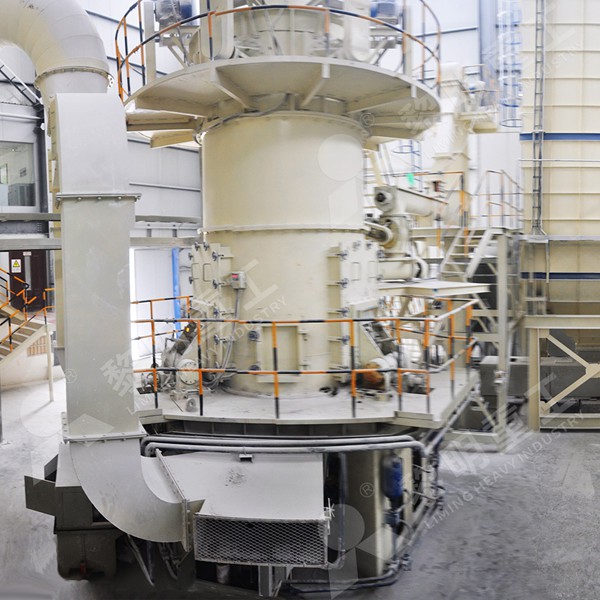
For large-scale barite grinding operations exceeding 10 tons per hour, the LM Vertical Roller Mill is the ideal solution. This mill integrates drying, grinding, powder selection, and conveying into a single, compact unit. With a capacity range of 10–400 T/H and an input size of 30–55 mm, the LM vertical mill is designed for non-metallic minerals, coal, and slag applications. Its new milling device and automatic electric control system ensure stable operation and precise fineness adjustment. For barite heavy filler production, the LM mill can achieve finenesses from 200 mesh to 800 mesh, making it suitable for high-volume plastic compounding lines. The system's built-in classifier eliminates the need for separate screening equipment, reducing capital expenditure and footprint. Energy consumption is typically 30–40% lower than ball mills of equivalent capacity, a critical advantage for cost-conscious manufacturers.
2. MTW European Type Trapezium Mill
The MTW European Type Trapezium Mill is an upgraded version of traditional Raymond and pendulum mills, featuring patented technology for enhanced performance. With a capacity of 3–55 TPH and input size of 30–50 mm, this mill is particularly well-suited for medium-scale barite grinding. It incorporates a trapezoidal grinding ring and roller design that increases grinding efficiency by 20–30% compared to conventional Raymond mills. The MTW mill can produce barite powder with fineness ranging from 80 mesh to 400 mesh, ideal for standard heavy filler applications in PVC profiles, pipes, and sheets. Its closed-system operation, combined with a pulse dust collector, ensures compliance with national environmental standards. The variable-frequency belt feeder allows precise control of material feed, minimizing variations in product quality. Liming's extensive experience in limestone desulfurization and non-metallic mineral powder making directly translates to robust performance in barite grinding.
3. MW Micro Powder Mill
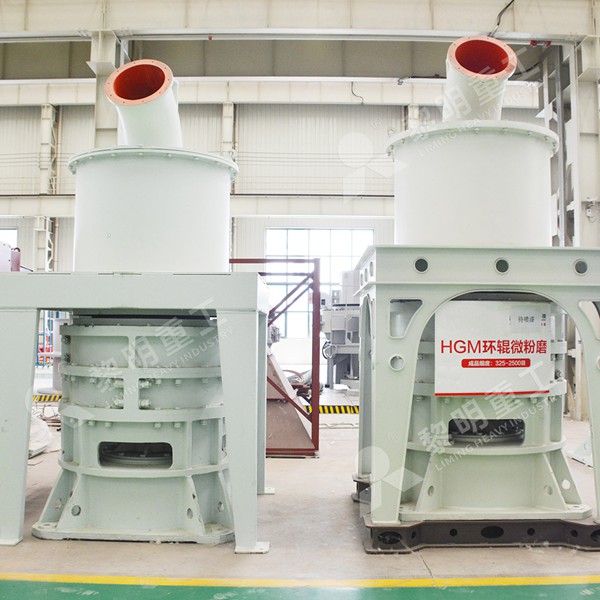
For plastic applications requiring ultra-fine barite powder — typically 800 mesh to 3250 mesh (d97 ≤ 5 μm) — the MW Micro Powder Mill is the technology of choice. This mill absorbs advanced Swedish grinding technology and is designed for superfine powder processing. With a capacity of 0.5–25 T/H and an input size of 10–20 mm, the MW mill uses a multi-roller system rotating against a raceway ring to achieve extreme fineness. The product fineness is adjustable, making it versatile for high-value plastic applications such as masterbatch, specialty films, and engineering plastics. The mill is equipped with a pulse precipitator, ensuring greener production. The working principle involves a hammer crusher for preliminary size reduction, followed by elevator and vibrating feeder for uniform feeding to the grinding chamber. The micronized barite produced by the MW mill offers superior dispersion and surface coverage in plastic matrices, enhancing mechanical properties and visual quality.
4. Raymond Mill and Ball Mill
For smaller-scale operations or where budget constraints are paramount, Liming's Raymond Mill and Ball Mill remain reliable options. The Raymond Mill, with a capacity of 1.2–4.5 T/H and input size of 15–25 mm, produces fineness between 613 μm and 44 μm, suitable for basic heavy filler applications. Its simplicity and low maintenance requirements make it a popular choice for small plastic manufacturers. The Ball Mill, with capacities from 0.65 to 50 T/H and input size ≤ 25 mm, is a robust, versatile option for grinding barite to medium fineness (typically 200–400 mesh). However, ball mills consume more energy and produce wider particle size distributions compared to vertical or trapezium mills, so they are generally recommended for applications where uniformity is less critical.
Operational Considerations for Barite Grinding in Plastics
When selecting a barite grinding mill for plastic heavy filler, several factors must be evaluated:
- Fineness requirements: Determine the target particle size based on the plastic application. Standard fillers (200–400 mesh) are suitable for general-purpose compounds, while ultra-fine grades (800–1250 mesh) are required for high-gloss surfaces or masterbatch.
- Throughput capacity: Match the mill's capacity to your production needs. Over-sizing leads to unnecessary capital costs, while under-sizing creates bottlenecks.
- Energy efficiency: Vertical roller mills and trapezium mills offer significant energy savings over ball mills, which is critical given the high electricity costs in grinding operations.
- Moisture content: Barite is typically dry, but if moisture exceeds 5%, the LM Vertical Mill with integrated drying is preferred.
- Environmental compliance: All Liming mills are equipped with pulse dust collectors or bag filters to meet emission standards, essential for modern factory operations.
- Automation and control: Liming's electric control systems allow for automatic monitoring of mill parameters, ensuring consistent product quality and reducing operator intervention.
Conclusion
Barite grinding for plastic heavy filler is a specialized process that demands careful mill selection to achieve the desired product quality, operational efficiency, and environmental sustainability. Liming Heavy Industry's portfolio — encompassing the LM Vertical Roller Mill, MTW European Type Trapezium Mill, MW Micro Powder Mill, Raymond Mill, and Ball Mill — provides scalable solutions for every production scale and fineness requirement. With a strong foundation in scientific research, precision manufacturing, and over 30 years of industry leadership, Liming is well-positioned to support plastic manufacturers in optimizing their barite filler production. By choosing the appropriate mill and leveraging Liming's technical expertise, companies can enhance their product offerings, reduce production costs, and maintain a competitive edge in the global plastics market.
Frequently Asked Questions (FAQ)
1. What is the ideal fineness of barite powder for plastic heavy filler applications?
The ideal fineness depends on the specific plastic product. For general-purpose fillers in PVC pipes or profiles, 325 mesh (44 μm) is commonly used. For higher performance applications like masterbatch or engineering plastics, fineness of 800–1250 mesh (10–15 μm) or even finer (up to 3250 mesh) may be required to ensure good dispersion and surface quality.
2. Can Liming's vertical roller mill handle barite with high moisture content?
Yes, the LM Vertical Roller Mill is designed with an integrated drying system that can handle materials with moisture content up to 15–20%. However, for barite specifically, moisture content is usually low (under 5%), so the drying function may not be necessary but provides flexibility if feed material varies.
3. How does the MTW European Type Trapezium Mill differ from a traditional Raymond mill?
The MTW mill features patented trapezoidal grinding rings and rollers, a variable-frequency feeder, and a more advanced classifier system. These improvements result in 20–30% higher grinding efficiency, better particle size control, and lower energy consumption compared to traditional Raymond mills. Additionally, the MTW system includes a pulse dust collector for improved environmental performance.
4. Is the MW Micro Powder Mill suitable for producing barite powder for medical radiation shielding plastics?
Absolutely. The MW Micro Powder Mill can achieve ultra-fine fineness down to d97 ≤ 5 μm, which is ideal for radiation shielding applications where uniform distribution of barite particles within the plastic matrix is critical for effective attenuation. The mill's closed system also ensures minimal contamination, preserving the purity required for medical-grade products.
5. What after-sales support does Liming Heavy Industry provide for barite grinding mills?
Liming Heavy Industry offers comprehensive after-sales services including installation guidance, operator training, spare parts supply, and technical troubleshooting. The company's global network of service centers and long-standing reputation in the industry ensures timely support to minimize downtime and optimize mill performance over its operational lifespan.


