The Limestone Ultrafine Grinding Mill MW, engineered by Liming Heavy Industry Co., Ltd., represents a paradigm shift in superfine powder processing technology. This medium-speed micro-grinding mill, which incorporates advanced Swedish grinding technology, is specifically designed for the efficient production of ultrafine limestone powders with a fineness range adjustable from 325 mesh to 3250 mesh, achieving particle sizes as fine as d97 ≤ 5 μm. With a processing capacity spanning 0.5 to 25 tons per hour and an input size of 10-20 mm, the MW mill integrates drying, grinding, and classification into a single, continuous operation. Its closed-circuit system, coupled with a pulse dust collector, ensures not only exceptional product quality but also compliance with stringent environmental standards. From heavy calcium carbonate processing to power plant desulfurization, this robust and energy-efficient machine is the preferred choice for industries demanding ultra-high fineness, consistent output, and sustainable operation.
Technical Specifications and Core Advantages
The MW Micro Powder Mill is a marvel of modern engineering, built on decades of research and development at Liming Heavy Industry. Established in 1987, our company has grown into a global leader in crushing and grinding equipment manufacturing, with a headquarters covering 80,000 m² in Zhengzhou’s Hi-Tech Zone and an additional 67,000 m² workshop in Shangjie Industrial Park. The MW mill exemplifies our commitment to precision manufacturing and scientific innovation.
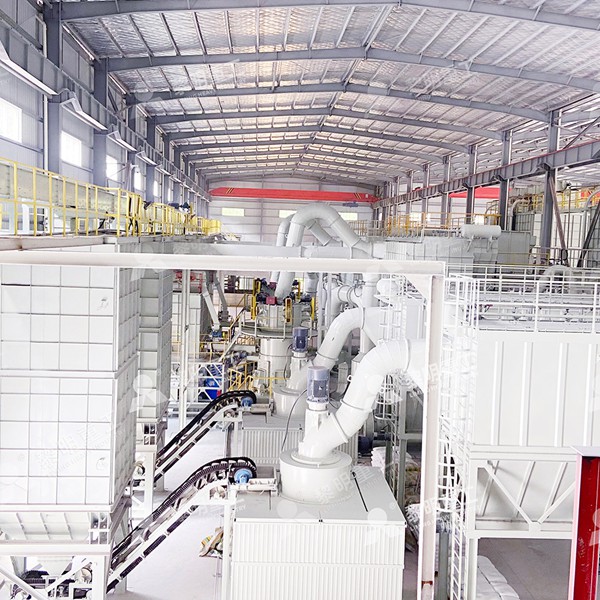
Key specifications include a capacity range of 0.5 to 25 T/H and a maximum input size of 20 mm. The mill’s core mechanism involves a main shaft driven by a motor through a reducer, which rotates multiple grinding rollers against a raceway ring. Material, pre-crushed by a hammer crusher, is fed into the mill via an elevator and vibrating feeder, evenly distributed to the central part of the upper turnplate. Centrifugal force propels the material outward, where it is crushed between rollers and the ring into ultrafine particles. The integral classifier ensures that only particles meeting the target fineness exit as finished product, while oversize material is returned for re-grinding.
Operational Excellence and Environmental Compliance
One of the standout features of the Limestone Ultrafine Grinding Mill MW is its commitment to green production. The system operates in a closed loop: air flow carries fine particles to the classifier, then recycles through the air blower, minimizing waste. The pulse dust collector captures virtually all fugitive dust, making the mill suitable for even the most regulated environments. This design not only reduces environmental impact but also improves material yield, as nearly all processed limestone becomes valuable product.
The mill’s variable-frequency belt feeder allows precise control over feed rate, ensuring stable operation under varying material conditions. Additionally, the grinding rollers and ring are constructed from wear-resistant alloys, extending service life and reducing maintenance downtime. For limestone applications—whether in desulfurization for power plants, heavy calcium carbonate production, or non-metallic mineral powder making—the MW mill delivers consistent, high-quality output with minimal energy consumption.
Comparative Performance Across Applications
Compared to other grinding technologies, the MW mill occupies a unique niche. While Raymond mills typically produce fineness in the 44-613 μm range and MTW European Type Trapezium Mills handle 3-55 TPH for coarser applications, the MW mill excels where ultra-fine particles are required. For example, in power plant desulfurization, limestone must be ground to a specific surface area for effective SO₂ absorption; the MW mill achieves this consistently. Similarly, in the production of heavy calcium carbonate for paints, plastics, and paper, the ability to adjust fineness from 325 to 3250 mesh allows manufacturers to tailor products to exact specifications.
Ball mills, while versatile for ores and cement, lack the precision classification and energy efficiency of the MW mill for superfine grinding. LM Vertical Roller Mills offer high capacity (10-400 T/H) but are better suited for coarser bulk processing. The MW mill thus fills a critical gap, combining the throughput of a medium-scale mill with the finesse of a micronizer.
Working Principle in Detail
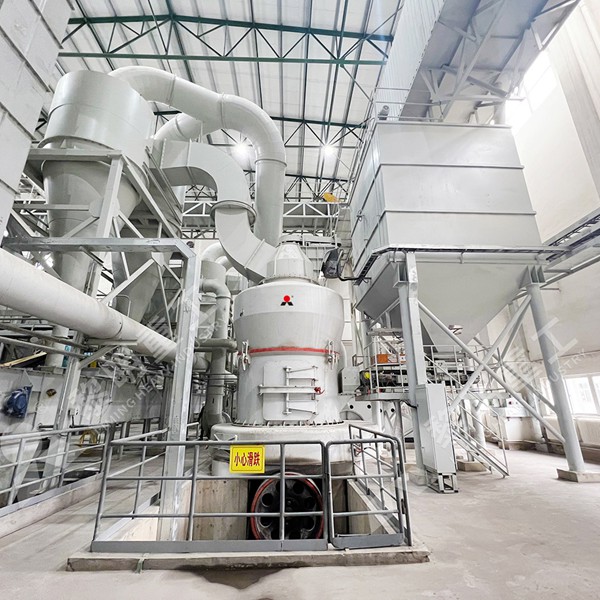
The MW mill’s operation is elegantly simple yet highly effective. The motor drives the main shaft and each turnplate through a reducer, which in turn drives dozens of rollers to rotate against the raceway ring via pins. Small material, crushed by a hammer crusher to <20 mm, is transported to a hopper by an elevator. A vibrating feeder then delivers the material evenly to the central part of the upper turnplate.
Under centrifugal force, the material falls to the circle and moves down to the raceway ring, where it is crushed into powder between the rollers and ring. The airflow system blows the pulverized material upward to the classifier. Particles that meet the fineness standard pass through and are collected as finished product, while coarser particles fall back to the grinding chamber for further reduction. The air, after passing through the classifier, re-enters the blower system for recycling, making the entire loop closed and efficient. The pulse dust collector ensures that even the finest dust is captured, aligning with global environmental regulations.
Conclusion: A Trusted Partner for Ultrafine Grinding
Liming Heavy Industry Co., Ltd. brings over 30 years of experience to the design and manufacture of the MW Micro Powder Mill. Our commitment to research, technological improvement, and scientific innovation ensures that each mill delivers reliable performance, long service life, and superior product quality. Whether for limestone desulfurization, calcium carbonate processing, or other non-metallic mineral applications, the MW mill stands as a testament to our leadership in the field. By choosing Liming, customers invest in a solution that balances productivity, precision, and environmental responsibility.
Frequently Asked Questions
- What is the typical fineness range achievable with the Limestone Ultrafine Grinding Mill MW?
The MW mill can produce finished powder with a fineness adjustable from 325 mesh up to 3250 mesh, achieving particle sizes down to d97 ≤ 5 μm, depending on material characteristics. - Can the MW mill handle materials other than limestone?
Yes, while primarily designed for limestone and other non-metallic minerals, the mill is suitable for gypsum, calcium carbonate, barite, and other materials with Mohs hardness under 7 and moisture below 6%. - How does the MW mill ensure environmental compliance?
The mill operates in a closed-circuit system with a pulse dust collector, which captures airborne dust and recirculates air, minimizing emissions and meeting national environmental protection standards. - What is the recommended feed size for optimal performance?
The MW mill accepts an input size of 10-20 mm. Material should be pre-crushed using a hammer crusher or similar equipment to achieve this range for efficient grinding. - What maintenance is required for the grinding rollers and ring?
Inspection intervals depend on usage, but the wear-resistant alloy components typically require minimal maintenance. Regular checks for wear and replacement of rollers and ring liners are recommended as part of routine service, with guidance provided in the manual.


