Published: October 26, 2023
In the realm of power generation, the efficiency of flue gas desulfurization (FGD) systems is paramount for meeting stringent environmental regulations. A critical component in this process is the grinding and preparation of limestone powder, which serves as the primary reagent for sulfur dioxide removal. Vertical limestone grinding mills have emerged as the preferred solution for power plants worldwide, offering high capacity, energy efficiency, and integrated drying, grinding, and classifying functions. As a leader in heavy industrial machinery since 1987, Liming Heavy Industry provides advanced vertical roller mill technology tailored for power plant applications, delivering capacities from 10 to 400 tons per hour and ensuring consistent product fineness. This article explores the technical advantages, operational principles, and selection criteria of vertical limestone grinding mills, drawing on decades of engineering expertise and real-world deployment in the energy sector.
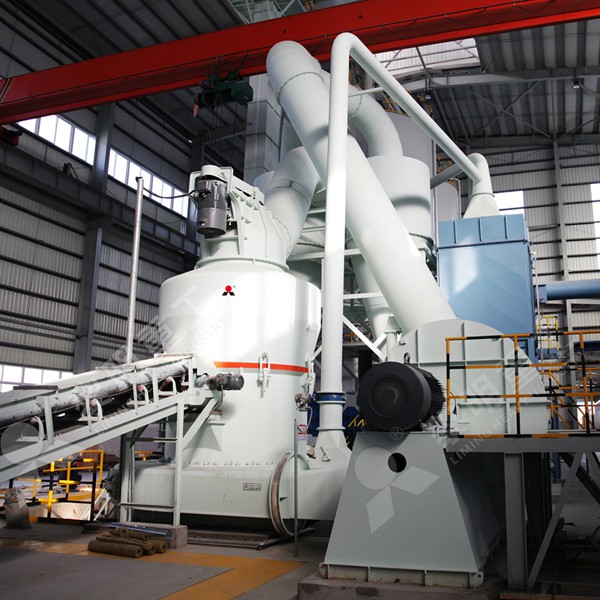
Why Power Plants Choose Vertical Roller Mills for Limestone Grinding
Power plants operate under demanding conditions where reliability, throughput, and environmental compliance are non-negotiable. Vertical roller mills (VRMs) have become the cornerstone of limestone preparation for FGD systems due to several distinct advantages over traditional ball mills or Raymond mills. The integrated design of VRMs combines crushing, grinding, drying, and classification in a single unit, drastically reducing the system footprint and capital expenditure. For a typical 300 MW power plant requiring around 15-20 tons of limestone powder per hour, a single vertical mill can meet the demand with lower energy consumption per ton compared to multiple ball mills running in parallel.
Liming Heavy Industry's LM Vertical Roller Mill is engineered specifically for these high-stakes environments. With an input size capability of 30-55 mm and capacity ranging from 10 to 400 T/H, this mill handles the coarse limestone delivered from the quarry without requiring secondary crushing. The mill's automatic electric control system optimizes grinding pressure, separator speed, and airflow in real time, maintaining product fineness within tight tolerances—typically 80% passing 200 mesh to 325 mesh, ideal for FGD slurry preparation. Furthermore, the mill's drying capacity can handle surface moisture up to 15%, utilizing hot gases from the plant's waste heat, thus improving overall thermal efficiency.
Working Principle and Key Components
The operating principle of Liming's vertical limestone grinding mill is elegantly efficient. The feed material enters the mill through a rotary feeder and drops onto the center of a rotating grinding table. Under centrifugal force, the material moves outward toward the grinding track, where it is crushed and ground between the grinding rollers and the table. The rollers, pressing down via a hydraulic system, exert controlled forces to achieve optimal particle size reduction. Simultaneously, a hot air stream entering from the nozzle ring lifts the ground particles upward through an integrated classifier. Coarse particles fall back onto the table for further grinding, while fine particles pass through the classifier vanes and are collected as finished product in a baghouse or cyclone.
Key components of the LM vertical mill include the grinding roller assembly, which is wear-resistant and easily replaceable; the grinding table with segmented liners; the dynamic separator for precise size control; and the lubrication system ensuring long-term reliability. The entire mill operates under negative pressure to prevent dust leakage, and the pulse dust collector system ensures emissions are well below national standards. For power plant operators, this closed-loop system translates to minimal maintenance downtime and consistent output quality over thousands of operating hours.
Selection Considerations for Power Plant Engineers
When choosing a vertical limestone grinding mill for a power plant, several technical parameters must be evaluated to ensure long-term performance and cost-effectiveness. The first is the Bond Work Index of the feed limestone, which influences the mill's capacity and power consumption. Liming Heavy Industry's engineering team uses proprietary simulation software to calculate the exact mill size required based on the client's specific limestone characteristics, moisture content, and target product fineness. The LM mill's adjustable classifier speed, from 30 to 80 RPM, allows fine-tuning of the finished product to meet varying FGD system requirements—whether for wet scrubbers requiring 90% passing 325 mesh or dry injection systems needing a slightly coarser grind.
Another critical factor is the availability of hot gases for drying. Power plants often have access to low-grade waste heat from the boiler exhaust, which can be ducted into the mill to dry the limestone. In cases where humidity is exceptionally high (over 15% surface moisture), a hot air generator may be recommended. Liming's mill design incorporates a wide nozzle ring area and adjustable airflow volume to optimize the drying-grinding balance. Additionally, the choice of wear materials—such as high-chrome cast iron for grinding rollers and Ni-hard for table segments—can significantly extend service life in abrasive limestone environments. Field data from installations in coal-fired power plants across Asia show that proper material selection can increase wear component life by 30-50% compared to standard alloys.
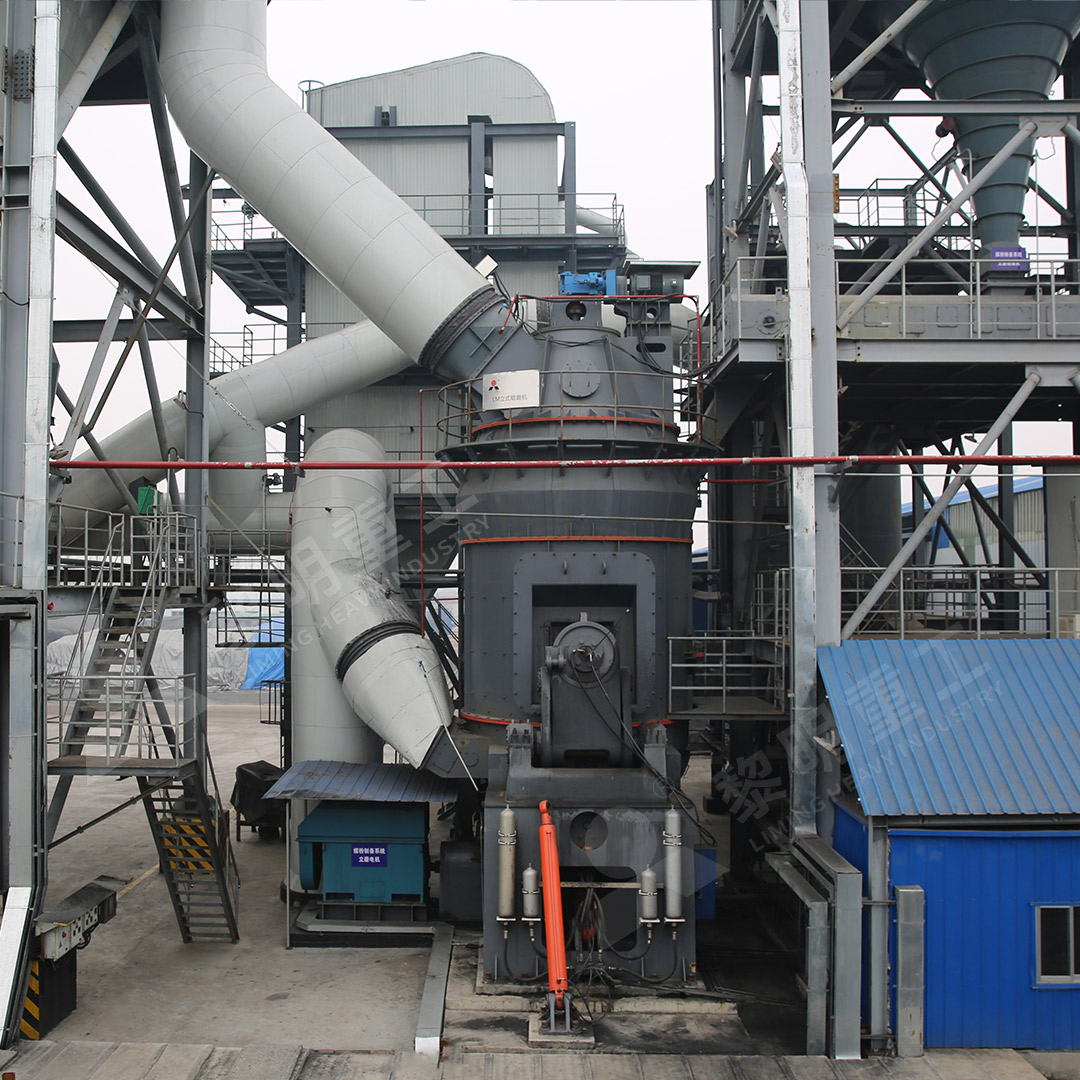
Comparative Advantages Over Traditional Grinding Systems
While ball mills and Raymond mills have historically been used in limestone grinding for power plants, the vertical roller mill presents clear advantages in several key areas. Energy efficiency is perhaps the most compelling: VRMs typically consume 30-50% less power per ton of finished product compared to ball mills. For a power plant running 24/7, this translates to substantial annual savings in electricity costs. Additionally, the lower noise level of the VRM—typically under 85 dB compared to over 95 dB for ball mills—improves operator working conditions and reduces the need for heavy soundproofing enclosures.
Maintenance simplicity is another differentiator. The LM vertical mill's modular design allows for individual roller replacement without dismantling the entire mill. Hydraulic cylinder and spring systems, which provide grinding pressure, are accessible from outside the mill housing, reducing the need for confined-space entry. In contrast, ball mills require frequent shutdowns for relining and ball charging. Liming's design also incorporates an online monitoring system that tracks vibration, temperature, and lubrication parameters, enabling predictive maintenance scheduling. Over a 20-year service life, these factors collectively reduce total cost of ownership by an estimated 25-40% compared to alternative technologies.
Case Study: LM Series Mill in a 600 MW Coal-Fired Plant
A notable implementation of Liming's vertical limestone grinding technology is at a 600 MW coal-fired power plant located in the Shandong province of China. The facility initially relied on ball mills for FGD limestone preparation but faced challenges with high energy costs and frequent maintenance shutdowns. After installing two LM190M vertical mills, each rated at 35 T/H capacity, the plant achieved a reduction in specific energy consumption from 32 kWh/t to 19 kWh/t—a 40% improvement. The mills operate on a 24/7 basis, producing a consistent product with 90% passing 200 mesh. The closed-loop air system, combined with a pulse-jet bag filter, ensures dust emissions remain below 10 mg/Nm³, exceeding local environmental standards. Over three years of operation, the mill has achieved 95% availability, with scheduled maintenance intervals of 6,000 hours for wear part replacement.
Future Trends and Sustainability
As power plants worldwide transition toward lower emissions and higher efficiency, the role of advanced grinding technology becomes even more critical. Liming Heavy Industry continues to innovate in vertical mill design, focusing on digital twin simulation, AI-driven predictive control, and modularization for faster on-site installation. The latest LM series mills feature smart sensor arrays that feed data into centralized plant optimization systems, automatically adjusting grinding parameters to compensate for changing limestone quality or moisture levels. Additionally, the mills are designed to accommodate alternative feedstocks such as desulfurized gypsum recycle, supporting circular economy initiatives in the power sector.
Sustainability extends beyond emissions: Liming's manufacturing facilities in Zhengzhou, covering 80,000 m², employ energy-efficient precision machining and strict quality control protocols. Every mill is rigorously tested in the factory before shipment, significantly reducing commissioning time. With a global service network and decades of application expertise, Liming Heavy Industry is positioned as a trusted partner for power plants seeking to optimize their limestone grinding operations while meeting the challenge of decarbonization.
Frequently Asked Questions (FAQs)
- What is the typical output fineness range of a vertical limestone grinding mill for power plant FGD?
The LM vertical roller mill can produce limestone powder with fineness from 200 mesh (74 microns) up to 325 mesh (44 microns), with 80-90% passing the specified sieve. The dynamic classifier allows precise adjustment to meet the exact requirements of different FGD systems. - How does the LM vertical mill handle high-moisture limestone?
The mill is equipped with a hot gas inlet system that can accept drying gases at temperatures up to 350°C. This allows effective drying of limestone with surface moisture up to 15%, using either waste heat from the power plant or an independent hot air generator. - What are the typical maintenance intervals for wear parts?
Under normal operating conditions with medium-abrasive limestone (Bond Work Index around 10-12 kWh/t), grinding roller and table liners typically last 6,000 to 8,000 hours. Liming offers wear part materials optimized for specific limestone characteristics to maximize service life. - Can the LM vertical mill be retrofitted into an existing power plant system?
Yes, Liming Heavy Industry provides customized retrofit solutions. The mill's compact footprint and modular components allow for installation within existing plant layouts. Our engineering team conducts site assessments to integrate the mill with existing material handling, air supply, and dust collection systems. - What is the electric power consumption of the LM vertical mill per ton of finished limestone powder?
Typical specific energy consumption ranges from 18 to 25 kWh per ton, depending on limestone hardness, feed size, and target fineness. This is generally 30-50% lower than a conventional ball mill system, resulting in significant operational cost savings for power plants.


