In the paper manufacturing industry, the quality and cost-effectiveness of filler materials are critical to producing bright, smooth, and printable paper grades. Limestone, when ground to a fine powder, serves as an excellent filler for paper, enhancing opacity, brightness, and ink receptivity while reducing overall production costs. The key to achieving the ideal limestone filler lies in the grinding equipment employed. The limestone ball mill, specifically engineered for paper filler applications, offers a reliable, high-capacity, and energy-efficient solution for producing ultra-fine calcium carbonate powders. This article provides an in-depth exploration of using ball mills for limestone filler production, highlighting equipment features, operational principles, and the technological advantages offered by modern grinding systems from leading manufacturers like Liming Heavy Industry, a pioneer in crushing and grinding technology since 1987.
The Role of Limestone Filler in Papermaking
Limestone, primarily composed of calcium carbonate (CaCO₃), is one of the most widely used fillers in the paper industry. It improves the optical properties of paper, such as brightness and opacity, and enhances printability. Ground limestone filler can replace more expensive fiber content, leading to significant cost savings. For paper applications, the limestone must be ground to a very fine particle size, typically between 1 and 10 microns (d97 ≤ 5μm for premium grades). The grinding process must be precise, consistent, and free from contamination to meet stringent papermaking standards. A limestone ball mill designed for this purpose must deliver high fineness, narrow particle size distribution, and stable operation over extended periods.
Why Choose a Ball Mill for Limestone Filler Grinding?
The ball mill is a classic and versatile grinding machine that has been perfected over decades. It is particularly well-suited for limestone filler production due to its robustness, scalability, and ability to produce fine powders efficiently. Liming Heavy Industry’s ball mill, for instance, is a key equipment used for milling after materials are crushed. It can grind all kinds of ores and other materials, making it ideal for non-metallic mineral processing. Key advantages include:
- High Capacity: With capacity ranging from 0.65 to 50 tons per hour, the ball mill can meet the demands of both small and large-scale paper mills.
- Fine Fineness: The mill can consistently produce limestone powder with fineness suitable for filler applications, often down to 325 mesh (44μm) or finer with proper classification.
- Reliability: The simple mechanical design ensures low maintenance and long service life.
- Versatility: It can handle both wet and dry grinding processes, though dry grinding is more common for paper filler due to ease of handling and storage.
Technical Specifications and Working Principle of Liming Ball Mill
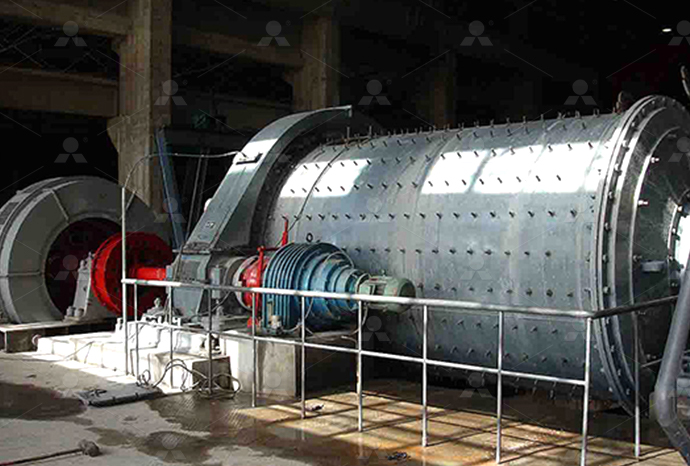
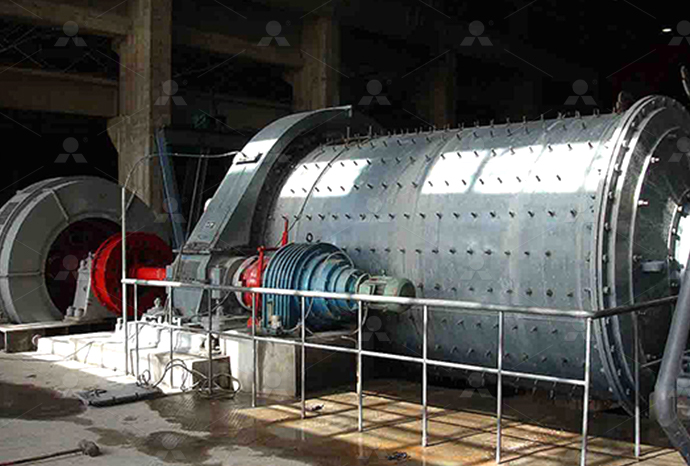
Liming Heavy Industry’s ball mill is a horizontal rotating device transmitted by the outer gear. The materials are transferred to the grinding chamber through the quill shaft uniformly. Inside the chamber, there are ladder liners and ripple liners, along with different specifications of steel balls. As the barrel rotates, centrifugal force causes the steel balls to rise to a certain height and then fall, impacting and grinding the limestone. The ground material is then discharged through the discharge board. Key technical data includes:
- Input Size: ≤ 25 mm
- Capacity: 0.65-50 T/H
- Applications: Cement, coal, power plant desulfurization, metallurgy, chemical industry, non-metallic mineral, construction material, ceramics.
For paper filler, the ball mill is often part of a closed-circuit system with a classifier (such as a separator or air classifier) to ensure the product fineness meets the exacting standards of the paper industry. The system can be equipped with advanced control systems to maintain consistent quality.
Optimizing the Grinding Circuit for Paper Filler
Producing limestone filler for paper requires more than just a ball mill; it demands an optimized grinding circuit. The typical process involves:
- Crushing: Raw limestone blocks (up to 30-55mm) are first crushed by a jaw crusher to a size suitable for the ball mill feed (≤ 25mm).
- Grinding: The crushed limestone is fed into the ball mill via a vibrating feeder. Water may be added for wet grinding, but dry grinding with an air classifier is preferred for paper filler to avoid dewatering steps.
- Classification: The mill discharge is sent to a classifier (e.g., a separator or a set of cyclones). Coarse particles are returned to the mill for regrinding, while fine particles (e.g., d97 ≤ 5μm) are collected as finished product.
- Collection: The fine powder is collected by a dust collector (often a pulse bag filter) to comply with environmental standards.
- Cost Efficiency: The ball mill’s low operating costs and high throughput reduce the per-ton cost of filler production.
- Consistent Quality: The closed-circuit grinding system ensures a narrow particle size distribution, meeting the precise requirements of paper makers.
- Environmental Compliance: Equipped with modern pulse dust collectors, the system meets stringent national environmental standards, reducing dust emissions and improving workplace safety.
- Scalability: Liming’s ball mills are available in various sizes, allowing paper mills to start with a small unit and expand as production demands grow.
- What is the typical fineness of limestone filler produced by a ball mill for paper applications?
The typical fineness ranges from 325 mesh (44μm) down to d97 ≤ 5μm (approx. 2500 mesh). A closed-circuit system with an air classifier is usually required to achieve the finer end of this range, which is ideal for premium paper fillers. - Can a ball mill grind wet limestone for paper filler?
Yes, ball mills can operate in both wet and dry modes. However, for paper filler, dry grinding is more common because it avoids the need for dewatering and drying steps. Dry grinding also produces a powder that is easier to handle and store. - What is the capacity range of Liming Heavy Industry’s ball mill for limestone grinding?
The capacity range is 0.65 to 50 tons per hour, depending on the model and the fineness required. Larger capacity mills are available for industrial-scale paper production. - How does the particle size distribution of ball mill product compare to other mills like Raymond mill?
The ball mill generally produces a broader particle size distribution compared to Raymond mills, but with a properly configured classifier, a very narrow distribution can be achieved. Ball mills are better suited for high-capacity, continuous production of fine limestone. - What maintenance is required for a limestone ball mill?
Regular maintenance includes checking the wear of liners and grinding media (steel balls), inspecting the gear transmission system and bearings, and ensuring the lubrication system is functioning properly. Routine checks of the dust collector and classifier are also essential for consistent operation.
Liming Heavy Industry’s expertise in providing complete grinding lines ensures that each component—from the ball mill to the dust collector—is correctly sized and configured for maximum efficiency.
Integration with Other Grinding Technologies
While the ball mill is a workhorse, it can be integrated with other grinding technologies for specialized applications. For example, Liming Heavy Industry also offers the MW Micro Powder Mill, which is capable of achieving ultra-fine fineness (up to d97 ≤ 5μm, 325-3250 mesh). For paper fillers requiring extremely high brightness and ultrafine particles, a combination of ball mill and micro powder mill, or a dedicated micro powder system, might be employed. However, for most standard paper filler applications, the ball mill remains the most cost-effective and reliable choice.
Each piece of equipment from Liming Heavy Industry is the result of over 30 years of innovation, adhering to modern scientific management systems and precision manufacturing. The company’s headquarters in Zhengzhou’s HI-TECH Zone and its workshop in Shangjie Industry Park (covering a combined 147,000 m²) underscore its capacity to deliver large-scale, high-quality grinding solutions.
Advantages for Paper Manufacturers
Why Partner with Liming Heavy Industry?
With a history spanning over 30 years, Liming Heavy Industry Co., Ltd. (founded in 1987) has established itself as a leader in the crushing and grinding machinery industry. The company persists in implementing a strategy of scientific research and development, focusing on improving product competitiveness through technological innovation. By relying on a mature scientific research team, Liming aims at the technological frontier of the industry, improving overall innovation capability. Their product portfolio includes not only ball mills but also LM Vertical Roller Mills, Raymond Mills, MTW European Type Trapezium Mills, and MW Micro Powder Mills, allowing them to offer tailored solutions for any application, including limestone grinding for paper fillers.
The company is a modern joint-stock corporation with research, manufacturing, and sales capabilities. This vertical integration ensures that customers receive complete support, from initial consultation to after-sales service. Liming’s commitment to “production, learning, and research” means that their equipment is continuously improved based on field feedback and latest technological advancements.
Conclusion
The limestone ball mill remains the cornerstone of filler production for the paper industry. Its proven design, combined with modern automation and classification systems, delivers the high-quality, fine powder that paper manufacturers require. Companies like Liming Heavy Industry provide not only the ball mill but comprehensive grinding solutions that enhance productivity, reduce costs, and meet environmental standards. For any paper mill looking to produce its own limestone filler in-house or improve an existing process, investing in a state-of-the-art ball mill from a reputable manufacturer is a strategic decision that yields long-term benefits.


