Published: October 26, 2023
When evaluating the invest cost of a dry limestone grinding mill, it is critical to understand that the total capital expenditure extends far beyond the initial purchase price. Based on decades of manufacturing experience and thousands of installations worldwide, the true investment cost encompasses equipment selection, foundation work, auxiliary systems, energy consumption, and long-term maintenance. For dry limestone grinding, typical invest cost components include the cost of the mill itself, crusher and feeder integration, dust collection systems, electrical control panels, piping and conveying equipment, and installation labor. Additionally, factors such as raw material moisture content, target fineness, capacity requirements, and site-specific conditions can significantly influence the overall budget. At Liming Heavy Industry, we have observed that a well-planned investment in a high-efficiency grinding mill—such as our MTW European Type Trapezium Mill or LM Vertical Roller Mill—often results in lower total cost of ownership through reduced energy consumption, higher throughput, and longer equipment life. This article provides a detailed breakdown of the key cost drivers and strategic considerations for investors looking to establish or expand a dry limestone grinding operation.
Dry limestone grinding is a fundamental process in industries ranging from power plant desulfurization to construction materials and agriculture. The limestone is typically reduced from large lumps—often 30–55 mm in size—down to a fine powder ranging from 44 to 613 microns, depending on the application. The invest cost for a grinding mill system must account for the entire comminution circuit: primary crushing, feeding, grinding, classifying, collecting, and conveying. A common mistake among first-time investors is focusing solely on the mill price while neglecting the upstream and downstream equipment that makes the system operational. For instance, a jaw crusher to reduce run-of-mine limestone to 30–50 mm, a variable-frequency belt feeder for controlled material flow, and a pulse dust collector to meet environmental standards are all essential components that add to the total invest cost. At our 80,000 m² headquarters in Zhengzhou's HI-TECH Industry Development Zone, we engineer these systems as integrated solutions, ensuring that each component is matched to the others for maximum efficiency. Over the past 30 years, our modern scientific management system and precision manufacturing have established Liming Heavy Industry as a leader in both domestic and overseas machinery manufacturing. Our products—including the Raymond Mill, Ball Mill, and Micro Powder Mill—are designed with the operator's total cost in mind, but the specific choice of mill type has a profound impact on the invest cost.
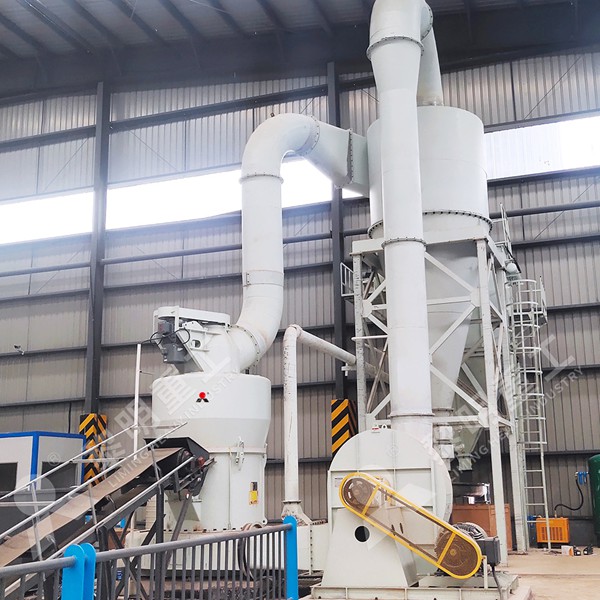
Let's examine the invest cost implications of the most common dry limestone grinding mill types. The Raymond Mill is a classic choice for capacities from 1.2 to 4.5 T/H with input sizes of 15–25 mm, producing fineness between 613 μm and 44 μm. Its invest cost is relatively low because the design is mature and components are widely available. However, for operators requiring higher capacity—say 10 to 400 T/H—the LM Vertical Roller Mill becomes more cost-effective on a per-ton basis. The LM mill integrates drying, grinding, powder selection, and conveying into a single unit, which reduces the need for separate classifiers and elevators, thereby lowering auxiliary equipment costs. For those targeting medium capacities of 3 to 55 T/H, the MTW European Type Trapezium Mill—an upgrade of traditional Raymond and pendulum mills—offers patented technology with high productivity and energy savings. Its invest cost is moderate, but the improved performance often justifies the premium, especially in limestone desulfurization applications where consistent fineness is critical. Finally, for superfine grinding down to 325–3250 mesh, the MW Micro Powder Mill (with capacities of 0.5–25 T/H) incorporates Swedish grinding technology and a pulse precipitator for environmental compliance, though its invest cost is higher due to the advanced mechanical design. Each of these mills has a different working principle that affects the capital required for installation. For example, the Ball Mill—a horizontal rotating device with steel balls—requires a robust foundation and significant floor space, which can increase civil engineering costs. In contrast, the LM Vertical Mill has a smaller footprint, potentially reducing site preparation expenses.
Another critical factor in the invest cost is the degree of automation and environmental compliance. Modern dry limestone grinding operations must meet stringent dust emission standards. The closed-loop system in the MTW mill, where air flow passes through the separator and returns to the blower, is inherently dust-tight, but a pulse dust collector is still recommended. The cost of a high-efficiency dust collector, ductwork, and stack monitoring equipment can account for 15–25% of the total invest cost. Additionally, the electrical control system—including variable-frequency drives for the feeder and classifier, and a central PLC—adds to the upfront expense but reduces operational energy costs. We recommend that investors obtain a detailed site survey before finalizing the budget. Factors such as local climate (which affects material moisture), proximity to raw material sources, and the cost of electricity in the region all influence the optimal mill selection and, consequently, the invest cost. At Liming Heavy Industry, our engineering team provides free pre-sale consultation to help clients estimate these costs accurately, leveraging our 30+ years of experience in manufacturing large and medium-sized crushing and grinding equipment. Our factory in Shangjie Industry Park, covering 67,000 m², allows us to fabricate custom components efficiently, which can shorten delivery times and reduce project delays—another hidden cost that investors often underestimate.
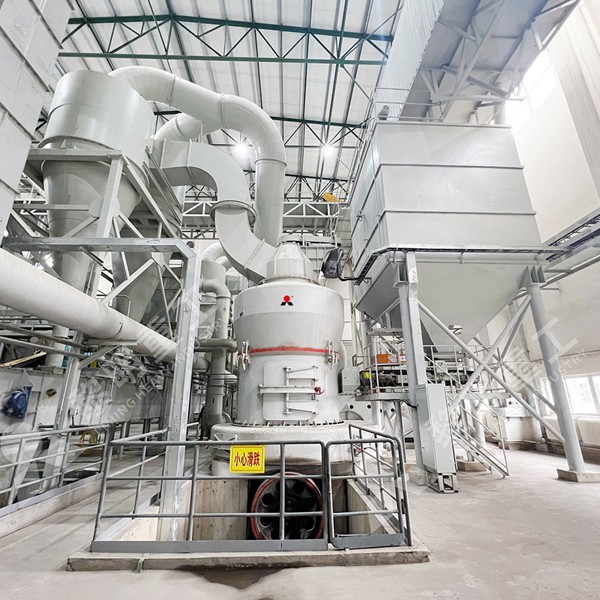
To illustrate the invest cost breakdown, consider a typical 15 T/H dry limestone grinding line using an MTW European Type Trapezium Mill. The major cost categories are: the mill itself (approximately 40–50% of total), primary crusher and vibrating feeder (10–15%), bucket elevator and storage hopper (5–8%), pulse dust collector and bag filter (10–12%), electrical panel and cabling (8–10%), foundation and civil works (10–15%), and installation and commissioning (5–7%). These percentages are based on average project data from our client feedback and are intended as a guide only. For a Ball Mill system of similar capacity, the mill cost might be lower (30–40% of total), but the foundation and structural steel costs are often higher due to the weight and vibration of the rotating drum. For a LM Vertical Mill, the mill's integrated design can reduce the number of auxiliary components by 20–30%, potentially lowering the total invest cost by 5–10% compared to a multi-equipment system. It is also important to factor in spare parts inventory for the first year of operation. Wearing parts—such as grinding rollers, ring, and liners—vary in lifespan from 600 to 2000 hours depending on the abrasiveness of the limestone. The initial spare parts order can add 5–8% to the invest cost, but having critical spares on hand prevents costly downtime. At Liming Heavy Industry, we manufacture all wearing parts in-house, ensuring quality control and competitive pricing, which contributes to lower long-term operational costs.
Ultimately, the invest cost of a dry limestone grinding mill should be evaluated using a total cost of ownership (TCO) model rather than just a purchase price comparison. A machine with a higher initial price but lower energy consumption and higher availability can pay back the difference in 18–36 months. For example, the LM Vertical Roller Mill's energy efficiency can be 30–50% better than a traditional Ball Mill for limestone grinding, significantly reducing electricity bills over the equipment's 10–15 year lifespan. Additionally, the automated electric control system in our modern mills reduces labor costs and improves consistency. We strongly advise investors to request a process flow diagram and equipment list from the manufacturer, along with references from similar projects. By conducting a thorough techno-economic analysis, including discounted cash flow (DCF) calculations, investors can make an informed decision that aligns with their production goals and financial constraints. Our technical team, backed by a mature scientific research group dedicated to product competitiveness, is available to assist with such analyses.
Frequently Asked Questions (FAQ)
- What is the typical payback period for a dry limestone grinding mill investment?
The payback period varies based on capacity, energy costs, and market demand for the ground limestone. For a medium-scale operation using our MTW mill, a payback period of 2–4 years is common, assuming stable sales and efficient operation. - Do I need to include a dryer in the invest cost for dry limestone grinding?
If the limestone feed has a moisture content above 6%, a drying system may be required. Our LM Vertical Roller Mill can handle drying within the mill itself, which can reduce the need for a separate dryer. For other mills, consider a flash dryer or a thermal air sweep system, which adds to the invest cost. - How does the fineness requirement affect the invest cost?
Finer product (e.g., d97 ≤ 5 μm for Micro Powder Mill) generally requires more power and a more advanced classifier, increasing both machine and operational costs. For standard fineness (200–325 mesh), Raymond or MTW mills offer lower invest cost. - What site preparations are needed before installing the mill?
A solid concrete foundation with vibration isolation, adequate space for maintenance, and proper hoisting access are required. The site should also have sufficient electrical capacity and dust collection duct routing. Civil works can add 10–15% to the total invest cost. - Can I use a single mill for both limestone and other materials like gypsum?
Yes, many of our mills—such as the Ball Mill and Raymond Mill—can handle multiple materials by adjusting the operating parameters. However, switching materials may require cleaning and recalibration, which can cause minor downtime. The invest cost for a multi-purpose mill is similar to that for a single-material unit, but additional feeder and hopper configurations may be needed.


