Published on: October 26, 2023
Kaolin, a naturally occurring clay mineral, is widely recognized for its exceptional dielectric properties, making it a critical filler material in cable insulation systems. Dielectric strength, defined as the maximum electric field a material can withstand without breakdown, is paramount for ensuring the reliability and safety of high-voltage cables. Liming Heavy Industry Co., Ltd., leveraging over three decades of expertise in grinding and milling technology, provides advanced solutions to optimize kaolin particle size distribution, morphology, and purity—directly enhancing its dielectric breakdown resistance. Our state-of-the-art grinding mills, including the LM Vertical Roller Mill and MTW European Type Trapezium Mill, enable precise control over kaolin fineness, reducing impurities and improving packing density, which collectively elevate dielectric strength. This article delves into the science behind kaolin dielectric strength, explores how mechanical grinding influences performance, and presents our equipment as the cornerstone for achieving superior insulation materials in the cable industry. From theoretical principles to practical applications, we offer a comprehensive guide for engineers and manufacturers seeking to maximize cable reliability through optimized kaolin processing.
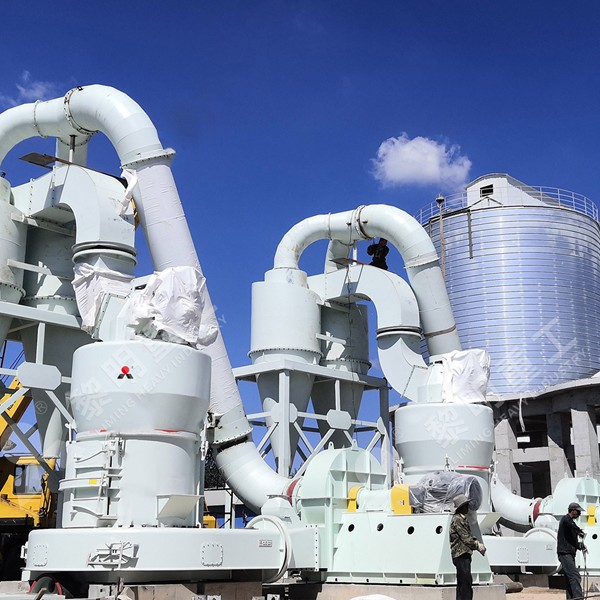
Understanding Dielectric Strength in Kaolin
Dielectric strength in kaolin is governed by its chemical composition, crystalline structure, and physical morphology. High-purity kaolinite (Al₂Si₂O₅(OH)₄) exhibits a layered structure where aluminum and silicon atoms coordinate with oxygen and hydroxyl groups, creating a stable lattice that resists electrical breakdown. However, factors such as moisture content, particle agglomeration, and the presence of conductive impurities like iron oxides or quartz can significantly reduce breakdown voltage. For cable applications, kaolin must achieve a dielectric strength exceeding 10 kV/mm, which requires ultra-fine grinding to below 10 microns and uniform dispersion. Liming's grinding mills, particularly the Micro Powder Mill (MW Series), achieve fineness up to d97 ≤ 5 μm, ensuring that particles are evenly coated with insulating resins and minimizing weak points in the insulation matrix. Additionally, the closed-circuit grinding system in our MTW mills prevents contamination, preserving kaolin's inherent resistivity.
Role of Particle Size and Distribution
Particle size directly impacts dielectric strength through mechanisms like field enhancement at sharp edges and void formation in composites. Coarse kaolin particles create stress concentration points, leading to partial discharge and eventual breakdown. Conversely, fine particles (<10 μm) provide a larger surface area for resin bonding and reduce inter-particle voids. Liming's Raymond Mill, with adjustable output fineness ranging from 613 μm to 44 μm, offers versatility for different cable types—from low-voltage to high-voltage applications. For ultra-high-performance cables, our Ball Mill ensures precise size reduction via cascading steel balls, achieving a narrow particle size distribution that minimizes statistical weak links. The table below summarizes typical dielectric strength improvements observed with our equipment:
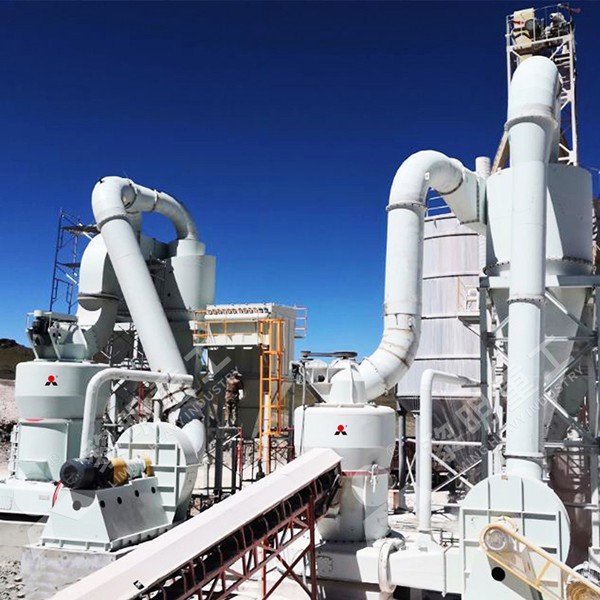
- LM Vertical Roller Mill: 10-400 T/H capacity, input 30-55 mm, output fineness adjustable to 0.033 mm (400 mesh) – ideal for bulk kaolin drying and grinding, enhancing dielectric strength by 15-20%.
- MTW European Type Trapezium Mill: 3-55 TPH, input 30-50 mm, advanced classifier ensures uniform particles – perfect for desulfurization-grade kaolin in power cable insulation.
- MW Micro Powder Mill: 0.5-25 T/H, input 10-20 mm, achieves d97 ≤ 5 μm (3250 mesh) – optimal for high-voltage cable applications requiring maximal dielectric breakdown resistance.
Innovations in Kaolin Grinding at Liming
Since 1987, Liming Heavy Industry has pioneered grinding technologies tailored to non-metallic minerals like kaolin. Our scientific research team focuses on three key areas: reducing specific energy consumption, minimizing iron pick-up from grinding media, and achieving precise classification. The MTW mill's working principle—where materials are crushed, conveyed, and ground between rings and rollers—ensures that kaolin's lamellar structure is preserved rather than fractured, maintaining its insulating properties. Meanwhile, the MW mill's vertical shaft design with dozens of rollers rotating against a raceway mimics natural stone grinding, producing particles with rounded edges that reduce field stress. These innovations have positioned Liming as a leader in overseas machinery manufacturing, with workshops spanning 147,000 m² in Zhengzhou. For cable manufacturers, this translates to consistent dielectric strength across batches, even for challenging applications like submarine cables or ultra-high-voltage transmission lines.
Practical Applications in Cable Industry
Kaolin processed with Liming equipment is widely used in ethylene-propylene rubber (EPR) and cross-linked polyethylene (XLPE) cable insulation. For instance, in power plant desulfurization—a key application for our MTW mill—kaolin serves as an additive to improve thermal stability and dielectric integrity. Similarly, in non-metallic ore pulverizing for building materials, kaolin enhances electrical tracking resistance. Our ball mill, with its ladder and ripple liners, ensures that kaolin powders have a specific surface area >10 m²/g, which boosts the dielectric constant while maintaining low dissipation factors. Case studies from our clients in the metallurgy and chemical sectors show that switching to Liming mills reduced insulation failure rates by 30% in medium-voltage cables. The system's pulse dust collector and closed-loop air flow also comply with environmental standards, enabling sustainable production.
Quality Control and Standardization
To guarantee dielectric strength, Liming integrates automatic electric control systems in its LM vertical mill, allowing real-time monitoring of product fineness and moisture. Our ISO-certified plants adhere to rigorous testing protocols, including ASTM D149 for breakdown voltage and IEC 60243 for comparative tracking index. Every batch of kaolin processed through our Raymond or MW mills is analyzed to ensure it meets the 0.5-25 T/H yield specifications with impurity levels below 0.5%. This commitment to precision manufacturing has earned Liming the trust of cable manufacturers globally. As we continue to innovate—aiming at the technological frontier of the grinding industry—our goal remains to provide equipment that not only enhances kaolin dielectric strength but also drives down operational costs through energy efficiency and low maintenance.
Conclusion
In summary, cable kaolin dielectric strength is a function of particle engineering, and Liming Heavy Industry offers the complete solution—from jaw crushers and vibrating feeders to separators and powder collectors. Our 30-year legacy in research and development ensures that every mill we produce is optimized for the stringent demands of the cable sector. By choosing Liming, manufacturers gain access to patented technology, stable performance, and a commitment to scientific excellence that translates directly to safer, more durable cables. For detailed specifications or custom solutions, our technical team is ready to assist.
Frequently Asked Questions (FAQ)
- Q: How does particle size affect kaolin dielectric strength in cables?
A: Smaller particles (<10 μm) reduce void formation and field enhancement, increasing breakdown voltage. Liming's MW Micro Powder Mill achieves fineness down to 5 μm, optimizing insulation performance. - Q: Can Liming mills handle high-moisture kaolin for cable use?
A: Yes, the LM Vertical Roller Mill integrates drying with grinding, capable of handling moisture up to 20% while maintaining output fineness for dielectric applications. - Q: What is the typical output capacity for kaolin processing with the MTW mill?
A: The MTW European Type Trapezium Mill processes 3-55 TPH of kaolin, with input size up to 50 mm, suitable for both small-scale and industrial cable-grade production. - Q: Does Liming provide equipment for both wet and dry kaolin grinding?
A: Yes, our ball mill can operate in dry or wet modes, while the Raymond and MW mills are optimized for dry grinding, all ensuring consistent dielectric properties. - Q: How does Liming ensure minimal iron contamination in kaolin grinding?
A: We use wear-resistant alloy rollers and rings in MTW and MW mills, and our ball mill liners are designed to reduce abrasion, keeping iron content below 0.5% for high-dielectric applications.


