Published: October 26, 2023
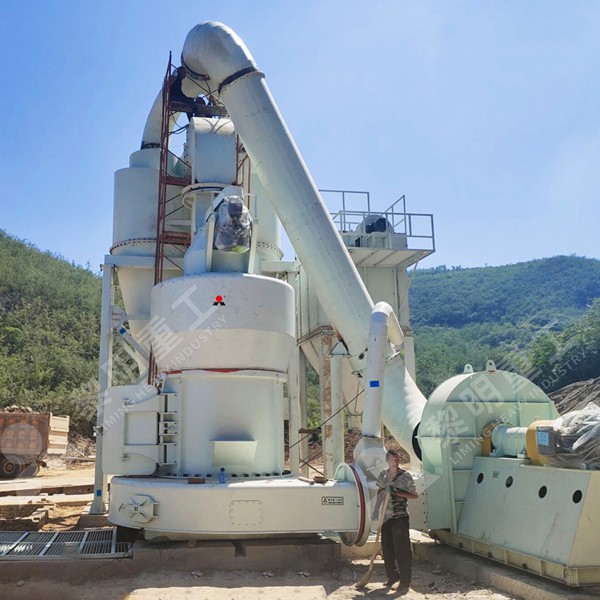
When optimizing a Kaolin Raymond mill for maximum throughput and energy efficiency, the pulley size is a critical mechanical parameter that directly influences the mill's rotational speed, grinding force, and overall operational stability. For Kaolin processing—where the material's natural softness (Mohs hardness 1–2) and high moisture sensitivity demand precise control of grinding pressure and airflow—selecting the correct pulley diameter ensures the mill operates at its ideal speed range. At Liming Heavy Industry, our Raymond mill series (including the standard R-type and upgraded European models) are designed with interchangeable pulley systems that accommodate different motor speeds and desired grinding fineness. The pulley ratio, typically expressed as the ratio of motor pulley diameter to mill pulley diameter, determines the rotational speed of the grinding roller shaft. For Kaolin, a common target speed is 150–180 RPM for the main shaft, which translates to a pulley ratio of approximately 1.5:1 to 2.0:1 depending on the motor speed (usually 1450–1480 RPM for 4-pole motors). Incorrect pulley sizing can lead to either insufficient grinding force (causing coarse output) or excessive vibration and bearing wear. This article provides a comprehensive technical breakdown of pulley size selection for Kaolin Raymond mills, covering calculation methods, material considerations, and practical installation tips based on Liming's 30+ years of manufacturing expertise.
Importance of Pulley Size in Kaolin Raymond Mill Performance
Kaolin, or china clay, is a hydrated aluminum silicate mineral with unique properties: it is chemically inert, has a fine particle size naturally, and is used in ceramics, paper coating, rubber, and plastics. In Raymond mill grinding, the pulley size determines the rotational speed of the grinding disc (or ring) and the centrifugal force acting on the grinding rollers. If the pulley is too large (undersized motor pulley), the mill runs slower, reducing the grinding capacity and increasing the residence time of material inside the mill, which can cause over-grinding and higher energy consumption per ton. Conversely, a too-small pulley (oversized motor pulley) increases the rotational speed, potentially causing the rollers to bounce or chatter, leading to uneven wear on the grinding ring and roller tires. For Kaolin, which has a tendency to become sticky when moisture exceeds 6%, maintaining the correct speed is essential to prevent material buildup on the grinding elements. Liming's standard Raymond mill pulley system is engineered to operate at a peripheral speed of the grinding ring of approximately 25–30 m/s for Kaolin, which corresponds to a mill pulley diameter of 800–1200 mm depending on the model. By adjusting the pulley size, operators can fine-tune the mill to achieve the desired fineness (typically 80–400 mesh for Kaolin) while maintaining stable airflow through the classifier.
Technical Parameters for Kaolin Raymond Mill Pulley Selection
Selecting the correct pulley size for a Kaolin Raymond mill requires considering the motor power, belt type, and desired mill shaft speed. Liming's Raymond mills are available in models ranging from 3R to 6R, with 4R and 5R being most common for Kaolin processing. The following table provides typical specifications for pulley systems on these models, based on our product database (note: values are for reference only and may vary with specific site conditions):
| Model | Motor Power (kW) | Motor Speed (RPM) | Mill Shaft Speed (RPM) | Motor Pulley Diameter (mm) | Mill Pulley Diameter (mm) | Pulley Ratio |
|---|---|---|---|---|---|---|
| 4R3216 | 37–55 | 1450–1480 | 160–180 | 250–300 | 900–1000 | 1.5:1 – 1.8:1 |
| 5R4119 | 75–110 | 1450–1480 | 140–160 | 300–350 | 1000–1200 | 1.6:1 – 2.0:1 |
| 6R5125 | 132–185 | 1480–1500 | 120–140 | 350–400 | 1100–1300 | 1.7:1 – 2.1:1 |
The pulley diameter should be selected to keep the belt speed within the recommended range of 15–25 m/s for V-belts and 25–35 m/s for synchronous belts. For Kaolin grinding, a slightly lower belt speed (15–20 m/s) is preferable to reduce dust generation and belt wear. Additionally, the pulley material must be robust enough to handle the high starting torque of the Raymond mill motor. Liming recommends cast iron pulleys (GG-25 or equivalent) for standard applications, with optional ductile iron (GGG-40) for high-power models (above 100 kW) to minimize vibration. The pulley's crown profile should also match the belt cross-section—common profiles include SPB (for 15–30 kW) and SPC (for 30–150 kW) for V-belts, or 8M (for 20–100 kW) and 14M (for 100–200 kW) for synchronous belts. Proper alignment of the motor and mill pulleys within ±0.5 mm is critical to prevent premature belt failure and ensure smooth power transmission.
Installation and Maintenance Best Practices
After selecting the correct pulley size, proper installation is key to achieving optimal performance. The following steps outline the recommended procedure for Kaolin Raymond mill pulley installation, based on field experience from Liming's service engineers:
- Pulley Hub Fit: Ensure the pulley bore diameter matches the shaft tolerance (typically H7/k6 or H7/m6 for interference fit). For mill pulleys, a keyway should be machined per DIN 6885 or equivalent standard to prevent slippage under heavy load.
- Belt Tensioning: Use a belt tension gauge to set the deflection force. For V-belts, the recommended tension is 1.5–2.0% of the belt span length. Over-tensioning can cause bearing damage, while under-tensioning leads to slippage and accelerated wear.
- Alignment Check: Use a laser alignment tool or straightedge to verify that the motor shaft and mill shaft are parallel within 0.1 mm per meter of span. Misalignment is a common cause of belt vibration and reduced component life.
- Lubrication: Apply a thin layer of anti-seize compound to the shaft before mounting the pulley to prevent corrosion and facilitate future removal. The pulley set screws should be torqued to the manufacturer's specified value (e.g., 45–55 Nm for M12 set screws).
- Run-in Period: Operate the mill at no load for 15–20 minutes after installation to allow the belts to seat properly. Then gradually add Kaolin feed while monitoring the amp draw on the motor—this should not exceed 80% of the rated full-load current to avoid thermal overload.
Regular maintenance includes checking pulley wear every 500 operating hours. If the pulley groove shows more than 1 mm of wear depth, replacement is recommended to maintain belt grip. For Kaolin processing, it is also advisable to install a belt guard with a dust seal to prevent fine powder from accumulating on the pulleys, which can cause belt slippage. Liming offers an optional pulley cleaning system that uses compressed air to blow off accumulated Kaolin dust from the pulley grooves, extending belt life by up to 30% in high-dust environments.
Case Study: Optimizing Pulley Size for Kaolin Grinding Plant
A Kaolin processing plant in Fujian, China, was experiencing inconsistent fineness (35% residue on 325 mesh) and high energy consumption (35 kWh/t) with a 5R4119 Raymond mill. The original pulley configuration used a 320 mm motor pulley and a 1050 mm mill pulley (ratio 1:3.28), resulting in a mill shaft speed of approximately 141 RPM. After consulting Liming's technical team, the operator replaced the motor pulley with a 290 mm diameter pulley (new ratio 1:3.62, resulting in 128 RPM). This change reduced the grinding speed, allowing more effective compression of Kaolin particles. The results after one month of operation showed a reduction in residue on 325 mesh to 18%, energy consumption dropped to 28 kWh/t, and throughput increased by 12% from 4.2 t/h to 4.7 t/h. The new pulley also reduced vibration levels from 4.5 mm/s to 2.8 mm/s (measured on the mill housing), indicating smoother operation. This case highlights the importance of pulley size calibration—even a 10% change in pulley ratio can significantly impact mill performance, especially for soft minerals like Kaolin where grinding pressure is more critical than impact force.
Custom Pulley Solutions for Special Kaolin Applications
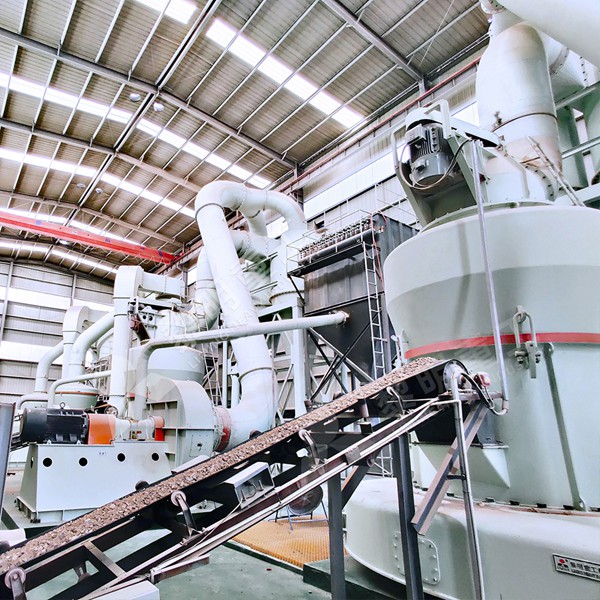
In some Kaolin applications, such as ultra-fine grinding for ceramic glaze or paper coating (fineness 800–1250 mesh), the standard pulley ratio may not provide sufficient speed reduction. For these cases, Liming offers custom pulley sets with a two-stage belt drive system. This involves an intermediate jackshaft with two pulleys—one driven by the motor and one driving the mill—effectively multiplying the reduction ratio. For example, with a motor speed of 1470 RPM and a desired mill speed of 80 RPM, a two-stage system with ratios of 1:2.5 and 1:2.9 can achieve the target without requiring excessively large single pulleys. These custom systems are engineered to fit within the existing mill frame dimensions and include tensioner pulleys to maintain belt slack. Liming also provides pulleys with interchangeable bushings (taper-lock or QD type) for easy installation and removal, which is particularly beneficial in plants where multiple Kaolin grades are processed and speed changes are frequent. The custom pulley sets are manufactured in-house at Liming's 67,000 sqm Shangjie workshop, using CNC machining for groove accuracy to ISO 21181 standards. For plants with space constraints, we also offer flange-mounted motor adapters that allow a larger motor pulley to be installed without modifying the motor base, providing up to 15% additional speed reduction capability.
Frequently Asked Questions (FAQ)
1. What happens if I use a pulley that is too large for my Kaolin Raymond mill?
Oversized motor pulley (smaller mill pulley) increases mill shaft speed, leading to higher centrifugal force and potential roller bounce. This causes uneven wear, increased vibration, and may result in coarse grinding as particles are thrown outward before proper compression. Energy consumption also rises due to inefficient grinding.
2. Can I use a synchronous belt pulley instead of a V-belt pulley on a Kaolin Raymond mill?
Yes, synchronous belts (timing belts) offer higher efficiency (98% vs. 95% for V-belts) and require less maintenance. However, they are more sensitive to misalignment and shock loads. For Kaolin processing with consistent feed, synchronous belts are recommended; for variable feed or sticky materials, V-belts are more forgiving.
3. How do I calculate the required pulley diameter for a specific mill speed?
Use the formula: Mill Pulley Diameter = (Motor Speed × Motor Pulley Diameter) / Desired Mill Speed. For example, with motor speed 1470 RPM, motor pulley diameter 300 mm, and desired mill speed 160 RPM, the mill pulley diameter is (1470 × 300) / 160 = 2756 mm (too large). In such cases, reduce the motor pulley diameter or add a jackshaft for two-stage reduction.
4. What is the typical lifespan of pulleys on a Kaolin Raymond mill?
With proper installation and maintenance, cast iron pulleys in Kaolin service last 3–5 years before groove wear affects belt performance. Factors like Kaolin dust accumulation, belt tension, and ambient humidity can reduce lifespan. Regular inspection every 500 hours is recommended, and pulleys should be replaced if groove wear exceeds 2 mm.
5. Does Liming Heavy Industry provide pulley size recommendation for existing Raymond mills from other manufacturers?
Yes, our engineering team can analyze your existing mill's motor specifications, current performance, and Kaolin feed characteristics to recommend an optimized pulley size. Contact Liming with your mill model nameplate data and desired production parameters for a free consultation. We have extensive experience retrofitting various Raymond mill brands with our pulley systems.


