Published: October 26, 2023
Agricultural kaolin, a naturally occurring white clay mineral primarily composed of kaolinite, has become an essential input in modern farming for crop protection, fruit quality enhancement, and pest management. One of the most critical yet often overlooked parameters of agricultural kaolin is its pH value, which directly influences its dispersibility in water, compatibility with other agrochemicals, and overall efficacy when applied to crops. Agricultural kaolin typically exhibits a pH value in the range of 6.0 to 8.0 when measured in a 10% slurry, with neutral to slightly alkaline grades being most desirable for field application. The pH of kaolin is not merely a chemical curiosity; it governs how the mineral interacts with plant surfaces, tank-mix partners such as pesticides and fertilizers, and environmental conditions like humidity and rainfall. For farmers and formulators alike, understanding and controlling the pH of agricultural kaolin ensures optimal performance, minimizes phytotoxicity risks, and maximizes the return on investment in crop protection programs. At Liming Heavy Industry Co., Ltd., we have engineered our grinding and milling equipment—ranging from LM Vertical Roller Mills to MTW European Type Trapezium Mills—to precisely control the fineness and purity of kaolin, thereby maintaining its natural pH balance while enhancing its functional properties for agricultural use.
The Role of pH in Agricultural Kaolin Quality
pH, defined as the negative logarithm of hydrogen ion concentration, is a master variable in colloidal and surface chemistry. In the context of agricultural kaolin, pH determines the surface charge of kaolinite particles, which in turn affects their ability to adhere to leaf surfaces and form a protective barrier against insects and solar radiation. A pH that is too acidic (below 5.5) can cause the kaolin particles to aggregate, reducing their coverage and uniformity. Conversely, a pH that is too alkaline (above 8.5) may lead to excessive dispersion and run-off, wasting the product. The ideal agricultural kaolin pH range—typically between 6.5 and 7.5—ensures that the particles remain electrostatically stable and form a consistent, breathable film on crops. This is particularly important for products like Surround WP or other kaolin-based crop protectants, where performance is directly tied to particle-to-leaf adhesion. Liming Heavy Industry's Raymond Mill and Micro Powder Grinding Mill are capable of producing kaolin powders with controlled particle size distribution, which helps preserve the natural pH of the mineral during processing. The closed-loop systems and pulse dust collectors integrated into our equipment also prevent contamination from acidic or basic impurities that could alter the final product's pH.
Factors Influencing the pH of Agricultural Kaolin
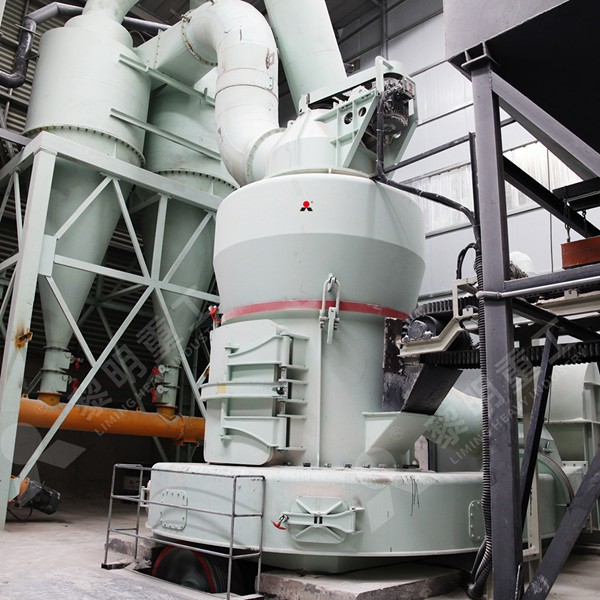
The pH of agricultural kaolin is not a fixed value; it can vary based on the geological source of the kaolin deposit, the beneficiation process employed, and the additives or surface treatments applied. Kaolin deposits from different regions contain varying amounts of accessory minerals such as quartz, feldspar, and iron oxides. For instance, kaolin derived from primary (residual) deposits tends to have a slightly lower pH due to the presence of organic acids and weathered alumino-silicate materials. Secondary (sedimentary) kaolin often exhibits a more neutral to slightly alkaline pH because of the buffering effect of carbonates and other marine-derived minerals. During processing, variables such as drying temperature, milling intensity, and classification methods can also shift the pH. High-temperature drying or excessive grinding in ball mills may cause partial dehydroxylation or surface activation, leading to a change in pH. Liming Heavy Industry's LM Vertical Roller Mill, with its advanced automatic electric control system and low-energy milling mechanism, minimizes thermal and mechanical stress on kaolin particles, thereby preserving the natural chemical properties, including pH. Additionally, our MTW European Type Trapezium Mill, which operates in a closed circuit with an air classifier, ensures that the finished product has uniform particle size and consistent pH, vital for reliable agricultural performance.
Practical Implications of pH for Farmers and Formulators
From a practical standpoint, the pH of agricultural kaolin influences three key aspects of its use: tank-mix compatibility, field persistence, and crop safety. Many pesticides and foliar fertilizers are formulated to work optimally within a specific pH range—often slightly acidic to neutral (pH 5.5 to 7.0). If the kaolin product is too alkaline, it can raise the tank mix pH, potentially degrading pH-sensitive active ingredients like organophosphates or pyrethroids. This not only reduces pest control efficacy but may also lead to economic losses. On the other hand, if the kaolin is too acidic, it can cause phytotoxicity, particularly on sensitive crops like grapes, tomatoes, or stone fruits. For formulators, a kaolin with a stable, known pH is essential for developing consistent, high-performance suspensions. Liming Heavy Industry supports this need by offering equipment capable of producing kaolin with controlled fineness (from 613μm down to 5μm or finer) and uniform chemical composition. Our Micro Powder Mill, with its adjustable fineness ranging from 325 mesh to 3250 mesh, is particularly suited for producing ultra-fine kaolin powders that disperse readily in water and maintain a stable pH in suspension. This ensures that the kaolin forms a homogeneous spray mixture that neither clogs nozzles nor separates in the tank, leading to uniform field coverage and maximum crop protection.
Processing Solutions for Consistent Kaolin pH from Liming Heavy Industry
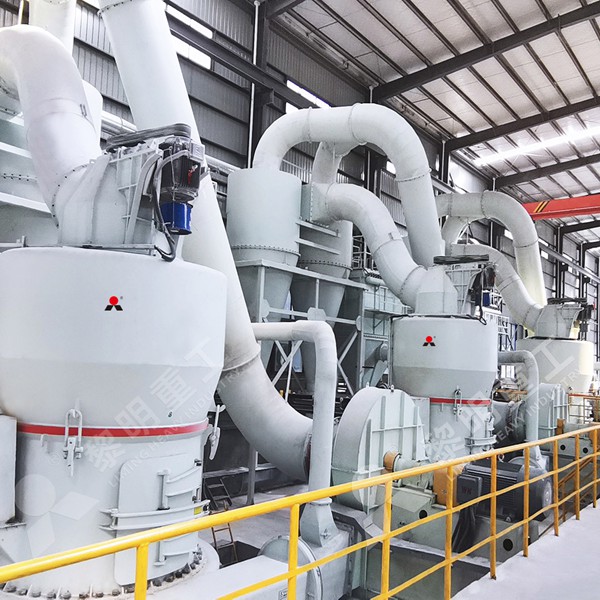
Liming Heavy Industry Co., Ltd., with over 35 years of experience in crushing and grinding equipment manufacturing, offers a comprehensive range of mills designed to process agricultural kaolin to exacting standards. Our LM Vertical Roller Mill is ideal for large-scale kaolin grinding, with capacities from 10 to 400 T/H and input sizes up to 55mm. This mill integrates drying, grinding, and powder selection in a single system, ensuring that the kaolin's moisture content is controlled and its pH remains stable. For medium-scale operations, our MTW European Type Trapezium Mill provides a capacity range of 3 to 55 TPH and input sizes of 30-50mm, incorporating patented technology that enhances productivity while maintaining gentle grinding action. The Raymond Mill, the industry workhorse, offers capacities from 1.2 to 4.5 T/H and is suitable for smaller kaolin processing plants requiring consistent product quality. Finally, our Micro Powder Mill (MW Series) delivers ultra-fine kaolin with fineness up to d97 ≤ 5μm, essential for premium agricultural formulations. All our mills are equipped with pulse dust collectors and closed-loop circulation systems to comply with environmental standards and prevent contamination. The result is a kaolin product with predictable pH, high purity, and superior performance in the field. For example, a customer processing kaolin for organic fruit orchards reported consistent pH readings of 6.8-7.2 across multiple batches using our MTW mill, significantly improving their product's market acceptance.
Conclusion: The Strategic Importance of pH in Agricultural Kaolin
In summary, the pH value of agricultural kaolin is a critical quality parameter that affects everything from particle dispersion and tank-mix compatibility to crop safety and pest control efficacy. For agricultural kaolin to deliver consistent results, the pH should be carefully monitored and controlled during both the mining and processing stages. Liming Heavy Industry Co., Ltd., through its advanced grinding solutions—including LM Vertical Roller Mills, Raymond Mills, MTW European Type Trapezium Mills, Micro Powder Mills, and Ball Mills—enables producers to achieve precise control over particle size, purity, and chemical properties, including pH. By investing in high-quality milling equipment, kaolin processors can ensure their products meet the demanding standards of modern agriculture, helping farmers protect their crops and improve yields in an environmentally sustainable manner. As the global demand for reduced-chemical farming practices grows, agricultural kaolin with optimal pH will remain a key enabler of integrated pest management and fruit quality enhancement strategies.
Frequently Asked Questions (FAQ)
- What is the ideal pH range for agricultural kaolin used in crop sprays?
The ideal pH range for agricultural kaolin is typically between 6.5 and 7.5 when measured as a 10% slurry. This neutral to slightly alkaline range ensures optimal dispersion, leaf adhesion, and compatibility with most pesticides and fertilizers. - How does the pH of kaolin affect its performance as a pesticide carrier?
If the pH of kaolin is too high (alkaline), it may raise the pH of the tank mix, potentially degrading certain pH-sensitive insecticides or fungicides. If too low (acidic), it may cause leaf burn or phytotoxicity on sensitive crops. A balanced pH maximizes both efficacy and crop safety. - Can Liming Heavy Industry equipment help maintain the natural pH of kaolin during processing?
Yes, our milling equipment—such as the LM Vertical Roller Mill and MTW European Type Trapezium Mill—operates with controlled temperature and mechanical force, reducing thermal and mechanical degradation that could alter the natural pH. The closed-circuit design also prevents contamination from acidic or alkaline impurities. - What methods are used to measure the pH of agricultural kaolin?
The pH of agricultural kaolin is typically measured by preparing a 10% (by weight) slurry in distilled water, stirring it for a set time (usually 5-10 minutes), and then measuring with a calibrated pH meter. Consistent measurement conditions are crucial for reliable results. - Does the particle fineness of kaolin influence its pH?
Particle fineness itself does not directly change the pH, but finer particles have a larger surface area, which may expose more reactive sites and increase the rate of pH equilibration when mixed with water. Proper milling that retains the mineral's structure, as achieved by our Micro Powder Mill, ensures the pH remains stable across different fineness levels.


