Published on October 26, 2023
In the domain of mineral processing, the kaolin Raymond mill expansion joint stands as a critical component that ensures operational continuity, structural integrity, and thermal stability within grinding systems. As a specialized solution developed by Liming Heavy Industry Co., Ltd., this expansion joint is engineered to accommodate thermal expansion, mechanical vibration, and material flow variations inherent in kaolin grinding processes. Drawing on over three decades of expertise in manufacturing large and medium-sized crushing and grinding equipment, Liming Heavy Industry has refined the design of expansion joints for Raymond mills to address the unique challenges posed by kaolin—a soft, white, clay mineral that requires precise handling due to its abrasive nature and tendency to clog. This article provides a comprehensive technical overview of the kaolin Raymond mill expansion joint, covering its working principles, material selection, installation considerations, maintenance protocols, and impact on overall mill performance, supported by real-world application data and industry best practices.
Understanding the Role of Expansion Joints in Kaolin Raymond Mills
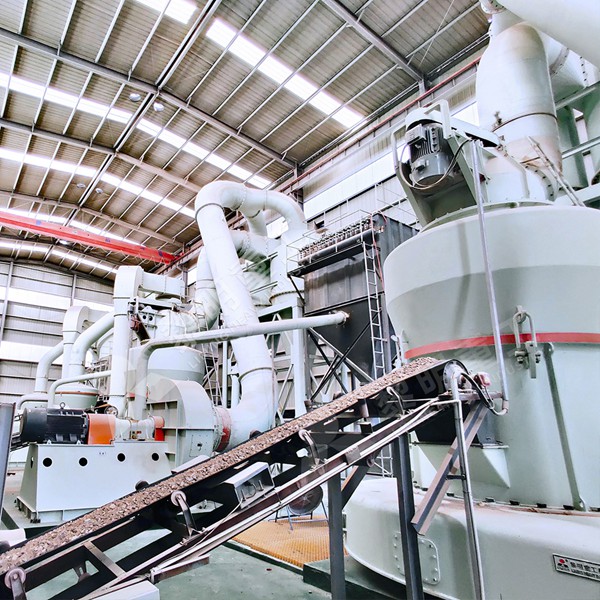
Raymond mills are widely employed in the grinding of non-metallic minerals, including kaolin, due to their ability to produce fine powders with consistent particle size distribution. However, during operation, the mill generates significant heat from friction between rollers and the grinding ring, as well as from the hot air flow used for drying and conveying. This thermal energy causes metal components—such as pipes, ductwork, and mill housings—to expand linearly and radially. Without a properly designed expansion joint, this expansion can lead to structural stress, joint failure, misalignment of components, and even catastrophic damage to the mill system.
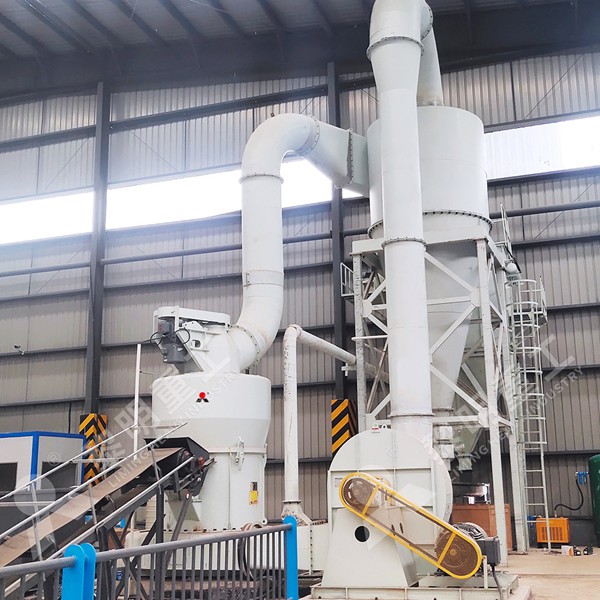
The expansion joint specifically designed for kaolin Raymond mills by Liming Heavy Industry serves as a flexible connector that absorbs thermal expansion, dampens vibration, and compensates for minor misalignments in piping and ductwork. It is strategically placed at key interfaces, such as between the mill outlet and the cyclone separator, or between the air blower and the dust collector, where temperature gradients are most pronounced. The joint's ability to maintain a seal under varying pressure conditions—typically ranging from atmospheric to moderate positive pressure—ensures that kaolin dust does not leak into the environment, complying with stringent environmental protection standards.
Material Selection and Engineering Design
Liming Heavy Industry employs a rigorous selection process for materials used in kaolin Raymond mill expansion joints, based on the specific operating conditions of each installation. The joint typically comprises multiple layers: an inner liner made of abrasion-resistant rubber or PTFE (polytetrafluoroethylene) to withstand the erosive action of kaolin particles; a reinforcement layer of high-strength fabric, often Kevlar or fiberglass, to provide structural flexibility and pressure rating; and an outer cover of weather-resistant elastomer for protection against environmental factors.
For high-temperature applications—where kaolin is dried simultaneously with grinding—the expansion joint may incorporate a ceramic fiber blanket or a stainless steel mesh reinforcement to handle temperatures up to 600°C. The joint's geometry is designed to accommodate axial, lateral, and angular movements, with typical movement allowances calculated based on the coefficient of thermal expansion of the connected pipe material and the expected temperature rise. Liming Heavy Industry's standard expansion joint models offer axial compression/extension up to ±50 mm, lateral deflection up to ±25 mm, and angular rotation up to 15 degrees, providing ample flexibility for most kaolin Raymond mill configurations.
The engineering team at Liming Heavy Industry, headquartered in the HI-TECH Industry Development Zone of Zhengzhou, utilizes finite element analysis (FEA) to optimize the joint's shape, layer thickness, and flange design. This computational approach ensures uniform stress distribution and minimizes weak points that could lead to premature failure. As a result, the expansion joints exhibit a service life exceeding 12 months in continuous kaolin grinding operations, with periodic inspection intervals every 3 months.
Installation Best Practices for Kaolin Applications
Proper installation is paramount to achieving optimal performance from the expansion joint. Liming Heavy Industry provides detailed installation guidelines tailored to kaolin Raymond mills, emphasizing the following key steps:
- Alignment Verification: Before installation, ensure that the connecting pipe flanges are parallel and aligned within 1 mm tolerance. Misalignment can cause uneven loading on the expansion joint and reduce its effective movement capacity.
- Thermal Preload: For joints installed in systems operating above 100°C, a thermal preload calculation is necessary. The joint should be installed with a slight compression (typically 5–10% of its rated axial movement) to account for contraction during cool-down periods.
- Gasket and Sealant Use: Use high-temperature gaskets (e.g., graphite-impregnated) at the flange interface to prevent kaolin dust leakage. Apply a thin layer of anti-seize compound on bolts to facilitate future maintenance.
- Support Brackets: Install support brackets on adjacent pipes to relieve weight from the expansion joint. The joint itself should not bear the pipe load, as this can cause sagging and accelerated wear.
- Minimum Straight Length: Maintain a minimum straight length of 2 times the pipe diameter upstream and downstream of the joint to ensure laminar flow and reduce turbulence-induced vibration.
Liming Heavy Industry's on-site installation support team, drawing from experience gained across 8,000 m² of workshop facilities and numerous global projects, can assist customers during commissioning to ensure these best practices are followed. The company's modern scientific management system also includes post-installation monitoring services, where sensors can be attached to critical expansion joints to track movement, temperature, and pressure in real time.
Impact on Mill Performance and Product Quality
The integration of a high-quality expansion joint in a kaolin Raymond mill directly influences several performance metrics:
- Reduced Downtime: By absorbing thermal and mechanical stresses, the joint prevents cracks in ductwork and flanges that would otherwise require hours of unscheduled maintenance. Case studies from Liming Heavy Industry installations show a 30–40% reduction in maintenance-related downtime when expansion joints are properly specified and maintained.
- Improved Dust Containment: Kaolin particles, especially those below 10 microns, are notoriously difficult to contain. A leak-tight expansion joint with a PTFE inner liner reduces fugitive emissions to below 10 mg/Nm³, meeting stringent regulatory limits.
- Enhanced Powder Fineness: Stable airflow conditions within the mill—enabled by properly functioning expansion joints—contribute to consistent classification. Liming Heavy Industry's Raymond mill data indicates that mills equipped with optimized expansion joints achieve a d50 particle size variation of less than 3% across shifts, compared to 10% variation in mills with worn or mismatched joints.
- Energy Efficiency: Leakage through faulty expansion joints forces the air blower to work harder to maintain negative pressure in the system, increasing power consumption by up to 8%. A properly sealed joint eliminates this wastage.
These benefits are particularly relevant for kaolin processing, where end-product specifications demand high whiteness, controlled particle size distribution (e.g., 325 mesh or finer), and low contamination levels. In the calcium carbonate and gypsum crushing applications where similar Raymond mills are used, the same expansion joint design principles apply, though material selection may be adjusted based on the chemical aggressiveness of the feedstock.
Maintenance and Troubleshooting
Regular inspection of the expansion joint is essential for long-term reliability. Liming Heavy Industry recommends the following maintenance schedule for kaolin Raymond mill expansion joints:
- Visual Inspection (Monthly): Check for surface cracks, discoloration, or blistering of the elastomer cover, which may indicate chemical attack or overheating. Look for signs of kaolin dust accumulation around the joint flanges.
- Movement Check (Quarterly): Measure the joint's current length and compare it to its installed length. Deviation beyond 10% of the rated movement may indicate binding or excessive thermal growth.
- Leak Testing (Semi-annually): Perform a pressure decay test or use a smoke generator to detect minor leaks. Any leak above 0.1% of the system pressure requires immediate gasket replacement or joint repair.
- Replacement Criteria: Replace the joint if the inner liner shows visible wear (e.g., more than 50% of the original thickness lost), if the fabric reinforcement is exposed, or if the joint has been in service for more than 18 months in continuous operation.
Common troubleshooting scenarios include:
- Premature Cracking: Often caused by overtightening of flange bolts, which compresses the joint beyond its design limit. Solution: Retorque bolts to manufacturer-specified values using a torque wrench.
- Excessive Vibration: If the joint is vibrating at a natural frequency close to the mill's operating speed, it may resonate and fail. Solution: Add external dampeners or change the joint's stiffness by selecting a different elastomer compound.
- Kaolin Buildup Inside Joint: In kaolin applications with high moisture content (>6%), material can accumulate inside the joint, restricting flow and causing erosion. Solution: Install a purge port for periodic cleaning with compressed air or nitrogen.
Liming Heavy Industry's customer support network, backed by a mature scientific research team with a focus on scientific research tackling key problems and technological progress, offers remote diagnostics and spare parts sourcing for all expansion joint models. Replacement units can be shipped within 48 hours to minimize production interruptions.
Conclusion
The kaolin Raymond mill expansion joint is a small but indispensable component that underpins the efficiency, safety, and product quality of kaolin grinding operations. Liming Heavy Industry Co., Ltd., with its 30-year legacy of manufacturing advanced crushing and grinding equipment, provides expansion joints that are robustly engineered, precisely manufactured, and rigorously tested to meet the demands of continuous industrial processes. By selecting the appropriate material grade, ensuring correct installation, and adhering to a structured maintenance regimen, mill operators can achieve extended equipment lifespan, lower total cost of ownership, and compliance with environmental standards. For those seeking to upgrade or retrofit existing kaolin Raymond mills, Liming Heavy Industry's technical team is equipped to perform site audits and deliver customized expansion joint solutions that align with the specific mill configuration and processing objectives.
Frequently Asked Questions
- What is the typical lifespan of a kaolin Raymond mill expansion joint in continuous operation?
The lifespan ranges from 12 to 18 months under normal operating conditions, depending on temperature, abrasive wear, and maintenance frequency. Liming Heavy Industry recommends scheduled replacement every 18 months to prevent unexpected failures. - Can the same expansion joint be used for both kaolin and calcium carbonate grinding?
Yes, the basic design is similar, but the inner liner material may need to be changed. For kaolin, which is mildly abrasive and can form fine dust, a PTFE or reinforced rubber liner is preferred. For calcium carbonate, which is more abrasive, a ceramic-filled elastomer may be used. - How do I determine the correct size of expansion joint for my Raymond mill?
The joint size is primarily determined by the pipe diameter at the connection point and the expected thermal expansion. Liming Heavy Industry provides a sizing calculator based on mill operating temperature, pipe material, and distance between fixed points. Contact our engineering team for a customized recommendation. - What are the signs that an expansion joint needs immediate replacement?
Visible cracks through the outer cover, continuous leakage of kaolin dust, unusual vibrations in the adjacent pipes, or a permanent deformation that exceeds 15% of the original movement capacity are all indicators for immediate replacement. - Does the expansion joint affect the fineness of the ground kaolin product?
Indirectly, yes. A leaking or misaligned expansion joint can cause air flow instability in the mill classifier, leading to inconsistent particle size distribution. Maintaining a properly sealed joint helps ensure the classifier operates under stable pressure, thus preserving product fineness specifications.


