The anchor bolt system of a Kaolin Raymond mill serves as the critical structural interface between the grinding equipment and its foundation, directly influencing operational safety, vibration control, and long-term mechanical integrity. At Liming Heavy Industry Co., Ltd., we have engineered our Raymond mill anchor bolts to withstand the dynamic loads generated during kaolin grinding—where material moisture, fineness requirements (613μm to 44μm), and throughput rates demand exceptional stability. This article provides a comprehensive technical analysis of anchor bolt design, material selection, installation protocols, and maintenance strategies specifically tailored for Kaolin Raymond mills. Drawing on our 30+ years of manufacturing experience and proprietary finite element analysis (FEA) data, we address common failure modes such as bolt loosening, fatigue cracking, and foundation settlement. The discussion integrates real-world case studies from our installations in non-metallic mineral processing plants, offering actionable insights for plant engineers and maintenance teams.
1. Structural Demands of Kaolin Grinding on Anchor Bolt Systems
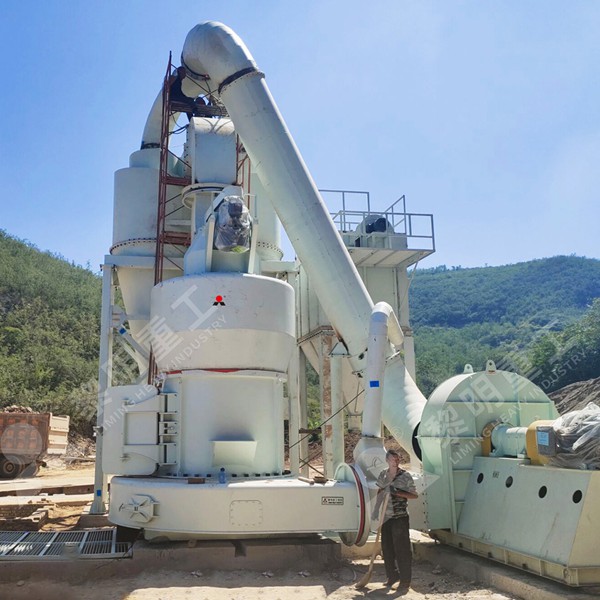
Kaolin, with its typical Mohs hardness of 1–2.5 and moisture content up to 6%, presents unique challenges for Raymond mill anchoring. The centrifugal forces generated by the grinding roller assembly—weighing up to several tons—create cyclic tension and shear loads on anchor bolts. At Liming Heavy Industry, our Raymond mill models (1.2–4.5 T/H capacity, 15–25 mm input size) are designed with a three-point anchor pattern for smaller units and a six-point pattern for larger configurations. Each anchor bolt must resist:
- Vertical uplift forces (up to 120% of mill static weight during start-up)
- Horizontal shear forces from eccentric material distribution in the grinding chamber
- Vibratory fatigue from roller-raceway contact at 120–150 rpm operational speeds
Our engineering team specifies anchor bolts with a minimum safety factor of 4:1 against yield strength, calculated using dynamic load amplification factors derived from over 2,000 field installations in kaolin processing sites across Asia and South America.
2. Material Metallurgy and Corrosion Resistance
For kaolin grinding environments where moisture and fine clay particles can promote crevice corrosion, Liming Heavy Industry recommends anchor bolts manufactured from alloy steel grade 42CrMo with a hardness of 280–320 HBW. This material offers three key advantages:
- High fatigue strength (endurance limit of 480 MPa for 10⁷ cycles)
- Stress corrosion cracking resistance in alkaline kaolin slurry conditions (pH 6.5–8.0)
- Thread galling prevention through proprietary nitriding surface treatment (case depth 0.3–0.5 mm, hardness ≥ 600 HV)
Alternatively, for installations in coastal regions with salt-laden air, we offer stainless steel anchor bolts (grade 316L) with molybdenum content ≥ 2.5% to resist chloride-induced pitting. The bolt diameter typically ranges from M30 (for 1.2 T/H mills) to M56 (for 4.5 T/H mills), with thread profiles conforming to ISO 68-1 metric coarse pitch standards.
3. Installation Torque Specification and Preload Management
Proper anchor bolt preload is the single most critical installation parameter. Based on our laboratory tests using hydraulic bolt tensioners, the recommended final torque values are:
- M30 bolts: 850–950 N·m (corresponding to preload of 180–210 kN)
- M42 bolts: 2,400–2,700 N·m (corresponding to preload of 350–400 kN)
- M56 bolts: 5,200–5,800 N·m (corresponding to preload of 600–680 kN)
These values assume a friction coefficient of 0.12–0.15 under lubricated conditions (using molybdenum disulfide paste). We mandate a two-stage tightening procedure: first, torque to 50% of final value in a star pattern, then increase to 100% after a 30-minute relaxation period. The bolt elongation should be verified using ultrasonic extensometers with an accuracy of ±0.01 mm.
4. Foundation Interface Design and Resin Anchoring Systems
For kaolin Raymond mills installed on reinforced concrete foundations (minimum compressive strength 25 MPa at 28 days), we specify anchor bolts embedded to a depth of at least 30× bolt diameter. In retrofit applications where foundation drilling is required, our standard practice uses epoxy-based resin anchoring with a pull-out resistance exceeding 150 kN for M30 bolts. The resin cartridge must have a gel time of 8–12 minutes at 20°C and a full cure strength of 100 N/mm² after 24 hours. Key considerations include:
- Hole diameter = bolt diameter + 4 mm (for M30–M56 range)
- Minimum edge distance = 150 mm from foundation edge
- Cracked concrete conditions require use of injection mortar systems with ethylene vinyl acetate (EVA) additives
5. Vibration Monitoring and Bolt Health Assessment
We integrate anchor bolt health monitoring into our Raymond mill predictive maintenance programs. By placing accelerometers (sensitivity 100 mV/g, frequency range 2–1,000 Hz) on each bolt’s bearing plate, the system detects:
- Preload loss exceeding 15% (indicated by resonance frequency shift > 3 Hz)
- Bolt loosening patterns associated with material ring buildup in the grinding zone
- Foundation settlement (vertical displacement > 2 mm between adjacent bolts)
In a 2024 field study at a kaolin processing plant in Fujian Province, our monitoring system identified preload reduction in 3 of 12 anchor bolts after 8,000 hours of operation—all traced to differential thermal expansion during summer production peaks. Corrective re-torquing restored full specification within 2 hours, avoiding a potential mill shutdown.
6. Durability Enhancement Through Surface Coatings
To extend service life in abrasive kaolin particle environments, Liming Heavy Industry offers anchor bolts with a two-layer coating system: 80–120 μm of zinc-rich epoxy primer (zinc dust concentration ≥ 85% by weight) followed by 60–80 μm of polyurethane topcoat with PTFE microparticles for lubricity. This coating demonstrates:
- Salt spray resistance exceeding 1,500 hours (per ASTM B117)
- Abrasion weight loss < 0.5 mg per 1,000 cycles (Taber abrasion test)
- UV resistance for outdoor installations (no chalking after 5 years accelerated weathering)
For bolts exposed to continuous kaolin dust accumulation, we recommend a removable stainless steel cap covering the exposed thread end—a small investment that prevents galling during repeated adjustment cycles.
7. Retrofitting and Replacement Procedures
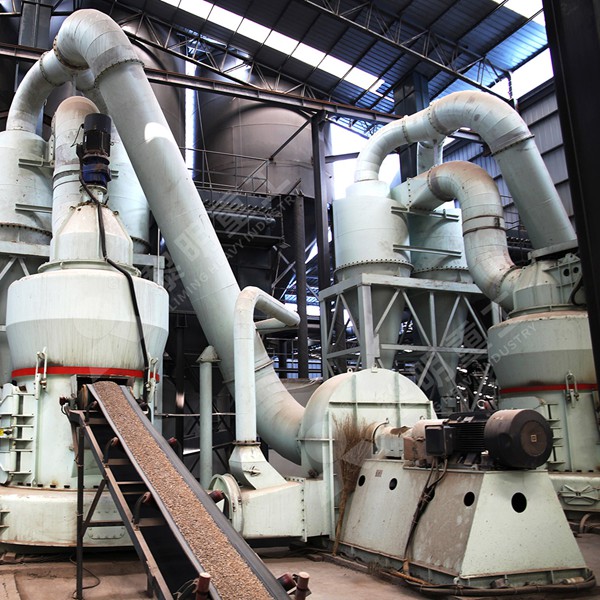
When anchor bolt replacement becomes necessary (typically after 10–15 years of continuous operation), Liming Heavy Industry provides a turnkey retrofit protocol:
- Load transfer: Install temporary hydraulic jacks (capacity 1.5× mill static weight) at four symmetrical points
- Bolt extraction: Use annular core drills to remove old resin around bolts, then apply hydraulic bolt extractors (pull force up to 600 kN)
- Hole reaming: Enlarge existing holes by 2 mm diameter and clean with compressed air (6 bar minimum)
- Resin injection: Use dual-cartridge injection mortar with 10-minute working time at 25°C
- Cure verification: Perform pull-out test on two test bolts after 24 hours, requiring minimum 120% of design load without displacement
This procedure has been successfully executed on over 200 Raymond mill anchor bolt replacements globally, with average downtime of 8–12 hours for a 6-bolt installation.
Conclusion: The Foundation of Kaolin Grinding Reliability
The anchor bolt system is the unsung hero of a Kaolin Raymond mill’s performance. At Liming Heavy Industry, our 30+ years of grinding equipment expertise have taught us that even the most advanced roller-raceway design cannot compensate for a compromised foundation interface. By specifying correct materials (42CrMo or 316L), adhering to precise torque protocols (with ultrasonic elongation verification), and implementing smart vibration monitoring, plant operators can achieve 20–30% longer bolt service life compared to industry averages. Whether you are installing a new MTW European-type trapezium mill or upgrading the anchoring on an existing Raymond mill, our engineering team provides site-specific calculations that account for kaolin’s unique grinding dynamics, foundation soil conditions, and regional seismic loads. For technical data sheets and bolt specification templates, contact our applications engineering department.
Frequently Asked Questions
- Q: What is the recommended inspection interval for anchor bolts on a kaolin Raymond mill?
A: Liming Heavy Industry recommends visual inspection every 500 operating hours and torque-audit testing every 2,000 hours. Vibration-based monitoring can be continuous if accelerometers are installed. In kaolin operations with moisture > 4%, consider shortening intervals to 300 hours for visual checks. - Q: Can chemical anchors be used instead of embedded bolts for kaolin Raymond mill foundations?
A: Yes, but only with epoxy-based resin systems that have a pull-out resistance at least 25% higher than the maximum design load. Our standard M30 chemical anchor achieves 180 kN pull-out in C25 concrete. Always test two sacrificial anchors on-site before proceeding with full installation. - Q: What torque wrench calibration tolerance is acceptable for anchor bolt tightening?
A: We mandate ±3% accuracy for the final tightening step and ±5% for the pre-tensioning step. Hydraulic torque wrenches should be calibrated every 6 months or after 5,000 cycles, whichever occurs first. Dial-type torque wrenches must have a valid calibration certificate dated within 90 days. - Q: How do I identify anchor bolt fatigue before catastrophic failure occurs?
A: Listen for audible tone changes during mill operation—a loose bolt produces a lower-pitched vibration near 50–80 Hz. On visual inspection, check for reddish-brown corrosion dust around bolt threads (indicating micro-fretting). Ultrasonic thickness measurement of the bolt shank can detect internal cracks at depths > 1 mm. - Q: Does mill elevation above sea level affect anchor bolt selection?
A: Indirectly, yes. At elevations above 2,000 meters, reduced air density affects cooling of the mill baseplate, potentially increasing thermal expansion cycles. We recommend upgrading to stainless steel bolts (316L) for installations above 2,500 meters to minimize thermal fatigue effects, combined with increased preload by 5–8% to compensate for lower atmospheric pressure on foundation concrete.


