Published: October 26, 2023
The consistent quality and superior gloss of kaolin-based paints are fundamentally dependent on achieving precise particle fineness and distribution during the mineral processing stage. As a leader in industrial grinding technology for over three decades, Liming Heavy Industry Co., Ltd. provides a comprehensive portfolio of advanced milling equipment engineered to meet the exacting demands of kaolin processing for high-gloss paint formulations. This article explores the critical relationship between grinding precision and gloss measurement, detailing how our specialized machinery—from Raymond Mills to Micro Powder Mills—enables producers to control key parameters like particle size, shape, and uniformity, which directly influence opacity, dispersion, and the final reflective quality of the coating.
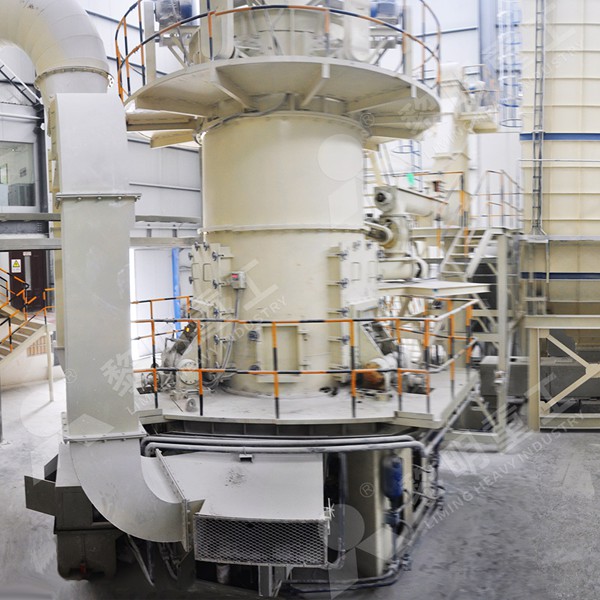
The pursuit of optimal gloss in kaolin-based paints begins with the raw material's transformation. Kaolin, or china clay, must be processed to a specific fineness to act effectively as an extender and opacifier. The particle size distribution (PSD) is paramount; overly coarse particles can scatter light irregularly, leading to a matte or uneven finish, while an ultra-fine, consistent powder promotes smooth film formation and uniform light reflection, resulting in high gloss. Liming Heavy Industry's grinding solutions are designed to deliver this precise control. Our LM Vertical Roller Mill, for instance, integrates drying, grinding, classification, and conveying in a single system. Its ability to handle moist feed materials and produce a consistent product in the range suitable for paint fillers (often targeting the 2-45 micron range) makes it an efficient choice for large-scale kaolin processing lines. The grinding mechanism, which utilizes rollers and a rotating table, applies both compression and shear forces, contributing to favorable particle morphology.
For applications requiring fine to ultra-fine kaolin powders, our MW Micro Powder Mill represents the technological frontier. Incorporating advanced grinding concepts, this mill is exceptionally capable of producing powders with a top cut (d97) down to 5 micrometers (approximately 2500 mesh). This superfine grinding capability is crucial for high-gloss paints, where even sub-micron particles impact the surface smoothness. The mill's working principle involves multiple rollers rotating against a stationary ring raceway, creating a multi-layered grinding effect. The integrated high-efficiency classifier ensures that only particles meeting the target fineness exit the grinding chamber, while oversize material is recirculated. This closed-circuit system, coupled with a pulse dust collector, not only guarantees precise PSD but also aligns with modern environmental standards for dust-free production—a critical consideration for paint-grade mineral suppliers.
Beyond sheer fineness, particle shape integrity is another factor influencing gloss. Aggressive milling that destroys the platy, hexagonal structure of kaolin can reduce its optical performance. Here, the grinding technology's gentleness matters. Our MTW European Type Trapezium Mill offers an excellent balance. As an evolution of traditional Raymond mill design, it features curved shovel blades that feed material more smoothly into the grinding zone and an innovative grinding ring and roller profile. This design reduces wear and promotes a more controlled milling action, helping to preserve the beneficial lamellar structure of kaolin particles while achieving the desired reduction in size. The system's stability and high productivity make it a reliable workhorse for dedicated kaolin processing plants focused on quality.
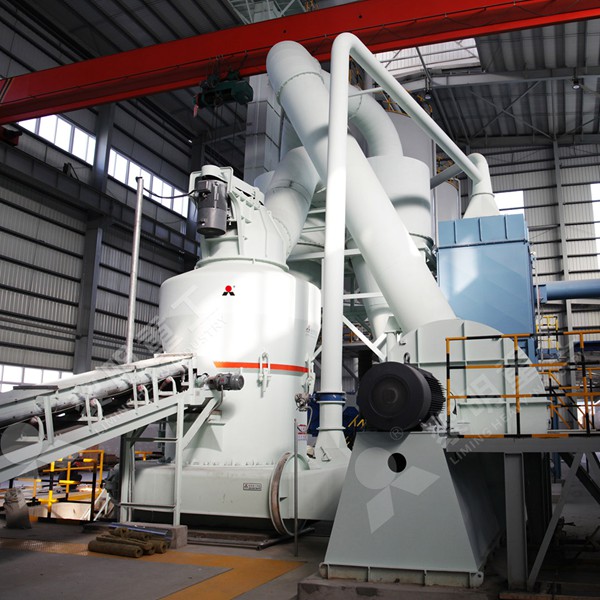
Quality control in gloss measurement necessitates not just the right equipment but a holistic process approach. A typical Liming grinding line for kaolin includes preparatory crushing (e.g., with a Jaw Crusher), precise feeding, the core grinding mill, an efficient separator (classifier), and a complete dust collection and product conveying system. This integrated design ensures every batch is processed under consistent parameters. The separator is the brain of this operation; by adjusting its rotor speed, operators can fine-tune the cut point of the particle size in real-time, allowing for rapid response to quality control lab results from gloss meters and particle analyzers. This closed-loop process control is what transforms a grinding mill from a simple size reducer into a precision instrument for quality manufacturing.
Finally, the choice of grinding system must align with the specific stage of kaolin processing. While our Ball Mill is a versatile unit often used in broader mineral beneficiation, its tumbling action is highly effective for the wet or dry grinding of calcined kaolin, a process that enhances brightness and abrasion resistance—properties synergistic with gloss. Meanwhile, our classic Raymond Mill remains a robust and economical solution for producing standard fineness kaolin powders reliably. At Liming Heavy Industry, our philosophy of "scientific research tackling key problems" drives continuous innovation in grinding technology. By leveraging our mature R&D team and modern manufacturing facilities across Zhengzhou, we develop solutions that empower the coatings industry to master the science of gloss through the art of precision grinding.
Frequently Asked Questions (FAQs)
Q1: Why is particle size so critical for kaolin gloss in paints?
A1: Particle size and distribution directly affect light scattering and film surface smoothness. Uniform, optimally sized kaolin particles pack densely in the paint film, creating a flatter surface that reflects light consistently, leading to higher gloss. Inconsistent or coarse particles create surface irregularities that diffuse light, reducing gloss.
Q2: Which Liming mill is best for producing ultra-fine (d97 < 10μm) kaolin for high-gloss applications?
A2: The MW Micro Powder Mill is specifically engineered for superfine grinding, capable of achieving a fineness up to d97 ≤ 5μm. Its advanced classification system and grinding mechanics make it the ideal choice for producing the ultra-fine, consistent powders required in premium gloss paint formulations.
Q3: How does your grinding technology preserve the natural platy structure of kaolin?
A3: Mills like the MTW European Type Trapezium Mill and LM Vertical Roller Mill utilize grinding principles (compression, shear) that are more conducive to delaminating kaolin particles along their natural planes compared to high-impact methods. This helps maintain the lamellar structure, which benefits opacity and suspension in the final paint.
Q4: Can your grinding systems be integrated with online particle size analysis for real-time adjustment?
A4> Yes, our grinding systems, particularly those with dynamic classifiers like in the LM and MTW mills, are designed for precise control. The separator speed can be automated and linked to feedback from online particle analyzers, creating a closed-loop system that continuously adjusts to maintain the target PSD for consistent gloss outcomes.
Q5: What are the key environmental features of your grinding lines for kaolin?
A5> All our complete grinding lines are equipped with high-efficiency pulse jet baghouse dust collectors, ensuring emissions meet stringent environmental standards. Furthermore, our systems are designed as negative-pressure or closed circuits, minimizing dust escape. The MW Micro Powder Mill and others also focus on energy efficiency, reducing the overall carbon footprint of the grinding process.


