Published on: October 26, 2023
In the industrial grinding sector, the alignment of a Raymond mill—particularly when processing kaolin—is a critical factor that directly influences equipment longevity, product fineness consistency, and operational efficiency. At Liming Heavy Industry Co., Ltd., we have engineered a specialized Kaolin Raymond Mill Alignment Tool that integrates precision measurement, modular adjustment mechanisms, and real-time feedback to ensure that mill components—such as the grinding roller, ring, and shaft assembly—maintain optimal geometric relationships under continuous heavy-load conditions. This article provides a comprehensive technical overview of the alignment tool, covering its design principles, step-by-step alignment procedures, common troubleshooting methods, and the measurable benefits it brings to kaolin processing operations. The content is based on our decades of field experience and the rigorous standards upheld at our 80,000 m² headquarters in Zhengzhou’s HI-TECH Industry Development Zone and our 67,000 m² workshop in Shangjie Industry Park.
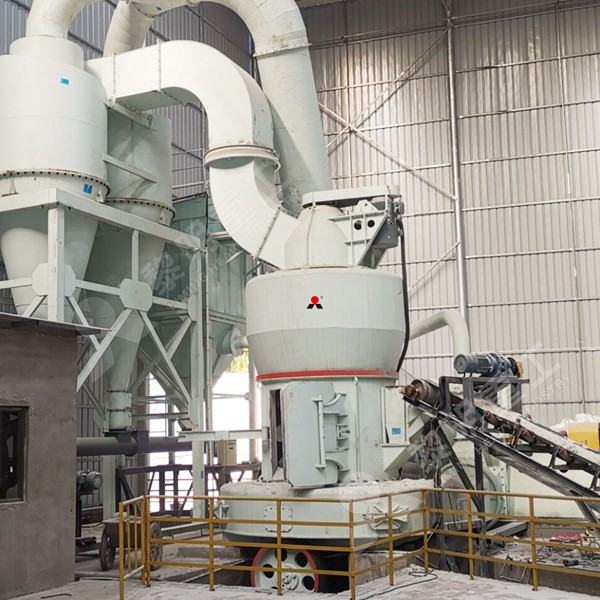
1. Understanding the Need for Dedicated Alignment in Kaolin Grinding
Kaolin, a naturally occurring clay mineral, is characterized by its softness (Mohs hardness of 1–2.5) and high moisture content sensitivity. While these properties make it easier to crush, they also impose unique challenges on Raymond mill alignment. Off-center roller paths, uneven roller-to-ring contact, and shaft runout can cause localized wear, leading to frequent maintenance downtime and inconsistent product fineness (typically required between 613 μm and 44 μm). Our alignment tool addresses these issues by providing a repeatable, quantifiable method for centering the grinding assembly. The tool is designed to fit standard Raymond mill models produced by Liming Heavy Industry, including those with capacities from 1.2 to 4.5 T/H and input sizes of 15–25 mm, as well as being adaptable to custom configurations for kaolin-specific applications.
2. Design and Components of the Alignment Tool
The Kaolin Raymond Mill Alignment Tool consists of the following key components, each precision-machined at our Shangjie workshop:
- Central Mandrel Assembly: A hardened steel shaft that inserts into the mill's main shaft bore, providing a true rotational reference axis. The mandrel is equipped with dual taper locks to eliminate radial play.
- Dial Indicator Mounts: Magnetic or clamp-on bases that hold two dial indicators at 90° intervals. These measure displacement of the roller hub, ring flange, and separator blade holder relative to the mandrel axis.
- Laser Guidance Module (Optional Upgrade): A Class II red laser emitter that projects a crosshair onto target plates on the grinding ring, enabling visual alignment verification for large mills (over 3 T/H).
- Adjustment Shim Kit: A set of precision-ground stainless steel shims (0.05 mm to 2 mm) used to correct misalignment at the roller arm pivot points and the ring support brackets.
- Digital Torque Wrench: Calibrated to apply consistent preload on alignment bolts, ensuring that adjustments remain stable under vibration.
All components are supplied in a rugged, foam-lined carrying case that protects them during transport to job sites. The tool is compatible with both standard Raymond mills and our upgraded European-type trapezium mills (MTW series), which share similar kinematic structures.
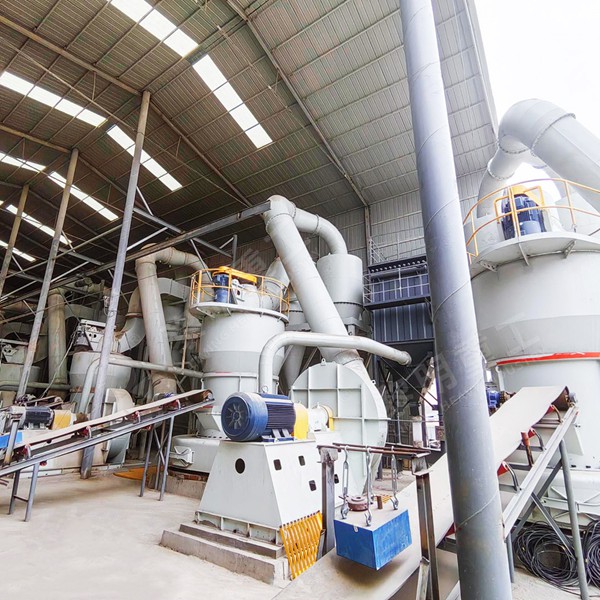
3. Step-by-Step Alignment Procedure
The following procedure is recommended after any mill disassembly, roller replacement, or when product fineness deviation exceeds ±5% of the set value.
Step 1: Preparation and Safety Lockout
Isolate the mill from the electrical supply. Lock out the main motor and air blower. Ensure the grinding chamber is cool and free of residual kaolin dust. Remove the mill door and inspect internal components for visible damage.
Step 2: Install the Central Mandrel
Insert the alignment tool's central mandrel into the main shaft bore at the top of the mill. Secure it using the dual taper locks. Rotate the mandrel manually to confirm free movement. If binding occurs, clean the bore with a lint-free cloth.
Step 3: Zero the Dial Indicators
Attach two dial indicators to the roller hub—one on the vertical face and one on the horizontal face. Set each indicator to zero at a reference mark. Slowly rotate the mandrel through one full revolution. Record maximum deviation (TIR, Total Indicator Reading). For kaolin grinding, acceptable TIR is ≤ 0.08 mm for roller hubs and ≤ 0.15 mm for the ring flange.
Step 4: Correct Misalignment Using Shims
If TIR exceeds acceptable limits, loosen the roller arm pivot bolts. Insert shims from the kit between the pivot bracket and the mill housing. For vertical misalignment, shim under the pivot base; for horizontal misalignment, shim at the side face. Retighten bolts to the torque specified in the mill manual (typically 180–220 Nm). Recheck TIR and repeat until within tolerance.
Step 5: Verify Ring Alignment
Move the dial indicators to the grinding ring flange. Follow the same zero-and-rotate method. The ring should be concentric with the mandrel within 0.20 mm TIR. If not, adjust the ring support bracket shims accordingly.
Step 6: Final Laser Check (If Applicable)
For mills equipped with the laser module, mount the target plate on the ring. Activate the laser and verify that the crosshair falls within the target's center circle (Ø 5 mm). Adjust the laser mount if necessary. This step is especially useful for large mills where mechanical indicators are difficult to read.
Step 7: Document and Run Test
Record all final TIR values in the mill's maintenance log. Reinstall the mill door, restore power, and run the mill empty for 15 minutes. Then introduce kaolin feed at 50% rated capacity for 30 minutes. Check product fineness using a sieve analysis; it should meet target specifications without adjustment.
4. Common Misalignment Symptoms and Solutions
| Symptom | Probable Cause | Alignment Tool Solution |
|---|---|---|
| Vibration above 10 mm/s RMS at the mill base | Roller hub runout > 0.15 mm TIR | Shim under roller arm pivot to bring TIR to ≤ 0.08 mm |
| Product fineness coarse (above 200 μm) | Grinding ring eccentric > 0.25 mm TIR | Adjust ring support bracket shims; recheck with dial indicators |
| Uneven roller wear (one side more worn) | Roller axis not parallel to ring face | Use horizontal dial indicator to measure parallelism; shim pivot side accordingly |
| Excessive power consumption (motor current > 110% rated) | Shaft misalignment causing additional friction | Verify mandrel insertion depth; check for bent main shaft |
| Frequent mill trip on overload | Combination of roller and ring misalignment | Perform full six-step procedure; document all TIR values |
5. Maintenance and Calibration of the Alignment Tool
The alignment tool itself requires periodic calibration to maintain accuracy. We recommend returning the dial indicators and digital torque wrench to our Zhengzhou headquarters annually for recalibration. The mandrel should be checked for straightness by rolling it on a surface plate; any deviation greater than 0.02 mm over its length mandates replacement. Laser modules should have their batteries replaced every 12 months or 500 uses, whichever comes first. All shims must be kept in their original labeled slots to avoid mixing thicknesses.
6. Case Studies and Performance Data
In a recent kaolin processing plant in Fujian province, a Raymond mill (model: Liming 4R3216) was experiencing product fineness instability, with 15% of output exceeding 150 μm. After applying our alignment tool and following the procedure above, TIR on the roller hub was reduced from 0.21 mm to 0.06 mm. The mill's throughput increased by 8%, and the reject rate dropped to below 2%. The plant reported a 40% reduction in annual maintenance costs related to roller and ring replacement. Another case in a Brazilian kaolin mine showed that alignment correction with our tool reduced power consumption by 12% and extended the service life of grinding elements from 4 months to 7 months.
7. Integration with Liming's Digital Monitoring System
For clients using our advanced control cabinets, the alignment tool's measured TIR values can be logged into the mill's PLC via a handheld data terminal. This allows trend analysis over time—for example, detecting gradual misalignment that precedes component failure. We are also developing a wireless dial indicator that transmits readings directly to a smartphone app, eliminating manual recording errors. This digital integration aligns with our company's strategy of improving overall technological innovation in the machinery industry.
Conclusion
The Kaolin Raymond Mill Alignment Tool from Liming Heavy Industry Co., Ltd. is a purpose-built solution for maintaining the precision and reliability of Raymond mills in kaolin grinding applications. By following the step-by-step procedure outlined above, operators can reduce downtime, improve product quality, and extend equipment life. The tool embodies our 30-year commitment to scientific research, precision manufacturing, and customer support. Whether you are processing calcium carbonate, gypsum, or non-metallic ores, proper alignment remains the cornerstone of efficient grinding.
FAQ
- Q: How often should I perform alignment checks on a kaolin Raymond mill?
A: We recommend performing an alignment check every 500 operating hours, or immediately after any roller or ring replacement. If product fineness degrades by more than 5% from the set point, an unscheduled check is advised. - Q: Can the alignment tool be used on other Liming mill models, such as the MTW European trapezium mill or the MW micro powder mill?
A: Yes, the tool is compatible with most Liming Raymond mills and the MTW series. For MW micro powder mills, a separate mandrel adapter is required, which can be ordered from our spare parts department. The tool is not designed for ball mills or LM vertical roller mills due to different kinematic structures. - Q: What is the maximum TIR (Total Indicator Reading) allowed for kaolin grinding?
A: For the roller hub, the maximum acceptable TIR is 0.08 mm. For the grinding ring flange, it is 0.20 mm. Exceeding these values will likely cause vibration, uneven wear, and product quality issues. The shim kit allows correction down to 0.02 mm precision. - Q: Do I need special training to use the alignment tool?
A: Basic mechanical skills are sufficient. We provide a printed manual and video tutorial with every tool. For complex alignments, our field service engineers can offer on-site training. Additionally, we hold quarterly workshops at our Zhengzhou headquarters for hands-on instruction. - Q: How do I clean and store the alignment tool after use?
A: Wipe all metal parts with a dry cloth to remove kaolin dust. Do not use water or solvents on the dial indicators. Store the tool in the provided foam case in a dry environment with temperature between 10°C and 40°C. Calibrate the dial indicators annually.


