Published on: October 26, 2023
The 325 mesh kaolin dispersion grinding plant represents a critical processing solution for the non-metallic mineral industry, specifically designed to achieve fine grinding and uniform dispersion of kaolin to a particle size of 325 mesh (approximately 44 micrometers). This plant integrates advanced milling technology, automated control systems, and environmentally compliant dust collection to deliver high throughput, energy efficiency, and consistent product quality. As a cornerstone of industrial mineral processing, the 325 mesh kaolin grinding plant is widely employed in ceramics, paper coating, rubber, paint, and plastic applications, where precise particle size distribution and dispersion are essential for end-product performance. This article provides a detailed examination of the plant configuration, equipment selection, working principles, and operational advantages, drawing on extensive experience in crushing and grinding machinery manufacturing.
The 325 mesh kaolin dispersion grinding plant is engineered to transform raw kaolin ore, typically in lump form with a moisture content below 6%, into a finely ground powder that meets stringent industrial specifications. The process begins with primary crushing using a jaw crusher, which reduces feed material to a manageable size of 15–30 mm. This crushed kaolin is then conveyed via a variable-frequency belt feeder to the grinding mill, ensuring consistent and controllable feed rates. The core milling equipment can vary based on production scale and fineness requirements, but for 325 mesh kaolin, the Raymond mill, MTW European type trapezium mill, or MW micro powder mill are the most suitable choices. These mills employ grinding rollers and rings to pulverize material through compression and shear forces, with an integrated air classifier that separates fine particles and returns oversize material for further grinding. The entire system operates in a closed circuit, with airflow recycled through a fan and pulse dust collector to minimize emissions and comply with environmental standards.
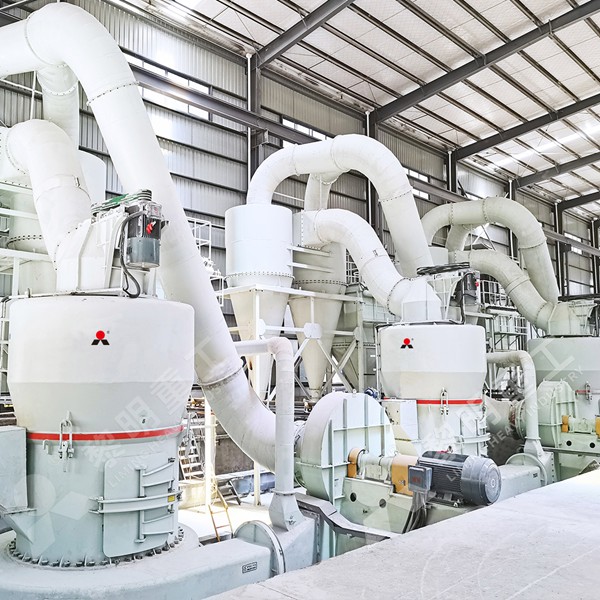
For optimal kaolin dispersion at 325 mesh, the MTW European type trapezium mill is frequently recommended due to its patented technology and robust design. With a capacity range of 3–55 TPH and input size up to 50 mm, this mill features a bevel gear integral transmission system that reduces energy consumption by 30% compared to traditional mills. The internal classifier adjusts fineness precisely between 80–400 mesh, making it ideal for achieving a uniform 325 mesh product. The mill's working principle involves material falling between the grinding roller and ring, where it is crushed and ground. Hot air or ambient air, drawn through the mill, lifts fine particles to the separator; those meeting size specifications are collected as product, while coarse particles fall back for regrinding. This closed-loop system, combined with a pulse dust collector, ensures a clean production environment and high recovery rates, typically above 99%. For smaller-scale operations or when ultra-fine grinding is needed, the MW micro powder mill offers an alternative, achieving fineness down to 325–3250 mesh with a capacity of 0.5–25 TPH.
The dispersion aspect of the plant is critical for kaolin applications where agglomerates must be broken down to ensure uniform particle distribution in liquid or solid matrices. In the grinding process, mechanical forces from the mill rollers, combined with the classifier's airflow, effectively deagglomerate kaolin particles. However, for enhanced dispersion, some plants incorporate a pre-dispersion step using a high-speed mixer or a ball mill with grinding media. The ball mill, with its horizontal rotating chamber and steel balls, provides impact and attrition forces that are particularly effective for breaking down tough agglomerates. Its capacity ranges from 0.65–50 TPH, and it can be operated in batch or continuous mode. When integrated into the 325 mesh kaolin plant, the ball mill serves as a secondary grinding stage or as a dedicated dispersion unit, especially for high-viscosity slurries. The choice between roller mills and ball mills depends on the final product specifications: roller mills offer higher efficiency and lower power consumption for dry grinding, while ball mills excel in wet grinding and dispersion.
From an operational perspective, the 325 mesh kaolin dispersion grinding plant is designed for reliability and ease of maintenance. The LM vertical roller mill, with its capacity of 10–400 TPH and input size of 30–55 mm, is another option for large-scale operations, integrating drying, grinding, and classification in a single unit. Its hydraulic system ensures stable roller pressure, while the automatic electric control system adjusts parameters in real time to maintain product consistency. The plant's layout typically includes a hopper for raw material storage, a jaw crusher for primary reduction, a vibrating feeder for metered feed, the main grinding mill, a cyclone collector for product separation, and a pulse dust collector for air purification. All components are connected via sealed pipes to prevent dust leakage and material loss. The entire system is controlled from a central electric cabinet, with motors sized to match the required power, typically ranging from 75 kW for small mills to over 500 kW for large vertical mills.
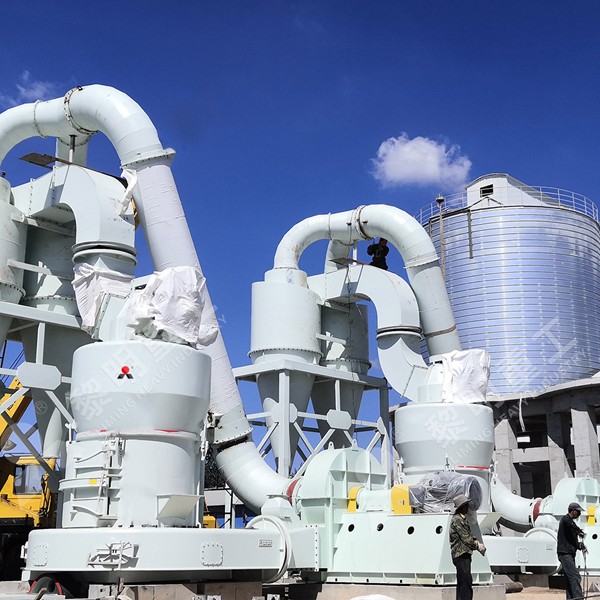
The advantages of the 325 mesh kaolin dispersion grinding plant are numerous. First, it achieves a narrow particle size distribution, with over 90% of particles passing 325 mesh, which is critical for applications like paper coating where gloss and opacity depend on particle uniformity. Second, the plant's energy efficiency, driven by advanced mill designs and variable-frequency drives, reduces operational costs by 15–25% compared to older technologies. Third, the closed-circuit system minimizes waste and environmental impact, complying with stringent emission regulations. Fourth, the modular design allows for easy capacity expansion or integration with existing processing lines. Finally, the plant's automation reduces labor requirements and improves process repeatability, ensuring consistent product quality batch after batch. For kaolin processors targeting markets such as ceramics (where kaolin provides plasticity and whiteness), paint (as an extender pigment), or rubber (as a reinforcing filler), this plant delivers a cost-effective and reliable solution.
In conclusion, the 325 mesh kaolin dispersion grinding plant is a sophisticated yet practical system for producing high-quality kaolin powder. By selecting the appropriate mill type—be it the MTW trapezium mill for balanced performance, the MW micro powder mill for ultra-fine grinding, or the ball mill for enhanced dispersion—operators can tailor the plant to their specific needs. The integration of crushing, grinding, classification, and dust collection into a single, automated line ensures high throughput, low maintenance, and superior product characteristics. As industries continue to demand finer and more consistent mineral powders, this plant remains a benchmark for kaolin processing excellence.
Frequently Asked Questions (FAQ)
- What is the typical capacity of a 325 mesh kaolin dispersion grinding plant?
The capacity varies by mill type: Raymond mills handle 1.2–4.5 TPH, MTW European type mills offer 3–55 TPH, and LM vertical roller mills can reach 10–400 TPH, depending on feed size and fineness requirements. - Can the same plant grind other materials besides kaolin?
Yes, the plant is versatile and can process non-flammable, non-explosive materials with Mohs hardness below 7 and humidity under 6%, such as limestone, gypsum, barite, and calcium carbonate, with adjustments to mill parameters. - What is the importance of the pulse dust collector in the system?
The pulse dust collector captures fine particles from the exhaust air, ensuring emission compliance with environmental standards, reducing material loss, and maintaining a clean working environment. Recovery rates typically exceed 99%. - How is the 325 mesh fineness maintained during operation?
Fineness is controlled by the mill's built-in air classifier, which adjusts the rotational speed of the separator wheel. Additionally, the feed rate and air volume are regulated via variable-frequency drives to ensure consistent particle size distribution. - What maintenance is required for the grinding mill?
Regular maintenance includes checking and replacing worn grinding rollers and rings, lubricating bearings, inspecting seals for dust leaks, and cleaning the classifier blades. Most mills are designed for easy access, with scheduled downtime every 500–1000 operating hours depending on material abrasiveness.


