Published on October 26, 2023
When it comes to producing high-quality 200 mesh limestone powder, the choice of grinding mill is critical for operational efficiency, product consistency, and long-term cost management. Liming Heavy Industry, a pioneering force in the crushing and grinding equipment sector since 1987, offers a comprehensive range of mills engineered to meet the demanding specifications of limestone grinding. Whether you require a Raymond mill for medium-scale production, an MTW European Type Trapezium Mill for large-capacity environmental operations, or a micro powder mill for ultra-fine applications, Liming provides solutions tailored to achieve precise 200 mesh (74 micron) output with high throughput and low energy consumption. This article explores the key technologies, operational principles, and selection criteria for 200 mesh limestone grinding mills, drawing on Liming's three decades of expertise in manufacturing large and medium-sized grinding equipment, with a headquarters spanning 80,000 m² in Zhengzhou and a dedicated workshop of 67,000 m² in Shangjie. We will delve into how modern scientific management and continuous innovation make Liming the industry leader for domestic and overseas powder processing projects.
Understanding 200 Mesh Limestone Powder
Limestone ground to 200 mesh (74 microns) is a versatile industrial mineral used extensively in flue gas desulfurization (FGD) in power plants, as a filler in construction materials, in agriculture for soil pH adjustment, and in the production of animal feed. Achieving this specific fineness requires a milling system that can consistently produce a narrow particle size distribution while maintaining high capacity and low operating costs. Liming's equipment portfolio addresses these needs, with each mill type offering unique advantages depending on the project's scale, moisture content, and hardness requirements of the limestone feed material.
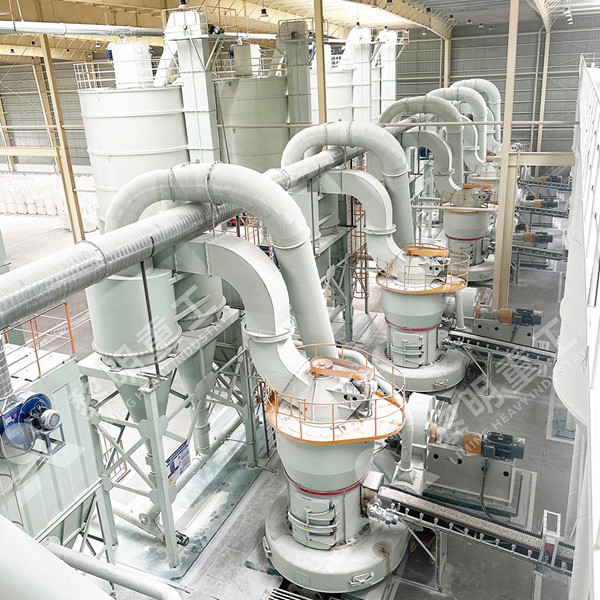
Key Grinding Mill Options for 200 Mesh Limestone
Raymond Mill (Classic Choice)
Liming's Raymond mill remains a reliable and cost-effective solution for small to medium capacity limestone grinding. With a capacity range of 1.2 to 4.5 T/H and an input size of 15-25 mm, it can produce fineness from 613 μm down to 44 μm, easily covering the 200 mesh target. The mill is designed for non-flammable, non-explosive materials with Mohs hardness below 7 and humidity under 6%. Its simple structure, low initial investment, and straightforward maintenance make it a popular choice for smaller limestone processing plants. The Raymond mill is particularly suitable for calcium carbonate crushing processing, gypsum processing, and power plant desulfurization projects where 200 mesh is the standard requirement.
MTW European Type Trapezium Mill (High-Capacity & Green)
For larger-scale operations demanding high productivity and environmental compliance, the MTW European Type Trapezium Mill is the upgraded successor to traditional Raymond and pendulum mills. It offers a capacity of 3 to 55 TPH with an input size of 30-50 mm. The MTW mill features patented technology that ensures stable performance, high throughput, and energy savings. It is committed to large-scale non-metallic mineral powder making, making it ideal for limestone desulfurization in power plants where continuous 200 mesh output is essential. The working principle involves a closed-loop system with a pulse dust collector that meets strict environmental standards. The mill integrates crushing, grinding, powder selection, and conveying, allowing for automated operation and reduced labor costs. For projects requiring consistent 200 mesh limestone powder at high tonnages, the MTW mill is a top-tier solution.
LM Vertical Roller Mill (Ultra-Large Scale)
When capacity requirements exceed 10 T/H and go up to 400 T/H, Liming's LM Vertical Roller Mill comes into play. Designed for the cement, electricity, metallurgy, and chemical industries, the LM mill focuses on non-metallic minerals, coal, and slag. With an input size of 30-55 mm, it integrates drying, grinding, powder selection, and conveying into a single unit. The advanced electric control system ensures precise fineness adjustment, making it capable of producing 200 mesh limestone powder at extraordinary volumes. The vertical mill's roller and table design provides efficient grinding with lower energy consumption compared to ball mills, and its compact footprint saves valuable plant space.
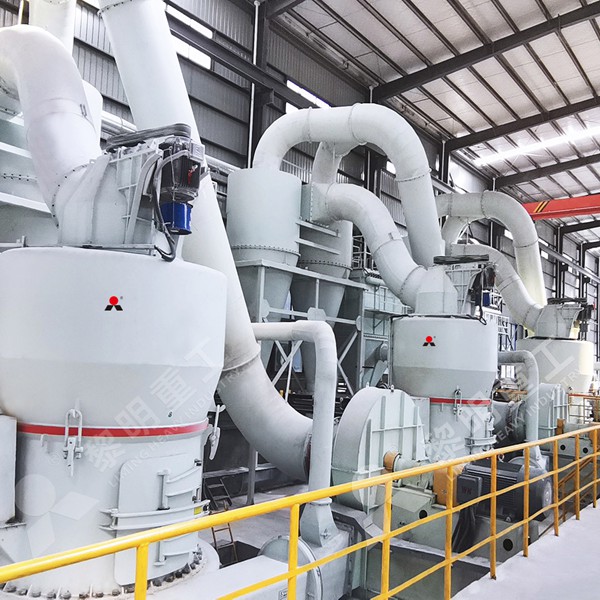
Micro Powder Grinding Mill (Ultra-Fine Applications)
Although primarily designed for finer products (325-3250 mesh), Liming's MW Micro Powder Mill can also achieve 200 mesh with excellent efficiency. This mill absorbs advanced Swedish grinding technology and is equipped with a pulse precipitator for clean operation. Capacity ranges from 0.5 to 25 T/H with an input size of 10-20 mm. For applications where a tighter particle size distribution is required or where operators need flexibility to switch between different mesh sizes, the micro powder mill offers that versatility. Its medium-speed grinding mechanism and multi-roller design ensure uniform grinding and high throughput even for 200 mesh limestone.
Ball Mill (Traditional Workhorse)
Liming's Ball Mill remains a common choice for many grinding circuits, especially when combined with a classifier to produce 200 mesh limestone powder. With a capacity of 0.65 to 50 T/H and an input size of up to 25 mm, the ball mill is a horizontal rotating device that uses steel balls to impact and grind materials. It is widely used in beneficiation, construction, and chemical industries. While ball mills have higher energy consumption compared to vertical or trapezium mills, they are robust, reliable, and can handle a wide variety of materials. For existing plants with ball mill infrastructure, retrofitting with a high-efficiency classifier can achieve precise 200 mesh output.
Working Principle Overview for 200 Mesh Production
Regardless of the mill type, the core process for producing 200 mesh limestone powder follows a similar path:
1. Crushing: Large limestone blocks are crushed to the required input size by a jaw crusher.
2. Feeding: A vibrating feeder or belt feeder delivers material uniformly into the grinding chamber.
3. Grinding: The material is ground between rollers or balls and a stationary or rotating ring/table.
4. Classification: An integral separator allows fine particles (≤200 mesh) to pass while returning oversized particles for further grinding.
5. Collection: A dust collector captures the finished powder, and the air is recycled in a closed-loop system, minimizing emissions.
Liming's mills optimize each of these steps with modern automation and high-quality wear parts, ensuring consistent 200 mesh production with minimal downtime.
Why Choose Liming Heavy Industry for 200 Mesh Limestone Grinding?
With over 30 years of dedicated research and manufacturing, Liming Heavy Industry stands as a leader in the machinery manufacturing industry. Our scientific research team focuses on tackling key technical challenges, continuously improving product competitiveness. We adhere to strict quality control and precision manufacturing, delivering mills that achieve the required fineness (200 mesh) while maximizing uptime and energy efficiency. Our global presence means we understand the diverse needs of limestone processors, from small agricultural operations to large power plants. The combination of our Raymond mill for budget-conscious projects, MTW mill for environmental and capacity demands, and LM mill for massive throughput ensures there is a solution for every 200 mesh limestone grinding requirement.
Conclusion
Selecting the right 200 mesh limestone powder grinding mill depends on your specific capacity needs, budget, and environmental regulations. Liming Heavy Industry offers a complete portfolio, from the economical Raymond mill to the high-capacity LM vertical mill, each backed by decades of engineering excellence. By choosing Liming, you invest in reliable machinery, lower operating costs, and a partner committed to your production success. Contact us today to discuss how our grinding solutions can optimize your limestone powder processing.
Frequently Asked Questions (FAQ)
Q1: What is the typical capacity of a Liming Raymond mill for producing 200 mesh limestone powder?
A: The Raymond mill from Liming can produce 200 mesh limestone powder at a capacity of 1.2 to 4.5 T/H, depending on the feed size and hardness of the limestone.
Q2: Can the MTW European Type Trapezium Mill achieve 200 mesh fineness for desulfurization applications?
A: Yes, the MTW mill is specifically designed to produce 200 mesh limestone powder ideal for power plant desulfurization. Its capacity ranges from 3 to 55 TPH, meeting both small and large-scale requirements.
Q3: How does the LM Vertical Roller Mill compare to a ball mill for 200 mesh limestone grinding in terms of energy consumption?
A: The LM Vertical Roller Mill typically consumes 30-50% less energy than a ball mill for the same capacity and fineness, making it a more cost-effective choice for large-scale 200 mesh limestone production.
Q4: What is the maximum input size for limestone when using Liming's micro powder mill for 200 mesh output?
A: The maximum input size for the MW Micro Powder Mill is 10-20 mm. Larger feed must be pre-crushed using a jaw crusher or other primary crusher before entering the mill.
Q5: Does Liming Heavy Industry provide after-sales support and spare parts for these grinding mills?
A: Yes, Liming Heavy Industry offers comprehensive after-sales support, including installation guidance, operator training, and a reliable supply of genuine spare parts for all mill types, ensuring long-term operational stability.


