Published: October 26, 2023
Limestone grinding mills for animal feed play a critical role in modern livestock nutrition by converting raw limestone into fine, calcium-rich powder that enhances bone development, eggshell quality, and overall animal health. As a leading manufacturer in the crushing and grinding equipment industry, Liming Heavy Industry Co., Ltd. offers a comprehensive range of milling solutions tailored to the specific needs of feed producers. With over three decades of engineering excellence, state-of-the-art manufacturing facilities spanning 80,000 m² in Zhengzhou's HI-TECH Zone and an additional 67,000 m² workshop in Shangjie Industry Park, our company has established itself as a global benchmark in machinery innovation. This article explores how our limestone grinding mills—including LM Vertical Roller Mill, Raymond Mill, MTW European Type Trapezium Mill, MW Micro Powder Mill, and Ball Mill—can boost feed production efficiency, ensure consistent particle size, and meet stringent regulatory standards. Whether you produce poultry, swine, or cattle feed, selecting the right grinder directly impacts feed digestibility, animal performance, and operational costs.
Why Limestone Grinding Matters in Animal Feed
Calcium is the most abundant mineral in the animal body, essential for skeletal structure, muscle contraction, and metabolic processes. In feed formulations, ground limestone (calcium carbonate) serves as the primary calcium source. The particle size and uniformity of the ground limestone influence how efficiently animals absorb calcium. Coarse particles may pass through the digestive tract undigested, while overly fine dust can cause respiratory issues and feed segregation. Therefore, a limestone grinding mill for animal feed must deliver precise fineness control, typically ranging from 100 to 400 mesh (149–38 microns), depending on the target species. Our grinding mills are engineered to achieve this with minimal energy consumption and maximum throughput.
Our Product Portfolio for Feed-Grade Limestone
LM Vertical Roller Mill: High-Capacity Solution for Large Feed Mills
The LM Vertical Roller Mill integrates drying, grinding, powder selection, and conveying in a single unit. Its innovative milling device and automatic electric control system allow feed producers to process up to 400 tons per hour with input sizes up to 55 mm. This mill is ideal for large-scale operations where consistent quality and high output are paramount. The vertical design reduces floor space requirements by up to 50% compared to traditional ball mills, making it a cost-effective choice for expanding feed plants. Additionally, the LM mill's built-in classifier ensures that 90% of the finished product passes through the desired sieve, minimizing the need for post-grinding screening.
Raymond Mill: Versatile and Reliable for Medium-Scale Production
For feed mills processing 1.2 to 4.5 tons per hour, the Raymond mill remains a workhorse. It handles non-flammable, non-explosive materials with Mohs hardness under 7 and moisture below 6%, which covers most limestone deposits. Output fineness ranges from 613 μm to 44 μm (25–325 mesh), easily adjustable to meet different feed specifications. The Raymond mill's robust construction and low maintenance requirements make it a favorite among small to medium enterprises. Its centrifugal grinding mechanism, combined with a blower and cyclone collector, delivers a clean, dust-free operation.
MTW European Type Trapezium Mill: Precision Grinding for High-Value Feed
The MTW European Type Trapezium Mill is the upgraded successor of traditional Raymond and pendulum mills, featuring patented technology for superior stability and productivity. With a capacity range of 3 to 55 TPH and input sizes up to 50 mm, it excels in producing ultrafine limestone powder for premium animal feed. The mill's working principle involves a jaw crusher reducing large rocks to the required size, which are then fed via a variable-frequency belt feeder. Inside the grinding chamber, materials are ground between rings and rollers; particles that do not pass the separator are recirculated until they reach the target fineness. The closed-loop airflow system, combined with a pulse dust collector, ensures compliance with environmental regulations. This mill is particularly suited for limestone desulfurization in power plants but also excels in feed-grade calcium carbonate production where consistent particle size distribution is critical.
MW Micro Powder Mill: Ultrafine Grinding for Specialized Feed Applications
When feed formulations require superfine limestone powder down to d97 ≤ 5 μm (3250 mesh), the MW Micro Powder Mill is the tool of choice. It absorbs advanced Swedish grinding technology and offers capacities from 0.5 to 25 TPH with input sizes of 10–20 mm. The mill's speed reducer drives dozens of rollers to rotate against the raceway of a ring, achieving micron-level precision. This is essential for pre-starter feeds or medicated premixes where uniform particle dispersion ensures consistent dosing. The integrated pulse precipitator also makes the process more environmentally friendly, reducing airborne dust.
Ball Mill: Industry Standard for Durability
The Ball Mill remains a classic choice for limestone grinding, particularly in large cement and chemical plants, but it also serves the feed industry. With capacities from 0.65 to 50 TPH and input sizes ≤ 25 mm, it operates as a horizontal rotating device where steel balls impact and grind materials against ladder or ripple liners. For feed applications, ball mills are often used in combination with classifiers to achieve the desired fineness. While newer technologies like the LM or MTW mills offer higher energy efficiency, the ball mill's simplicity and proven reliability make it a viable option for operations with existing infrastructure.
Key Considerations When Choosing a Limestone Grinding Mill
Feed producers should evaluate several factors: required capacity, target fineness, limestone feed size, moisture content, and energy costs. Our team at Liming Heavy Industry provides consultation to match the mill type with production goals. For instance, if you process 15 tons per hour of limestone with 3% moisture and need 200 mesh fineness, an MTW European Type Trapezium Mill would offer the best balance of throughput and energy efficiency. Conversely, for ultrafine powder required in aquaculture or pet feed, the MW Micro Powder Mill is optimal.
Installation and maintenance are also simplified with our modular designs. All mills come with comprehensive manuals, and our global service network ensures prompt support. We persist in implementing a strategy of scientific research and development, focusing on improving product competitiveness through technological advancement. Our mature scientific team targets the technological frontier, enhancing overall innovation ability to serve industries from cement and metallurgy to animal feed.
Environmental and Operational Benefits
Modern limestone grinding mills reduce carbon footprint through energy-efficient drive systems and closed-loop air circulation. The pulse dust collectors in our MTW and MW mills capture over 99.9% of particulate matter, complying with stringent emission standards. This not only protects the environment but also reclaims valuable product that would otherwise be wasted. Additionally, the automatic control systems minimize operator intervention, reducing labor costs and human error.
As the global livestock sector grows, the demand for high-quality, consistent feed additives will only increase. Investing in a reliable limestone grinding mill from Liming Heavy Industry ensures your feed plant stays competitive. Our headquarters in Zhengzhou's HI-TECH Zone and our second workshop covering 67,000 m² are testaments to our commitment to scale and precision manufacturing.
Conclusion
Selecting the right limestone grinding mill for animal feed is a strategic decision that affects nutrition quality, operational efficiency, and regulatory compliance. From the high-capacity LM Vertical Roller Mill to the ultrafine MW Micro Powder Mill, Liming Heavy Industry offers proven solutions backed by 30 years of manufacturing leadership. By partnering with us, feed producers gain access to cutting-edge technology, robust after-sales support, and a team dedicated to advancing the science of grinding.
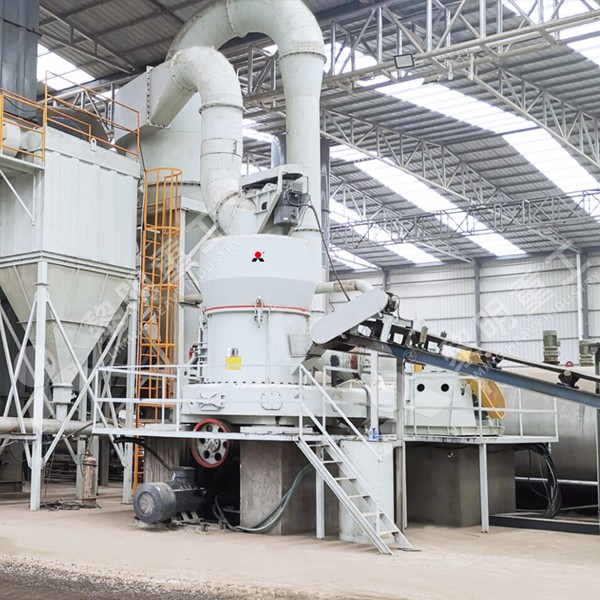
Figure 1: A typical limestone grinding mill setup for animal feed, highlighting the feeder, grinding chamber, and classifier.
In summary, our portfolio covers every segment of the feed industry. Whether you need to grind 1 ton per hour for a local farm or 400 tons per hour for an industrial compound feed plant, we have the expertise and equipment to deliver. Contact us today for a personalized recommendation.
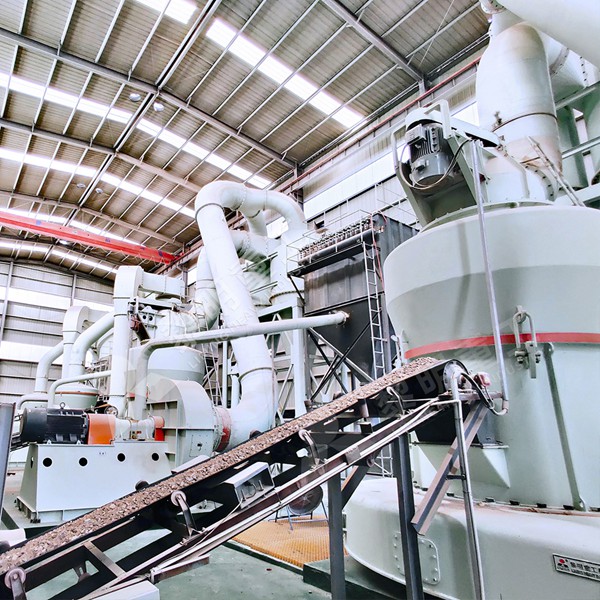
Figure 2: The MTW European Type Trapezium Mill in operation, showcasing its compact design and dust collection system.
Frequently Asked Questions (FAQ)
Q1: What is the ideal fineness for limestone used in poultry feed?
A: For poultry, especially laying hens, a particle size between 100 and 200 mesh (149–74 microns) is recommended. Coarser particles improve eggshell strength, while finer particles enhance calcium absorption in the gut. Our Raymond and MTW mills can achieve this range with precision.
Q2: Can the same limestone grinding mill handle other feed ingredients like grain or minerals?
A: While our mills are optimized for limestone and non-metallic minerals, some models like the Ball Mill or LM Vertical Roller Mill can grind other materials with similar hardness. However, we recommend dedicated milling for feed to avoid cross-contamination. Consult our engineers for specific applications.
Q3: How do I maintain the grinding rollers and rings for long service life?
A: Regular lubrication of bearings, checking for wear on roller and ring surfaces, and ensuring proper material feed rate are key. Our mills come with maintenance schedules. For example, Raymond mill rollers typically require replacement after 800–1200 operating hours depending on material abrasiveness.
Q4: What is the power consumption of an MTW European Type Trapezium Mill for limestone?
A: Power consumption varies with capacity and fineness. Typically, producing 1 ton of 200-mesh limestone powder requires 15–25 kWh. The actual figure depends on feed moisture and hardness. Our mills are designed for energy efficiency, with variable-frequency drives to optimize load.
Q5: Do you provide installation and training for these grinding mills?
A: Yes, Liming Heavy Industry offers full installation supervision, commissioning, and operator training for all our mills. We also supply spare parts and provide technical support via phone or on-site visits, ensuring your feed production runs smoothly from day one.


