Published: October 26, 2023
In the realm of mineral grinding, the selection of blade material for Kaolin Raymond mills is a critical determinant of operational efficiency, wear resistance, and product quality. At Liming Heavy Industry Co., Ltd., we have dedicated over three decades to perfecting grinding technologies, and our Raymond Mill stands as a testament to this commitment. The blade, often overlooked, is the heart of the milling process—it directly impacts particle size distribution, energy consumption, and maintenance intervals. This article delves into the specific metallurgical compositions and design philosophies behind our Raymond mill blades, particularly for kaolin processing, offering a detailed technical perspective grounded in our extensive R&D and field experience. We will explore how advanced materials, from high-chromium alloys to composite ceramics, are engineered to withstand the abrasive nature of kaolin while ensuring consistent fineness between 613μm and 44μm. Whether you are optimizing a calcium carbonate line or tackling non-metallic ore pulverization, understanding blade material science is paramount to maximizing your return on investment.
The Critical Role of Blade Material in Kaolin Grinding
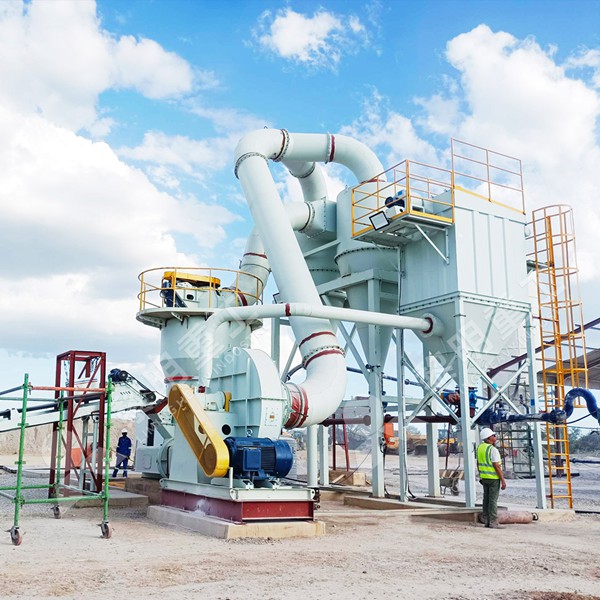
Kaolin, or China clay, is a soft, white, earthy mineral with a Mohs hardness typically ranging from 2 to 2.5. While this might suggest easy grindability, the reality is more nuanced. Kaolin contains free silica (quartz) and other hard impurities that act as abrasives, accelerating wear on grinding components. In a Raymond mill, the blade—often referred to as the grinding roller scraper or shovel blade—serves two primary functions: it feeds material between the grinding roller and the ring, and it helps create the air-carrying current for classification. If the blade material degrades prematurely, the mill's capacity drops, product fineness becomes erratic, and downtime increases. At Liming Heavy Industry, we have systematically addressed this challenge by developing blade materials that balance hardness, toughness, and thermal stability. Our standard offerings utilize high-chromium white iron, with a chromium content exceeding 20%, to form hard carbides (M7C3 type) that resist abrasive wear. For extreme conditions, we offer blades with tungsten carbide inserts or ceramic-metal composites, which can extend service life by up to 300% compared to conventional steel blades.
Material Science Behind Our High-Chromium Blades
The core of our blade technology lies in the metallurgical engineering of high-chromium white iron. This material is not just about adding chromium; it involves precise control of carbon content (typically 2.5-3.5%), silicon (0.5-1.0%), and manganese (0.5-1.5%) to achieve a martensitic matrix with a high volume fraction of eutectic carbides. These carbides, primarily (Fe,Cr)7C3, have a hardness in the range of 1200-1500 HV, making them highly effective against the sliding abrasion caused by kaolin particles. However, high hardness often comes at the cost of brittleness. To mitigate this, Liming employs a specialized heat treatment process involving destabilization at high temperatures (950-1050°C) followed by subcritical tempering. This process transforms retained austenite into martensite and secondary carbides, improving toughness without sacrificing wear resistance. For our Raymond Mill models (capacity: 1.2-4.5 T/H, input size: 15-25mm), this blade material ensures a wear life of 1200-1800 hours under standard kaolin processing conditions. When dealing with kaolin containing higher quartz content (above 5%), we recommend upgrading to our composite blades, where the working edge is clad with a cobalt-based hardfacing alloy.
Composite and Ceramic Alternatives for Extreme Wear
In high-tonnage or particularly abrasive kaolin applications, the limits of even high-chromium iron can be reached. For such scenarios, Liming Heavy Industry has pioneered the use of metal matrix composites (MMCs) in Raymond mill blades. Our MMC blades incorporate ceramic particles—such as alumina (Al2O3) or silicon carbide (SiC)—embedded in a ductile iron or steel matrix. The ceramic particles have hardness exceeding 2000 HV, which acts as a barrier to abrasive wear, while the metal matrix provides the necessary structural integrity to withstand impact loads during startup and when tramp material enters the mill. These blades are manufactured through investment casting, where ceramic particles are placed in the mold cavity prior to pouring, ensuring a gradient structure: a hard-facing layer on the wear surface and a tough core. Field tests at a kaolin processing plant in Fujian, China, using our MTW European Type Trapezium Mill, demonstrated that these composite blades outperformed standard blades by a factor of 2.5 in terms of total processed tonnage before replacement. Furthermore, the consistent blade profile maintained a stable air flow pattern, improving classification efficiency by 8-12% and reducing specific power consumption by approximately 5%.
Design Integration with Liming's Raymond Mill System
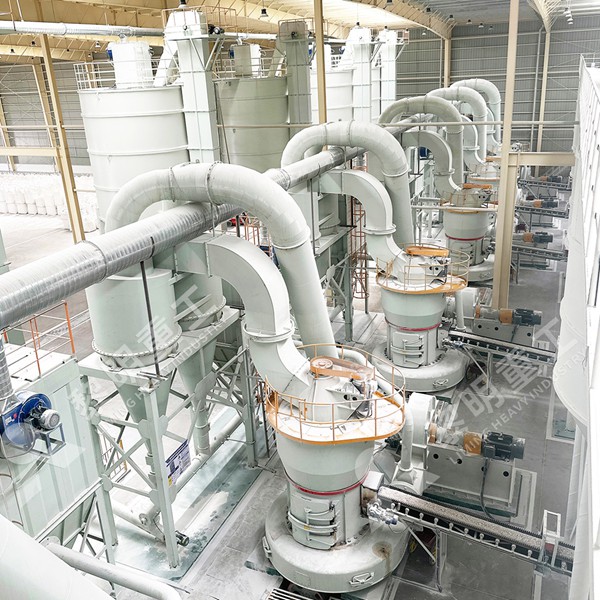
Blade material is only one part of the equation; the geometric design and its interface with other mill components are equally crucial. In our Raymond Mill, the blades are designed with a specific attack angle (typically 15-20 degrees) to optimize the material pick-up velocity and minimize recirculation of fines. The blade tip clearance to the grinding ring is adjustable, typically set between 5-10mm for kaolin, which balances grinding efficiency and wear. We have also standardized the blade mounting system using bolted connections with anti-vibration washers to prevent loosening under dynamic loads. For the upgrade product, the MTW European Type Trapezium Mill, the blade design incorporates a curved profile that follows the trajectory of material flow, reducing turbulence and energy loss. The blade materials in MTW mills are frequently specified as Ni-hard Type 4 (nickel-chromium martensitic iron) as a cost-effective option, with high-chromium or composite options available as upgrades. Our technical support team provides detailed material selection guides based on the client's specific kaolin feedstock analysis, including free silica content, moisture levels (must be below 6% for optimal performance), and target fineness (e.g., 325 mesh for paper industry or 800 mesh for ceramics).
Maintenance and Lifecycle Considerations
Optimal blade material selection directly influences your maintenance schedule and total cost of ownership. For a typical kaolin operation running a Raymond Mill at 4-5 T/H, a high-chromium blade will require inspection every 300 hours and replacement at approximately 1500 hours. We provide a wear tolerance chart: when the blade width reduces by 30% from its original dimension (typically 40mm to 28mm), replacement is recommended to prevent efficiency loss. To extend blade life, we advise pre-screening the kaolin feed to remove particles larger than 25mm and to install a magnetic separator to eliminate any metallic contaminants. Our LM Vertical Roller Mill and MW Micro Powder Mill customers benefit from even longer blade life due to the different grinding mechanics—rollers pressing against a table rather than scraping—but the blade material principles remain applicable for auxiliary equipment like the separator blades. Liming Heavy Industry's global service network stocks blade kits for all major models, ensuring minimal downtime. We also offer a blade reconditioning service: worn high-chromium blades can be rebuilt using specialized welding techniques with hardfacing electrodes from our approved supplier list, restoring up to 80% of original life at 40% of the cost of a new blade.
Conclusion
The blade material in a Kaolin Raymond mill is not a commodity—it is a high-performance engineering component that demands careful consideration. Liming Heavy Industry's decades of experience in manufacturing large and medium-sized crushing and grinding equipment have led us to a portfolio of blade materials that range from high-chromium white iron for general use to advanced composites for extreme abrasion. By choosing the right blade—and coupling it with proper mill setup and maintenance—operators can achieve higher throughput, consistent product quality, and lower operational costs. We invite you to consult our technical team for a custom recommendation based on your kaolin properties and production goals.
FAQ
- What is the typical hardness of the blade material used in your Kaolin Raymond Mill? Our standard high-chromium blades achieve a surface hardness of 58-62 HRC (Rockwell C scale), with the carbide phase reaching 1200-1500 HV. This hardness provides excellent resistance to the abrasive wear from silica impurities in kaolin.
- Can I use the same blade material for grinding other minerals like gypsum or limestone? Yes, our blade materials are versatile. High-chromium blades are suitable for gypsum (Mohs 2) and limestone (Mohs 3-4). However, for harder materials like quartz (Mohs 7), we recommend upgrading to composite or ceramic blades to maintain acceptable wear life.
- How do I know when the blade needs replacement in my Raymond mill? The primary indicators are a drop in throughput (beyond 15% of rated capacity), increased vibration or noise, and deterioration in product fineness (coarser particles). Physically, when the blade tip width reduces by 30%, or if you see chipping or cracking, it is time for replacement.
- Does Liming Heavy Industry provide blade material testing or sampling services? Yes, for volume clients or those with unique kaolin compositions, we offer a sampling program. You can send us a 50-kg sample of your kaolin, and our laboratory will conduct wear tests using our standard and premium blade materials, providing a performance report within four weeks.
- What is the typical lead time for custom blade material orders? For standard high-chromium blades, lead time is 10-15 working days. For composite or ceramic upgraded blades, please allow 20-30 working days, as these require specialized casting and heat treatment cycles. We recommend ordering spare blade sets with your initial mill purchase to avoid production interruptions.


