Published: October 10, 2023
For a 20 tons per hour (TPH) kaolin purity grinding project in India, achieving high-grade output with consistent quality requires a carefully designed processing line that integrates efficient crushing, precise grinding, and rigorous classification. Kaolin, a naturally occurring clay mineral, is widely used in ceramics, paper coating, paint, rubber, and plastics, and its market value is directly tied to its whiteness and particle size distribution. This article presents a comprehensive technical overview of a 20 TPH kaolin grinding system, leveraging advanced milling technologies to maximize purity while maintaining cost-effective operations. The discussion covers equipment selection—ranging from Raymond mills and European-type trapezium mills to vertical roller mills—system layout, energy efficiency, environmental compliance, and the critical role of automated control in producing a final product with d97 below 10 μm. The project scope includes material handling, drying (if required), grinding, classification, and dust collection, all engineered to meet Indian industrial standards and local raw material characteristics.
1. Project Overview and Key Challenges
The Indian kaolin industry is experiencing robust growth driven by demand from the ceramics and paper sectors. A 20 TPH grinding project typically targets the production of 325 mesh (44 μm) to 1250 mesh (10 μm) kaolin powder with minimal iron and titanium impurities. The primary challenges include:
- Feed variability: Raw kaolin often contains moisture up to 15% and associated quartz, mica, and iron oxides.
- Purity requirements: The final product’s brightness must exceed 85% ISO brightness for coating-grade applications.
- Energy consumption: Grinding kaolin to fine particle sizes is energy-intensive, demanding efficient mill designs.
- Environmental regulations: Indian pollution control boards impose strict limits on particulate emissions and noise.
To address these, the project must incorporate pre-processing (blending, drying, and magnetic separation) and a grinding circuit that balances capacity, fineness, and power draw.
2. Core Grinding Equipment Options
2.1 Raymond Mill (Traditional Solution)
The classic Raymond mill remains a workhorse for kaolin grinding in India due to its simplicity and low capital cost. For a 20 TPH project, multiple units would be required—typically 4–5 Raymond mills with 1.2–4.5 TPH capacity each. The output fineness ranges from 613 μm to 44 μm. However, Raymond mills have limitations in handling high-moisture feeds and may produce coarser particles, necessitating additional classification. They are best suited for medium-fineness products (100–325 mesh) where purity is moderate.
2.2 European Type Trapezium Mill (MTW Series)
As an upgrade to the Raymond mill, the MTW European Type Trapezium Mill offers significant advantages for kaolin processing. With a capacity range of 3–55 TPH, a single MTW mill can handle the 20 TPH target, reducing the footprint and maintenance effort. Key features include:
- Patented technology that improves grinding efficiency by 30% compared to traditional mills.
- Integrated drying with hot air if raw kaolin moisture exceeds 6%.
- High classification precision ensuring uniform particle size distribution.
- Environmental compliance with pulse dust collectors meeting India’s emission standards.
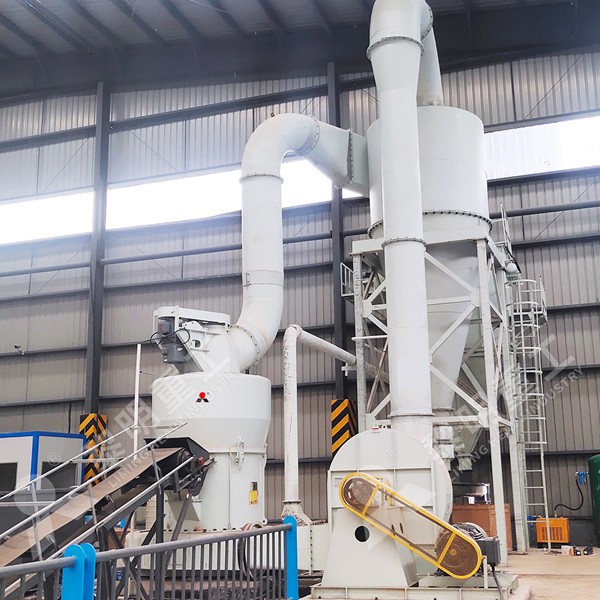
Working principle: The system uses a jaw crusher to reduce feed to 30–50 mm, then a variable-frequency belt feeder delivers material into the mill. Grinding occurs between rollers and the ring, with airflow carrying fine particles to the separator. Oversized particles fall back for regrinding. The closed air circuit recycles air, and pulse jets clean the bag filter.
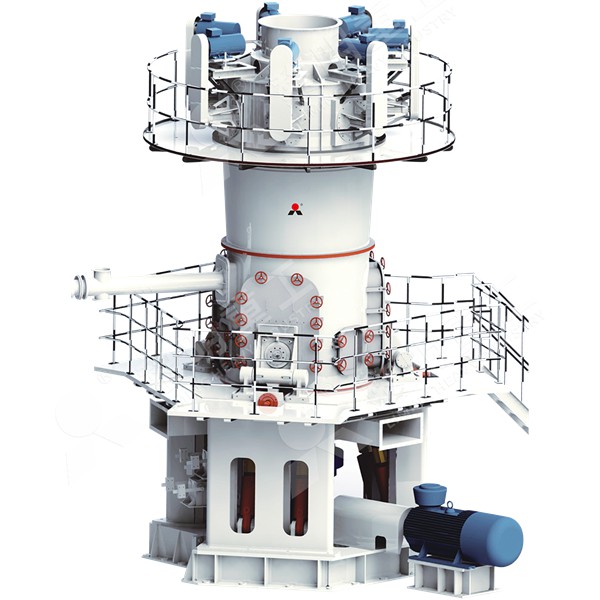
2.3 LM Vertical Roller Mill (High-Demand Applications)
For projects requiring consistent production of ultra-fine kaolin (1250 mesh and finer) with minimal contamination, the LM vertical roller mill is the optimal choice. With a capacity of 10–400 TPH, it easily covers the 20 TPH requirement. Advantages include:
- Simultaneous drying, grinding, and classification in a single unit.
- Low energy consumption per ton due to efficient roller grinding and internal recirculation.
- Automatic electric control system for real-time adjustment of feed rate, classifier speed, and air flow.
- Suitable for non-metallic minerals like kaolin, ensuring high whiteness and low iron pickup.
2.4 Micro Powder Grinding Mill (MW Series)
If the project targets super-fine kaolin (d97 ≤ 5 μm, 325–3250 mesh), the MW micro powder mill is the specialist. Its capacity range of 0.5–25 TPH means a single or dual-unit setup can achieve 20 TPH. The medium-speed grinding mechanism, derived from Swedish technology, delivers narrow particle size distributions essential for high-value applications like paper coating. The pulse precipitator ensures zero dust emissions.
3. System Design and Process Flow for 20 TPH
A typical process flow for the 20 TPH kaolin grinding project includes:
- Raw Material Handling: Run-of-mine kaolin is crushed to ≤30 mm using a jaw crusher.
- Pre-Drying (if needed): A rotary dryer reduces moisture from 15% to <5% for efficient grinding.
- Grinding Circuit: The MTW or LM mill operates with a closed circuit classifier. For the MTW mill, the input size is 30–50 mm, and the system is equipped with a variable-frequency feeder for controlled feed. The mill produces powder that is carried by air to a dynamic separator.
- Classification: The separator returns coarse particles for regrinding, while fines are conveyed to the dust collector.
- Product Collection: A pulse jet bag filter collects finished powder with >99.9% efficiency. The product is stored in a silo or directly packed.
- Environmental Controls: The entire system is under negative pressure to prevent fugitive dust. Noise enclosures are installed around the mill.
4. Equipment Selection Criteria Based on Kaolin Purity
To achieve high purity, the grinding equipment must avoid introducing contaminants. Cast iron grinding elements can cause iron pickup, so ceramic or wear-resistant steel linings are recommended. The LM vertical mill and MTW mill offer options for chrome alloy or ceramic components. Additionally, the classifier blade material should be non-abrasive. For the 20 TPH project, we recommend:
- Primary option: One MTW European Type Trapezium Mill (model MTW175 or MTW215) with a capacity of 15–30 TPH, paired with a dynamic classifier for product fineness of 325–800 mesh.
- Secondary option: One LM vertical roller mill (model LM1300 or LM1500) for higher fineness (800–1250 mesh) and lower power consumption. The LM mill’s automatic control system maintains stable product quality despite feed variations.
5. Case Example: Implementing the MTW Mill for a 20 TPH Indian Project
Consider a kaolin processing plant in Gujarat, India, where raw kaolin has 10% moisture and 0.5% iron oxide. The customer required 20 TPH of 600 mesh (d97 < 20 μm) kaolin for ceramic tile production. After pilot tests, an MTW175 mill was selected with the following specifications:
- Feed size: ≤35 mm
- Main motor power: 160 kW
- Classifier motor: 22 kW (frequency-controlled)
- Air blower: 110 kW
- Dust collector: pulse jet type with 168 bags
- Total installed power: ~350 kW
The system included a direct-fired hot air generator for drying, a belt feeder with variable speed, and an automatic PLC system controlling mill temperature (80–100°C), feed rate, and separator speed. Results showed consistent product brightness of 86–88% ISO, with throughput exceeding 20 TPH at 98% availability.
6. Energy Efficiency and Cost Optimization
Grinding consumes 60–70% of the plant’s energy. The MTW and LM mills incorporate features to reduce power consumption:
- Optimized roller pressure and grinding track geometry reduce friction.
- High-efficiency classifiers minimize over-grinding.
- Variable-frequency drives on feeders and fans match energy use to load.
- Waste heat from the air blower can be recycled for pre-drying.
An energy audit of a comparable 20 TPH installation showed 45 kWh per ton for the MTW mill versus 55–60 kWh per ton for traditional Raymond mills—a 20–25% saving.
7. Maintenance and After-Sales Support
Reliability is critical for continuous production. The project benefits from Liming Heavy Industry’s comprehensive support, including:
- On-site installation and commissioning by experienced engineers.
- Training for local operators on mill maintenance (roller replacement, bearing lubrication, classifier tuning).
- Spare parts availability from the Indian stock point to minimize downtime.
- Remote monitoring via IoT for predictive maintenance.
Conclusion
A 20 TPH kaolin purity grinding project in India demands a balanced approach combining robust equipment, process integration, and purity control. The MTW European Type Trapezium Mill and LM Vertical Roller Mill from Liming Heavy Industry offer proven solutions that meet the capacity, fineness, and environmental criteria. By selecting the appropriate mill model and supporting systems, the project can achieve a high-quality product with competitive operating costs. As the Indian kaolin market continues to expand, investing in advanced grinding technology will ensure long-term profitability and market leadership.
FAQ
- Q: What is the ideal mill type for producing 1250 mesh kaolin from a 20 TPH project?
A: The LM vertical roller mill or MW micro powder mill is best suited for ultra-fine kaolin. The LM mill offers better energy efficiency for consistent d97 < 10 μm, while the MW mill provides narrower particle size distribution for premium applications. - Q: How do you prevent iron contamination during grinding?
A: By using ceramic or high-chrome steel grinding elements, and by installing magnetic separators before the mill. The mill lining and roller material can be specified as wear-resistant alloy with low iron content. - Q: Can the same system handle both dry and wet kaolin?
A: The MTW and LM mills can integrate a hot air drying system for raw kaolin with up to 15% moisture. For wet kaolin exceeding this level, a separate rotary dryer is recommended upstream. - Q: What is the typical payback period for a 20 TPH kaolin grinding plant?
A: While it depends on local costs, a well-designed plant with efficient equipment can achieve payback within 18–24 months due to lower energy consumption and higher product value. - Q: What after-sales support does Liming provide for Indian projects?
A: Liming offers full installation supervision, operator training, a spare parts warehouse in India, and remote technical assistance. The company has a local team for rapid response.


