Published: October 26, 2023
Opacity is a critical quality indicator for kaolin used in paper coating and filling applications, directly influencing paper brightness, printability, and overall aesthetic appeal. Achieving consistent, high opacity requires precise control over particle size distribution and morphology during the grinding process. This article explores the fundamental principles of kaolin opacity testing and details how advanced grinding technologies, such as those developed by Liming Heavy Industry, enable producers to meet stringent paper industry specifications. By examining the interplay between milling equipment selection, operational parameters, and final product characteristics, we provide a technical framework for optimizing kaolin processing to maximize opacity and other key performance metrics.
The demand for high-quality coated paper continues to drive innovation in kaolin processing. Opacity, essentially the ability of a material to obscure what lies beneath it, is paramount. In paper, higher opacity reduces show-through, enhancing print clarity and readability. For kaolin, this property is intrinsically linked to its particle size and shape. Finer particles with a platy morphology scatter light more effectively, increasing opacity. Therefore, the grinding stage is not merely about size reduction; it is a critical step in engineering the particle characteristics that define end-use performance.
Liming Heavy Industry, with over three decades of expertise in manufacturing crushing and grinding equipment, offers a suite of mills specifically engineered for the mineral processing sector. Our research and development philosophy, centered on scientific problem-solving and technological advancement, has led to the creation of grinding systems that deliver unparalleled precision. For kaolin applications targeting the paper industry, the selection of the appropriate grinding mill is the first decisive step toward achieving target opacity values.
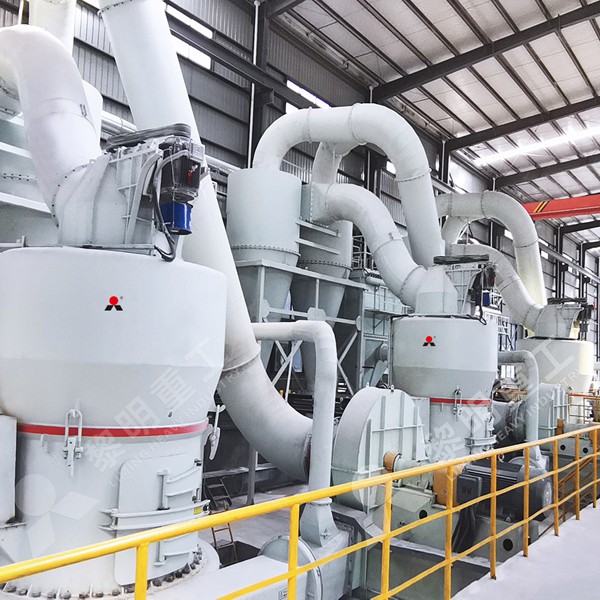
Among our portfolio, the MW Micro Powder Mill stands out for superfine kaolin processing. Capable of producing powders with a fineness up to d97 ≤ 5μm (approximately 2500 mesh), this mill is instrumental in achieving the ultra-fine particles necessary for superior light scattering. Its design, which incorporates advanced Swedish grinding technology, ensures a narrow particle size distribution—a key factor for consistent opacity. The closed-circuit system with an integrated pulse dust collector maintains a clean operation, preventing contamination that could adversely affect kaolin brightness.
For large-scale production of coated-grade kaolin, the MTW European Type Trapezium Mill presents an optimal solution. As an upgrade over traditional Raymond mills, it offers higher productivity, improved energy efficiency, and exceptional stability. Its grinding mechanism, involving rollers and rings, applies both compression and shear forces, effectively delaminating kaolin stacks into thinner platelets without excessive fracturing. This preservation of the platy structure is crucial for opacity. The system's integrated separator allows for precise control over the product's top-cut size, ensuring no coarse particles compromise the coating smoothness or optical properties.
The industry-standard Ball Mill remains a reliable workhorse for certain kaolin processing circuits, particularly where a combination of grinding and delamination is required. The cascading action of steel balls within the rotating chamber can effectively reduce particle size. However, for ultimate opacity performance, ball mills are often followed by more specialized classifiers or delaminators to achieve the desired particle shape. Liming's ball mills are engineered for robustness and can handle the continuous demands of mineral processing plants.
Conducting the opacity test itself is a standardized procedure, typically involving the preparation of a coated paper sample under controlled conditions and measuring its light reflectance over both a black and a white background using a spectrophotometer. The contrast ratio, calculated from these two measurements, quantifies the opacity. The results are profoundly influenced by the kaolin slurry's properties—solids content, particle size distribution, and degree of dispersion—all of which are determined during the milling and subsequent refining stages. Consistent mill operation translates directly to consistent test results.
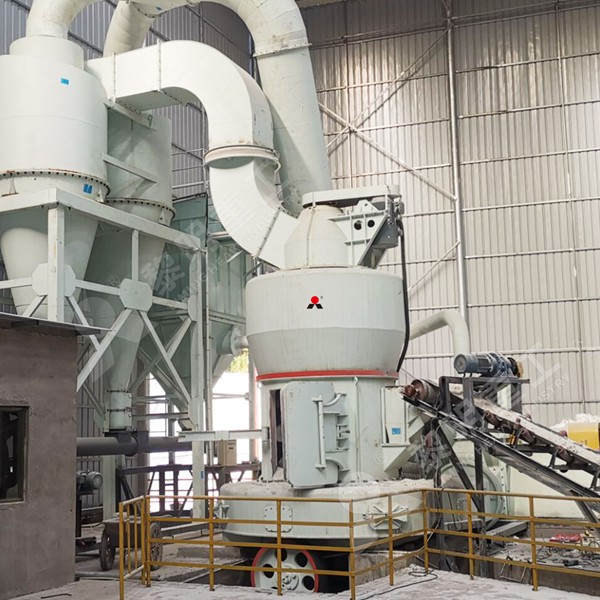
Beyond equipment selection, process optimization is vital. Parameters such as grinding pressure in roller mills, rotational speed, feed rate, and classifier settings must be finely tuned. Liming Heavy Industry supports clients through this optimization phase, leveraging our mature scientific research team to tackle specific production challenges. Our mills' automated electric control systems, as seen in the LM Vertical Roller Mill and others, provide the stability and adjustability needed to maintain these parameters within optimal windows, batch after batch.
In conclusion, mastering the paper kaolin opacity test is synonymous with mastering the grinding process. It requires a deep understanding of particle technology and access to milling equipment capable of translating that understanding into a commercial product. Liming Heavy Industry's commitment to "precision manufacturing, pioneering and innovation" is embodied in our range of grinding mills, from the superfine MW series to the high-capacity MTW and robust Ball Mills. By partnering with a technology-driven equipment manufacturer, kaolin producers can confidently navigate the technical complexities of opacity and deliver products that meet the evolving standards of the global paper industry.
Frequently Asked Questions (FAQs)
Q1: What is the most important particle characteristic for kaolin opacity in paper?
A1: The most critical characteristics are a fine particle size (especially a controlled top-cut) and a high aspect ratio platy morphology. These features maximize light scattering, which directly increases the measured opacity of the coated paper sheet.
Q2: Can the same grinding mill be used for both filler-grade and coating-grade kaolin?
A2: While some mills are versatile, coating-grade kaolin demands stricter fineness and shape control. Mills like the MW Micro Powder Mill or MTW European Mill, with their advanced classification systems, are better suited for high-quality coating clays, whereas filler grades may be processed efficiently with Raymond Mills or Ball Mills.
Q3: How does the grinding process affect kaolin brightness, another key paper industry metric?
A3: Grinding must be performed with minimal contamination. Liming's mills use wear-resistant materials in grinding zones and closed-circuit systems with effective dust collection to prevent iron contamination and other impurities that can reduce the intrinsic brightness of the kaolin.
Q4: Is a drier or wetter grinding process better for opacity?
A4: For ultimate opacity related to delamination, wet processing (using stirred media mills) is often employed after initial dry crushing. However, advanced dry grinding systems like Liming's MTW and MW mills can achieve excellent results for many applications, offering significant advantages in energy efficiency and lower capital cost for dewatering and drying.
Q5: How does Liming Heavy Industry support customers in optimizing their process for opacity?
A5: We provide comprehensive technical support, from initial lab testing and mill selection to on-site installation, commissioning, and parameter optimization. Our engineering team works closely with clients to integrate our equipment into their process flow, ensuring it meets their specific product quality and capacity targets.


