Published: October 26, 2023
In the evolving landscape of clean energy conversion, coal gasification stands out as a pivotal technology for transforming solid coal into synthesis gas (syngas) — a mixture of carbon monoxide and hydrogen used for power generation, chemical synthesis, and industrial fuel. The efficiency and reliability of the entire gasification process hinge critically on the quality and consistency of the coal feedstock fed into the gasifier. This is where the coal grinding mill for gasification plays an indispensable role. A properly designed and operated grinding system ensures that coal particles are reduced to the optimal fineness and moisture content required for uniform gasification reactions, minimizing slagging, reducing energy consumption, and maximizing carbon conversion. At Liming Heavy Industry, we have dedicated over three decades to perfecting these grinding technologies, offering a comprehensive suite of mills — from high-capacity vertical roller mills to precision micro powder mills — specifically engineered to meet the demanding specifications of gasification projects worldwide. This article provides an in-depth technical overview of our coal grinding solutions tailored for gasification, examining key equipment options, operational principles, and selection criteria to help plant operators and project engineers achieve superior feedstock preparation.
The Critical Role of Coal Grinding in Gasification
Coal gasification requires a feedstock that is both finely ground and uniformly sized to ensure complete and rapid reaction within the gasifier. Typical particle size distributions for entrained-flow gasifiers demand that 70–90% of the coal particles pass through a 200-mesh sieve (74 micrometers), while fluidized-bed gasifiers may tolerate slightly coarser feeds. Beyond particle size, moisture content must be tightly controlled — usually below 2–5% — to prevent agglomeration and to maintain stable gasifier temperature profiles. The grinding process also serves to increase the surface area of coal particles, enhancing the reactivity with steam and oxygen in the gasifier. Any inconsistency in grind size or moisture can lead to poor carbon conversion, increased tar formation, and unstable syngas composition. Therefore, selecting the right coal grinding mill is not merely a matter of capacity; it is a fundamental decision that impacts the entire gasification plant's economic and environmental performance.
Liming Heavy Industry: A Trusted Partner in Grinding Technology
Since our founding in 1987, Liming Heavy Industry has grown into a modern joint-stock corporation integrating research, manufacturing, and sales. Our headquarters, located in the HI-TECH Industry Development Zone of Zhengzhou, spans 80,000 square meters, with an additional 67,000-square-meter workshop in the Shangjie Industry Park. Over the past 30+ years, we have adhered to a philosophy of precision manufacturing, scientific management, and continuous innovation. Our scientific research team, equipped with deep expertise in crushing and grinding equipment, consistently focuses on technological breakthroughs and product competitiveness improvement. For coal grinding in gasification, we offer several proven mill types, each with distinct advantages depending on the project scale, coal characteristics, and downstream gasifier design.
Our product portfolio includes the LM Vertical Roller Mill, Raymond Mill, MTW European Type Trapezium Mill, MW Micro Powder Mill, and Ball Mill — all of which can be configured for coal grinding service. Among these, the LM Vertical Roller Mill and MTW European Type Trapezium Mill are particularly well-suited for large-scale gasification plants requiring high throughput and precise particle size control.
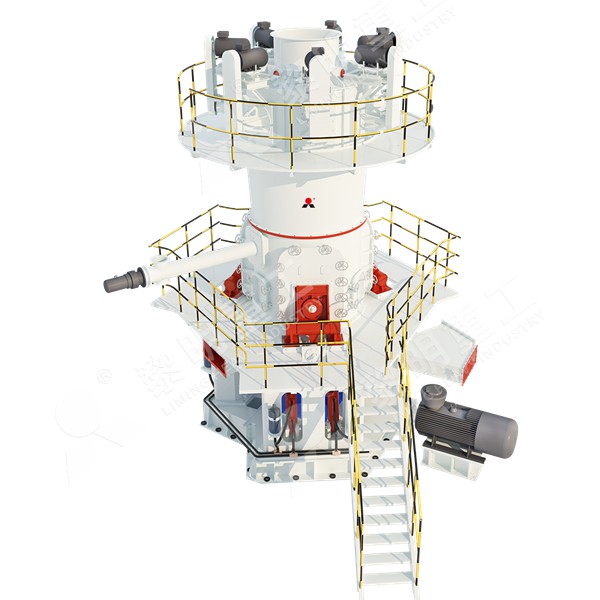
LM Vertical Roller Mill: High-Capacity Solution for Large Gasification Projects
The LM Vertical Roller Mill is the flagship product for coal grinding in large-scale gasification applications, with capacities ranging from 10 to 400 tons per hour and feed sizes up to 55 mm. This mill integrates drying, grinding, powder selection, and conveying into a single, compact system — a critical advantage for coal grinding where moisture removal is essential. The mill utilizes a new milling device driven by a vertical spindle, rotating the grinding table while rollers press against the material bed. Hot gases from an external source (or recycled from the gasification process) are introduced into the mill, simultaneously drying the coal and conveying fine particles to the built-in classifier. The automatic electric control system maintains stable operation by adjusting feed rate, gas flow, and roller pressure in real time, ensuring that the product fineness remains within tight specifications.
For gasification applications, the LM mill's ability to handle high-moisture coals (up to 20–25% moisture in the feed) without pre-drying is a significant cost and energy saver. The vertical configuration also offers a small footprint, making it suitable for retrofitting into existing coal handling plants. Furthermore, the mill's robust construction and wear-resistant materials minimize downtime — a critical factor for continuous gasifier operations. We have successfully deployed LM mills in cement, power generation, and metallurgical industries, and the same reliability extends to coal preparation for syngas production.
MTW European Type Trapezium Mill: Precision and Flexibility for Medium-Scale Plants
For medium-scale gasification projects or those using special coal blends, the MTW European Type Trapezium Mill provides an excellent balance of capacity (3–55 TPH) and fineness control. As an upgrade of traditional Raymond and pendulum mills, the MTW mill incorporates patented technology such as bevel gear integral transmission, curved shovel, and a self-lubricating system. The grinding rollers and ring are designed in a trapezium shape that increases the grinding area and reduces energy consumption. The system includes a jaw crusher, vibrating feeder, hopper, dust collector, and a closed-loop air circuit that recycles air through an air blower, minimizing emissions. The pulse dust collector ensures compliance with strict environmental standards, which is increasingly important for gasification plants operating under green regulations.
The MTW mill's working principle involves crushing bulk coal to a uniform size (30–50 mm) using a jaw crusher, then feeding it via a variable-frequency belt feeder into the mill chamber. Inside, material is ground between the ring and rollers, and fines are carried upward by airflow. Oversize particles fall back for regrinding, while the finished powder is collected. The precision of this process makes the MTW mill ideal for gasification applications where the coal grind must be consistent to within a few microns to maintain gasifier stability. Its modular design also simplifies maintenance and reduces spare parts inventory.
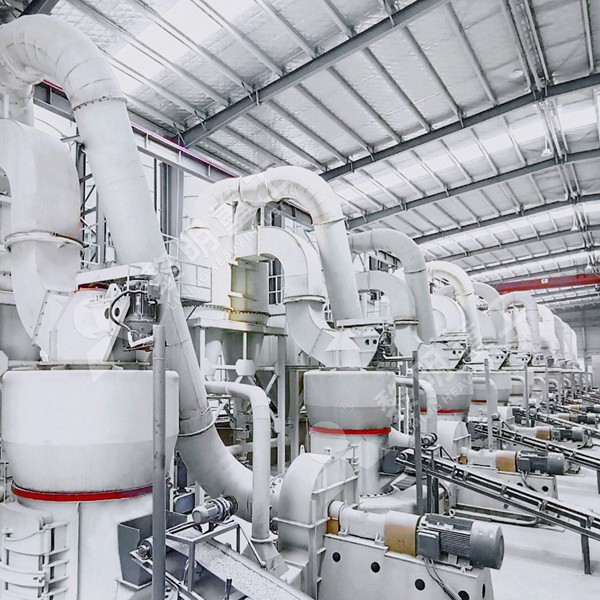
Alternative Grinding Solutions: Raymond Mill, MW Micro Powder Mill, and Ball Mill
While the LM and MTW mills dominate large and medium-scale applications, Liming's smaller mills serve niche roles. The Raymond Mill, with a capacity of 1.2–4.5 TPH and input size of 15–25 mm, is suitable for small pilot gasification units or specialized chemical processes requiring fine coal powder (fineness between 613 μm and 44 μm). Its proven design for non-metallic minerals and coal makes it a dependable choice for lower-throughput applications.
The MW Micro Powder Mill, on the other hand, is unmatched for ultra-fine grinding when the gasification process demands particle sizes down to 5 μm (325–3250 mesh). With a capacity of 0.5–25 TPH and feed size of 10–20 mm, this mill uses a unique mechanism: the motor drives a main shaft and turnplate, which rotates dozens of rollers against the raceway ring. Material is crushed by a hammer crusher, then fed to the center of the turnplate, falling to the raceway under centrifugal force. For advanced gasification technologies such as slurry-fed entrained-flow gasifiers that require micron-sized coal particles suspended in water, the MW mill offers an ideal solution.
The Ball Mill, with capacities from 0.65 to 50 TPH and feed sizes up to 25 mm, remains a robust workhorse for coal grinding. Its horizontal rotating barrel contains steel balls that impact and grind the material as the barrel rotates. While ball mills are generally less energy-efficient than vertical roller mills, they are extremely reliable and easy to operate. For gasification plants where the coal feed is already partially dried, a ball mill can serve as a cost-effective secondary grinding stage.
Key Selection Criteria for Coal Grinding Mills in Gasification
Choosing the correct mill involves evaluating several factors: required capacity (t/h), coal hardness (Moisture and Ash content), target particle size distribution (typically % passing 200 mesh), and the gasifier type (entrained-flow, fluidized-bed, or fixed-bed). For entrained-flow gasifiers requiring high throughput and fine grind (70–90% passing 200 mesh), the LM Vertical Roller Mill or MTW Mill are recommended. For smaller or pilot-scale operations, the Raymond Mill or Ball Mill may suffice. Additionally, the mill's ability to integrate drying, classification, and conveying reduces the complexity of the coal handling system, lowering capital expenditure.
Liming Heavy Industry provides engineering support to customize each mill for specific coal characteristics, ensuring that the mill operates at peak efficiency with minimal wear. Our after-sales service includes spare parts availability, on-site commissioning, and training for plant operators.
Conclusion
Coal gasification continues to be a vital pathway for clean utilization of coal, and the grinding mill chosen for feedstock preparation can make or break the economic and environmental performance of the plant. Liming Heavy Industry, with over 30 years of specialized experience and a comprehensive product range from the LM Vertical Roller Mill to the MW Micro Powder Mill, offers solutions tailored to every scale and requirement. By integrating advanced features like automatic control, high-efficiency classification, and closed-loop dust collection, our mills ensure that the coal fed into the gasifier is of the highest quality — maximizing syngas yield, minimizing waste, and complying with global emission standards. Whether you are designing a new gasification plant or upgrading an existing facility, our team is ready to help you achieve optimal grinding performance.
Frequently Asked Questions (FAQ)
- What is the ideal coal particle size for entrained-flow gasifiers?
Entrained-flow gasifiers typically require 70–90% of the coal particles to pass through a 200-mesh sieve (74 micrometers), with a maximum particle size around 100–200 micrometers to ensure rapid and complete gasification reactions. - Can the LM Vertical Roller Mill handle high-moisture coal without pre-drying?
Yes, the LM mill integrates a drying function using hot gases, allowing it to process coals with moisture content up to 20–25% as long as sufficient hot gas is supplied, eliminating the need for a separate pre-drying system. - Which Liming mill is best for ultra-fine coal grinding (below 10 microns)?
The MW Micro Powder Mill is specifically designed for ultra-fine grinding, achieving fineness down to d97 ≤ 5 μm (approximately 3250 mesh), making it ideal for slurry preparation in advanced gasification technologies. - How does the MTW mill ensure consistent product quality in gasification plants?
The MTW mill uses a built-in classifier that recirculates oversize particles, combined with a variable-frequency belt feeder and automatic control system, to maintain a consistent particle size distribution within tight tolerances. - What maintenance is required for the grinding mills used in coal gasification?
Routine maintenance includes inspection of grinding rollers and rings for wear, checking the classifier blades, lubricating bearings, and replacing wear parts as needed. Liming provides detailed maintenance schedules and spare parts to minimize downtime.


