Published: October 2025
Summary: Barite, a barium sulfate mineral, is a critical functional filler in rubber matting production, where it enhances density, wear resistance, dimensional stability, and sound-deadening properties. The choice of grinding mill directly influences barite particle size distribution, purity, and production cost efficiency. Liming Heavy Industry, with over three decades of expertise in crushing and grinding equipment manufacturing, offers a suite of mills—including Vertical Roller Mill, Raymond Mill, European Type Trapezium Mill, Micro Powder Mill, and Ball Mill—each tailored to specific barite fineness requirements (from 613μm down to d97 ≤ 5μm) and throughput scales (0.5 TPH to 400 TPH). This article examines the technical parameters, working principles, and application advantages of these mills for rubber matting manufacturers, emphasizing energy efficiency, environmental compliance, and consistent product quality.
Rubber matting used in industrial flooring, automotive interiors, gyms, and agricultural settings requires a dense, homogeneous base to resist wear and provide dimensional stability under load. Barite powder, typically ground to 200–800 mesh (74–20 μm), serves as an economical weighting agent and filler. Its high specific gravity (4.2–4.5 g/cm³) increases the density of rubber compounds, improves thermal conductivity, and reduces material costs by replacing more expensive rubber polymers. However, barite is a moderately hard mineral (Mohs hardness 3–3.5) and abrasive due to its crystalline structure, demanding robust grinding equipment that can maintain precise particle size distribution while minimizing iron contamination and energy consumption.
Liming Heavy Industry’s mills address these challenges through dedicated design features: wear-resistant grinding elements, closed-loop air classification, and integrated dust collection systems. Below we examine the most relevant mill types for barite processing in rubber matting applications.
LM Vertical Roller Mill – High-Capacity Barite Grinding for Large-Scale Production
For rubber matting manufacturers operating at industrial scales with throughputs exceeding 10 TPH, the LM Vertical Roller Mill is the preferred solution. This mill integrates drying, grinding, powder selection, and conveying in a single unit, reducing plant footprint and auxiliary equipment costs. The grinding table rotates at a controlled speed, while hydraulic cylinders press grinding rollers against the material bed. The centrifugal force flings ground material outward where an internal classifier separates fine particles—those meeting the target fineness (typically 200–325 mesh for barite in rubber) exit the mill, while coarse particles are returned for regrinding.
The LM mill’s automatic electric control system ensures stable operation even when barite feed moisture varies between 1% and 5%. For rubber matting, a uniform particle size of 40–75 μm (200–400 mesh) is critical to avoid stress concentrations that lead to mat tearing. The LM mill consistently achieves a residue on 325 mesh of less than 3%, meeting the strictest rubber compound specifications. Its capacity range of 10–400 T/H and input size up to 55 mm make it ideal for mining operations that grind barite before shipment to rubber matting factories.
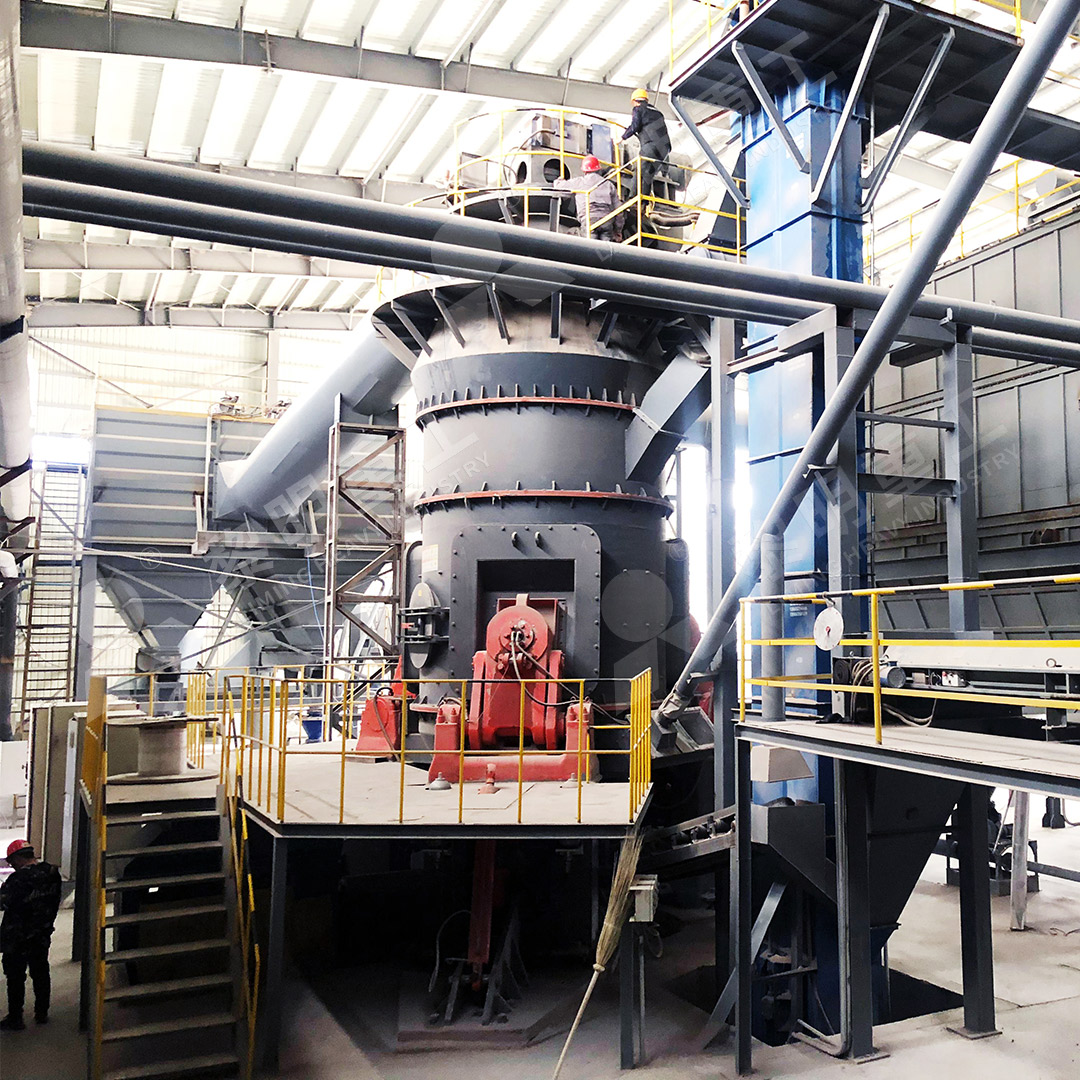
MTW European Type Trapezium Mill – Upgraded Pendulum Mill for Medium-Capacity Barite Processing
The MTW European Type Trapezium Mill represents the technological evolution of the traditional Raymond mill. Designed for barite grinding in the 3–55 TPH range, it is particularly suited for rubber matting manufacturers who require consistent fineness between 80 and 600 mesh (180–25 μm) without the capital cost of a vertical roller mill. The trapezium-shaped grinding rollers and ring increase the grinding area, reducing the number of passes needed to achieve target fineness. An internal high-efficiency classifier with variable speed control adjusts cut points on the fly, allowing rapid product changeover between different rubber matting formulations.
In the MTW mill, barite lumps (30–50 mm) are crushed by a jaw crusher, then fed via a variable-frequency belt feeder into the grinding chamber. The rollers rotate against the ring under centrifugal force; ground material is carried upward by air flow to the classifier. Oversize particles fall back, while fines pass through to a cyclone collector or pulse bag filter. The closed air circulation system minimizes dust emissions, complying with national environmental standards while protecting barite purity from external contaminants. For rubber matting end-users, the MTW mill’s output typically contains fewer than 1% particles above 150 μm, ensuring smooth surface finish and uniform density.
Raymond Mill – Classic Reliability for Standard Barite Grinding
The Raymond mill remains a workhorse in barite processing for medium to small-scale rubber matting operations. With a capacity of 1.2–4.5 T/H and an output fineness of 613–44 μm (30–325 mesh), it is optimal for manufacturers processing less than 5 tons per day of barite filler. Its simple mechanical design ensures high uptime and low maintenance in dusty environments. The mill uses a rotating grinding bowl and stationary rollers; barite is fed into the center and moves outward by centrifugal force, being crushed between rollers and bowl liner.
For rubber matting applications where barite purity above 95% BaSO₄ is desired, the Raymond mill’s cast iron grinding elements can be optionally replaced with ceramic or alloy steel components to reduce iron contamination below 100 ppm. The mill is also compatible with side-mounted classifiers that allow fineness adjustment from coarse to fine without stopping production. Liming’s Raymond mills are equipped with pulse dust collectors as standard, aligning with the rubber industry’s increasing emphasis on workplace safety and emissions reduction.
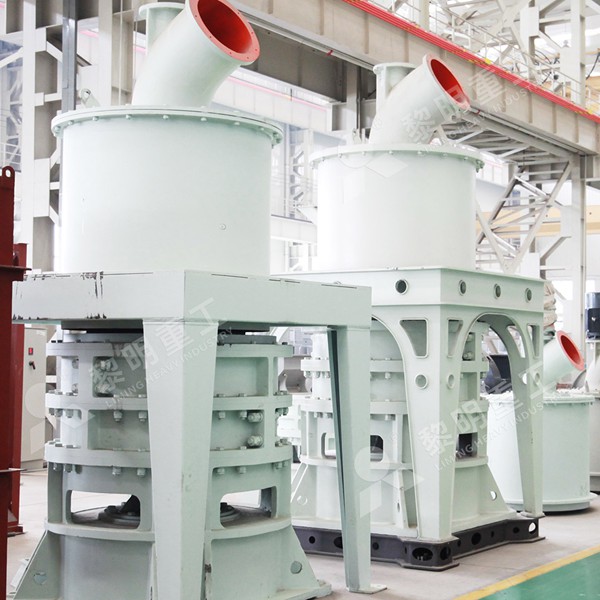
MW Micro Powder Mill – Superfine Barite for Premium Rubber Matting
When rubber matting products require ultra-smooth texture or high gloss finish (e.g., decorative gym mats, automotive floor liners), barite must be ground to superfine grades of 325–3250 mesh (44–5 μm). The MW Micro Powder Mill, based on Swedish grinding technology, is engineered for this niche. Its capacity ranges from 0.5 to 25 T/H, and it achieves a fineness of d97 ≤ 5 μm—one of the tightest particle size distributions available in mechanical grinding.
The MW mill operates with a multi-roller design: the motor drives a main shaft and turnplate, which in turn drives dozens of rollers to rotate against the grinding ring. Raw barite crushed to 10–20 mm is fed to the upper turnplate center; under centrifugal force, material falls onto the raceway and is repeatedly crushed by roller pressure. A high-speed air classifier ensures that only particles below the set cut size exit the grinding zone. The closed system, combined with an integrated pulse precipitator, achieves near-zero dust leakage. For rubber matting compounders, the MW mill’s output allows filler loadings of up to 50% by weight while maintaining elongation within specification—a key advantage for high-performance mats.
Ball Mill – Versatile Coarse-to-Fine Grinding for Barite
The ball mill, with its horizontal rotating cylinder and steel ball grinding media, offers unmatched versatility for barite grinding in small-batch or pilot-scale rubber matting applications. With an input size up to 25 mm and capacity of 0.65–50 T/H, it can produce fineness ranging from 20 mesh (850 μm) for coarse fillers to 400 mesh (38 μm) for standard matting formulations. The ball mill’s ladder and ripple liners optimize ball lift and impact force, ensuring efficient grinding even for barite’s abrasive nature.
For rubber matting manufacturers who require on-site grinding of barite from lump to powder in a single step, the ball mill can be configured with a discharge grate to control residence time and prevent over-grinding. A typical barite grinding circuit includes a jaw crusher feeding the ball mill, followed by a spiral classifier or hydrocyclone to return oversize particles. The mill’s gear drive is enclosed for safety and noise reduction. Liming provides complete ball mill systems with electric control cabinets and motors, ready for integration into existing matting production lines.
Application Guidelines for Rubber Matting
Selecting the correct mill for barite grinding in rubber matting depends on three factors: throughput, target fineness, and contamination limits. For production lines consuming more than 40 tons of barite per day, the LM Vertical Roller Mill offers the lowest energy cost per ton and highest consistency. For medium-scale operations (5–40 TPD), the MTW European Trapezium Mill balances capital and operating costs. Small plants or specialty matting producers benefit from the Raymond or MW Micro Powder Mills. Ball mills remain economical for batch processing or when multiple mineral fillers are ground in the same facility.
Liming Heavy Industry’s mills feature standardized electrical controls, making them compatible with automated rubber compounding systems. All mills include pulse dust collectors as standard, meeting international air quality standards. Optional extras for barite grinding include magnetic separators to remove tramp iron, moisture analyzers for feed control, and silo-level monitoring for finished powder storage.
Frequently Asked Questions (FAQ)
- Q: What fineness of barite is recommended for rubber matting applications?
A: Typical barite fineness for rubber matting ranges from 200 mesh (74 μm) to 800 mesh (20 μm). For standard mats, 200–325 mesh provides optimal density and wear resistance. Superfine barite (above 600 mesh) is used for high-gloss or thin rubber mats where surface smoothness is critical. - Q: Can Liming mills handle barite with high moisture content?
A: Yes. The LM Vertical Roller Mill integrates drying and grinding, capable of handling barite with up to 5% moisture. For other mill types, we recommend pre-drying feed to below 3% moisture to maintain classifier efficiency and prevent agglomeration. - Q: How does iron contamination from grinding affect rubber matting quality?
A: Iron particles above 50 ppm can cause discoloration, accelerated aging, and reduced dielectric strength in rubber mats. Liming offers wear-resistant lining options (ceramic, alloy steel) for mill components contacting the feed material to minimize iron pickup. Additionally, magnetic separators can be installed downstream. - Q: What is the typical power consumption for grinding 1 ton of barite to 325 mesh?
A: Power consumption varies by mill type: MTW European Type Trapezium Mill typically consumes 18–25 kWh/t; LM Vertical Roller Mill consumes 14–20 kWh/t; Ball Mill consumes 25–35 kWh/t. The LM mill’s integrated classifier reduces energy use by 15–20% compared to ball mill circuits. - Q: Does Liming provide complete barite grinding turnkey solutions for rubber matting factories?
A: Yes. Liming Heavy Industry offers engineering, equipment supply, installation supervision, and commissioning for entire barite grinding systems—from primary crushing (jaw crusher, hopper) to storage silos and pneumatic conveying. We also provide after-sales training and spare parts support globally.


