Published on: October 26, 2023
Barite, a naturally occurring barium sulfate mineral, is a crucial component in the production of high-quality inks and pigments due to its high density, chemical inertness, and excellent opacity. The grinding process is paramount to achieving the fine particle size and uniform distribution required for superior ink performance, influencing everything from color strength to flow properties and print definition. A specialized barite grinding mill, engineered for precision and efficiency, is essential for transforming raw barite ore into a valuable industrial pigment. With over three decades of expertise in manufacturing large and medium-sized crushing and grinding equipment, Liming Heavy Industry offers a comprehensive range of mills tailored to meet the demanding specifications of the ink pigment sector. Our technologies, from Raymond mills for standard fineness to micro powder mills for ultrafine grades, are designed to deliver consistency, high capacity, and energy efficiency. This article explores how Liming's grinding solutions, including the LM Vertical Roller Mill, MTW European Type Trapezium Mill, and MW Micro Powder Mill, are optimized for barite processing in ink pigment applications, detailing their working principles, key features, and the resulting benefits for manufacturers.
Understanding Barite's Role in Ink Pigments
Barite (BaSO₄) is prized in the ink industry as a filler and extender, but its role goes beyond simple volume. Its high specific gravity (4.0-4.5 g/cm³) allows it to improve the weight and body of inks, which is particularly valuable for screen printing and gravure inks where precise viscosity and laydown are critical. Moreover, its high refractive index contributes to excellent opacity and whiteness, enabling ink manufacturers to reduce the use of more expensive primary pigments like titanium dioxide without sacrificing coverage. The purity and particle size of ground barite directly affect the final ink quality. Impurities can cause color shifts or chemical instability, while particle size distribution determines gloss, dispersion ease, and rheological behavior. For high-gloss inks, a very fine and narrow particle size distribution is required, while matte finishes may benefit from a slightly coarser grind. Therefore, selecting the correct barite grinding mill is a strategic decision that impacts both product quality and production economics.
Liming Heavy Industry: A Legacy of Grinding Excellence
Founded in 1987, Liming Heavy Industry Co., Ltd. has evolved into a modern joint-stock corporation integrating research, manufacturing, and sales. Headquartered in the HI-TECH Industry Development Zone of Zhengzhou, covering 80,000 m², with an additional workshop in Shangjie Industry Park spanning 67,000 m², the company possesses extensive production capabilities. Over the past 30 years, Liming has adhered to modern scientific management systems, precision manufacturing, and continuous innovation, becoming a leader in the domestic and overseas machinery manufacturing industry. Our commitment to scientific research, technological improvement, and the 'production, learning, and research' model ensures that we remain at the technological frontier of the industry. This dedication is evident in our portfolio of grinding mills, each engineered to address specific challenges in non-metallic mineral processing, including barite grinding for ink pigments.
Optimal Mill Solutions for Barite Pigment Grinding
Different ink applications require different barite fineness levels, typically ranging from 200 mesh (74 µm) for basic fillers to 1250 mesh (10 µm) or finer for high-end pigment applications. Liming offers targeted solutions across this spectrum.
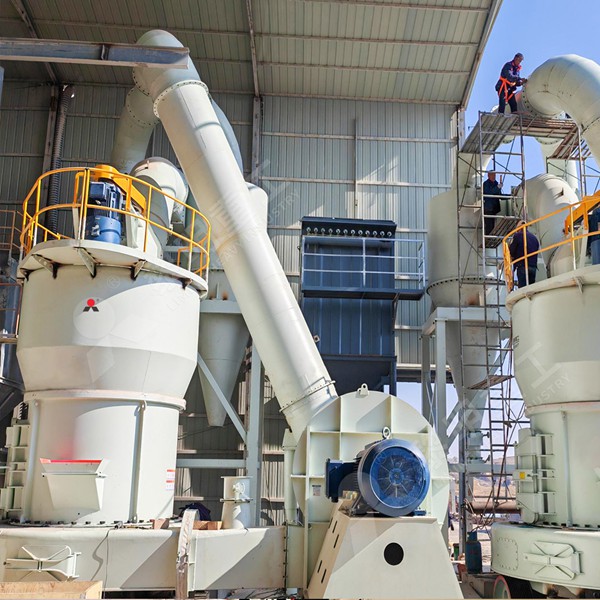
1. MW Micro Powder Mill for Ultrafine Barite Pigments
For premium ink pigments requiring sizes down to D97 ≤ 5 µm (approximately 2500 mesh), the MW Micro Powder Mill is the premier choice. This equipment incorporates advanced Swedish grinding technology, specifically designed for superfine powder processing with a fineness adjustable between 325 mesh and 3250 mesh. Its working principle involves the motor driving the main shaft and turnplate, which causes dozens of rollers to rotate against the raceway of a ring. Small material crushed by a hammer crusher is fed to the central turnplate, where centrifugal force spreads it to the ring raceway for grinding. For ink pigment producers, this mill ensures exceptional particle size consistency, which is critical for dispersion and final product transparency or opacity. The system is equipped with a pulse dust collector, ensuring environmentally friendly operation—a key advantage in modern manufacturing facilities. The capacity ranges from 0.5 to 25 T/H with an input size of 10-20 mm, making it ideal for specialized batches or continuous production of high-value barite pigments.
2. MTW European Type Trapezium Mill for Standard to Fine Inks
The MTW European Type Trapezium Mill represents a significant upgrade over traditional Raymond mills, offering enhanced stability, productivity, and energy efficiency. This mill is ideally suited for producing barite powder in the 200-800 mesh range, commonly used in printing inks for newsprint, packaging, and general commercial applications. With a capacity of 3 to 55 TPH and an input size of 30-50 mm, it is a workhorse for medium to large-scale operations. The system integrates grinding, separating, and conveying in a closed loop, equipped with a pulse dust collector that meets stringent environmental standards. The working principle involves crushed material being fed via a variable-frequency belt feeder into the mill, where it is ground between rings and rollers. Particles are lifted by airflow, with oversized particles returning for regrinding and qualified fines collected as finished product. The patented technology ensures high throughput and low maintenance, making it a cost-effective solution for consistent barite pigment supply.
3. Raymond Mill for Economy Barite Fillers
For basic ink formulations where extreme fineness is not required, the classic Raymond Mill remains a reliable and economical choice. Suitable for processing non-explosive materials like barite with Mohs hardness under 7 and humidity below 6%, this mill produces fineness between 613 µm and 44 µm (approximately 30-325 mesh). Its output capacity of 1.2 to 4.5 T/H and input size of 15-25 mm makes it perfect for small to medium-scale operations looking to produce standard barite fillers for low-cost inks. While simple in design, the Raymond mill benefits from decades of refinement, offering robust operation and easy maintenance.
4. LM Vertical Roller Mill for High-Capacity Production
When large volumes of barite powder are required—for instance, in bulk ink manufacturing or pigment masterbatch production—the LM Vertical Roller Mill excels. This mill integrates drying, grinding, powder selection, and conveying into a single unit. With a capacity range of 10 to 400 T/H and input size of 30-55 mm, it is designed for the heaviest industrial demands. The automatic electric control system ensures precise operation, while its new milling device optimizes energy consumption. The vertical design has a small footprint, which is advantageous in space-constrained plants. For ink pigment processors, the LM mill provides consistent fineness across high tonnages, ensuring batch-to-batch uniformity essential for commercial ink production.
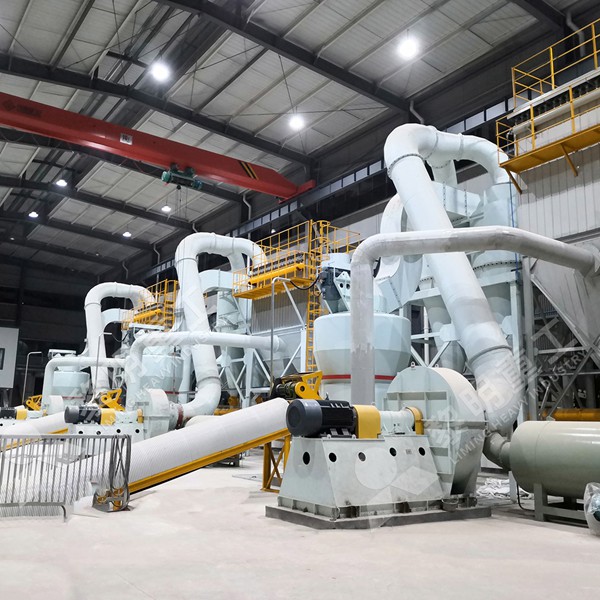
Key Benefits for Ink Pigment Manufacturers
Utilizing Liming's barite grinding mills offers multiple advantages:
1. Precision Particle Size Control: Both the MTW and MW mills feature advanced classifiers that allow precise adjustment of fineness, enabling manufacturers to tailor barite powder to specific ink viscosity and gloss requirements.
2. Energy Efficiency and Lower Operating Costs: Modern designs, particularly the LM and MTW series, consume significantly less energy per ton of product compared to older mill technologies. This directly reduces the cost per kilogram of pigment produced.
3. High Purity and Consistency: Liming mills are constructed with wear-resistant materials that minimize iron contamination, preserving the whiteness and purity of the barite—a critical factor in color-critical ink applications. The closed-loop systems also prevent external contamination.
4. Environmental Compliance: All Liming mills are available with integrated pulse dust collectors, ensuring that the grinding process meets strict environmental protection standards, which is increasingly important for regulatory compliance and corporate sustainability goals.
5. Versatility Across Fineness Ranges: From coarse fillers to ultrafine pigments, Liming's product line covers the entire spectrum, allowing single-source procurement for multiple product grades.
Working Principle Overview and System Integration
A typical barite grinding line involves several stages: primary crushing with a jaw crusher, feeding via a vibrating feeder into a hopper, and then metering into the grinding mill. In the MTW mill, for example, the material is ground between rollers and a grinding ring, with hot air (if needed for drying) carrying the particles to the separator. Oversized particles fall back for regrinding, while fines are collected in a powder collector. The entire airflow is recycled in a closed system, minimizing heat loss and dust emission. For ink pigment production, this integrated approach ensures smooth operation, from raw barite lumps to ready-to-use powder in silos or bags.
Conclusion
Choosing the right barite grinding mill is fundamental to producing high-quality ink pigments that meet exacting performance standards. Liming Heavy Industry provides a complete spectrum of solutions—from the ultra-fine MW Micro Powder Mill to the high-capacity LM Vertical Roller Mill—backed by over 30 years of engineering excellence. Our mills offer the precision, reliability, and efficiency that modern ink manufacturers demand. By partner with Liming, you gain not only advanced equipment but also a partner committed to your process optimization and product quality.
Frequently Asked Questions (FAQ)
1. What is the optimal fineness of barite for ink pigment?
The optimal fineness depends on the ink type. For general printing inks, fineness from 200-400 mesh (74-37 µm) is common. For high-gloss or speciality inks, fineness of 800-1250 mesh (15-10 µm) or even finer, such as D97 ≤ 5 µm, is required for better dispersion and gloss.
2. Can Liming's grinding mills process barite with high moisture content?
Yes. Mills like the LM Vertical Roller Mill and MTW European Type Trapezium Mill are designed to integrate drying with grinding. Hot air can be introduced into the mill to reduce moisture from feed material, eliminating the need for a separate dryer in many cases.
3. How do you prevent iron contamination during barite grinding?
Liming mills use high-quality wear-resistant materials for grinding parts. For critical pigment applications, we can provide mills with ceramic-lined grinding chambers and non-metallic grinding elements to minimize or eliminate iron contamination, preserving barite whiteness and purity.
4. What is the typical power consumption for grinding barite to 800 mesh?
Power consumption varies by mill type and feed size, but modern mills like the MW Micro Powder Mill are designed for high energy efficiency. Typically, grinding barite to 800 mesh might consume 50-70 kWh per ton, but a detailed analysis can be provided based on your specific throughput and target fineness.
5. How long does it take to install and commission a barite grinding mill?
Installation time depends on the mill model and site conditions. For standard Raymond or MTW mills, installation can be completed in 2-3 weeks, with commissioning and tuning taking an additional 5-7 days. Large vertical mills may require 4-6 weeks. We provide on-site supervision and training to ensure smooth startup.


