Published: March 15, 2025
Barite, a naturally occurring barium sulfate mineral, is a critical functional filler in the sealant industry due to its high specific gravity (4.2–4.5 g/cm³), chemical inertness, and low oil absorption. When ground to precise fineness (typically 200–325 mesh, with d97 ≤ 45 μm), barite powder effectively increases the weight and density of sealants, improving their sag resistance, acoustic damping, and radiation shielding properties without compromising viscosity or workability. Selecting the right barite grinding mill is therefore essential for achieving consistent particle size distribution, high throughput, and energy efficiency. Liming Heavy Industry, with over 30 years of expertise in manufacturing crushing and grinding equipment, offers a comprehensive range of mills—including Raymond mill, MTW European type trapezium mill, MW micro powder mill, and LM vertical roller mill—each tailored to specific barite processing requirements for sealant weight applications. This article provides a professional, in-depth analysis of these grinding solutions, covering capacity, fineness, working principles, and integration into sealant production lines, while comparing operational advantages to help manufacturers optimize their production.
Understanding barite’s role in sealant weight formulation
In sealant manufacturing, density control is paramount. Standard sealants based on silicone, polyurethane, or polysulfide often require inorganic fillers to adjust specific gravity from 1.2 g/cm³ to over 2.0 g/cm³. Barite excels here because it does not react with the polymer matrix, resists moisture absorption, and provides uniform weight distribution. However, to achieve these benefits, the barite powder must meet strict specifications: moisture content below 0.5%, fineness of 200–400 mesh, and particle shape that is predominantly blocky or irregular to enhance packing and reduce settling. Poor milling can lead to agglomeration, excessive fines that increase oil absorption, or oversized particles that cause nozzle clogging during sealant application. Therefore, the choice of mill directly impacts final product quality and production cost.
Overview of Liming Heavy Industry’s barite grinding mills
Founded in 1987 and headquartered in Zhengzhou’s HI-TECH Industry Development Zone, Liming Heavy Industry Co., Ltd. is a modern joint-stock corporation integrating research, manufacturing, and sales. With a main facility covering 80,000 m² and an additional workshop of 67,000 m² in Shangjie, the company produces large and medium-sized crushing and grinding equipment. Its core barite grinding mills include the following:
| Mill Type | Model Example | Capacity Range | Input Size | Fineness Range | Best Use Case |
|---|---|---|---|---|---|
| Raymond Mill | YGM Series | 1.2–4.5 T/H | 15–25 mm | 613–44 μm | Small to medium production, traditional grinding |
| European Type Trapezium Mill | MTW Series | 3–55 T/H | 30–50 mm | 200–44 μm | Medium to large capacity, stable performance |
| Micro Powder Mill | MW Series | 0.5–25 T/H | 10–20 mm | d97 ≤ 5 μm (325–3250 mesh) | Ultra-fine barite for high-value sealants |
| LM Vertical Roller Mill | LM Series | 10–400 T/H | 30–55 mm | 200–65 μm | Large-scale industrial production, drying & grinding |
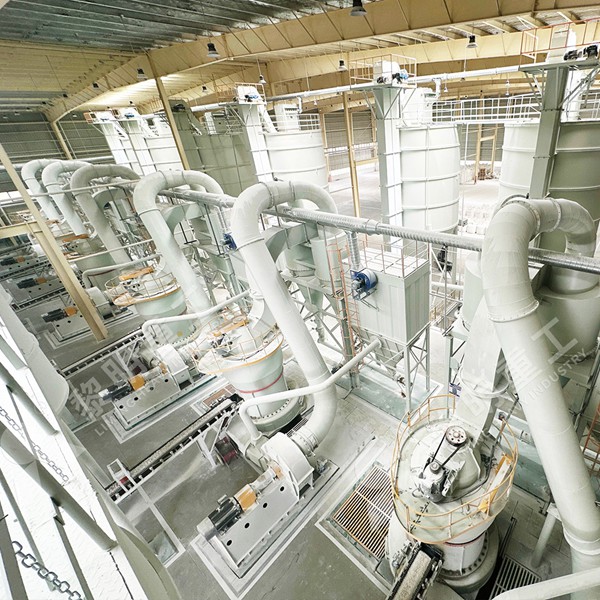
Detailed analysis of mill types for barite sealant weight applications
Raymond mill: the workhorse for small-scale operations
Raymond mill, or pendulum roller mill, has been a staple in mineral grinding for over a century. Liming’s Raymond mill is designed for materials with Mohs hardness below 7 and humidity under 6%, making it suitable for barite. The grinding process relies on a rotating central shaft with suspended rollers that swing outward against a stationary grinding ring. Barite feed of 15–25 mm is crushed between the roller and ring, then blown by an air stream to a classifier. The classifier returns coarse particles for regrinding while allowing fine powder to pass to a cyclone collector. For sealant weight applications, the Raymond mill typically produces 200-mesh (74 μm) to 325-mesh (44 μm) powder, which is adequate for standard barite-filled sealants. Its capacity of 1.2–4.5 T/H limits its use to small-batch or pilot-scale production. Maintenance is straightforward, but energy efficiency is lower compared to newer technologies. Operators should monitor the grinding ring wear, as barite’s abrasiveness can reduce component life.
MTW European type trapezium mill: optimized for medium-large barite grinding
Liming’s MTW series represents the next generation of Raymond mill technology, incorporating patented trapezium-shaped rollers and a curved grinding ring. This design increases the grinding area and reduces material slippage, resulting in 30% higher capacity than traditional Raymond mills at the same power consumption. The MTW mill accepts barite lumps up to 50 mm and produces uniform powder of 200–44 μm. Its closed-loop air system includes a pulse dust collector, ensuring environmental compliance—essential for sealant factories requiring low dust emissions. The variable-frequency belt feeder allows precise control of feed rate, which directly correlates with powder fineness stability. For sealant weight production, the MTW mill is ideal for throughputs of 3–55 T/H, making it suitable for moderate to large operations. The working principle involves a jaw crusher reducing large barite to 30–50 mm, followed by grinding between the ring and rollers. Air flow carries fines to the separator; particles that fail the fineness test fall back to the grinding ring. This mill excels in limestone desulfurization and heavy calcium carbonate processing, but its robust design translates well to barite grinding.
MW micro powder mill: ultra-fine barite for premium sealants
For sealants requiring extremely high density (e.g., 2.5 g/cm³) or specialized radiation shielding, ultra-fine barite powder (d97 ≤ 5 μm, 325–3250 mesh) is necessary. Liming’s MW micro powder mill, based on advanced Swedish grinding technology, is purpose-built for this task. It employs a multi-roller (up to dozens of rollers) rotating against a grinding ring. Material crushed by a hammer crusher to 10–20 mm is fed via an elevator and vibrating feeder to the center of an upper turnplate. Centrifugal force throws the material to the ring raceway, where rollers crush it into fine powder. The classifier achieves exceptionally steep particle size distribution, minimizing oversized fractions. For sealant manufacturers, this means consistent weight addition and reduced settling over time. The MW mill’s capacity ranges from 0.5 to 25 T/H, suitable for specialized production lines. Pulse precipitators ensure clean operation, and the closed system prevents barite dust loss—critical for maintaining yield and workplace safety.
LM vertical roller mill: high-capacity integrated solution
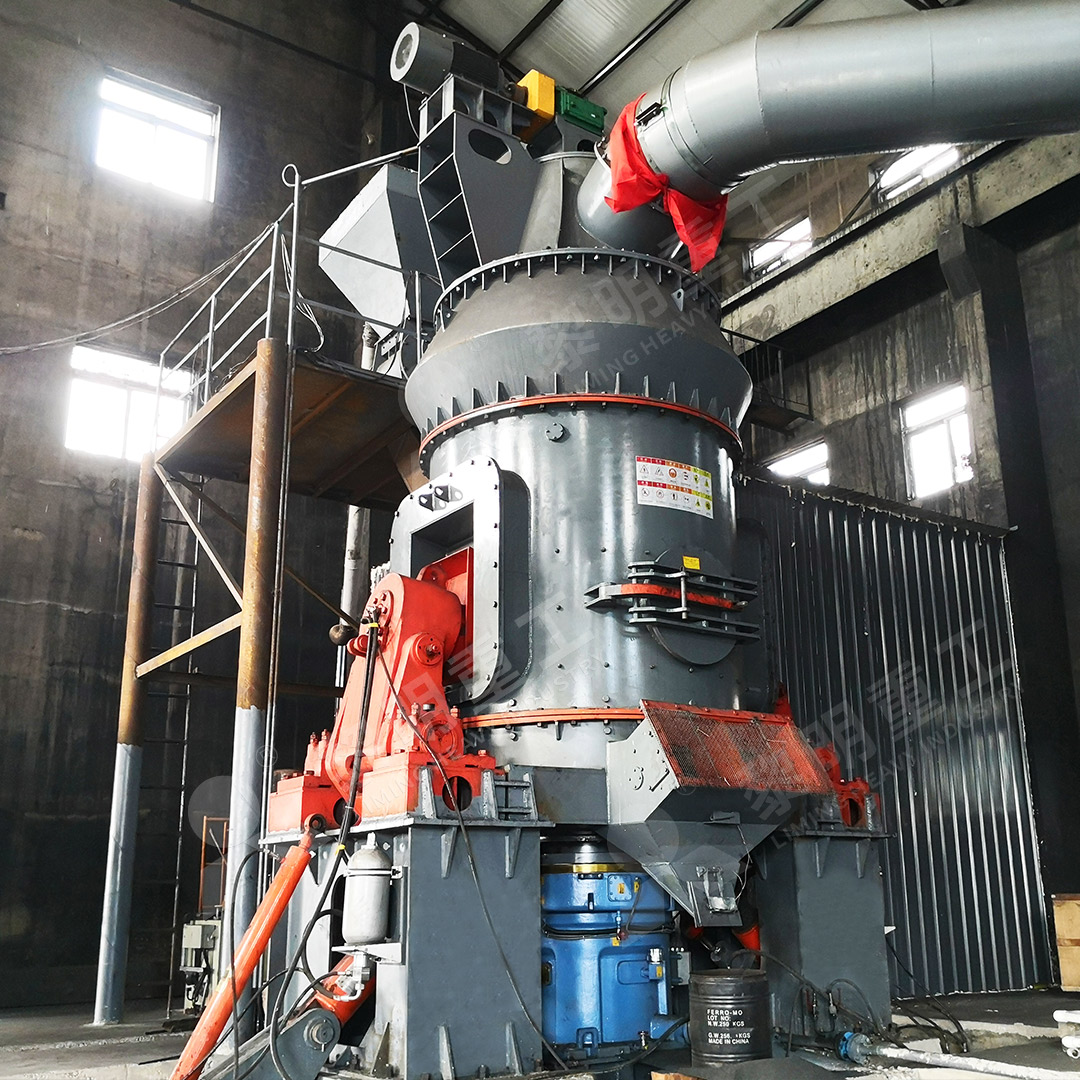
When sealant production demands hundreds of tons of barite powder per day, the LM vertical roller mill is the most economical choice. Integrating drying, grinding, powder selection, and conveying in one unit, it accepts barite feed up to 55 mm and produces fineness from 200 to 65 μm. The mill operates by rotating a grinding table, with hydraulic rollers pressing down on the material. Hot air can be introduced into the mill to dry barite with higher moisture content (up to 15%), eliminating the need for a separate dryer. Separated fines are conveyed to a bag filter for collection. With capacities from 10 to 400 T/H, the LM mill is ideal for centralized barite processing plants feeding multiple sealant manufacturing lines. Its automatic electric control system ensures constant product quality. However, initial capital expenditure is higher, and the plant footprint is larger. For sealant weight applications, the LM mill produces powder with excellent flowability, which reduces bridging in silos during downstream handling.
Selection criteria for the optimal barite grinding mill
Choosing the right mill depends on several factors:
- Production scale: For less than 5 T/H, Raymond mill offers simplicity; for 5–55 T/H, MTW is preferred; above 10 T/H, LM vertical mill scales efficiently.
- Fineness requirement: Standard sealants (200–325 mesh) are achievable with MTW or Raymond. Ultra-fine demands below 40 μm require MW micro powder mill.
- Moisture content: If barite feed has high moisture (>6%), LM vertical mill with hot air drying is advantageous.
- Energy consumption: MTW and LM mills typically offer lower kWh per ton compared to Raymond and ball mills.
- Environmental regulations: All Liming mills can be equipped with pulse dust collectors to meet emission standards.
- Automation: MW and LM mills feature advanced electric control, reducing labor requirements.
Operational integration into a sealant manufacturing line
In a typical sealant plant, barite grinding is preceded by primary crushing (e.g., jaw crusher reducing run-of-mine barite to 50–100 mm) and followed by classification or blending. Liming mills can be integrated with a hopper, vibrating feeder, and bucket elevator for automated material flow. The finished barite powder is then pneumatically conveyed to storage silos. Batch weighing systems dose the barite powder into mixers containing liquid polymer, plasticizers, and other additives. The particle size distribution of the barite directly influences sealant rheology—excessive fines increase viscosity, while coarse particles cause sedimentation. Liming’s classifier systems in MTW and MW mills allow fineness adjustability via separator speed, enabling rapid changeover between different sealant formulations. Regular maintenance of grinding elements (rollers, rings, liners) is crucial, as barite’s abrasiveness (Mohs 3–3.5) accelerates wear. Liming recommends using high-chrome steel components for extended service life.
Conclusion
Barite grinding for sealant weight applications demands a mill that delivers consistent fineness, high throughput, and low energy consumption. Liming Heavy Industry’s portfolio—Raymond, MTW, MW, and LM mills—covers every production scale, from small batches to industrial tonnages. The MTW European type trapezium mill strikes the best balance for most medium-sized sealant manufacturers, while the MW micro powder mill unlocks ultra-fine possibilities for premium products. For large-volume operations, the LM vertical roller mill provides unmatched efficiency and integration. By aligning mill selection with specific sealant performance requirements, manufacturers can achieve precise density control, reduce waste, and maintain competitive advantage in the global sealant market.
Frequently Asked Questions (FAQs)
1. What is the typical fineness of barite powder used for sealant weight?
The recommended fineness for barite powder in sealant weight applications is between 200 mesh (74 μm) and 325 mesh (44 μm). This range provides optimal density enhancement without excessive oil absorption or settling. For specialized high-density sealants, fineness down to d97 ≤ 5 μm can be achieved with micro powder mills.
2. Can the same mill grind both barite and other minerals for sealants, such as calcium carbonate?
Yes, Liming Heavy Industry mills, particularly the MTW European type trapezium mill and LM vertical roller mill, are versatile enough to process barite, calcium carbonate, gypsum, and talc. However, switching materials requires thorough cleaning of the grinding chamber and classifier to prevent cross-contamination, which could alter sealant properties. Barite’s higher abrasiveness may also necessitate quicker replacement of grinding components compared to softer minerals.
3. How does the moisture content of barite feed affect the grinding process?
Barite feed with moisture content above 6% can cause material adherence to grinding surfaces and classifier vanes, reducing capacity and causing blockages. For such cases, Liming recommends the LM vertical roller mill, which can utilize hot air (up to 350°C) to dry the barite during grinding. Alternatively, pre-drying the barite in a rotary dryer before feeding into Raymond or MTW mills is a viable solution.
4. What maintenance is required for the grinding mill when processing barite?
Key maintenance tasks include regular inspection and replacement of grinding rollers and rings (typically every 800–1,200 operating hours, depending on barite feed size), lubrication of bearings and gearboxes, and cleaning of the pulse dust collector bags to maintain suction. Liming provides wear-resistant parts made of high-chrome or manganese steel to extend service intervals. It is also advisable to monitor classifier blades for erosion.
5. Is it possible to produce both coarse and fine barite powder from a single mill setup?
Yes, by adjusting the classifier speed, Liming mills can produce a range of fineness specifications. For example, the MTW mill can switch from 200 mesh to 325 mesh by increasing separator rotor speed. However, producing both very coarse (e.g., 100 mesh) and very fine (e.g., 600 mesh) from the same mill in a single pass is inefficient. In such cases, installing a separate classification system downstream or using multiple mills in parallel is more practical.


