Published on: October 5, 2023
Barite, a naturally occurring barium sulfate mineral, is a critical raw material in ceramic glaze production, prized for its high density, chemical inertness, and ability to enhance opacity, whiteness, and gloss in finished ceramic products. The quality of ceramic glaze directly correlates to the fineness, uniformity, and purity of the barite powder used—making the choice of grinding mill a pivotal decision for manufacturers. At Liming Heavy Industry Co., Ltd., we specialize in providing advanced barite grinding mill solutions tailored to the exacting demands of ceramic glaze applications. Our extensive portfolio includes the LM Vertical Roller Mill, MTW European Type Trapezium Mill, Raymond Mill, MW Micro Powder Mill, and Ball Mill, each engineered to deliver consistent particle sizes ranging from 44 microns to ultra-fine 5 microns, with capacities from 0.5 to 400 tons per hour. With over three decades of expertise in crushing and grinding equipment manufacturing, our mills integrate state-of-the-art automation, energy-efficient designs, and robust construction to ensure high throughput, low operational costs, and unwavering product quality. Whether processing barite for ceramic tile glazes, sanitary ware, or artware coatings, our equipment guarantees a homogeneous powder with controlled particle size distribution, free from contaminants—essential for achieving vibrant, durable, and defect-free ceramic surfaces. In this article, we delve into the technical specifics of our barite grinding mills, their working principles, and why they are the preferred choice for ceramic glaze manufacturers worldwide.
Why Barite Matters in Ceramic Glaze
Ceramic glaze is a vitreous coating applied to ceramics to improve appearance, strength, and resistance to moisture and chemicals. Barite, as a flux and opacifier, plays a dual role: it lowers the melting point of the glaze mixture, promoting smooth fusion during firing, and its high refractive index scatters light, producing an opaque, glossy finish. For optimal performance, barite must be ground to a fine powder—typically between 200 mesh (74 microns) and 1250 mesh (10 microns)—with minimal oversize particles and consistent specific surface area. Inconsistent grinding leads to glaze defects such as pinholes, blistering, or uneven color, which can ruin entire production batches. This is where our grinding mills excel, offering precision control over fineness moduli and particle shape, ensuring every grain of barite contributes to a flawless glaze layer.
Our Barite Grinding Mill Solutions for Ceramic Glaze
1. LM Vertical Roller Mill: High-Capacity Precision
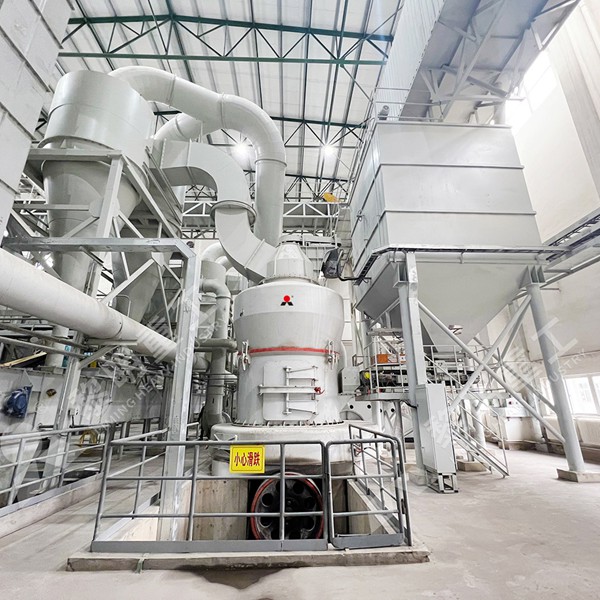
The LM Vertical Roller Mill is designed for large-scale barite processing, with capacities ranging from 10 to 400 tons per hour. Its innovative milling device and automatic electric control system integrate drying, grinding, powder selection, and conveying in one unit—ideal for handling barite with varying moisture levels. The vertical design reduces floor space, while the hydraulic roller system minimizes vibration and wear. For ceramic glaze production, the LM mill achieves fineness of 200-325 mesh with a narrow particle size distribution, ensuring consistent opacity and gloss in glazes. The built-in classifier allows real-time adjustment of product fineness, crucial when switching between different glaze recipes. Although primarily used for cement and non-metallic minerals, its adaptability makes it a top choice for high-volume barite grinding operations in ceramic manufacturing.
2. MTW European Type Trapezium Mill: Industry Standard for Glaze
The MTW European Type Trapezium Mill is our flagship product for mid-scale barite grinding, with a capacity of 3-55 tons per hour and input size up to 30-50 mm. As an upgrade of traditional Raymond and pendulum mills, it incorporates patented technologies for enhanced stability and productivity. Its trapezoidal grinding ring and roller design increase grinding efficiency by 20-30% compared to conventional mills, while the variable-frequency belt feeder ensures uniform material flow. For ceramic glaze, the MTW mill delivers a finished product fineness of 80-325 mesh (adjustable via separator speed), with minimal energy consumption. The closed-loop pneumatic system, paired with a pulse dust collector, complies with strict environmental standards—vital for indoor glaze preparation facilities. Many ceramic plants choose the MTW mill for its balance of performance, reliability, and cost-effectiveness.
3. Raymond Mill: Proven Reliable
Our Raymond Mill, with capacities of 1.2-4.5 tons per hour, is a time-tested solution for small-to-medium barite grinding operations. It processes barite with a Mohs hardness under 7 and humidity below 6%, outputting fineness between 613 μm (30 mesh) and 44 μm (325 mesh). The mill's auto-pneumatic system adjusts roller pressure for consistent grinding, while the cyclone collector and dust removal system maintain a clean working environment. In ceramic glaze applications, the Raymond mill is often used for specialty glazes requiring coarser barite particles, such as engobes or matt finishes. Its simplicity and low maintenance make it a favorite for artisanal ceramic studios and small factories.
4. MW Micro Powder Mill: Ultra-Fine Barite for Premium Glazes
For high-end ceramic glazes demanding ultra-fine barite—such as translucent or crystalline finishes—the MW Micro Powder Mill is unmatched. It achieves a finished product fineness range of d97 ≤ 5 μm (325-3250 mesh), with a capacity of 0.5-25 tons per hour. Based on advanced Swedish grinding technology, it employs a medium-speed rotating turnplate and multiple rollers that grind material against a raceway ring. The integrated pulse precipitator ensures zero dust emission, and the fineness can be precisely adjusted to meet custom glaze specifications. This mill is ideal for manufacturers producing premium ceramic tiles or tableware where gloss and transparency are critical.
5. Ball Mill: Versatile and Durable
Our Ball Mill, with capacities from 0.65 to 50 tons per hour, offers a robust solution for barite grinding in ceramic glaze production. Its horizontal rotating barrel, lined with ladder or ripple liners, uses steel balls to impact and grind materials. The ball mill can handle input sizes up to 25 mm and produces fineness adjustable via grinding time and ball size. It is particularly effective for wet grinding of barite, often used in ceramic slurry preparation. The centrifugal force action ensures thorough blending, making it suitable for pre-mixing glaze components. Despite its larger footprint, the ball mill's durability and low operational cost make it a staple in large ceramic facilities.
Key Advantages of Liming Barite Grinding Mills for Ceramic Glaze
- Precision Fineness Control: All our mills feature advanced classifiers to adjust particle size from coarse (613 μm) to ultra-fine (5 μm), meeting diverse glaze requirements.
- High Purity and Consistency: Closed-system designs prevent contamination, and the use of wear-resistant materials ensures no iron or metal particles enter the barite—critical for glaze color purity.
- Energy Efficiency: The LM Vertical Mill and MTW Mill reduce power consumption by 30-50% compared to traditional ball mills, lowering operating costs over time.
- Environmental Compliance: Pulse dust collectors and low-noise operations meet global environmental standards, enabling indoor installation without air quality issues.
- Reliability and After-Sales Support: With over 30 years of manufacturing excellence, Liming offers comprehensive technical support, spare parts availability, and on-site commissioning to ensure uninterrupted production.
Working Principle Overview
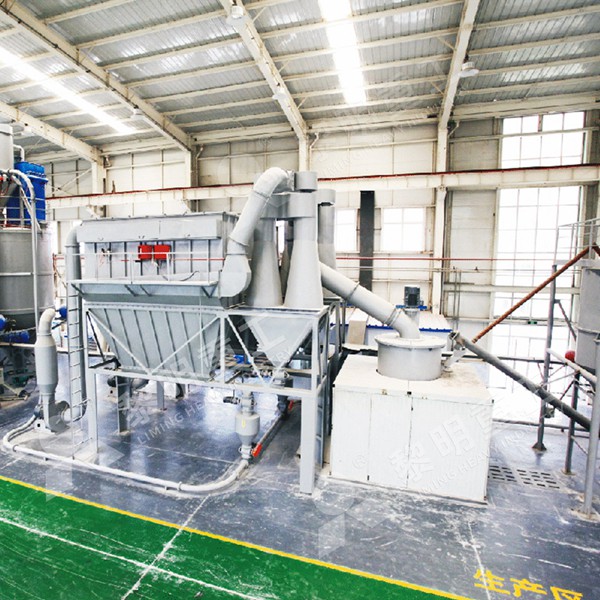
In general, barite grinding in our mills follows a systematic process: barite lumps are crushed by a jaw crusher to the specified input size (e.g., 30-50 mm for MTW, 10-20 mm for MW). The crushed material is fed via a vibrating feeder into the mill's grinding chamber. Inside, rotating rollers or balls compress and shear the barite against stationary surfaces (rings or liners). Airflow or centrifugal force carries fine particles upward to a separator, where oversized particles are returned for regrinding, while qualified powder is collected in a cyclone or bag filter. The system operates in a closed circuit, minimizing waste and dust. Each mill type adapts this principle for its specific capacity and fineness range, ensuring optimal efficiency for barite's specific gravity (~4.5 g/cm³) and abrasive nature.
Conclusion
Selecting the right barite grinding mill for ceramic glaze is a strategic decision impacting product quality, production efficiency, and environmental footprint. At Liming Heavy Industry Co., Ltd., we offer a comprehensive range of mills—from the compact Raymond Mill for small batches to the heavy-duty LM Vertical Roller Mill for high-volume lines—all engineered to meet the rigorous demands of the ceramic industry. Our commitment to scientific research, technological innovation, and customer support ensures that every grinding solution we provide enhances your glaze performance while reducing operational headaches. For ceramic glaze manufacturers aiming for excellence, partnering with Liming means investing in technology that turns raw barite into a masterpiece of ceramic artistry.
Frequently Asked Questions (FAQ)
Q1: What fineness of barite is required for ceramic glaze applications?
A1: For standard ceramic glazes, barite is typically ground to a fineness of 200-325 mesh (74-44 microns). For premium glazes requiring ultra-smooth finishes or high transparency, fineness up to 1250 mesh (10 microns) or finer may be used. Our MW Micro Powder Mill and MTW European Type Trapezium Mill can achieve these ranges with precise adjustment.
Q2: Which Liming mill is best for a small ceramic factory with limited space?
A2: For small-scale operations, our Raymond Mill (1.2-4.5 T/H) or MW Micro Powder Mill (0.5-25 T/H) are ideal due to their compact footprint, low energy consumption, and ease of operation. The Raymond Mill is especially cost-effective for productions under 5 tons per day.
Q3: How do you ensure no metal contamination in the barite powder?
A3: Our mills use high-chrome alloy steel for grinding components (rollers, rings, balls), which are wear-resistant and minimize metal abrasion. Additionally, the closed-system design with magnetic separators (optional) can be integrated to catch any stray metal particles, ensuring powder purity for glaze consistency.
Q4: Can the mills handle barite with high moisture content?
A4: Yes, the LM Vertical Roller Mill has an integrated drying system that can handle moisture levels up to 15% without pre-drying. For our other mills, we recommend pre-drying barite to below 6% humidity to maintain grinding efficiency and prevent clogging in the separator or pipes.
Q5: What is the typical lifespan of grinding parts for barite processing?
A5: The lifespan depends on the mill type and barite's hardness. In our MTW mill, grinding rollers and rings typically last 6-12 months under continuous operation with barite. For ball mills, steel balls need replacement every 3-6 months, while liners can last 1-2 years. Liming provides wear parts as standard spare kits for timely replacements.


