Published on: October 26, 2023
Barite, a barium sulfate mineral, plays a crucial role in glass manufacturing, acting as a flux and fining agent that improves clarity, reduces melting temperature, and enhances the overall quality of glass products. The selection of an efficient barite grinding mill is paramount for achieving the fine, uniform particle sizes required for this application. Liming Heavy Industry, a leader in crushing and grinding equipment since 1987, offers a comprehensive range of mills engineered to process barite into high-quality glass-grade powder. Our solutions, from vertical roller mills to micro powder grinders, combine decades of innovation with robust construction, ensuring that glass manufacturers can achieve consistent fineness, high throughput, and energy efficiency. This article explores the key aspects of barite grinding for glass making, highlighting the technologies and benefits that Liming Heavy Industry brings to the table.
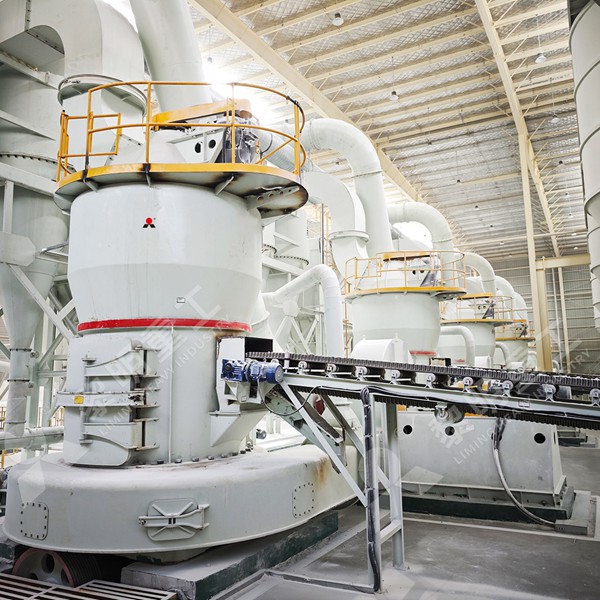
When it comes to processing barite for the glass industry, the grinding mill must handle the material's hardness (3-3.5 Mohs) and specific gravity (4.2-4.5) while achieving a fineness typically in the range of 200-325 mesh (74-44 microns). Liming Heavy Industry's product portfolio is tailored to meet these demands. Our LM Vertical Roller Mill, for instance, integrates drying, grinding, and powder selection in one system, making it ideal for high-capacity operations (10-400 T/H). Its innovative grinding roller and table design minimize energy consumption while maximizing material bed stability, ensuring that barite particles are uniformly ground without over-crushing. This mill is particularly suited for large-scale glass plants requiring consistent, high-quality feed. Alternatively, our MTW European Type Trapezium Mill, an upgrade of traditional Raymond mill technology, offers a capacity range of 3-55 T/H and is designed for fine grinding of non-metallic minerals like barite. It features a multi-classifier impeller for precise particle size control, which is critical for glass making to avoid impurities that can cause defects. The sealed system and pulse dust collector ensure compliance with environmental standards, a growing priority in modern manufacturing.
For glass manufacturers demanding superfine barite powder, the MW Micro Powder Mill is the prime choice. With a capacity of 0.5-25 T/H and a fineness adjustable from 325 mesh to 3250 mesh (down to d97 ≤ 5μm), this mill utilizes advanced Swedish grinding technology. The working principle involves a reducer driving the main shaft and rollers against a ring, crushing materials into ultra-fine particles. This is particularly beneficial for specialty glass, such as optical or lead-free glass, where barite replaces lead to achieve high density and refractive indices. Likewise, our Ball Mill, with a capacity of 0.65-50 T/H, remains a reliable workhorse for barite grinding in glass applications where simplicity and durability are valued. Its horizontal rotating barrel uses steel balls to impact and grind materials, offering a straightforward solution for plants that prioritize easy maintenance. Liming Heavy Industry's commitment to research and development ensures that each mill is optimized for barite's unique properties, providing glass makers with a competitive edge through consistent output and lower operational costs.
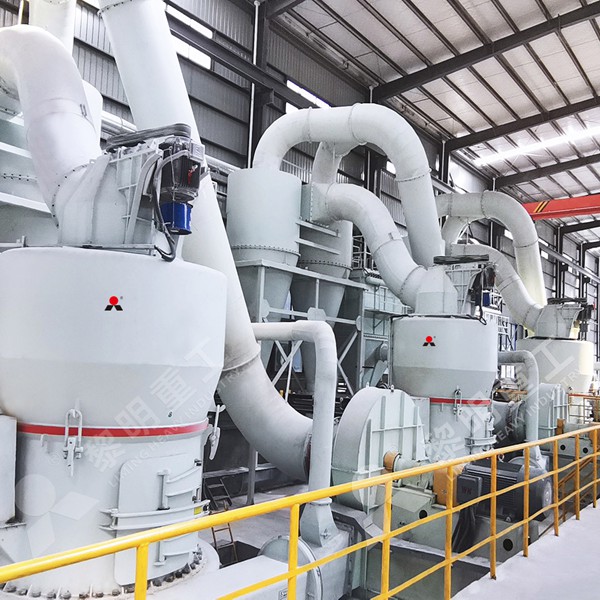
Beyond the machinery, Liming Heavy Industry understands that successful barite grinding for glass making requires a holistic approach. Our engineers consider factors such as feed size, moisture content, and desired fineness to recommend the ideal configuration. The working principle of our MTW mill, for instance, begins with a jaw crusher reducing barite lumps to 30-50mm. A variable-frequency belt feeder then ensures uniform feed into the mill, where material is ground between rings and rollers. Air flow carries particles upward to a separator; those that fail to meet fineness return for regrinding, while finished powder is collected in a dust collector. This closed-loop system minimizes waste and energy use. Similarly, the Raymond Mill, a trusted design for barite, offers an output fineness of 613-44 μm, suitable for standard glass applications. All our equipment is backed by a legacy of over 30 years, with a manufacturing base spanning 147,000 m² across two workshops. We persist in implementing a strategy of scientific research, aiming at the technological frontier to improve overall innovation ability. This ensures that glass manufacturers not only get a mill but a partner committed to their production excellence.
In conclusion, choosing the right barite grinding mill is essential for glass producers to maintain product quality, reduce costs, and meet environmental regulations. Liming Heavy Industry provides a spectrum of solutions—LM Vertical Roller Mill for high-capacity integration, MTW Trapezium Mill for precision and efficiency, MW Micro Powder Mill for superfine requirements, and Ball Mill for reliability. Our equipment is designed to handle the challenges of barite grinding, offering high throughput, consistent fineness, and low maintenance. With a focus on scientific development and technological improvement, we empower glass manufacturers to optimize their operations. Whether you are producing container glass, flat glass, or specialty glass, Liming Heavy Industry has the expertise and machinery to elevate your barite grinding process to new heights.
Frequently Asked Questions (FAQ)
- What fineness of barite powder is typically required for glass making? Barite for glass making is usually ground to a fineness of 200-325 mesh (74-44 microns). For specialty glasses, superfine grades up to 3250 mesh (5 microns) may be needed, which can be achieved with micro powder mills like our MW series.
- Can Liming Heavy Industry mills handle wet barite or barite with high moisture content? Yes, our LM Vertical Roller Mill is equipped with an integrated drying system that can handle materials with up to 15-20% moisture. For other mills, we recommend pre-drying or using a drying accessory to maintain grinding efficiency.
- What is the typical capacity range of Liming mills for barite processing? Our mills cover a wide capacity range to suit different operations. The LM Vertical Roller Mill handles 10-400 T/H, MTW Trapezium Mill processes 3-55 T/H, MW Micro Powder Mill manages 0.5-25 T/H, and Ball Mill offers 0.65-50 T/H. We can customize configurations based on specific needs.
- How does Liming ensure environmental compliance during barite grinding? Our mills are designed with closed-loop systems and pulse dust collectors to minimize dust emissions and noise. The MTW and MW series, for example, comply with national environmental protection standards, making them suitable for sustainable manufacturing.
- What maintenance is required for a barite grinding mill from Liming Heavy Industry? Regular inspection of grinding rollers, rings, separators, and seals is recommended. We provide comprehensive after-sales support, including spare parts and service manuals. Our ball mills require periodic steel ball replacement, while roller mills have longer service intervals due to advanced wear-resistant materials.


