Published: October 5, 2023
In the production of high-quality putty filler, the choice of grinding equipment directly influences final product fineness, throughput efficiency, and operational cost. Barite, as a key weighting agent and filler material, requires precise milling to achieve the optimal particle size distribution—typically between 200 mesh and 1250 mesh—for superior smoothness, adhesion, and crack resistance in wall putty applications. Liming Heavy Industry offers a comprehensive range of advanced barite grinding mills, including Raymond mills, MTW European-type trapezium mills, and LM vertical roller mills. These solutions are engineered to handle barite’s moderate hardness (Mohs 3–3.5) with high throughput, low energy consumption, and strict adherence to environmental standards. This article provides an in-depth technical analysis of barite grinding for putty filler, covering mill selection, working principles, and system integration, based on Liming Heavy Industry's three decades of experience in the field.
Understanding Barite Grinding Requirements for Putty Filler
Barite (barium sulfate, BaSO4) is widely used in wall putty formulations due to its high density, chemical inertness, and whiteness. For putty filler applications, the ground barite powder must achieve a fineness of 80% passing 325 mesh (44 μm) or finer. This ensures even spreading, minimal shrinkage, and enhanced water resistance. A barite grinding mill must therefore deliver consistent particle size distribution, high capacity, and reliable operation under continuous duty cycles.
Liming Heavy Industry’s mills are designed to meet these demands. For example, the Raymond mill, a classic workhorse, processes barite with capacities up to 4.5 T/H and fineness adjustable from 613 μm to 44 μm. The MTW European-type trapezium mill, an upgrade of traditional pendulum mills, offers capacities up to 55 T/H with superior energy efficiency and a patented roller and ring design that minimizes wear. For large-scale operations, the LM vertical roller mill integrates drying, grinding, and classification in one unit, achieving capacities up to 400 T/H—ideal for centralized barite processing plants.
Raymond Mill: Proven Reliability for Small to Medium Production
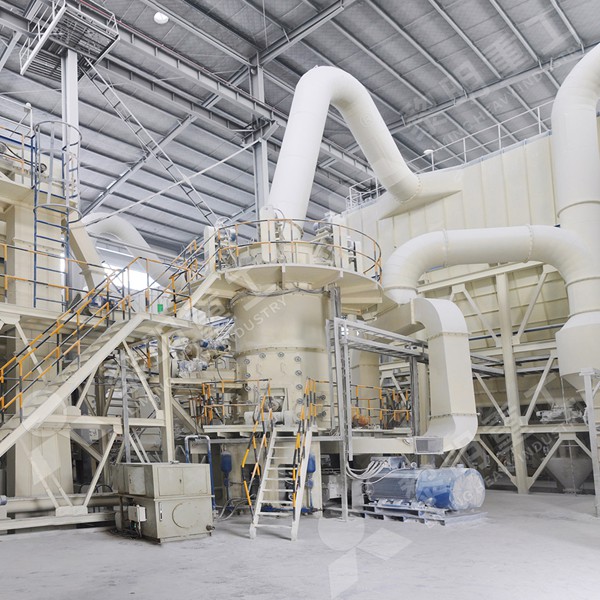
The Raymond mill remains a popular choice for putty filler manufacturers requiring moderate throughput. Its working principle involves a rotating grinding roller that swings outward against a stationary ring, crushing barite particles by extrusion and grinding. The built-in classifier ensures that only fine particles pass through, while coarse material returns for re-grinding. Liming Heavy Industry’s Raymond mills feature a robust frame, wear-resistant grinding rollers and rings, and a sealed gearbox for extended service life.
For barite putty filler, the typical feed size is 15–25 mm, and the mill can produce 1.2 to 4.5 T/H of finished powder. The system includes a jaw crusher for primary size reduction, a bucket elevator for feeding, and a pulse dust collector to meet environmental regulations. Maintenance is straightforward, with all major components accessible for quick replacement. This makes the Raymond mill suitable for small-to-medium enterprises in the putty filler industry.
MTW European-Type Trapezium Mill: High Efficiency for Continuous Operation
When higher capacity and finer fineness are required, Liming’s MTW European-type trapezium mill offers a significant upgrade. Its trapezoid-shaped roller and ring design increases contact area, improving grinding efficiency by 20–30% compared to traditional Raymond mills. The mill uses a bevel gear transmission system driven by a motor and reducer, ensuring smooth operation at low noise levels. A variable-frequency belt feeder precisely controls material flow, while an integrated classifier adjusts the fineness from 80 mesh to 425 mesh (d97).
For barite putty filler, the MTW mill can process 3–55 T/H with input sizes up to 50 mm. The closed-loop airflow system recycles air through a blower, reducing energy losses. The optional pulse jet dust collector captures over 99.7% of fine particles, making the system compliant with modern environmental standards. Liming Heavy Industry has installed hundreds of MTW mills in barite grinding applications, with documented uptime exceeding 95% under full load.
LM Vertical Roller Mill: Large-Scale Integrated Solution
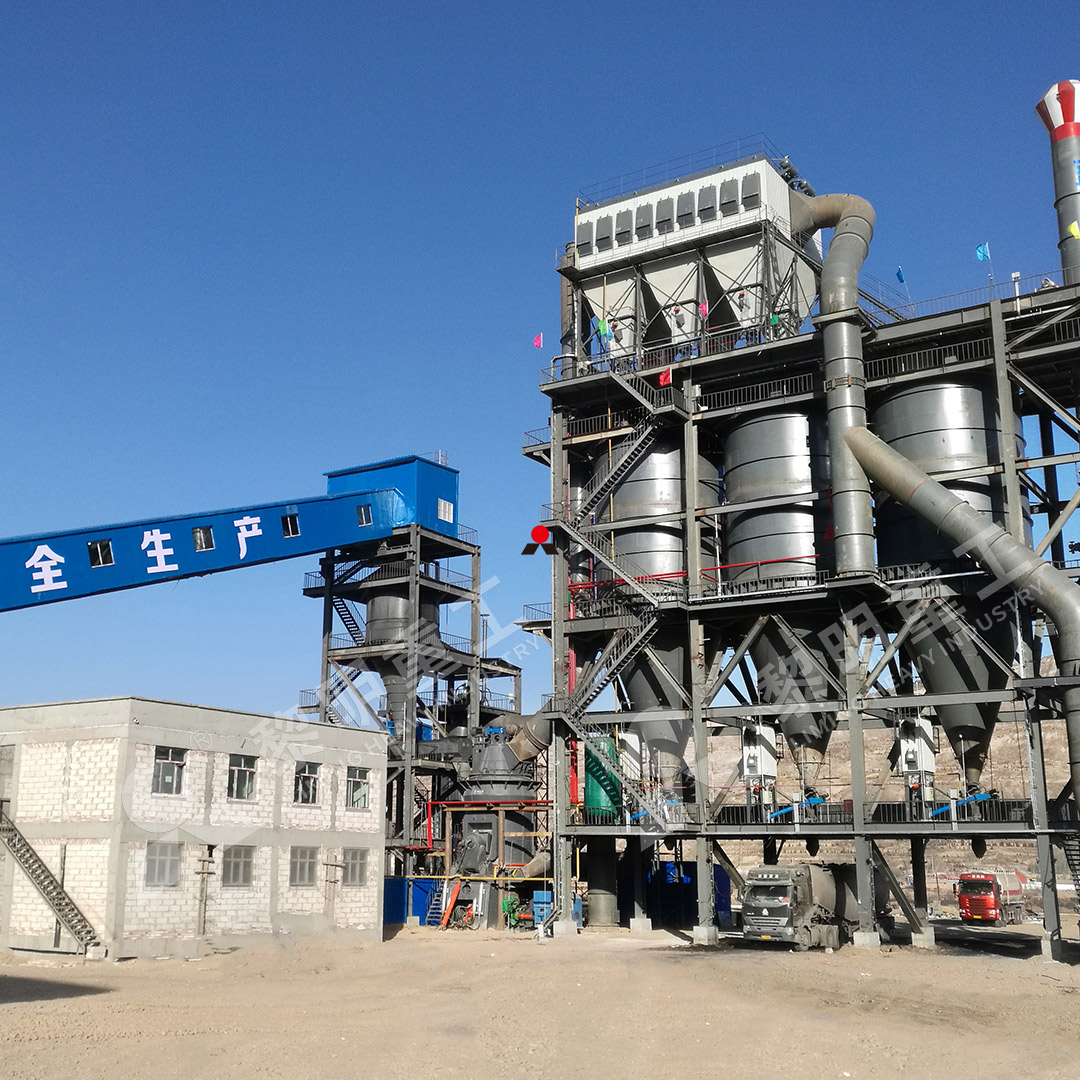
For putty filler manufacturers handling high volumes, the LM vertical roller mill provides an all-in-one solution. It integrates crushing, grinding, drying, and classification within a single vertical housing, reducing floor space and auxiliary equipment. The mill employs a hydraulic cylinder to apply grinding pressure on rollers against a rotating grinding table. Material is fed through a central chute, and hot air or inert gas carries fine particles upward to a dynamic separator. Oversize material returns to the table for further grinding.
The LM mill is particularly effective for barite with moisture content up to 5%, as it incorporates a drying zone near the inlet. Capacities range from 10 to 400 T/H, with feed sizes up to 55 mm. For putty filler, typical fineness is 200–325 mesh (74–44 μm), achieved with precise separator speed control. The automatic electric control system monitors grinding pressure, air flow, and product fineness, enabling unattended operation. Liming Heavy Industry’s LM mills are used in major barite processing hubs worldwide, delivering energy consumption 30–40% lower than ball mills.
System Components and Integration for Putty Filler Production
Regardless of mill type, a complete barite grinding system for putty filler includes several key components: a primary crusher (usually jaw crusher), a vibrating feeder, a bucket elevator, the mill itself, a classifier, a cyclone collector or pulse dust collector, a blower, a control cabinet, and interconnecting pipes. Liming Heavy Industry provides turnkey solutions, ensuring each component is matched to the required capacity and fineness. For example, in a typical 10 T/H putty filler line, a PE-400×600 jaw crusher reduces raw barite to 20–30 mm, a GF vibrating feeder meters material into the MTW138 mill, and a DMC pulse dust collector recovers 99.9% of product. The finished powder is stored in a silo via a pneumatic conveying system.
Liming Heavy Industry also offers after-sales services including installation supervision, operator training, and spare parts supply. Over the past 30 years, the company has established a global service network with local offices in Southeast Asia, Africa, South America, and the Middle East. This ensures quick response for maintenance and technical support.
Why Choose Liming Heavy Industry for Barite Grinding Mills?
Founded in 1987, Liming Heavy Industry has grown to become a leading manufacturer of crushing and grinding equipment, with two production bases covering 147,000 m² in Zhengzhou, China. The company holds ISO 9001:2015 certification and adheres to a scientific management system. Every barite grinding mill undergoes rigorous precision manufacturing, including CNC machining of gears and rollers, dynamic balancing of rotating assemblies, and full-system load testing before shipment.
The company’s strong R&D team focuses on improving grinding efficiency, reducing wear, and integrating automation. Recent innovations include wear-resistant alloy materials for grinding rollers that extend service life by 50% in barite applications, and intelligent control systems that adjust feed rate and classifier speed in real time to maintain product quality. With over 10,000 grinding mills installed worldwide, Liming Heavy Industry has proven expertise in the putty filler sector.
Conclusion
Selecting the right barite grinding mill is critical for achieving consistent putty filler quality and optimizing production cost. Liming Heavy Industry offers a range of mills—Raymond, MTW European-type, and LM vertical—each tailored to different capacity and fineness requirements. With advanced manufacturing, comprehensive system integration, and global support, these mills provide reliable, efficient, and environmentally friendly solutions for the putty filler industry. Contact Liming Heavy Industry for a personalized equipment recommendation based on your raw material characteristics and production targets.
Frequently Asked Questions (FAQ)
1. What is the ideal fineness for barite powder used in putty filler?
For standard wall putty, barite powder should have a fineness of at least 80% passing 325 mesh (44 μm). For premium putty with smoother finish, fineness up to 1250 mesh (10 μm) may be required. Liming’s MTW and LM mills can adjust to these levels through classifier speed control.
2. How does moisture content in barite affect grinding performance?
Barite with moisture above 3% can cause agglomeration in Raymond mills and ball mills, reducing throughput and increasing power consumption. Liming’s LM vertical mill includes an integrated drying zone that handles moisture up to 5% without pre-drying, making it advantageous for damp feedstocks.
3. What maintenance is required for a barite Raymond mill?
Routine maintenance includes inspecting grinding rollers and rings for wear (replace every 6–12 months), lubricating bearings and gearbox every 500 hours, and cleaning the classifier blades. Liming provides a complete maintenance manual and remote diagnostics support.
4. Can you process barite mixed with other minerals for putty filler?
Yes. Liming mills can grind barite blended with calcium carbonate, talc, or silica, as long as the mixture’s hardness remains below Mohs 7. The MTW mill’s adjustable classifier and variable-speed feeder allow precise control over the final blend’s fineness.
5. What dust collection system is needed for environmental compliance?
Liming recommends a pulse jet baghouse dust collector with filtration efficiency of 99.9% for barite grinding. The system captures fine powder (PM2.5 and larger) and returns it to the product stream. This meets EPA and European Union emission standards for non-metallic mineral processing.


