Barite grinding mills have become an essential component in the production of high-quality roofing felt, providing the finely ground barite powder required for weight enhancement, fire resistance, and durability. As a leading manufacturer with over 30 years of experience in crushing and grinding equipment, Liming Heavy Industry Co., Ltd. offers a comprehensive range of mills specifically engineered to meet the demanding needs of the roofing felt industry. From Raymond mills and European-type trapezium mills to vertical roller mills and micro powder mills, our solutions deliver consistent particle size distribution, high throughput, and energy efficiency. This article explores the critical role of barite grinding in roofing felt manufacturing, the technical specifications of our grinding equipment, and the operational advantages that set our technology apart. With a modern 80,000 m² headquarters in Zhengzhou's Hi-Tech Zone and an additional 67,000 m² workshop in Shangjie, our company combines precision manufacturing with scientific innovation to support global clients in achieving superior product quality and production efficiency.
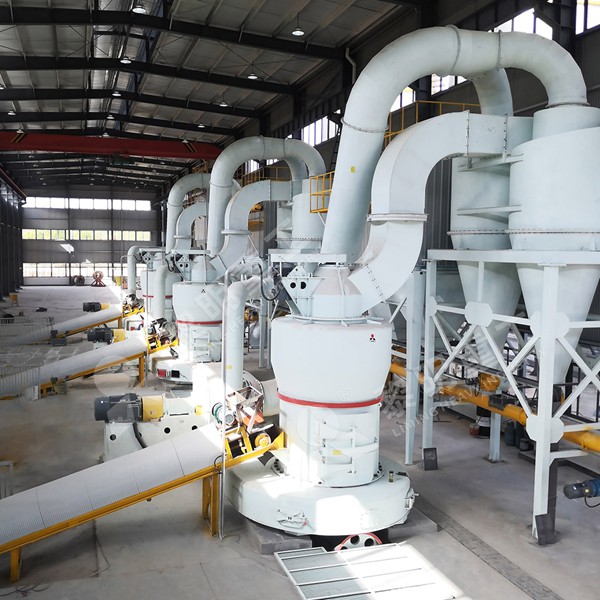
Why Barite Matters in Roofing Felt Manufacturing
Barite, a barium sulfate mineral with a high specific gravity of 4.2 to 4.5 g/cm³, is a key additive in roofing felt production. When ground to a fine powder, it serves multiple functions: it increases the weight of the felt, improving its resistance to wind uplift and mechanical stress; it enhances fire retardancy by providing a non-combustible filler; and it improves the surface finish and dimensional stability of the final product. Roofing felt manufacturers typically require barite powder with a fineness ranging from 200 mesh to 325 mesh (74 μm to 44 μm), with strict control over particle size distribution to ensure uniform coating and adhesion. The grinding process must also handle barite's moderate hardness (3-3.5 on the Mohs scale) and its tendency to produce dust, making efficient and environmentally compliant milling systems essential.
Our Grinding Mill Portfolio for Barite Processing
Liming Heavy Industry offers a diverse lineup of grinding mills capable of processing barite for roofing felt applications. Each mill is designed to meet specific capacity, fineness, and energy consumption requirements, ensuring that manufacturers can select the optimal equipment for their production scale.
Raymond Mill for Standard Barite Grinding
The Raymond mill, a classic in mineral grinding, is ideal for barite processing with a capacity of 1.2 to 4.5 tons per hour and an input size of 15 to 25 mm. It produces a fineness range of 613 μm to 44 μm, easily covering the 200-325 mesh requirement for roofing felt. This mill operates by using a rotating grinding ring and stationary rollers to crush and grind barite ore. Its simple structure and low maintenance requirements make it a cost-effective option for small to medium-scale production. The Raymond mill is particularly suited for manufacturers who need a reliable, proven technology with minimal operational complexity.
MTW European-Type Trapezium Mill
As the upgrade of traditional Raymond and pendulum mills, the MTW European-type trapezium mill offers higher productivity and energy efficiency. With a capacity range of 3 to 55 tons per hour and an input size of 30 to 50 mm, this mill is engineered for large-scale barite grinding. The patented technology includes a bevel gear transmission system that reduces power consumption, a curved air duct for improved airflow, and an integrated separator that achieves fineness adjustments from 80 mesh to 425 mesh. For roofing felt production, the MTW mill delivers consistent particle size distribution, minimizing waste and ensuring uniform product quality. Its closed-loop system, combined with a pulse dust collector, meets stringent environmental standards, making it a sustainable choice for modern factories.
LM Vertical Roller Mill
For ultra-high capacity barite grinding, the LM vertical roller mill stands out with a capacity of 10 to 400 tons per hour and an input size of 30 to 55 mm. This mill integrates drying, grinding, powder selection, and conveying into a single unit, reducing equipment footprint and energy consumption. The LM mill's automatic electric control system ensures precise operation, while its grinding rollers and table design optimize material retention time for uniform particle size. In roofing felt applications, the LM mill can produce barite powder with fineness as fine as 325 mesh at high throughputs, ideal for large manufacturing plants that require continuous, uninterrupted production.
MW Micro Powder Mill for Superfine Barite
When superfine barite powder is needed for premium roofing felt products, the MW micro powder mill delivers fineness adjustable from 325 mesh to 3250 mesh (d97 ≤ 5 μm). With a capacity of 0.5 to 25 tons per hour and an input size of 10 to 20 mm, this mill utilizes advanced Swedish grinding technology. It features dozens of rollers rotating against a ring raceway to produce ultra-fine particles, making it suitable for specialized applications where barite acts as a high-performance filler. The MW mill's pulse precipitator ensures dust-free operation, aligning with green manufacturing practices. This mill is preferred for producing barite powder that enhances the felt's fire resistance and thermal properties at a micro-level.
Ball Mill for Versatile Grinding
The ball mill, a horizontal rotating device transmitted by an outer gear, is a versatile option for barite grinding with a capacity of 0.65 to 50 tons per hour and an input size of ≤25 mm. Uses steel balls in a rotating barrel to impact and grind materials, the ball mill can produce fineness suitable for roofing felt, typically around 200 mesh. While it is less energy-efficient than modern roller mills, the ball mill remains a robust choice for manufacturers who need a simple, durable machine for batch or continuous grinding. Ladder and ripple liners allow for customization of the grinding medium, adapting to different barite ore characteristics.
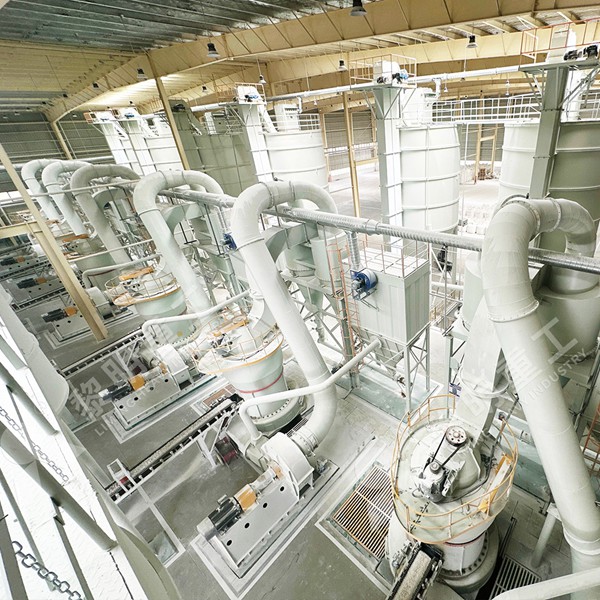
Operational Benefits of Our Barite Grinding Mills
Our grinding mills are designed with features that directly benefit roofing felt manufacturers. First, the integrated drying capability in the LM and MTW mills eliminates the need for separate drying equipment, reducing capital expenditure and floor space. Second, the advanced separator systems in all mills enable quick fineness adjustments without downtime, allowing manufacturers to switch between different barite grades for various felt types. Third, the pulse dust collectors and closed-loop systems ensure compliance with environmental regulations, minimizing airborne dust and protecting worker health. Finally, our machines are backed by a scientific research team that continuously improves product competitiveness through technological innovation. With over 30 years of industry leadership, we provide comprehensive after-sales support, including installation, training, and spare parts services.
Technical Support and Quality Assurance
At Liming Heavy Industry, we adhere to a modern scientific management system that spans research, manufacturing, and sales. Our mature scientific research team focuses on developing solutions that address real-world industrial challenges. For barite grinding in roofing felt, we conduct mill trials to optimize parameters based on ore characteristics, ensuring maximum yield and minimum energy use. Our manufacturing facilities in Zhengzhou and Shangjie produce equipment that meets international quality standards, with stringent testing for performance, durability, and safety. We also offer customized configurations, such as variable-frequency belt feeders for precise material control and upgraded motors for high-altitude or humid environments.
Conclusion
Barite grinding mills are indispensable for producing roofing felt with superior weight, fire resistance, and durability. Liming Heavy Industry's comprehensive range of grinding equipment, from Raymond mills to micro powder mills, provides scalable, efficient, and environmentally friendly solutions for manufacturers worldwide. Our commitment to scientific research and technological innovation ensures that our machines deliver consistent performance, helping clients enhance their product quality and reduce operational costs. With a strong track record since 1987, we invite you to explore how our barite grinding mills can transform your roofing felt production line.
FAQ
1. What is the typical fineness of barite powder required for roofing felt production?
Barite powder for roofing felt typically requires a fineness of 200 to 325 mesh (74 μm to 44 μm), with a uniform particle size distribution to ensure even coating and proper adhesion to the felt substrate. Finer powders may be used for premium-grade felt to enhance fire resistance and surface smoothness.
2. Can the MTW European-type trapezium mill handle barite with high moisture content?
Yes, the MTW mill is designed with a drying function integrated into the grinding process, capable of handling materials with moisture content up to 6% without issues. For barite exceeding this level, pre-drying or using the LM vertical roller mill with higher drying capacity is recommended.
3. What is the power consumption of the Raymond mill when grinding barite?
The Raymond mill typically consumes between 30 to 50 kWh per ton of barite processed, depending on the target fineness and feed size. Its energy efficiency is competitive for small to medium-scale operations, while larger mills like the MTW and LM offer lower specific energy consumption for high-throughput production.
4. How do I choose between a ball mill and a roller mill for barite grinding in roofing felt?
Choose a ball mill if you need a low-capacity, batch-oriented process with simple operation and maintenance, and if initial investment is a primary concern. Opt for a roller mill (like Raymond or MTW) for higher capacity, continuous production, better energy efficiency, and finer fineness control, which are critical for consistent roofing felt quality in larger operations.
5. Does Liming Heavy Industry provide training for operating the grinding mill system?
Yes, we provide comprehensive training for operators and maintenance personnel as part of our after-sales service. This includes hands-on instruction on mill operation, fineness adjustment, routine maintenance, and troubleshooting, ensuring your team can maximize the equipment's performance and lifespan.


